A bolt-action rifle is not supposed to feel legendary. The Lee-Enfield changed that.
The rifle behind the myth
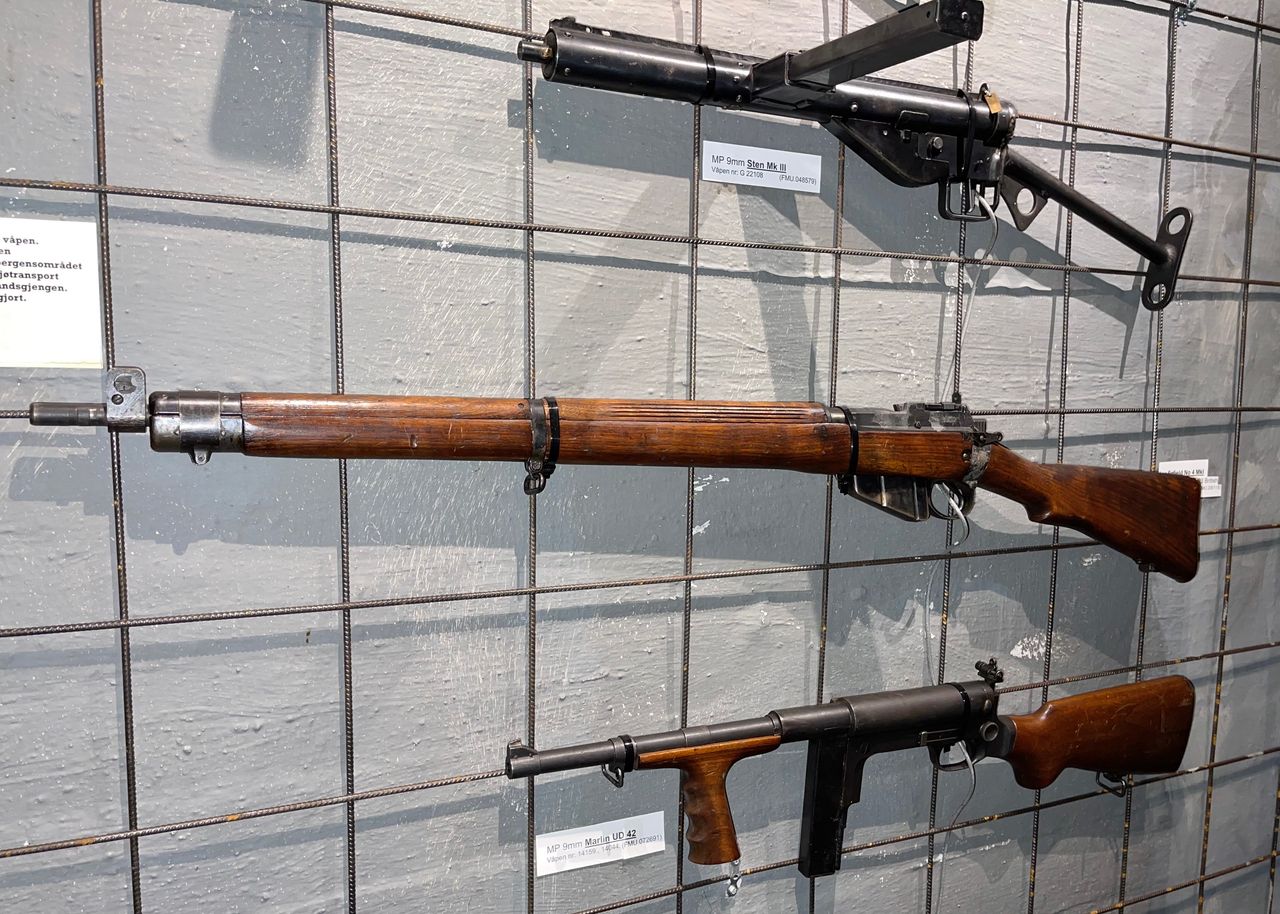
When people say Germans thought this rifle was a machine gun, they are talking about the Lee-Enfield, especially the Short Magazine Lee-Enfield, or SMLE, that armed British troops in the early years of World War I. It was a bolt-action service rifle, not an automatic weapon, and that distinction matters. A machine gun fires continuously with one sustained trigger action, while the Lee-Enfield still required the shooter to work the bolt after every shot.
What made the rifle special was how fast that cycle could happen in practiced hands. The Lee-Enfield combined a smooth, short bolt throw with a 10-round magazine, which was generous for its era. According to long-cited military histories and museum accounts, a trained rifleman could deliver roughly 20 to 30 aimed shots in a minute, an astonishing figure for a standard infantry rifle.
That speed fed the legend. At battles such as Mons in August 1914, British rifle fire was so intense that some German officers reportedly believed they were facing far more machine guns than were actually present. The rifle did not magically become automatic. It was simply the fastest practical bolt-action battle rifle in the hands of men drilled to use it without hesitation.
Why the Lee-Enfield was unusually quick
The Lee-Enfield was built around battlefield efficiency rather than benchrest elegance. Its rear-locking bolt and cock-on-closing action made cycling feel smooth and fluid once the shooter learned the rhythm. Instead of fighting the mechanism on the opening stroke, the rifle spread the effort in a way many soldiers found quicker under pressure.
The bolt handle placement helped too. Shooters could manipulate it rapidly without dramatically lifting the rifle off target. Combined with the rifle’s magazine-fed design, that meant fewer interruptions than older service rifles that relied more heavily on stripper loading habits or slower handling characteristics. The 10-round capacity also gave British infantry a practical edge when many rival rifles commonly held fewer rounds.
None of this meant the Lee-Enfield was perfect. Critics then and now often compare it with the German Mauser system, which many consider stronger or more refined in some respects. But speed was the Lee-Enfield’s calling card. Historians have repeatedly noted that its action allowed a volume of aimed fire unmatched by most contemporaries, which is exactly why battlefield observers could confuse massed rifle fire with automatic fire.
The “Mad Minute” made the rifle famous

The Lee-Enfield’s reputation was not built by design alone. British training doctrine turned mechanical potential into real combat performance through a drill popularly known as the “Mad Minute.” The goal was simple and brutal: fire as many accurate rounds as possible in 60 seconds at a standard target, while maintaining control rather than spraying shots wildly.
Elite riflemen were expected to score around 15 hits, but highly skilled soldiers could do much more. Later retellings often cite 20 to 30 aimed rounds per minute as a realistic top-end combat rate for trained men using the SMLE. That number appears again and again in historical writing because it captures what made British prewar musketry so formidable. This was not showboating. It was doctrine.
The drill rewarded muscle memory. Soldiers learned to keep the rifle shouldered, work the bolt with minimum wasted motion, and maintain sight picture between shots. In effect, the British Army created a system where ordinary infantrymen could produce a startling wall of fire. When large numbers of riflemen did it together, the sound and impact could easily suggest machine guns to an enemy advancing into the beaten zone.
Mons and the opening shock of 1914
The legend of German troops mistaking Lee-Enfield fire for machine-gun fire is tied most strongly to the opening battles of World War I, especially Mons on August 23, 1914. There, the small but highly trained British Expeditionary Force met advancing German formations at a moment when old-world assumptions collided with industrial-age firepower. British rifle marksmanship made an immediate impression.
Accounts of Mons describe dense, accurate British fire cutting into German attacks with shocking effect. According to military historians, German observers were startled by the speed and consistency of the incoming rounds. Some reports and later recollections framed that surprise in vivid terms: they believed they were facing numerous machine guns when much of the punishment was coming from riflemen using SMLEs.
It is worth being careful with the phrase. The Germans were not ignorant of what machine guns sounded like, and the battlefield contained actual automatic weapons on multiple sides. But the key point holds up. The British Army’s trained rifle fire generated a volume that exceeded what many opponents expected from bolt-action infantry. In the chaos of first contact, that discrepancy became one of the enduring stories of the war’s opening weeks.
Bolt-action rifle, machine-gun effect

To understand the story clearly, it helps to separate the mechanism from the battlefield effect. The Lee-Enfield was never a machine gun in any technical sense. It did not fire automatically, it did not sustain long bursts, and it could not match the true cyclic fire of weapons like the Maxim, Vickers, or later German machine guns. A real machine gun changed the tactical geometry of battle through continuous fire.
But at the squad or platoon level, perception mattered almost as much as mechanism. If dozens of trained riflemen each fired 20 or more aimed shots per minute, the combined effect could be devastating. The enemy did not need to be wrong about the engineering to be overwhelmed by the result. What they experienced was concentrated, disciplined, repeating fire arriving far faster than expected.
That is why the legend survived. It captures a battlefield truth, even if repeated versions sometimes grow a little dramatic in the retelling. The Lee-Enfield was a manually operated rifle that produced machine-gun-like shock in short bursts of combat. For a general audience, that is the real story: not a magical weapon, but a superb design paired with soldiers trained to exploit every advantage it offered.
Why it outclassed many rival service rifles
The Lee-Enfield arrived in an era crowded with famous bolt-action rifles, including the German Gewehr 98, the Russian Mosin-Nagant, and the American Springfield 1903. All were serious military arms, and some were praised for strength, accuracy, or manufacturing quality. What set the Lee-Enfield apart was not necessarily that it beat all of them in every category. It was that it delivered speed without surrendering practical battlefield usefulness.
Its 10-round magazine was a major advantage. Many rival rifles of the day typically carried 5 rounds, which meant more frequent reload interruptions during sustained engagements. The Lee-Enfield’s action also encouraged a smoother firing rhythm. In close-in and medium-range combat, where seconds mattered, that rhythm could feel decisive. It let British infantry put more lead downrange before the enemy could recover or reposition.
That edge remained part of the rifle’s identity well beyond 1914. The Lee-Enfield family served for decades across the British Empire and Commonwealth, officially in British service into the 1950s. It lasted because it worked. Plenty of weapons were stronger on paper or newer in design, but few inspired the same mix of soldier loyalty, battlefield confidence, and fear in the men on the receiving end.
The lasting reputation of the Lee-Enfield

Today, the Lee-Enfield’s legend lives in military history circles, collector communities, and among shooters who still admire how lively the action feels. It is one of those rare service rifles whose reputation rests on something immediately understandable. Even people who know little about firearms can grasp the core idea: this thing was fast, and fast enough to fool the enemy under combat conditions.
Modern writers sometimes oversell the story, as if every German unit in 1914 was completely convinced it had run into hidden machine-gun nests. The cleaner version is better and more believable. Trained British troops using Lee-Enfields could create a volume of accurate fire so intense that German attackers and officers sometimes interpreted it as machine-gun fire. That is impressive enough without embellishment.
In the end, the Lee-Enfield matters because it proves a weapon’s reputation is never just about hardware. Design matters, yes, but doctrine, training, and battlefield context matter just as much. The rifle was fast because the mechanism was smart. It became famous because soldiers mastered it. And that combination was powerful enough to make one of history’s great bolt-action rifles feel, for a terrifying moment, like something far deadlier.