People have been declaring the .45 ACP dead for years. The funny thing is, the market data in 2026 tells a more complicated story.
Why do people keep saying the .45 ACP is finished?
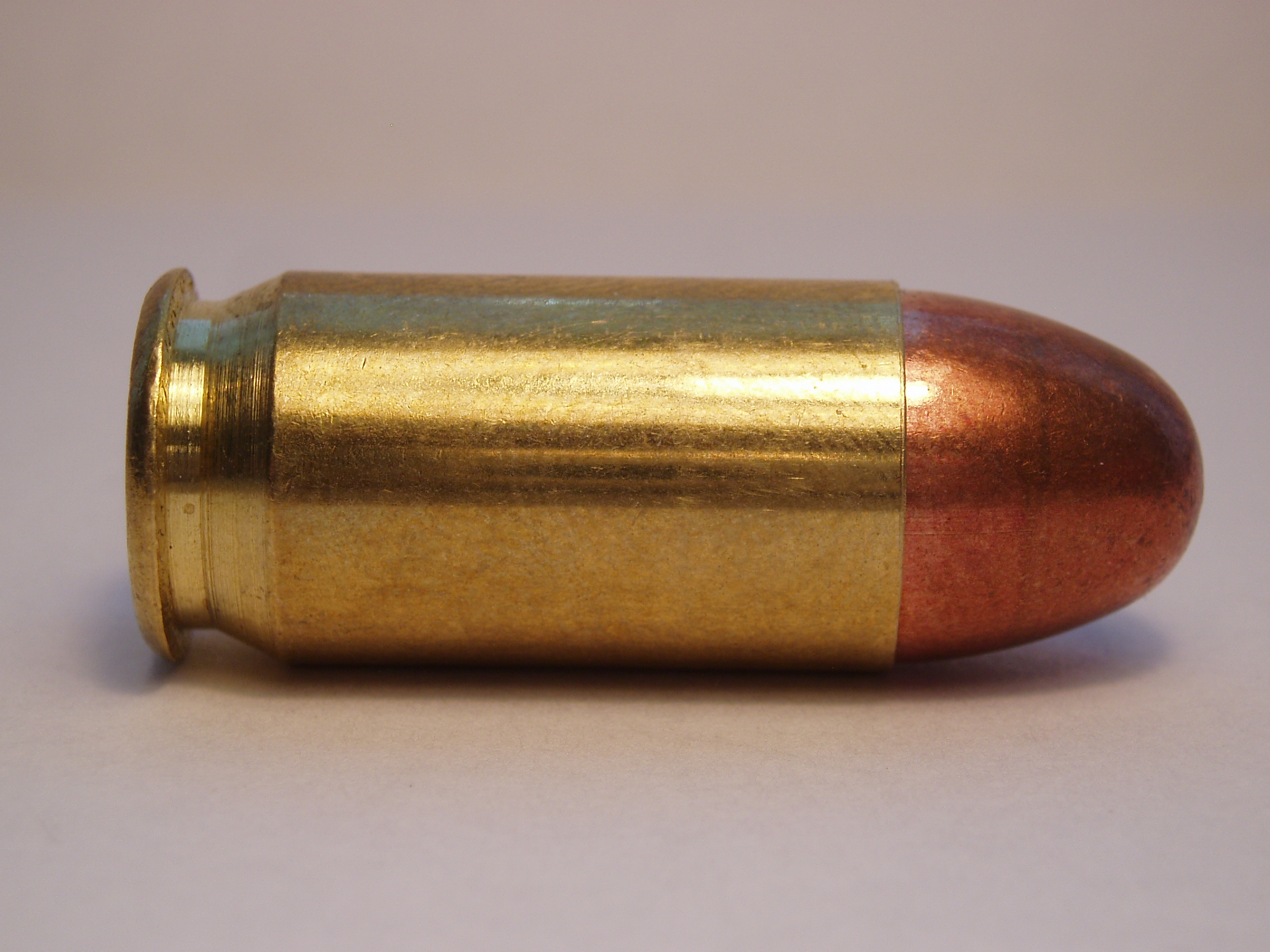
The case against .45 ACP is easy to understand. Modern 9mm loads have improved dramatically over the last two decades, especially with bonded hollow points and better penetration standards. Law enforcement agencies that once flirted with .40 S&W or stuck with .45 have largely standardized around 9mm, and that shift changed the public conversation.
Capacity is another major reason. In similarly sized handguns, 9mm usually gives shooters several extra rounds, less recoil, and cheaper practice ammunition. For newer shooters, that combination matters a lot more than caliber mythology, and manufacturers follow demand where it actually exists.
The internet has amplified this trend. Social media clips, forum debates, and gun counter chatter often flatten a nuanced market into a simple verdict: if it is not the dominant choice, it must be obsolete. That is not how mature product categories work, especially in firearms, where buyer preference, legacy platforms, and specialized uses keep older formats alive for decades.
A quick Wikimedia Commons image idea for this topic would be a classic M1911 pistol on display, since it immediately signals the .45 ACP story to general readers. That visual works well because the cartridge is still closely tied to the 1911 in both popular memory and current sales.
What the 2026 sales numbers actually suggest
By raw volume, .45 ACP trails 9mm by a wide margin in 2026. Retail scanner data from large sporting goods chains, distributor mix reports, and manufacturer production comments all point in the same direction: 9mm dominates centerfire handgun ammunition sales, while.45 ACP occupies a much smaller but still meaningful slice.
In most broad retail mixes, .45 ACP sits behind 9mm and often behind .380 Auto in some urban or carry-heavy markets. It also competes with the 10mm for buyers who specifically want a larger caliber semiauto. That sounds grim until you remember that “smaller share” does not equal “dead category.”
The key metric is continuity, not just ranking. Major ammunition makers are still loading multiple .45 ACP SKUs across full metal jacket, standard pressure hollow point, +P defensive rounds, and subsonic offerings. When manufacturers continue regular production, distributors keep stocking it, and stores turn inventory consistently, that points to a living market rather than a dying one.
Handgun sales tell a similar story. Fewer new pistol launches chambered in .45 ACP appear each year compared with 9mm, but the caliber still shows up in 1911s, polymer duty-size pistols, and compact carry models aimed at established enthusiasts.
Where .45 ACP still holds real advantages
The strongest practical case for .45 ACP in 2026 is not magic stopping power. It is that the round remains effective, predictable, and naturally subsonic in many common loadings. That subsonic character makes it appealing for suppressed shooting, where users want to avoid the ballistic crack that often comes with standard 9mm loads.
There is also a platform advantage. The 1911 market is still healthy, and .45 ACP remains the chambering many buyers want in that design. A large share of 1911 purchasers are not looking for the most efficient carry gun on earth. They want the classic experience, the trigger, the recoil impulse, and the historical connection.
Some shooters simply perform better with it than critics assume. In full-size steel pistols, .45 ACP often produces a slower, rolling recoil sensation that experienced users find manageable and even pleasant. That does not make it superior for everyone, but it explains why many owners continue buying it despite higher ammo cost and lower magazine capacity.
Competition and recreational shooting also matter. Certain divisions, scoring systems, and traditions still reward or at least accommodate .45 ACP, and that keeps demand anchored beyond pure self-defense use.
The role of law enforcement and the military demands
If you only look at institutional adoption, the .45 ACP clearly lost the big war years ago. Most police departments prefer 9mm because it lowers training costs, reduces recoil-related qualification issues, and allows officers to carry more rounds in lighter sidearms. Those advantages are hard for any agency budget office to ignore.
Military procurement trends are similar. While specialized units have used .45 platforms at various times, standardization pressures almost always favor cartridges with broader logistical support, lighter carried weight, and higher magazine capacity. In that environment, nostalgia has very little influence.
But there is an important distinction between agency decline and market death. Civilian firearms culture in the United States is much broader than police and military purchasing. A caliber can lose institutional prestige and remain commercially healthy if enthusiasts, competitors, collectors, and suppressor users keep buying guns and ammunition.
That is exactly what happened here. The same data that shows weak agency relevance also shows durable civilian demand. In other words, the .45 ACP is no longer propped up by official adoption, but it also does not need that support to survive.
Ammo prices, availability, and what buyers are doing
Price is probably the biggest everyday obstacle facing the .45 ACP in 2026. On a per-round basis, practice ammunition usually costs noticeably more than 9mm, and defensive loads can widen that gap further. For shooters who train regularly, that difference compounds quickly over the course of a year.
Even so, availability is far better than it was during past shortage cycles. The major brands continue to allocate enough production to keep .45 ACP visible in stores and online retail catalogs, and buyers can usually choose from multiple bullet weights and load styles. That matters because dead calibers become hard to find, not just less fashionable.
Consumer behavior also shows a stable pattern. Plenty of gun owners do not buy only one caliber. They may carry a 9mm most days, keep a .45 ACP 1911 or home-defense pistol in the safe, and still purchase a few hundred rounds a year. That kind of mixed ownership quietly sustains entire product lines.
The result is a caliber that has become less central but more specialized. It is no longer the universal answer, yet it still has enough practical and emotional pull to maintain steady shelf space.
How .45 ACP compares with 10mm, .40 S&W, and 9mm

The best way to judge whether .45 ACP is dead is to compare it with its neighbors. Against 9mm, it clearly loses on mainstream adoption, cost, capacity, and broad manufacturer focus. Against .40 S&W, though, .45 ACP looks remarkably resilient because it has a stronger enthusiast identity and a more stable flagship platform in the 1911.
Compared with 10mm, the .45 occupies a different lane. The 10mm has momentum thanks to backcountry defense, hunting use, and a general appetite for high-energy semiauto cartridges. But it also brings sharper recoil, bigger performance variation across loads, and a less traditional feel for many buyers.
The .45 ACP wins by familiarity and shootability in large pistols. It is powerful enough for defensive use, widely understood by consumers, and supported by a century of gun design and ammunition development. That sort of installed base matters more than trend-driven commentary often admits.
If anything, 2026 shows a stratified handgun market. The 9mm owns the center, 10mm is the growth edge, and .45 ACP survives as the established heavyweight that refuses to disappear.
So, is the .45 ACP dead in 2026?
No, but it has definitely changed status. The .45 ACP is not dead in any serious commercial sense, yet it is no longer a first-choice default for the average new handgun buyer. The data points to a caliber that has shifted from mainstream contender to durable specialty option.
That distinction matters. Dead products lose production support, vanish from retailer inventories, and stop attracting new firearm releases. The .45 ACP still appears in catalog updates, still commands shelf space, and still moves enough ammunition to justify multiple load types from major manufacturers.
Its future probably looks like its present: smaller than its past, but stable. It will continue to serve 1911 owners, suppressor users, traditionalists, and shooters who simply like the way it performs. That is not a decline into irrelevance. It is maturation into a niche with staying power.
So if someone tells you the .45 ACP is finished, the cleanest answer is this: it is not dead, it is just no longer trying to be everything to everyone. In 2026, the numbers say it still has plenty of life left.