
If modern conveniences vanished for good, the firearms that matter most would be the ones you can keep running, feed easily, and trust under stress. This gallery looks at the gun categories that make the most practical sense for long-term self-reliance, from small-game tools to all-purpose defensive workhorses. The focus here is not fantasy gear, but proven platforms with a real argument for permanent off-grid life.
22 LR Bolt-Action Rifle

A good .22 LR bolt-action rifle is about as sensible as survival guns get. It is light, simple, usually very reliable, and chambered for one of the easiest cartridges to store in quantity. When every shot matters, that kind of economy starts looking less like a nice bonus and more like a major advantage.
This is the gun for rabbits, squirrels, pests around a garden, and steady practice without punishing recoil or noise. A bolt gun also tends to be easier to maintain over the long haul, with fewer moving parts and less to go wrong.
It is not a fight-stopper in the way centerfire rifles are, but permanent grid-down life is not only about dramatic defense scenarios. It is also about day-after-day utility, and few firearms earn their keep more consistently.
22 LR Semi-Automatic Rifle

If the bolt-action .22 is the pure minimalist pick, the semi-automatic .22 is the more flexible cousin. It keeps the same low-cost, low-recoil appeal while adding faster follow-up shots and often higher magazine capacity. For many people, that makes it the easiest rifle in the safe to shoot well.
In a long emergency, familiarity matters. A platform like this can serve for training new shooters, controlling pests, and taking small game without burning through precious centerfire ammunition.
The tradeoff is that semi-autos can be a bit more ammunition-sensitive and a little more maintenance-dependent than a plain bolt gun. Even so, a dependable .22 self-loader remains one of the smartest support firearms for a true off-grid setup.
12-Gauge Pump Shotgun

The 12-gauge pump shotgun has long been the answer when someone wants one gun that can do almost everything. With the right load, it can handle birds, deer, home defense, and predator control. That kind of versatility is hard to ignore when resupply is uncertain and specialization becomes a luxury.
A pump gun also has a reputation for ruggedness that is well earned. It tolerates rough treatment, digesting a wide range of shells without the finicky behavior some semi-autos show.
Its downsides are real. Ammunition is bulky, recoil can be punishing, and capacity is limited compared with many rifles. Still, for a household that needs broad utility in a single package, the 12-gauge remains one of the clearest practical choices.
357 Magnum Revolver
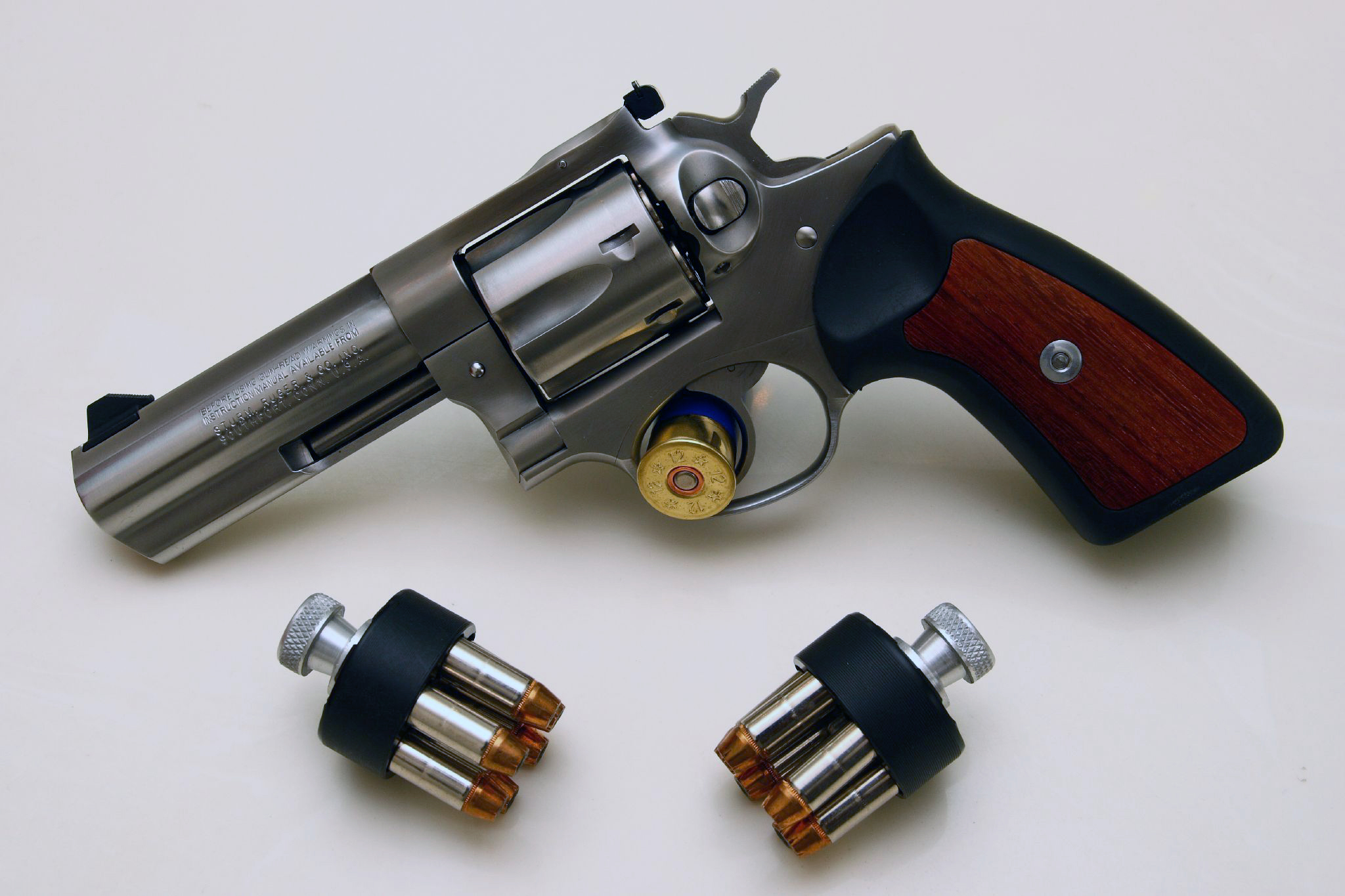
There is a reason the .357 Magnum revolver still has a devoted following. It is mechanically straightforward, tolerant of long periods of storage, and able to chamber both .357 Magnum and .38 Special. That dual-caliber flexibility is exactly the sort of practical perk people start valuing when supply chains stop being dependable.
A revolver can also be comforting in rough conditions because it is less sensitive to ammunition power and does not rely on detachable magazines. For some owners, that simplicity inspires real confidence.
The drawbacks are capacity, slower reloads, and a bulkier profile than many modern pistols. Still, as a durable sidearm with field utility and strong defensive credibility, the .357 wheelgun remains a very sensible pick.
AR-15 in 5.56 NATO

The AR-15 in 5.56 NATO is often treated like a culture-war object, but strip away the noise and it is one of the most practical rifles ever made. It is lightweight, accurate, low in recoil, and supported by an enormous ecosystem of parts, magazines, and institutional know-how. In a world where repair and replacement matter, that support network is a serious asset.
It also covers a lot of defensive ground without overburdening the shooter. Fast follow-up shots and easy optics mounting make it effective in capable hands.
Its critics usually point to complexity compared with older manual-action rifles, and that is fair. But if the goal is a realistic defensive rifle that can be kept running, the AR-15 belongs near the top.
AK-Pattern Rifle in 7.62×39

If the AR is the precision-minded modern option, the AK-pattern rifle is the hard-use bruiser. Its reputation rests on durability, loose tolerances, and a willingness to keep working in dirt, neglect, and rough weather. In a grid-down scenario, that reputation carries obvious appeal.
The 7.62×39 cartridge also offers solid punch at realistic distances, especially for a rifle expected to do general-purpose defensive work. Many shooters appreciate the platform’s straightforward feel and robust magazines.
The tradeoffs are usually weight, recoil, and less refinement than a well-set-up AR. Quality can also vary widely depending on the maker. Still, a good AK remains one of the most believable choices for long-term hard service.
Lever-Action Rifle in 30-30

The lever-action 30-30 still makes sense because America is full of places where it has always made sense. It is handy, familiar, and entirely capable inside the distances where a lot of hunting and rural defense actually happen. In thick woods, on a farm, or around a homestead, its balance of power and portability feels refreshingly honest.
There is also something valuable about a platform with a long record of real-world use. Ammunition and parts may not rival the AR universe, but the cartridge remains common enough to stay relevant.
You give up capacity and reload speed compared with detachable-magazine rifles. Even so, the 30-30 lever gun remains a highly practical choice for those who want proven utility without modern tactical complexity.
Pistol-Caliber Carbine

The pistol-caliber carbine is the quiet achiever of practical firearms. Chambered in rounds like 9mm, it gives shooters an easier-to-handle long gun with mild recoil, good controllability, and often shared ammunition or magazines with a sidearm. In a prolonged crisis, simplifying logistics is more than convenient. It can shape what remains usable over time.
These carbines are especially appealing for home and property defense at short to moderate range. They are approachable for newer shooters and often easier to suppress where legal.
No one should confuse a PCC with a true rifle-caliber carbine when distance or barrier performance matters. But for close-in utility and household commonality, it is a very smart middle-ground option.