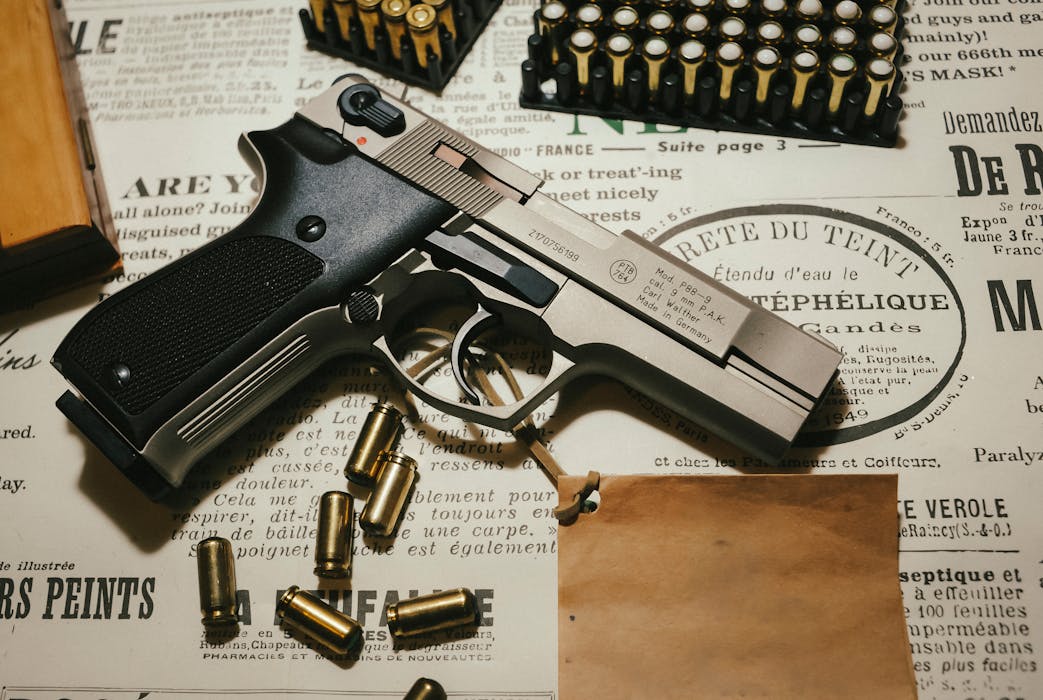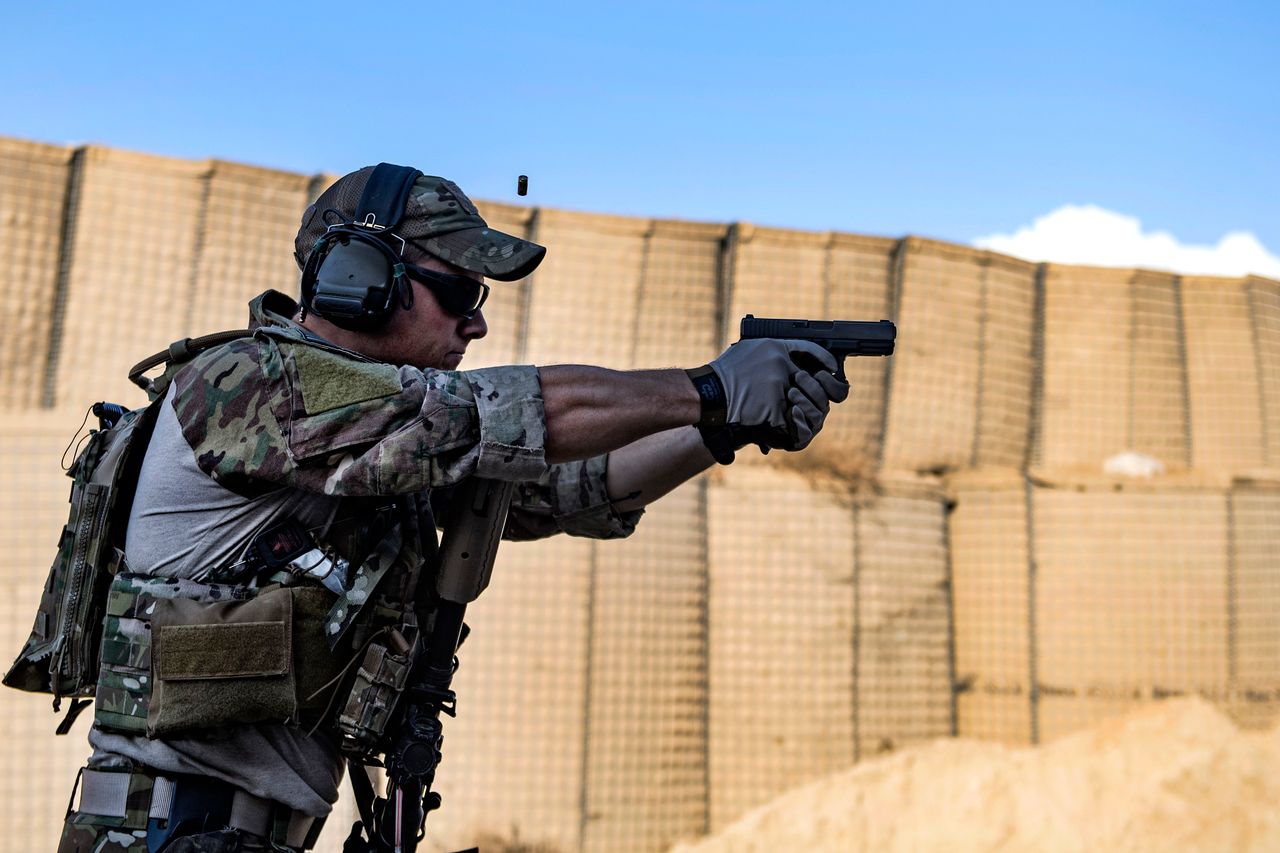
Few firearm debates last as long as Glock versus Sig Sauer. But when 500 shooters weighed in, the final margin left very little room for suspense.
Why This Rivalry Still Gets Shooters Talking
Glock and Sig Sauer sit at the center of the modern handgun conversation for good reason. Both brands have deep law enforcement and military ties, both have loyal fans, and both offer pistols that are trusted for concealed carry, home defense, training, and duty use. Yet they appeal to shooters in very different ways, which is exactly why comparisons between them never seem to die.
Glock built its reputation on simplicity, ruggedness, and consistency. The Austrian company’s polymer-frame striker-fired pistols changed the market by giving shooters a lighter sidearm with fewer parts and a famously straightforward manual of arms. Ask longtime owners why they stay with Glock, and the answer is usually some mix of reliability, cheap magazines, abundant parts, and a trigger feel that stays familiar from model to model.
Sig Sauer, by contrast, often wins people over with feel and refinement. Even shooters who do not consider themselves brand loyal will often say a Sig simply feels better in the hand. From the classic P226 line to the wildly successful P320 and P365 families, Sig has built a reputation for ergonomics, shootability, and feature-rich designs that feel a step more premium right out of the box.
That split matters because this rivalry is not really about which company can build a functioning handgun. Both clearly can. It is about which brand better matches what most shooters value most when they are spending their own money and staking confidence in a sidearm they may carry for years.
What 500 Shooters Voted For and Why the Gap Stood Out

In a 500-shooter vote, the striking takeaway was not just who won, but how decisively the winner separated itself. Glock pulled ahead early and never really gave Sig Sauer a realistic chance to close the gap. That kind of result usually points to one thing: broad trust across multiple kinds of shooters, from first-time buyers to seasoned range regulars.
When a vote becomes lopsided, it usually means the winner is scoring well in the categories people care about most. With Glock, those categories are easy to identify. Buyers know what they are getting; holster support is enormous, magazines are widely available, aftermarket upgrades are everywhere, and the pistols have a long track record of functioning under neglect, hard use, and inconsistent ammo conditions.
Sig Sauer did not lose because shooters dislike the brand. In fact, many who prefer Glock still speak highly of Sig. The issue is that admiration does not always translate to majority preference. A pistol can be more comfortable, more feature-rich, or more attractive, but still lose to a model line that people see as simpler to maintain, easier to source, and more predictable in long-term ownership.
That helps explain why the winner was never close. In large opinion pools, practical advantages tend to beat niche strengths. The broader the group, the more often the vote shifts toward durability, affordability, consistency, and familiarity rather than toward refinement alone.
Reliability and Durability Usually Decide These Fights
If there is one category that consistently dominates handgun buying decisions, it is reliability. This is where Glock has spent decades building a nearly unmatched public reputation. The phrase “it just runs” follows Glock everywhere, and while that may sound like marketing shorthand, it reflects countless real-world user experiences from law enforcement qualification lines to civilian range bags that get little maintenance between outings.
Glock’s design philosophy contributes heavily to that image. Fewer controls, a consistent trigger system, corrosion-resistant finishes, and a reputation for digesting a wide range of ammunition all matter to ordinary buyers. A person choosing a carry gun is rarely shopping for romance. They are shopping for confidence, and Glock has become almost synonymous with that idea.
Sig Sauer also produces highly reliable pistols, and many agencies and armed professionals trust them daily. The P226 earned a legendary service reputation, while the P320 and P365 lines became major commercial and institutional successes. Still, Sig has at times dealt with more public controversy surrounding platform changes, upgrade programs, and model-specific debates than Glock generally has in the striker-fired mainstream.
Fair or not, reputation compounds over time. A buyer hearing ten years of praise about Glock’s endurance is likely to reward that brand in a vote. When respondents are asked to choose one name they trust most, durable simplicity often beats everything else on the ballot.
Ergonomics, Trigger Feel, and Shootability Favor Sig for Many

This is where Sig Sauer makes the debate interesting, because for many shooters, the first magazine tells a different story than the vote total. Pick up a Sig P320, P365 XMacro, or classic metal-frame P226, and the immediate impression is often excellent grip shape, useful factory sights, and a shooting experience that feels polished. For some hands, Sig simply points more naturally than Glock.
Trigger feel also plays a major role in why Sig earns passionate loyalty. While factory Glock triggers are functional and predictable, they are not usually described as impressive. Sig’s triggers, depending on the model, are often seen as cleaner or more refined out of the box. That can matter to newer shooters, who may shoot a Sig better during a first range session and come away convinced it is the superior pistol.
Ergonomics, however, can be deeply personal. Glock’s grip angle has critics, but it also has millions of committed users who train around it or genuinely prefer it. Later generations improved texture, backstrap options, and overall comfort, helping the brand answer one of its most common complaints without abandoning its basic identity.
So why did Sig not win if it often feels better in the hand? Because range comfort is only one part of the buying decision. Many voters clearly prioritized what happens after the purchase: upkeep, parts, carry ecosystem, training familiarity, and proven consistency across years of use.
Price, Aftermarket Support, and Everyday Ownership Matter More Than People Admit
A lot of handgun debates pretend they are purely about performance, but ownership is about far more than how a pistol feels for 50 rounds at the range. Glock has long dominated the practical side of the equation. The pistols are generally priced competitively, magazines are affordable, spare parts are easy to find, and nearly every holster maker, sight company, and accessory brand supports the platform.
That creates a strong value loop. A buyer gets a pistol with a proven track record, then discovers that everything needed to support it is everywhere and often cheaper than competing options. Need ten magazines, a quality inside-the-waistband holster, steel sights, and a replacement recoil spring? Glock owners can usually solve that shopping list quickly and without overspending.
Sig Sauer can absolutely compete on features, and in some models, it offers more from the factory. Better sights, modularity, optics-ready slides, and upgraded textures can make a Sig feel like a more complete package on day one. But that premium feel often arrives with a higher price tag, and long-term accessory costs can add up faster for budget-conscious shooters.
In a 500-person vote, those ownership realities loom large. People remember not only what they shot well, but what was easy to live with. Glock’s landslide strength often comes from winning the entire ownership experience, not just the firing line.
Where Sig Sauer Still Clearly Wins

Even in a one-sided vote, there are areas where Sig Sauer deserves real credit. Concealed carry is a major one. The P365 changed the carry market by packing impressive capacity into a very compact package, and competitors spent years chasing the formula. For many buyers, especially those prioritizing slim dimensions without giving up round count, Sig did not just compete; it led.
Sig also wins with shooters who want variety within a premium ecosystem. The company offers striker-fired carry guns, full-size duty pistols, modular chassis systems, and respected hammer-fired classics. That breadth attracts enthusiasts who enjoy trying different formats while staying within one brand they trust. Glock’s lineup is coherent and proven, but it is also more uniform in feel and philosophy.
There is also the simple matter of shootability for certain users. Some people shoot Sig pistols faster and more accurately with less adjustment. Better stock sights, more hand-friendly contours, and a more refined trigger can narrow the learning curve. For those shooters, “best” is not theoretical. It is the gun that prints tighter groups and inspires more confidence today.
That is why the brand remains so strong despite losing the broader vote. Sig may not have captured the majority, but it still owns several categories that matter intensely to specific shooters, and those strengths are not going away anytime soon.
What the Results Really Mean for Buyers
The big lesson from a 500-shooter vote is not that Sig Sauer makes inferior pistols. It is that Glock has become the default answer for a huge portion of the shooting public because it checks more boxes for more people. When a brand is trusted for reliability, simple operation, affordable support, and consistent performance, it tends to dominate broad surveys even against excellent competition.
For first-time buyers, that matters. A one-sided result suggests there is safety in choosing the platform with the widest support network and the most universally understood manual of arms. In practical terms, that can mean easier training, cheaper magazines, more holster options, and fewer surprises over the life of the gun.
For experienced shooters, the takeaway is more nuanced. If ergonomics, trigger feel, factory features, or concealed-carry innovation matter most, Sig Sauer remains a compelling choice and sometimes the better one. Plenty of highly knowledgeable shooters prefer Sig for exactly those reasons, and they are not wrong to do so.
Still, the vote says what it says. When 500 shooters were asked to choose between Glock and Sig Sauer, Glock did not merely edge ahead. It owned the middle ground where most real buyers live, and that is usually where these battles are decided.