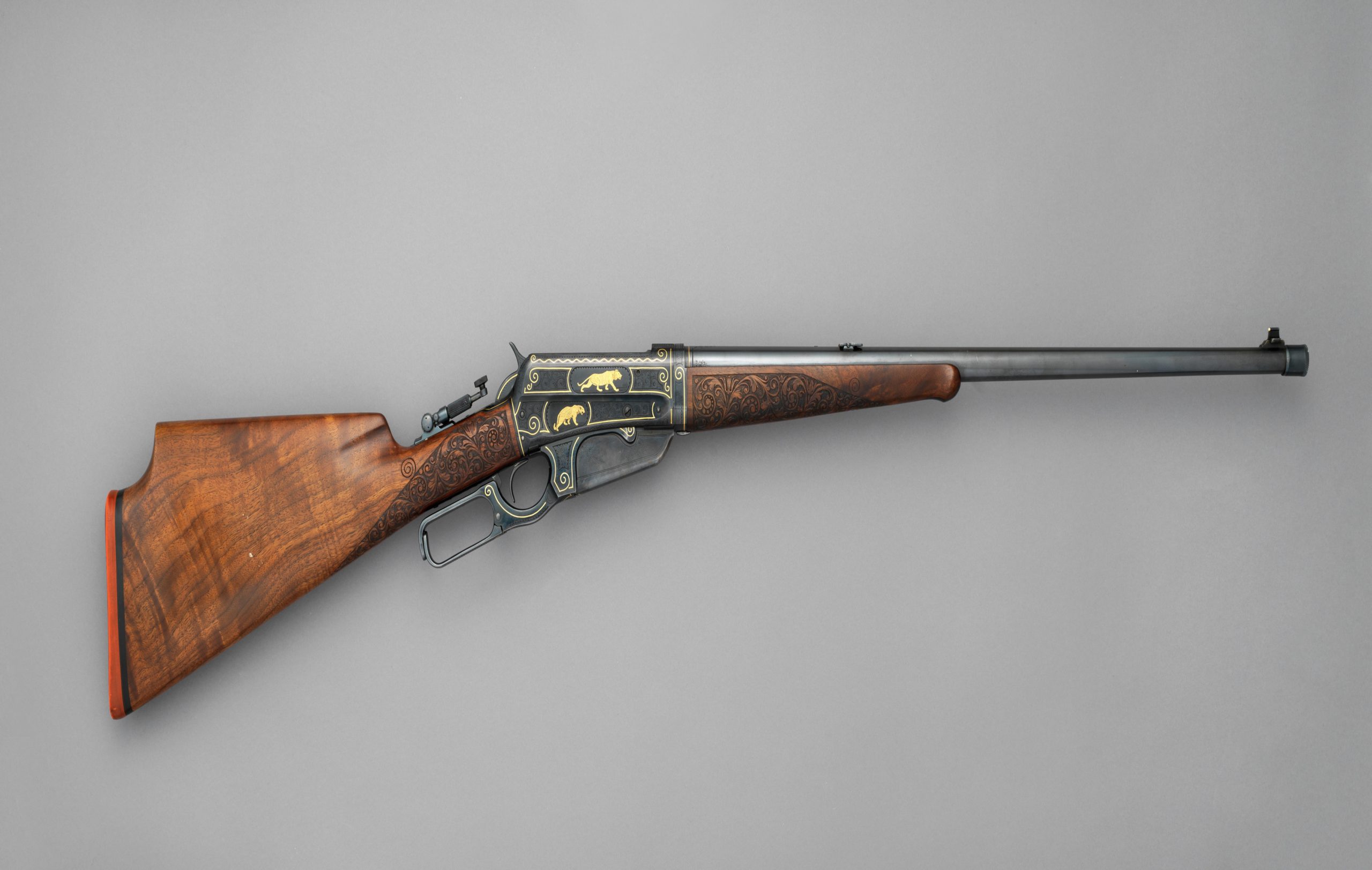
It looked like a lever gun, but it was really a bridge to a new ballistic age. The Winchester Model 1895 succeeded because John Browning designed it for a future many shooters still distrusted.
A lever action built for a changing world

By the mid-1890s, rifle design was being pushed hard by smokeless powder. Compared with black powder, the new propellant delivered higher velocity, flatter trajectories, and far less fouling, but it also demanded stronger actions and better ammunition handling.
Winchester’s own historical timeline says the Model 1895 was introduced with an internal box magazine specifically to handle modern pointed bullets. That mattered because the traditional tube magazine under most lever guns worked best with flat- or round-nose bullets, not the sharper projectiles that defined modern military cartridges.
John Browning saw the shift early. According to Winchester and the Winchester Collector organization, the 1895 was engineered around the new class of high-power smokeless cartridges rather than adapted reluctantly after the fact.
Why the box magazine changed everything
The genius of the Model 1895 was not just that it was stronger. It was that its fixed box magazine solved the geometry problem that had limited earlier lever rifles.
In a tube magazine, cartridges rest nose to primer. With pointed bullets under recoil, that arrangement raised obvious safety concerns, especially as smokeless loads increased pressure and performance. Winchester’s own Model 1895 manual still describes the rifle as the lever action that first handled jacketed, pointed bullets and smokeless powder together.
That gave hunters and soldiers access to better ballistics without giving up lever-gun speed. It also made the 1895 look strangely modern beside earlier Winchesters, with its slab-sided receiver and magazine projecting below the action.
The cartridges that proved the idea
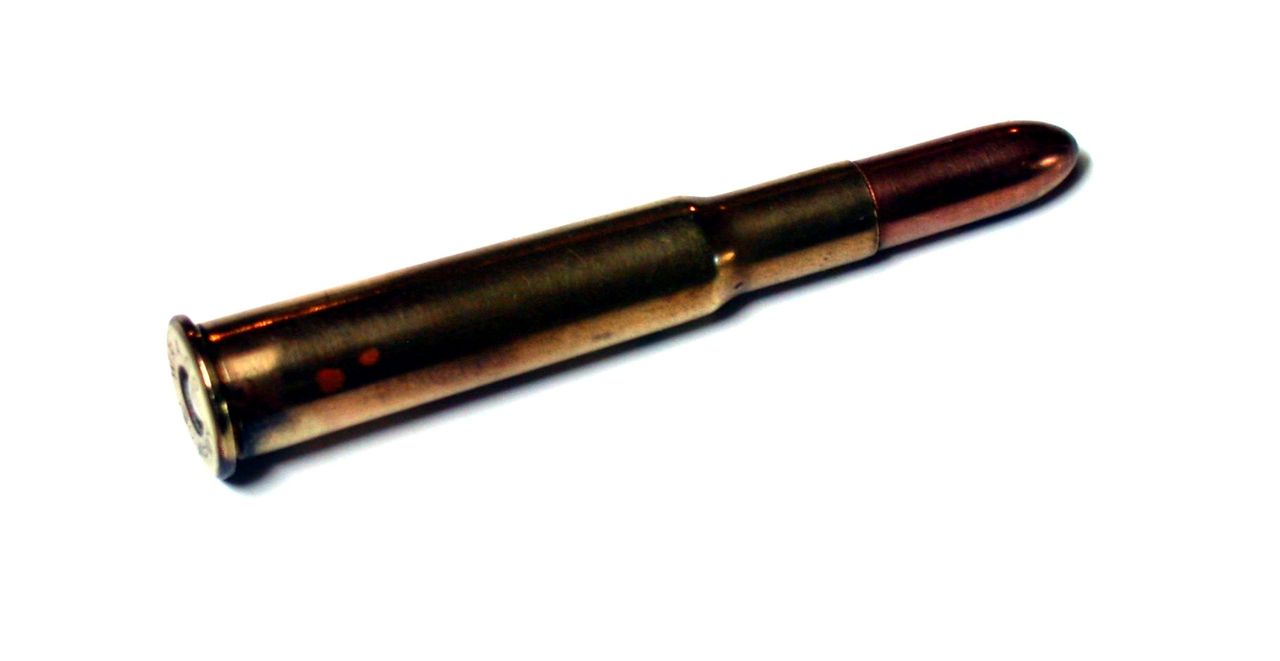
The Model 1895 was introduced in .30-40 Krag, with later chamberings including .303 British, .35 W.C.F., .405 Winchester, .30-03, and eventually .30-06. That list tells the story better than any advertisement could.
These were not nostalgic frontier rounds. They were military and high-velocity sporting cartridges tied directly to the smokeless era. American Rifleman notes that the rifle could safely handle .30-40 Krag and later the .30-03 and .30-06, which placed a lever gun squarely in competition with the most advanced rifle ammunition of its day.
In other words, the 1895 was not merely surviving the transition. It was participating in it at full speed.
Roosevelt, war contracts, and real-world credibility
The rifle’s reputation got a major lift from Theodore Roosevelt. The Winchester manual notes his famous praise, and Winchester Collector preserves his description of the .405 as “the medicine gun for lions.”
That kind of endorsement mattered because Roosevelt was no showroom spokesman. He used Model 1895 rifles on his 1909 African safari, helping cement the rifle’s image as a serious big-game arm rather than a technological curiosity.
Military interest added another layer of proof. American Rifleman reports that Russia bought roughly 293,816 Model 1895 muskets in 1915-1916, nearly half of total production. Those rifles even used stripper-clip guides, showing how far the design could be stretched toward modern service-rifle practice.
Why shooters hesitated anyway
For all its advantages, the Model 1895 arrived during a period of genuine uncertainty. Smokeless powder was better, but “better” in the 1890s often meant unfamiliar pressures, unfamiliar maintenance, and unfamiliar trust.
Shooters knew what black powder did. They understood the smoke, the fouling, and the trajectory. Smokeless powder felt like a leap into a more technical world, and early adopters were asking a lot of their rifles, barrels, and ammunition makers.
That helps explain why the 1895 was so important. Browning did not ask the market to trust smokeless powder on faith alone. He gave it a lever gun purpose-built to manage the new cartridges safely, practically, and with familiar handling.
The Model 1895’s real legacy
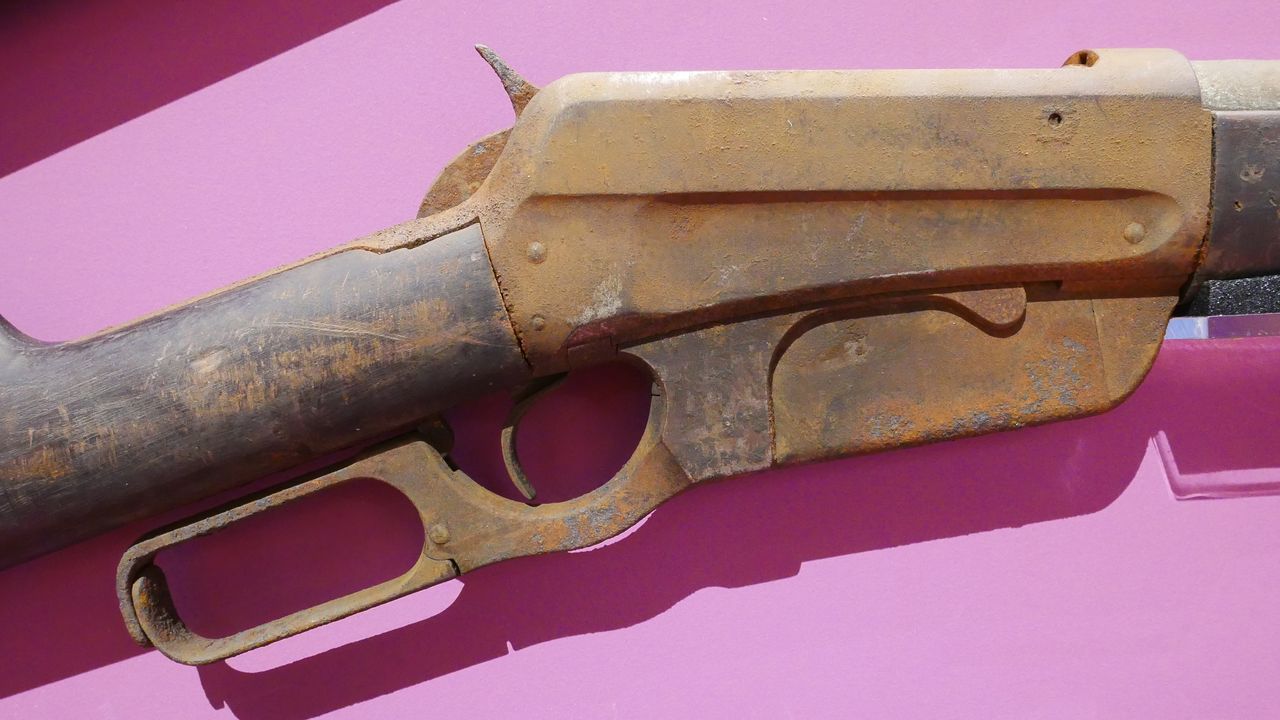
The Model 1895 was Browning’s last lever-action design for Winchester, and it ran from 1895 to 1936, with total production around 425,000 according to American Rifleman. More than 3/4 of those were muskets, which says plenty about how seriously governments took the design.
Its long-term legacy is easy to miss because bolt actions ultimately owned the smokeless age. They were simpler to scope later, easier to manufacture for military use, and eventually cheaper for many shooters.
But the Winchester 1895 deserves credit as the lever gun that met smokeless powder head-on. Before the shooting public fully trusted the new propellant, Browning had already built the rifle that proved a lever action could belong in the modern era.