Some war heroes arrive in uniform. Others show up as strays.
A Dog Walks Into Camp
In the summer of 1917, soldiers of the 102nd Infantry Regiment were training around the Yale Bowl in New Haven, Connecticut, when a stub-tailed stray wandered into camp. The men took to him immediately, and Private Robert Conroy gave him the name Stubby.
What began as camp amusement quickly became something more. According to the Smithsonian and Connecticut military historians, Stubby attached himself so completely to the regiment that he became its mascot almost by force of personality.
That mattered more than it sounds. World War I regiments often embraced mascots, but few animals bonded so fully with one unit that soldiers treated them almost like a comrade before they ever saw combat.
Smuggled Into A World War
There was one problem: pets were not supposed to go overseas. When the 102nd shipped out for Europe in late 1917, Conroy smuggled Stubby aboard the transport headed to France.
The dog stayed hidden long enough to avoid being left behind. By the time officers discovered him, Stubby had already charmed the men and, in the best-known version of the story, even saluted well enough to win over a commanding officer.
From that point on, he was no longer just tolerated. The Smithsonian notes that he was effectively allowed to accompany the Yankee Division forward as its official mascot, an extraordinary promotion for a dog that had started as a camp stray.
The Mascot Learns The Battlefield
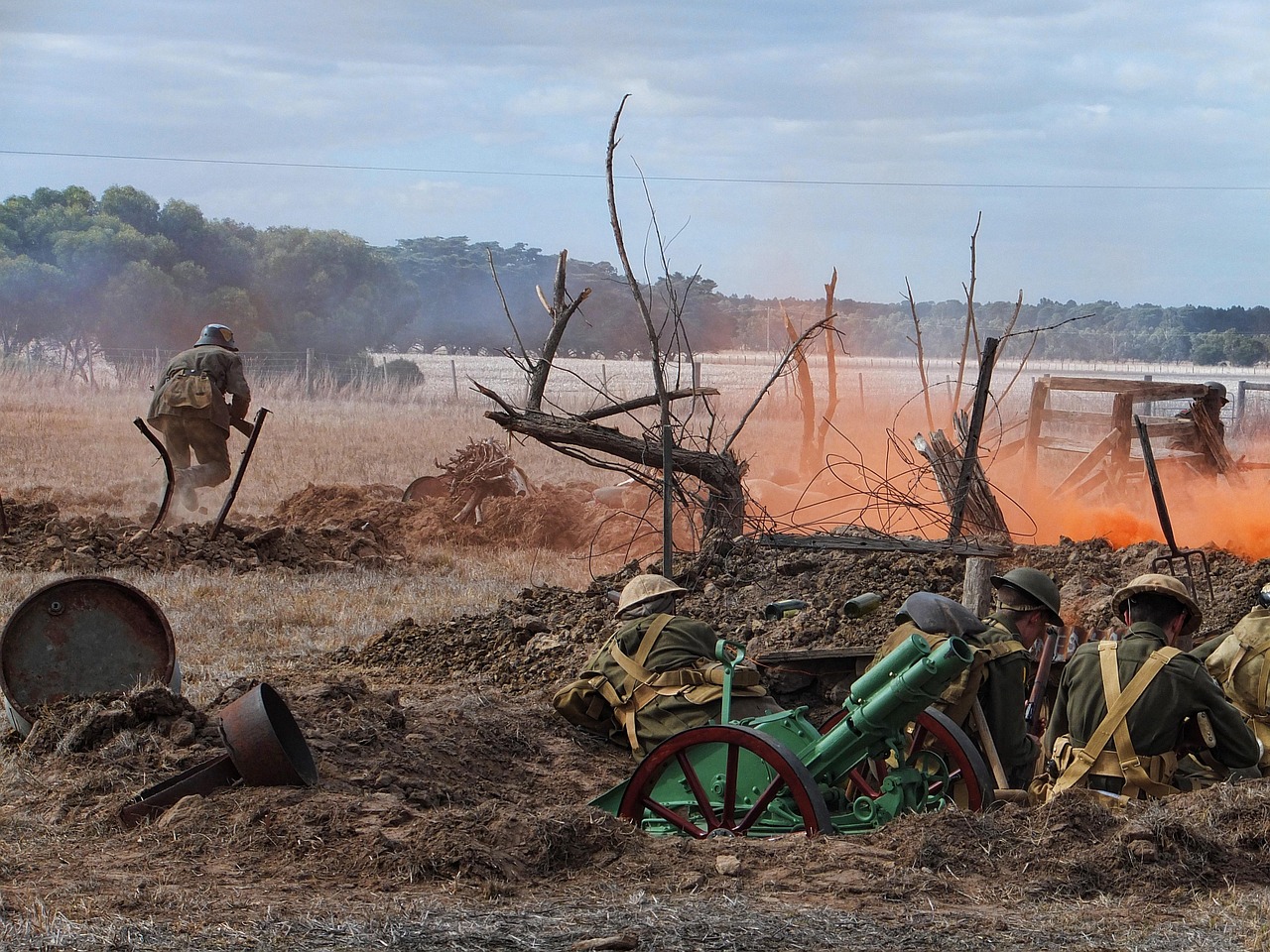
Stubby’s transformation happened at the front. The 102nd Infantry entered some of the hardest fighting of the war in 1918, and Stubby adapted to shellfire, trenches, mud, and gas attacks with a speed that stunned the soldiers around him.
Accounts preserved by the Connecticut Military Department say he learned to warn troops of incoming gas by reacting before many men noticed danger. In a war where poison gas could kill or maim in minutes, early warning was no small contribution.
He was also injured himself. Stubby reportedly suffered wounds from shell fragments and gas exposure, then returned to duty after recovering, which only deepened his reputation inside the regiment.
Why Soldiers Saw More Than A Mascot
Mascots do practical work in wartime, but their emotional role can be even bigger. In the claustrophobic misery of trench warfare, Stubby gave exhausted soldiers something alive, familiar, and unbroken to rally around.
That psychological lift was real. Men living with constant artillery, disease, and death often formed fierce attachments to anything that represented home, humor, and loyalty, and Stubby delivered all three in a compact, fearless package.
He also seemed to understand routine and rank. Stories from the era describe him recognizing bugle calls and participating in camp life in ways that made him feel less like decoration and more like a fully enlisted member of the outfit.
The Deeds That Built A Legend
Stubby’s fame rests on more than morale. The most repeated stories credit him with locating wounded soldiers, warning of gas, and once helping capture a German soldier by latching onto the man until Americans arrived.
Some details have been polished by time, as happens with nearly every wartime legend. Still, the core facts are consistent across Smithsonian and Connecticut state accounts: Stubby served at the front, endured combat, was wounded, and emerged celebrated by the men who fought beside him.
That is the key distinction. He was not made famous after the fact by distant admirers alone. His legend started with veterans of the 102nd, the people in the best position to know whether the dog had earned his reputation.
Promotion, Medals, And Public Fame
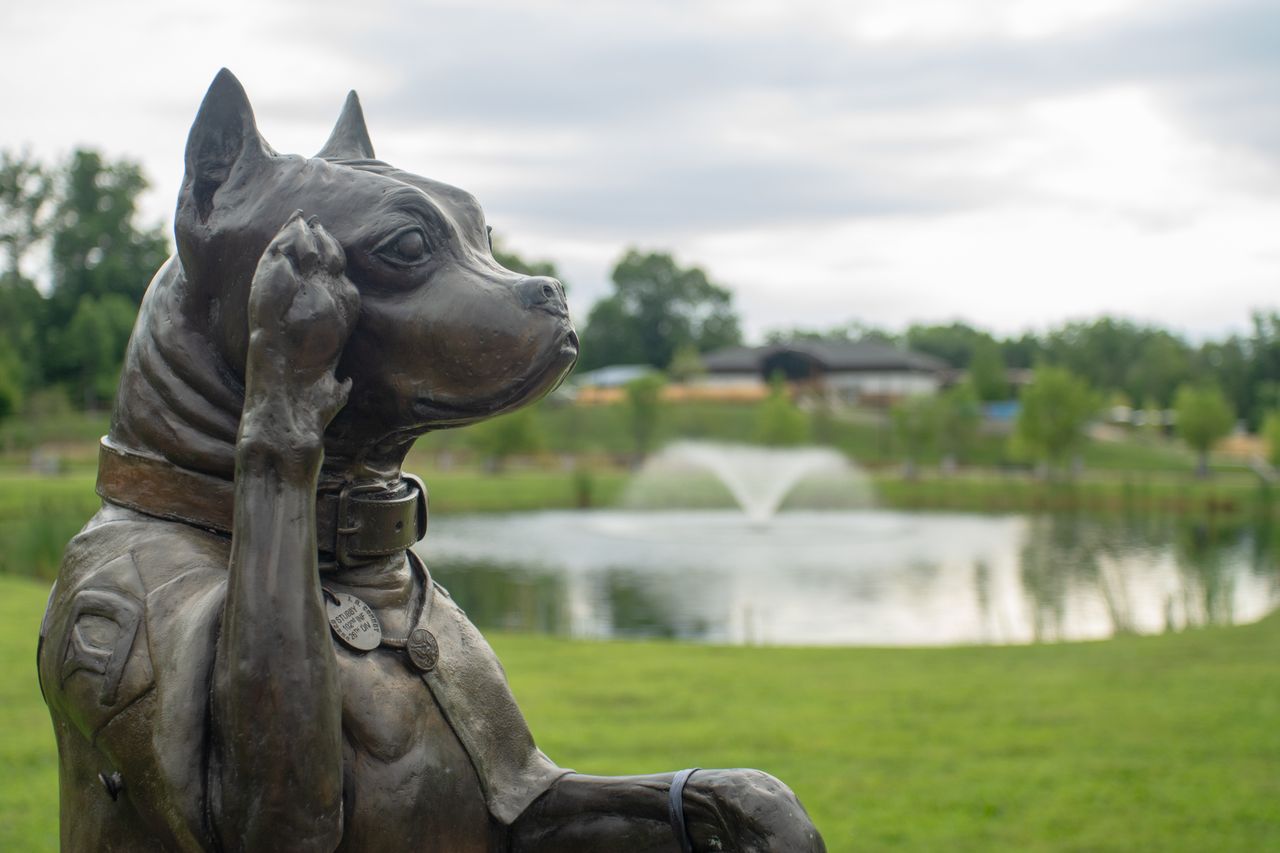
Stubby’s rise from mascot to “Sergeant” was unofficial, but it stuck because it captured how soldiers viewed him. The Smithsonian says he was promoted after combat service, and Connecticut sources note that General John J. Pershing later pinned a hero dog’s gold medal on him in 1921.
Back home, he became a national celebrity. He marched in parades, met presidents, and was embraced by veterans’ groups at a time when Americans were still trying to process the scale of World War I.
That celebrity was not just sentimentality. Stubby gave the public a story of courage small enough to grasp and vivid enough to remember, which is often how history turns one unit’s mascot into a lasting American icon.
Why Stubby Still Matters
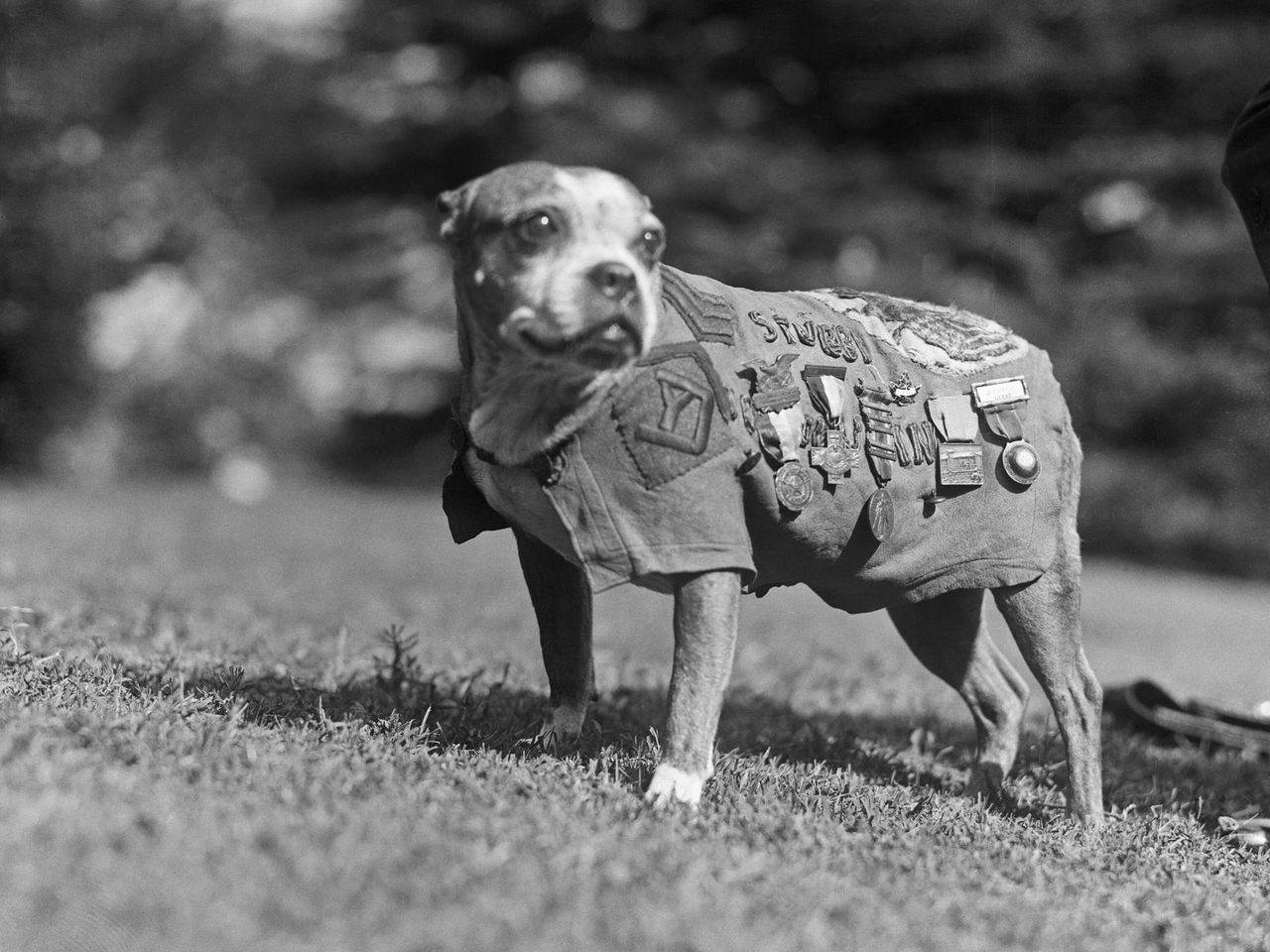
Sergeant Stubby died in 1926, but his story never really disappeared. His preserved remains entered the Smithsonian’s collection in 1956, where the dog who once crossed the Atlantic in secret became part of the official national memory.
That arc is what makes the tale so durable. A stray wandered into camp, earned a regiment’s trust, survived the Western Front, and came home decorated, famous, and deeply loved.
For a general audience, that story still lands because it compresses the chaos of war into one unforgettable figure. Stubby reminds us that heroism does not always look grand at first glance; sometimes it has short legs, a damaged tail, and perfect timing.