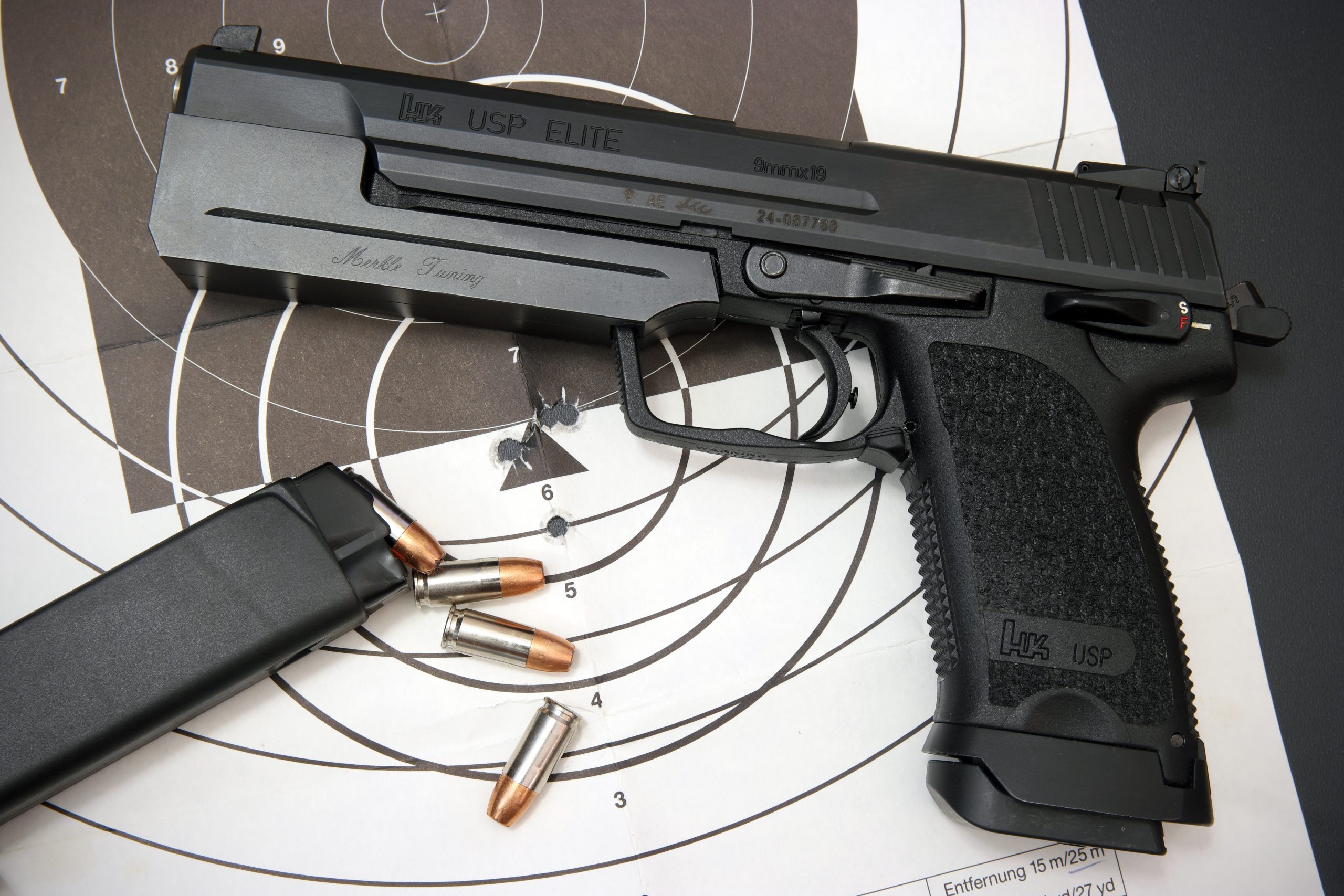
The Heckler & Koch USP arrived during a period when American military and law-enforcement organizations were demanding pistols that could combine reliability, durability, modern materials, and flexible controls. Developed with the American market firmly in mind, the USP shared important technological ideas with HK’s work on the SOCOM Mark 23 program. It was never ultimately selected as the U.S. military’s standard sidearm, but its testing history and design features helped establish the USP as one of HK’s most enduring handgun families.
1. It Was Designed With America in Mind
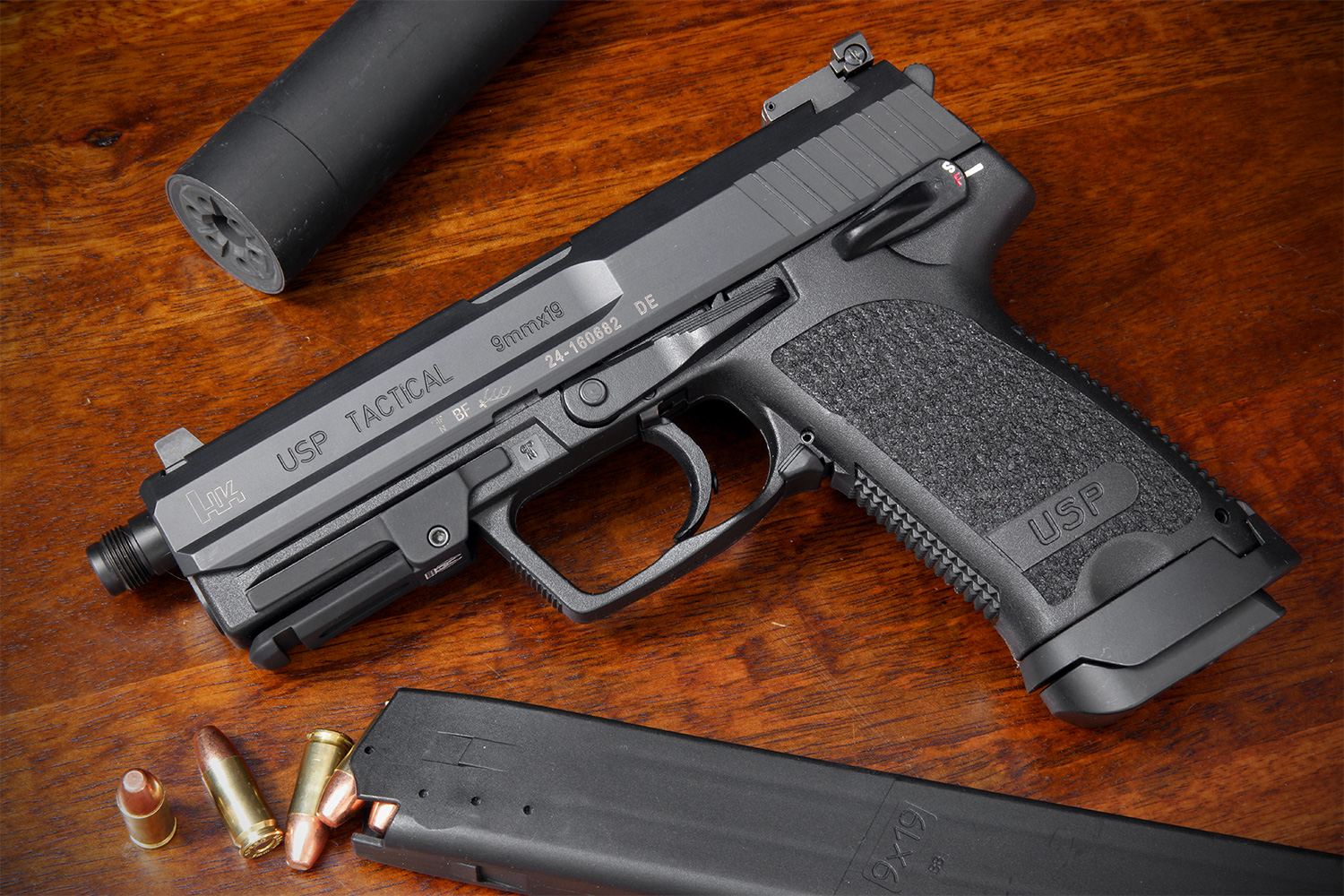
The USP was deliberately created to appeal to American shooters rather than simply being another European pistol imported into the United States. HK began its new-pistol development around 1989, studying what American military, police, and civilian users wanted from a modern handgun. Development was substantially advanced by 1991, while the separate SOCOM Offensive Handgun Weapon System program was also taking shape. The first USP production models appeared in 1993, initially in 9mm and .40 S&W. That timeline explains why the pistol arrived with features tailored to American preferences instead of copying an older European service design.
2. Its Connection to the Mark 23 Was Real but Complicated
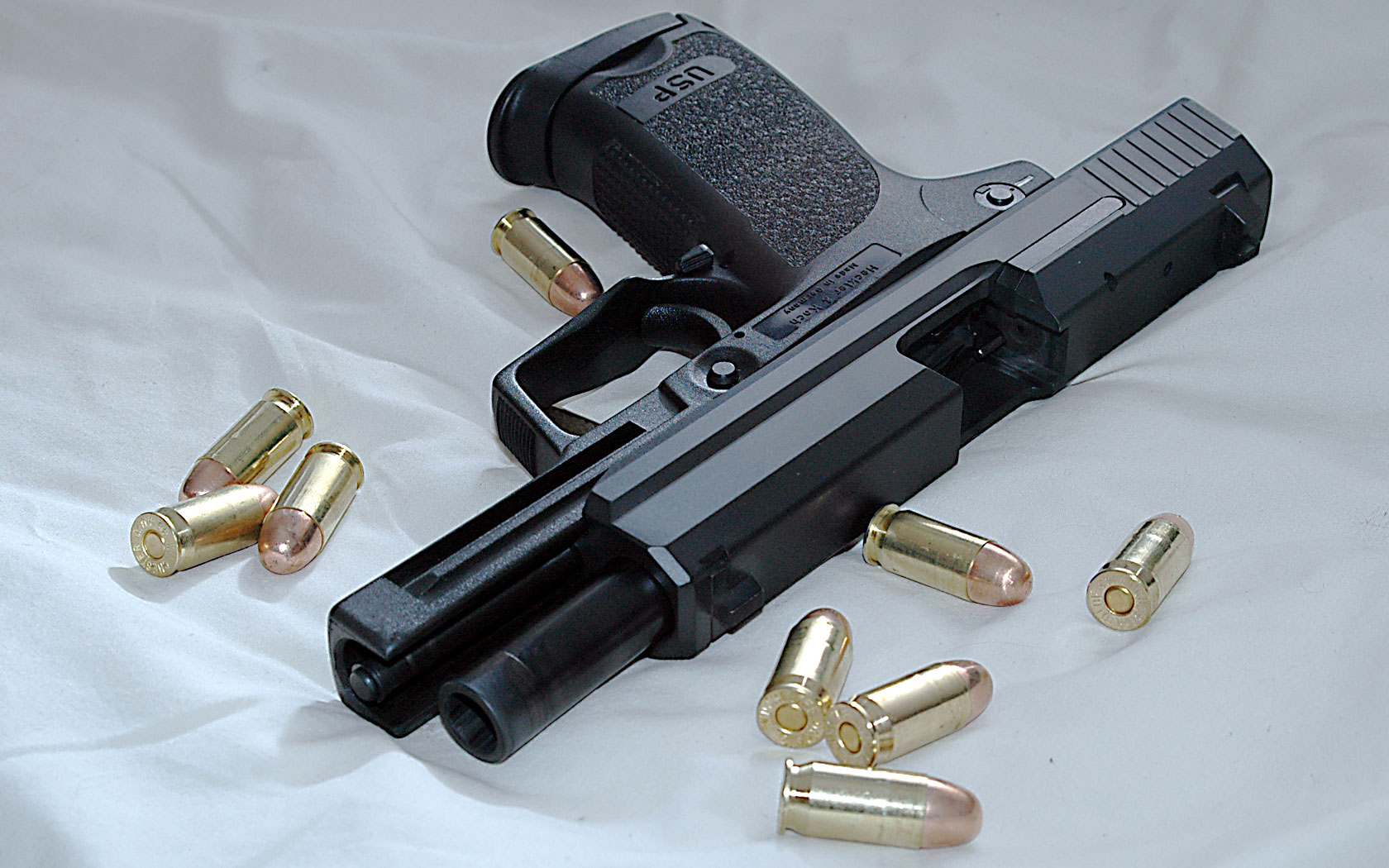
The USP and the SOCOM Mark 23 were developed during overlapping periods, which often leads to the mistaken idea that one pistol was simply a smaller version of the other. In reality, HK developed the two programs independently, although engineering ideas and testing experience influenced both projects. The Mark 23 was created specifically for the U.S. Special Operations Command’s OHWS requirement, while the USP was intended as a broader service and commercial pistol. HK also states that the USP’s recoil-reduction technology was tested in the Mark 23 program. Their relationship was therefore close, but not a straightforward parent-and-child design story.
3. The Recoil System Was One of Its Biggest Innovations
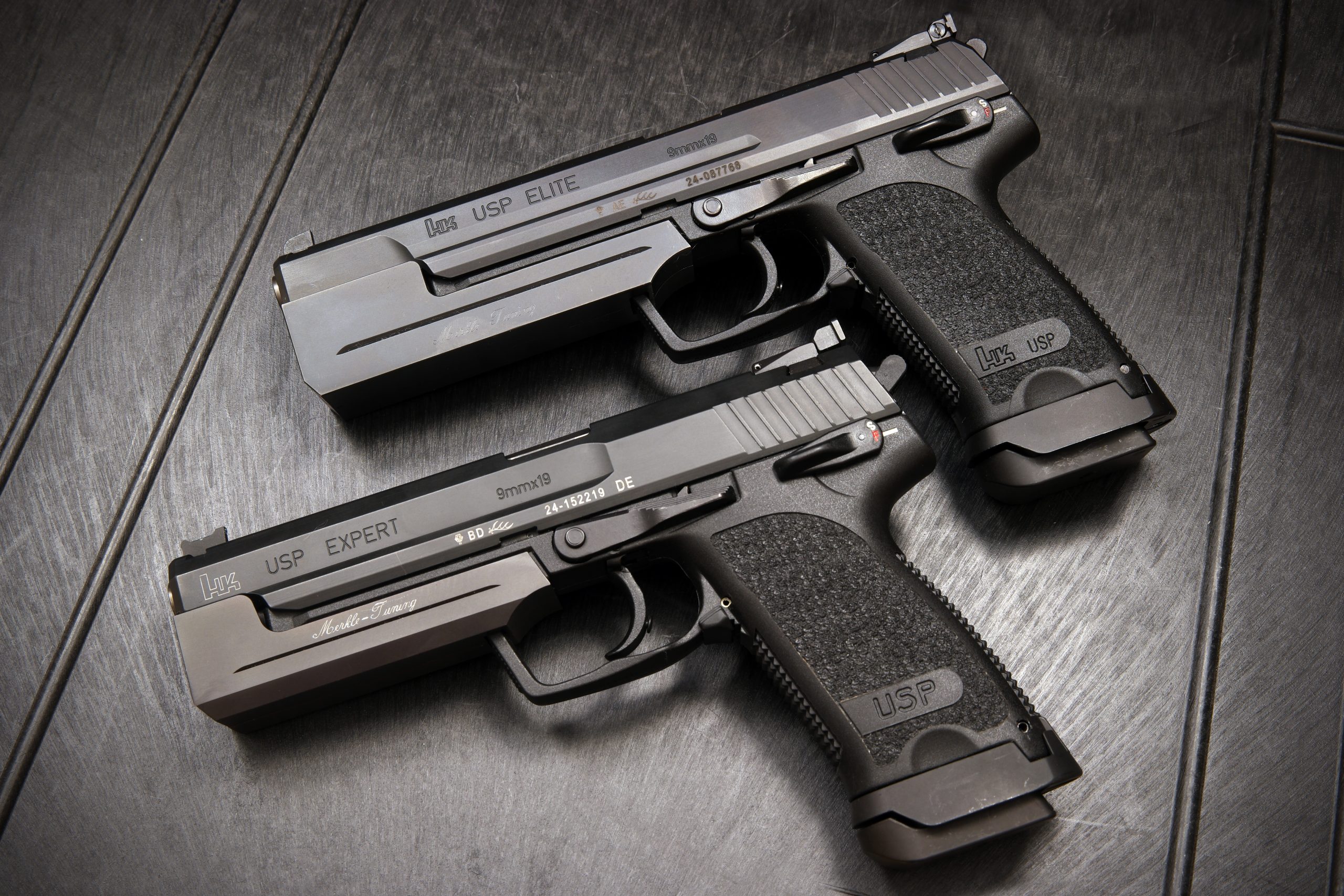
HK gave the full-size USP a distinctive recoil-reduction system intended to lessen the forces transmitted through the pistol during firing. Rather than requiring special ammunition settings or complicated user adjustments, the system was designed to function across USP models without routine maintenance changes. HK also notes that the technology was tested and proven during development of the Mark 23 for SOCOM. The USP used a modified Browning-type operating system, combining a familiar locking principle with HK’s own recoil-management approach. This helped make the pistol unusually durable while giving its engineering a distinct identity among contemporary service handguns.
4. It Could Be Configured in Nine Trigger Variants
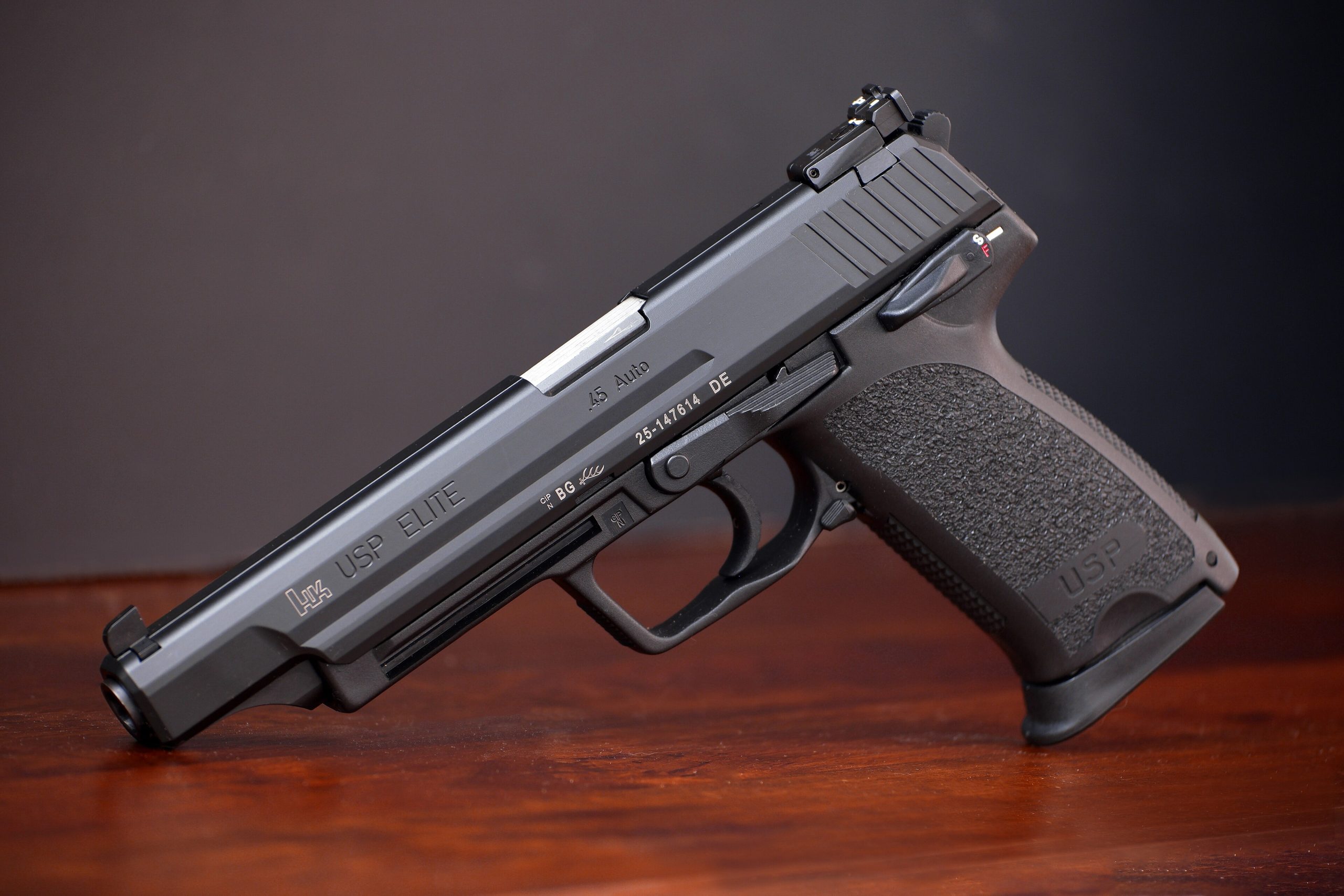
One of the USP’s most unusual features was its modular control system. Depending on configuration, the pistol could be supplied with different combinations of double-action, single-action, decocking, and safety functions. HK lists 9 trigger and firing-mode variants for the USP family, including versions with controls arranged for left- or right-handed users. The control lever itself could also serve different purposes depending on the selected variant. This flexibility meant agencies were not locked into one trigger philosophy. Instead, an organization could choose a configuration that matched its training system, handling preferences, and operational requirements without redesigning the entire pistol.
5. Polymer Made the USP Lighter Without Making It Fragile
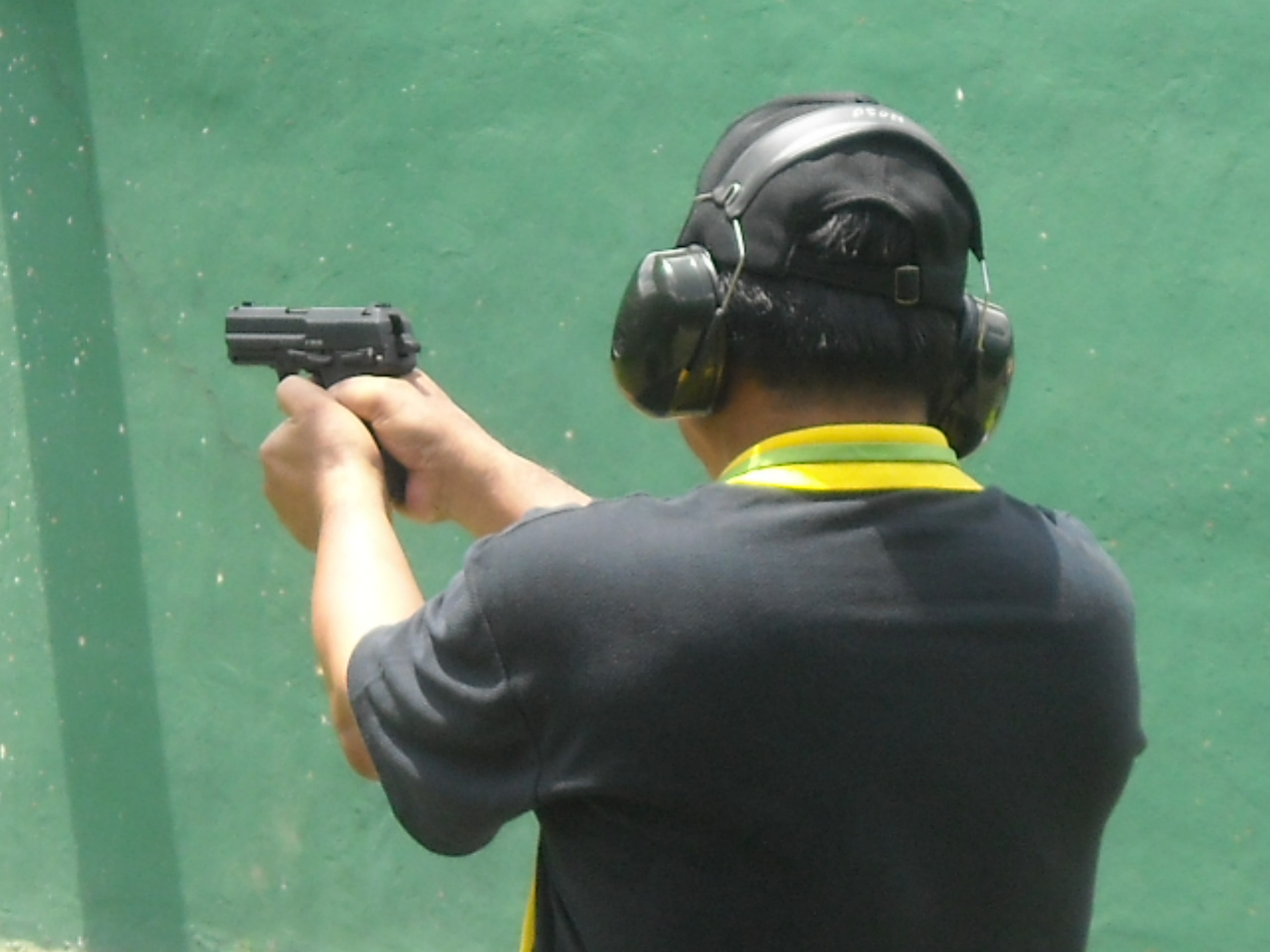
The USP used a fiber-reinforced polymer frame strengthened with stainless-steel inserts at areas experiencing significant stress and friction. That combination allowed HK to reduce unnecessary weight while retaining a robust structure around critical components. A standard USP9 weighs approximately 1.65 lb, while the .45 ACP USP45 is about 1.74 lb according to HK specifications. The full-size USP9 measures roughly 7.64 inches long and has a 4.25-inch barrel. These figures show how HK balanced a substantial service-pistol footprint with materials that were considerably lighter and more corrosion-resistant than an all-metal construction.
6. The USP Was Built Around Three Major Calibers
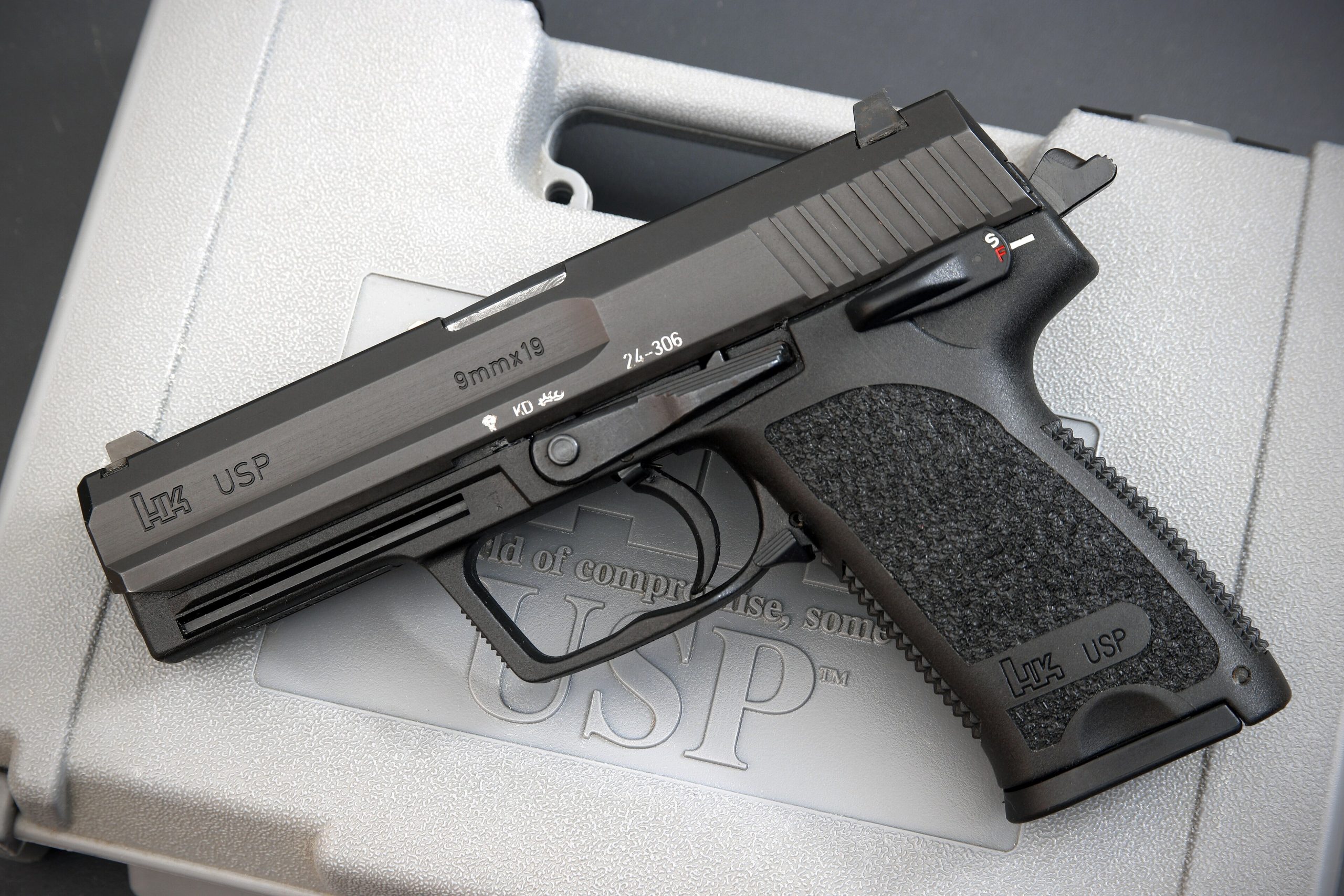
The original USP family was unusually versatile because HK designed it around several major handgun cartridges. The lineup included 9mm, .40 S&W, and .45 ACP, allowing users to select a caliber according to mission requirements or institutional preference. The standard USP9 carries 15 rounds, the USP40 holds 13, and the USP45 holds 12 in HK’s published specifications. That combination of caliber choice and capacity helped the pistol compete in a rapidly changing American handgun market during the 1990s. It also demonstrated that the USP was intended as a broad platform rather than a single-purpose military sidearm.
7. Its Durability Became Part of the USP Reputation
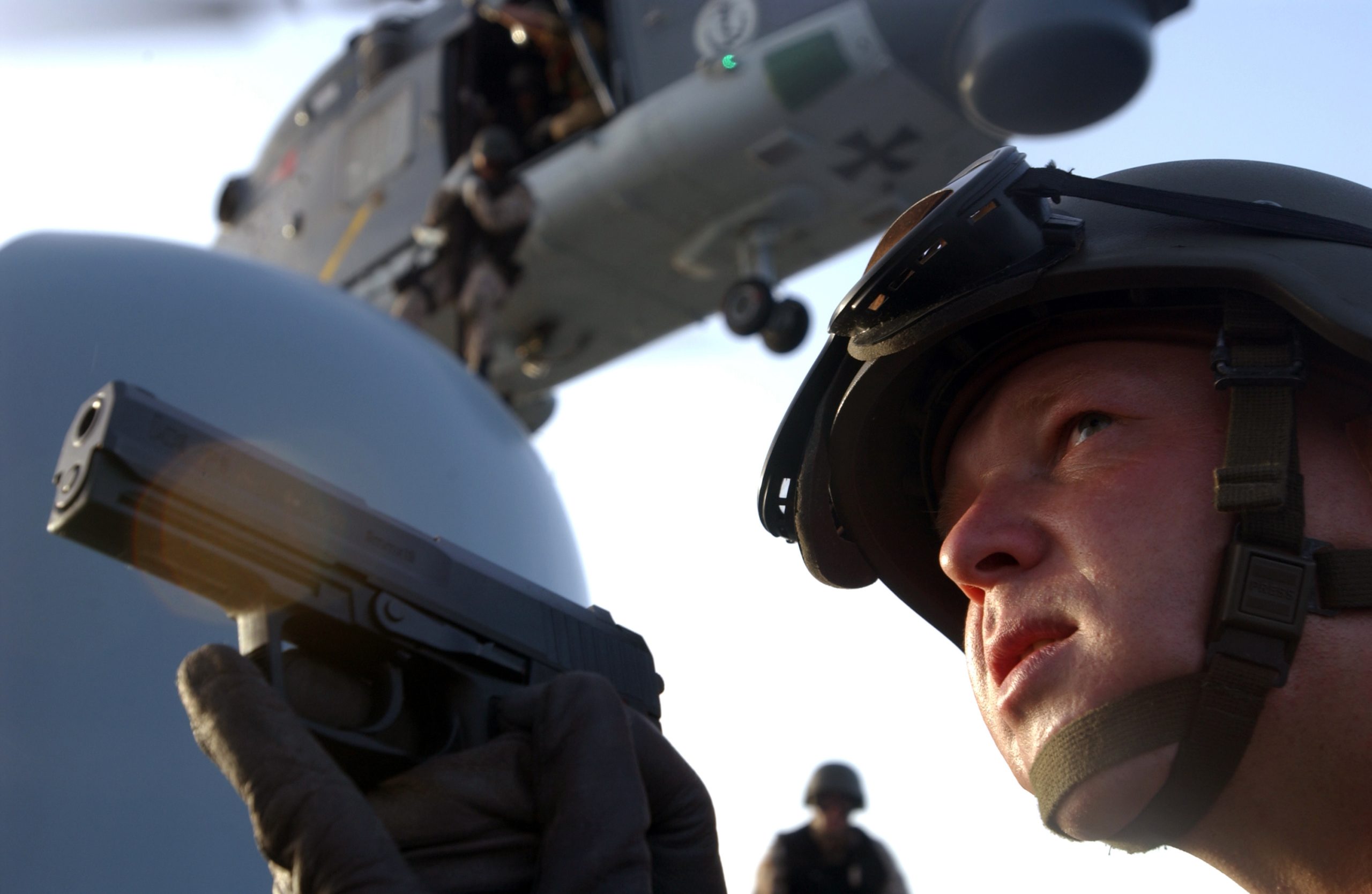
HK engineered the USP around components intended to survive demanding service conditions, including a corrosion-resistant polymer frame, machined-steel slide, and durable barrel construction. The company also used a polygonal bore profile on later USP barrels, citing benefits including easier cleaning, increased velocity, and extended barrel life. The design was built around a modified Browning locking system rather than an exotic operating principle. That mixture of conventional mechanics and carefully engineered materials gave the USP a reputation for toughness without making the pistol dependent on an unusually complicated operating system. Its appeal came from combining proven fundamentals with HK-specific refinements.
8. It Came Close to the Military World Without Becoming the Standard
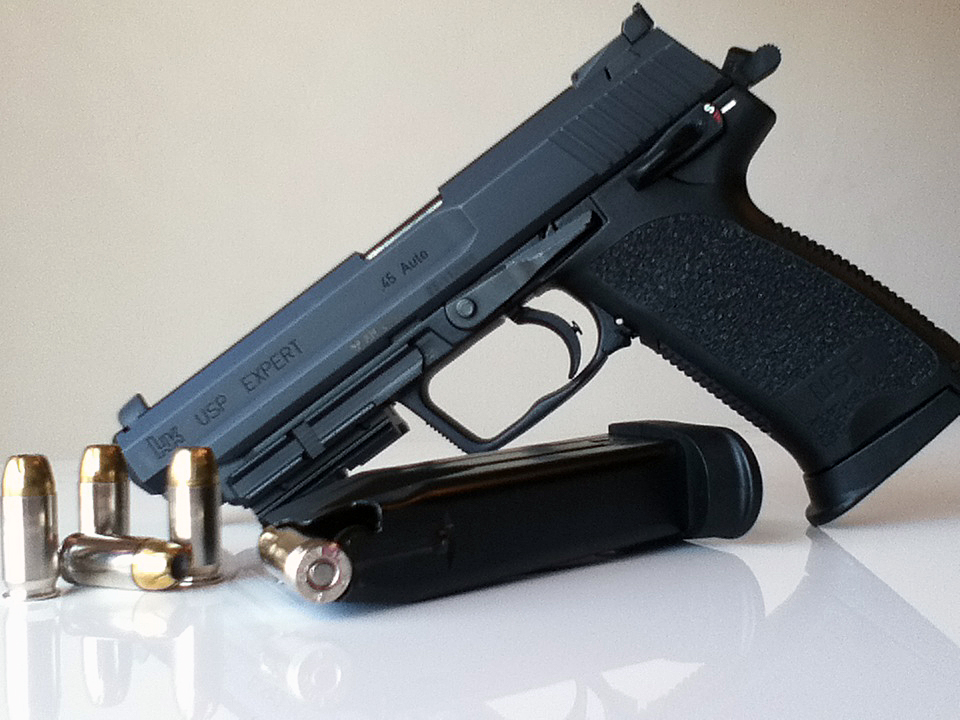
The USP’s most interesting historical detail is that its development occurred alongside serious U.S. military handgun testing, yet the pistol itself never became America’s standard service sidearm. Instead, the related Mark 23 program produced the MK23 Mod 0, which was adopted for SOCOM. The USP remained a major commercial and law-enforcement success, while later versions such as the USP Compact expanded the family further. HK introduced the compact model in 1997, giving users a smaller platform while retaining the family’s core design philosophy. The USP therefore occupied an unusual place in military history: closely connected to a successful U.S. special-operations program, extensively evaluated, but ultimately never selected as America’s general-issue handgun.