Long before cartridges and swing-out cylinders, a five-shot pistol built in New Jersey changed how people thought about firearms. Samuel Colt’s Paterson revolver sold poorly, and the company behind it folded within six years, yet its mechanics, mistakes, and marketing shaped nearly everything that followed. Gunmakers who studied it picked up lessons about locking, loading, testing, and business that still matter. Here are nine, with the dates, calibers, and figures that make each one clear.
1. A Rotating Cylinder Must Lock Precisely
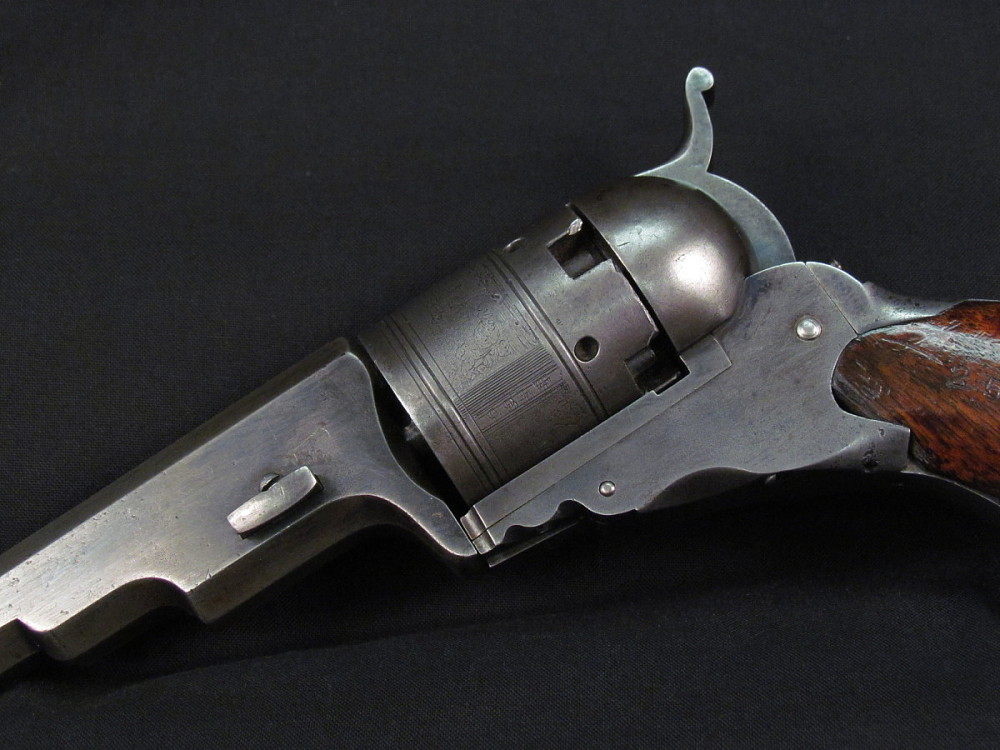
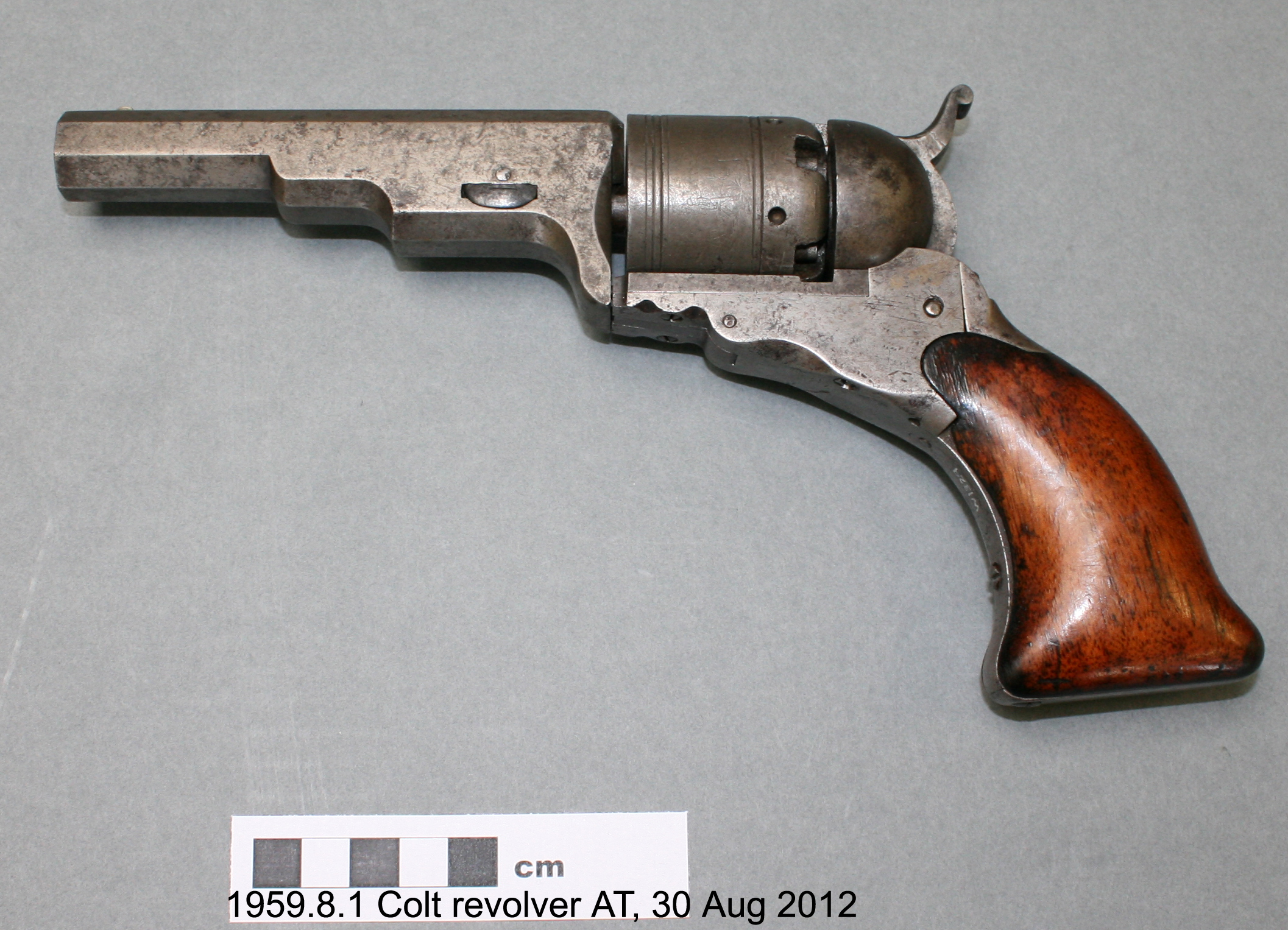
A revolver is only as good as its ability to line up a chamber with the barrel, and the Paterson tackled that problem head-on. Samuel Colt’s 1836 patent tied cylinder rotation to the hammer, so cocking the gun turned the next chamber into place, while a small bolt rose into a notch to hold it. Most Patersons carried five shots, and each chamber had to sit within a hair of the bore, or the bullet would shave lead and scatter at 25 yards. Gunmakers who studied it learned that the hand, the bolt, and the notches must be timed together, a principle that still governs revolvers built today. Colt proved the idea across roughly 2,850 handguns built before 1842.
2. A Hidden Trigger Trades Safety for Fragility
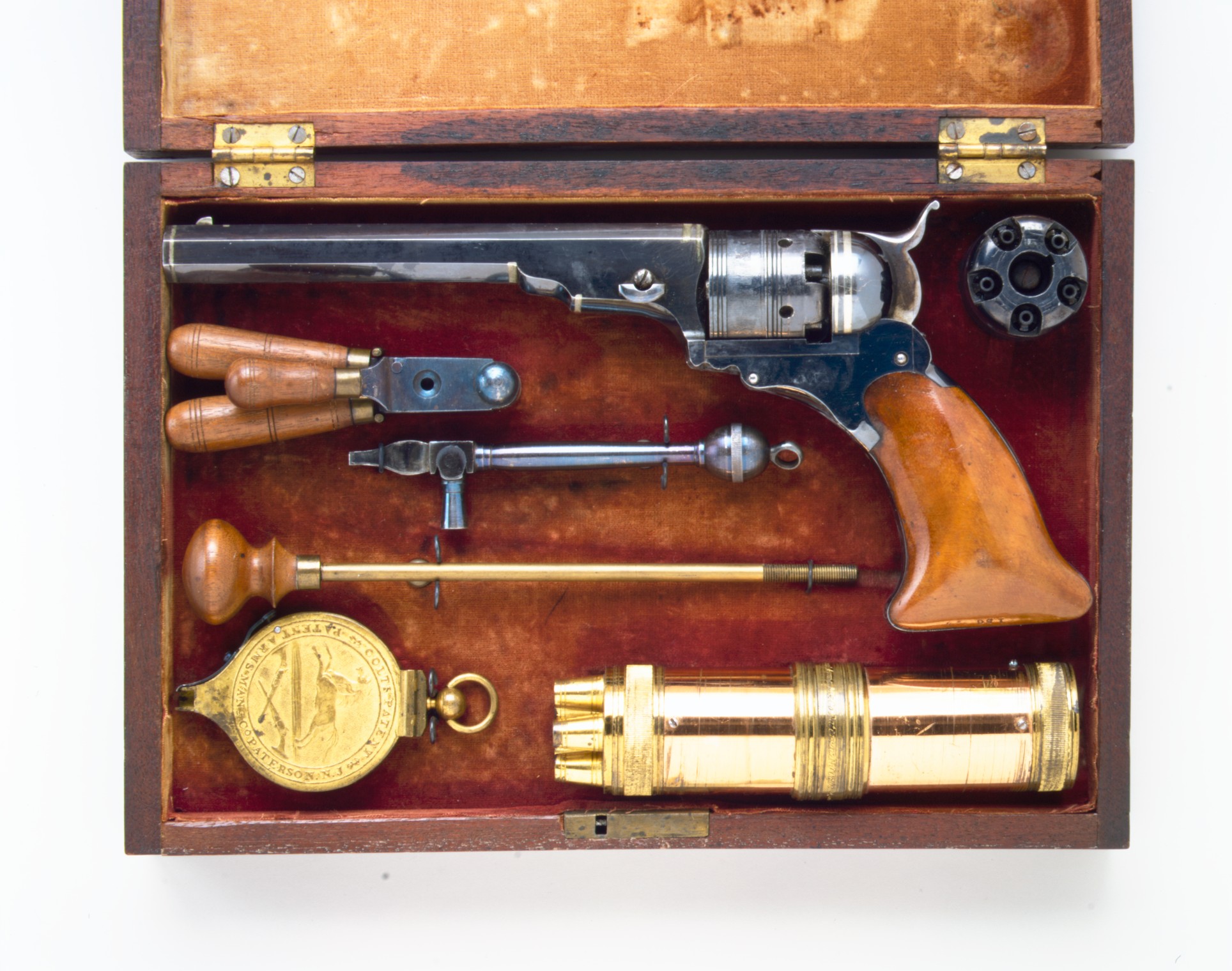
The Paterson had no trigger guard at all, and that odd detail taught makers a lot about carry and safety. Cocking the hammer caused a slim folding trigger to drop out of the frame, ready for the finger, then it tucked away again once the hammer was lowered. The idea kept the profile slim, so a pocket model like the .28 caliber Baby Paterson slipped into a coat with little fuss. It also kept stray fingers off the trigger while the pistol rode in a pocket. The tradeoff was fragility, since the small part could bend or snap under hard use. Later makers, including Colt himself, added a fixed trigger and guard by 1847, a change that survives on nearly every revolver made since.
3. Sealing Each Chamber Prevents Chain Fires
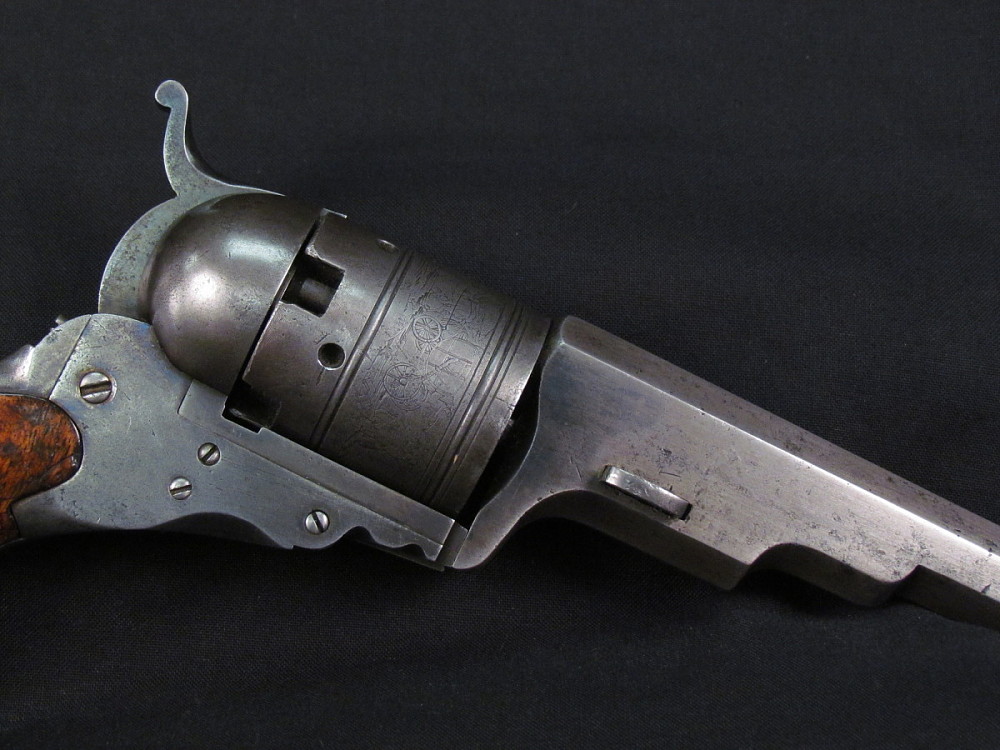
Loose powder and a lead ball in every chamber made fire control a serious puzzle for early gunmakers. Each chamber was loaded from the front, then a percussion cap went onto a nipple at the rear. If flash leaked past a ball, it could ignite neighboring chambers in a chain fire, sending several balls downrange at once. Makers responded with tighter chambers and a smear of grease over each ball, a habit still taught to black powder shooters. A typical .36 charge ran roughly 20 to 25 grains, so even a small leak mattered. A five-chamber cylinder meant five separate chances for trouble. The lesson pushed later designs toward sturdier steel and closer tolerances.
4. Fast Reloading Matters as Much as Fast Firing
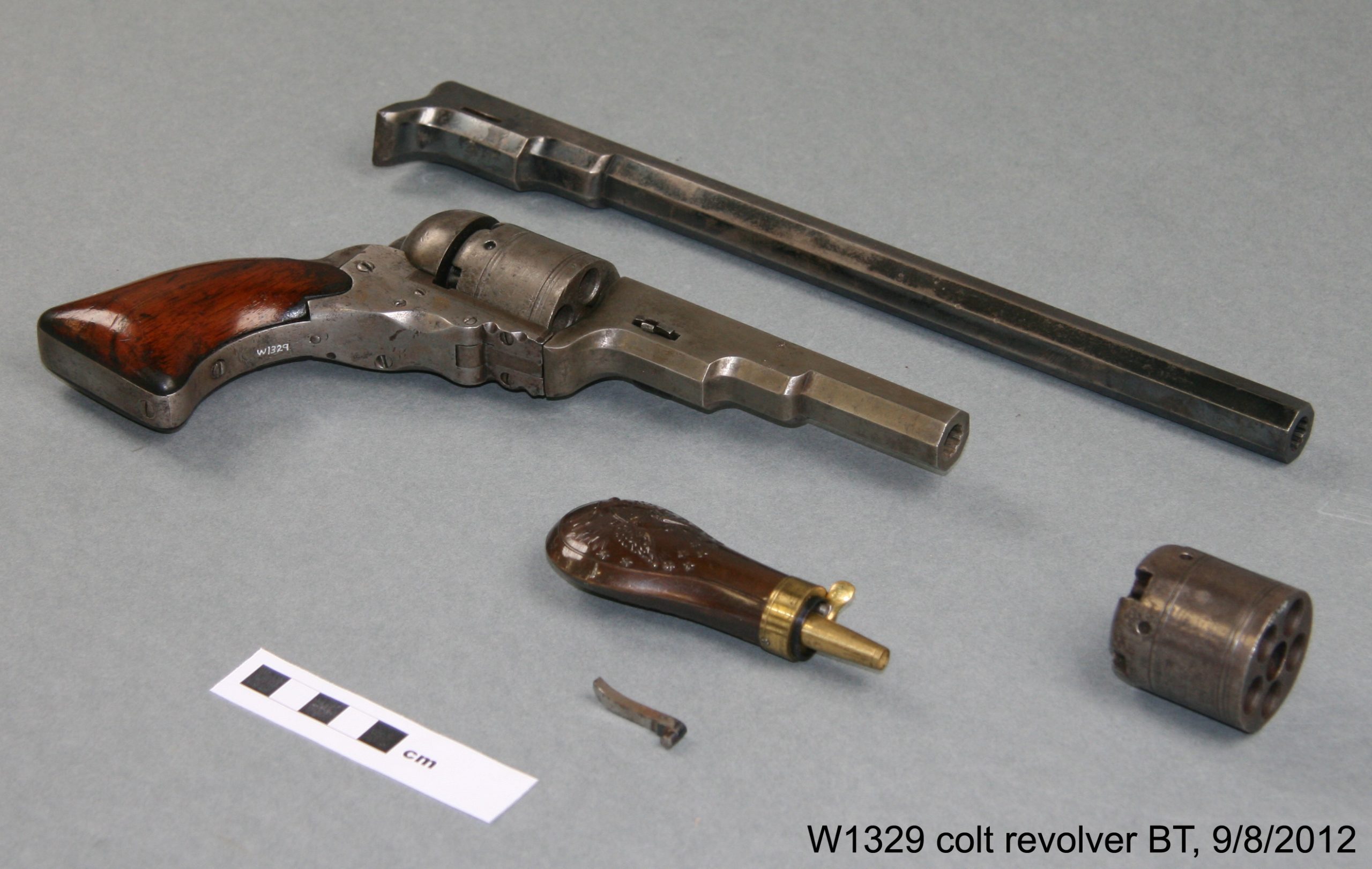
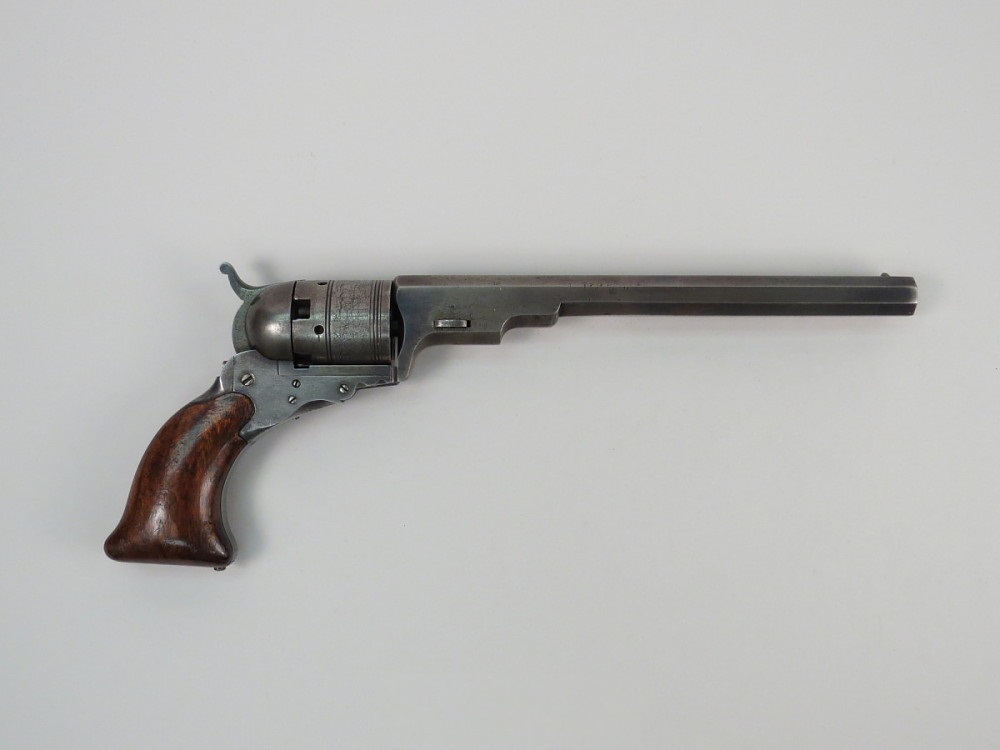
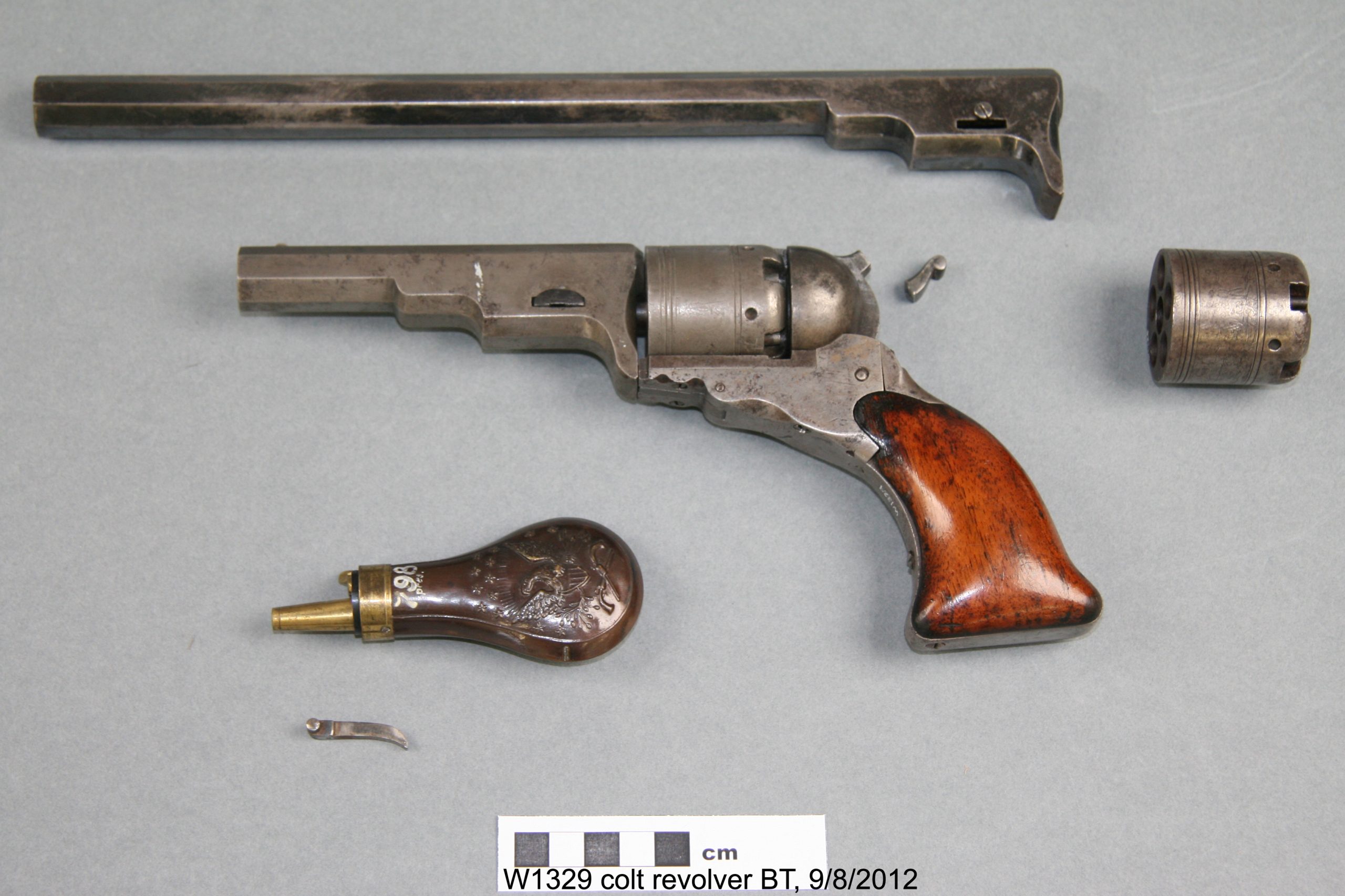
Reloading a Paterson was slow, and that slowness became a lesson in itself. To refill a belt model, the shooter pulled the barrel wedge, slid off the cylinder, charged each of five chambers, and seated the balls with a separate tool. Even a practiced hand needed a minute or more, which is why some men carried spare cylinders. The larger Holster Model added a loading lever beneath the barrel, so balls could be rammed home without a loose tool. Gunmakers realized that a fast reload mattered as much as five quick shots. That idea pushed designers toward the Walker’s attached lever in 1847 and, later, toward cartridge revolvers that arrived in the 1870s. Today a speedloader refills six rounds in roughly 3 seconds.
5. Caliber Should Match the Job
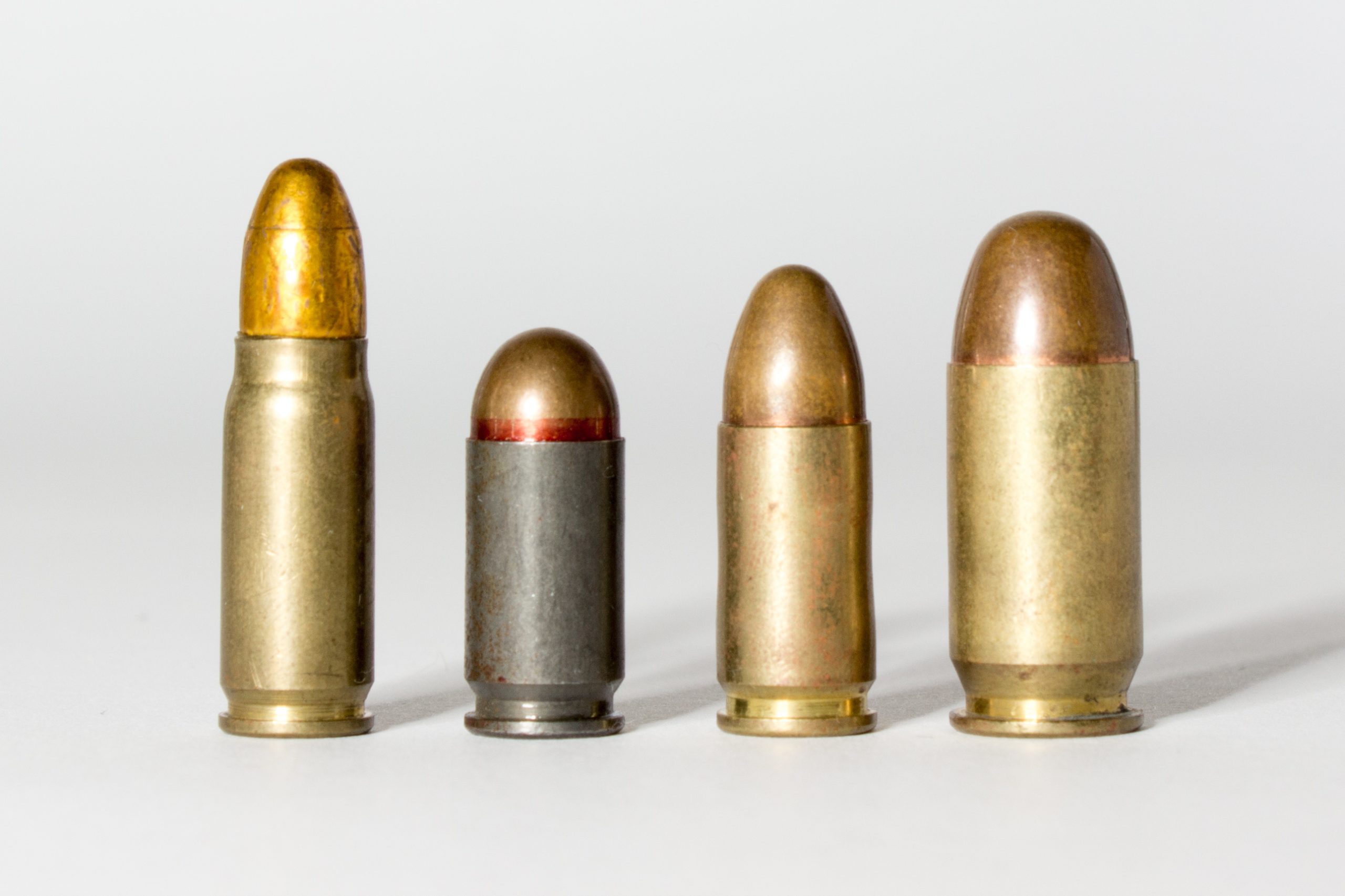
Colt offered his Patersons in four calibers, and the lineup showed how caliber and purpose must match. The Baby Paterson fired a tiny .28 ball, the belt models used .31 or .34, and the big No. 5 Holster Model, later nicknamed the Texas Paterson, took a .36 ball of around 80 grains. Barrels on that big gun ran about 7.5 to 9 inches, and the whole pistol weighed near 2.5 pounds. That heft gave real authority on horseback, while the small pocket guns suited close defense. Makers learned that no single size fits every buyer, so a catalog needs distinct models. Bigger bullets meant stronger frames, which meant heavier guns. The lesson also set up the jump to .44 in the Walker.
6. Field Use Teaches Faster Than Any Workshop
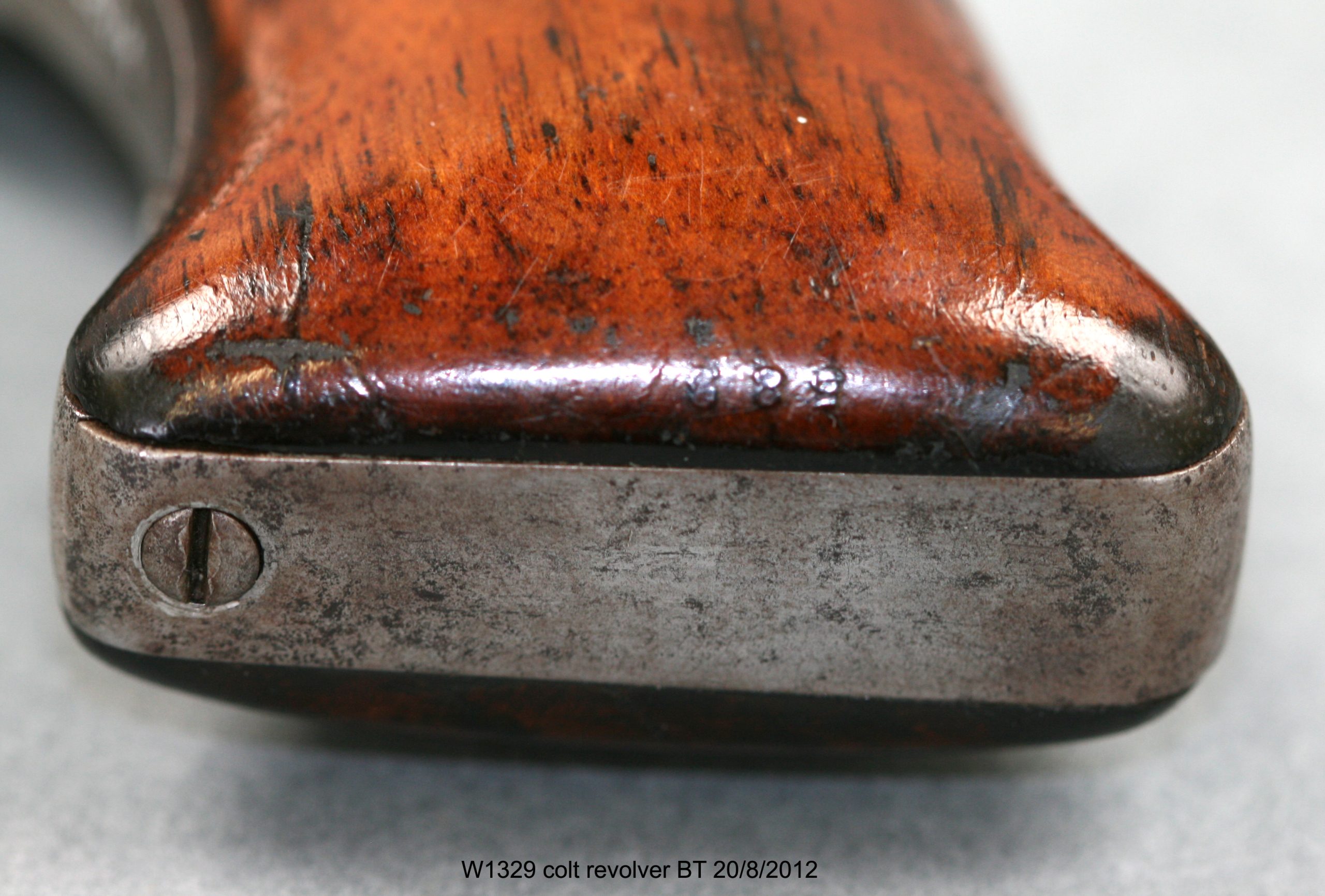
Nothing teaches a gunmaker faster than real use, and Texas gave the Paterson its toughest classroom. The Republic of Texas Navy bought about 180 Holster Models in 1839, and Texas Rangers carried them in frontier scrapes. In June 1844, Captain Jack Hays and about 15 Rangers faced roughly 70 Comanche warriors at Walker’s Creek, and their revolvers let them keep firing after the first volley. Such stories sold guns, but they also exposed weak arbors, loose wedges, and fragile frames under hard riding. Captain Samuel Walker wrote to Colt in 1846 with design suggestions, and that feedback shaped the sturdier 1847 revolver. Smart makers listen closely to the people who actually carry their guns, because real complaints beat any bench test.
7. Machine Work Beats Hand Fitting
The Paterson shop taught Colt that hand fitting could never keep pace with demand. The company itself had raised roughly $230,000 in capital. Machinery cut many parts, yet skilled workers still filed and adjusted pieces, so a cylinder from one gun rarely dropped cleanly into another. Between 1836 and 1842 the plant turned out only a few thousand firearms, a trickle next to what an army needs. Those limits explain why Colt hired Eli Whitney Jr. to build the first 1,000 Walkers at the Whitneyville works in 1847. Later, his Hartford armory refined the approach with true interchangeable parts. Any maker aiming at volume learned that repeatable measurements, jigs, and gauges beat clever filing, and that lesson reshaped American gunmaking.
8. Great Design Still Needs Steady Customers
Even a brilliant design fails without steady customers, and the Paterson company learned that lesson hard. The Army tested Colt’s revolving arms in the late 1830s but bought only small numbers, which left the factory dependent on scattered private sales and a few Texas contracts. Debts piled up, and the firm shut its doors in 1842. Colt then spent years on underwater mines and telegraph cable until Walker’s 1847 request for 1,000 revolvers rescued him, at about $25 each. Makers who followed noticed that quality alone does not pay the bills; a lasting contract does. Colt also began to pitch his guns with polished demonstrations, engravings, and gift pistols, a sales habit that became standard practice. Marketing mattered as much as metal.
9. Patents Can Protect a Young Company
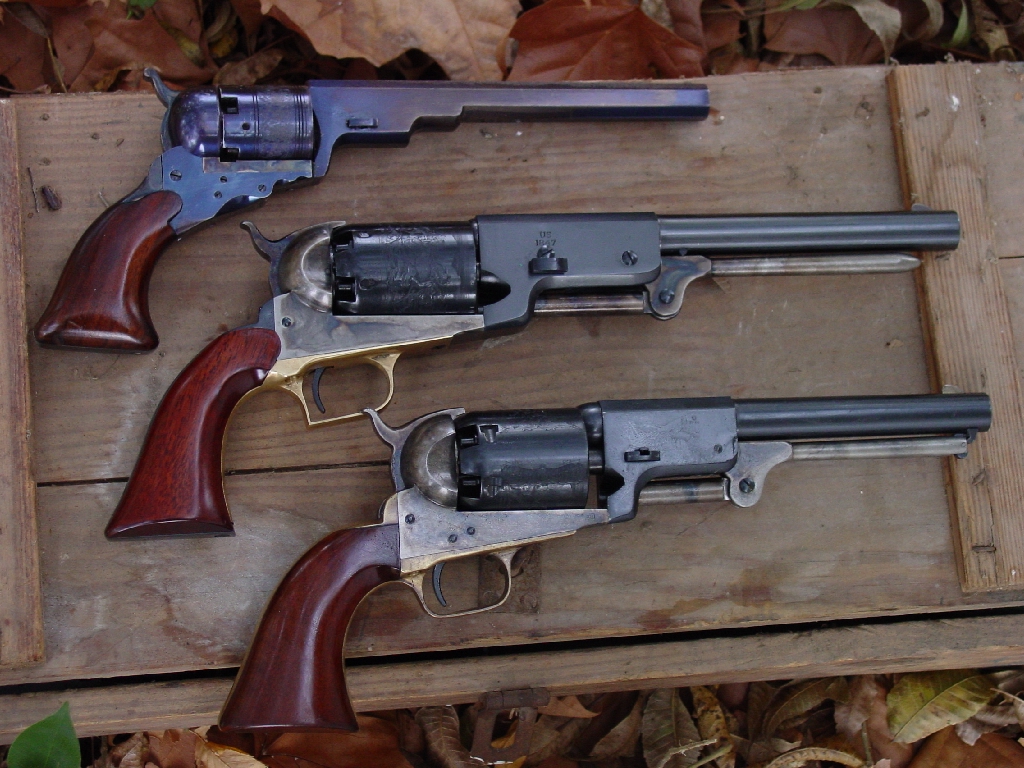
Colt guarded his ideas fiercely, and the Paterson showed why patents shaped the whole industry. He secured a British patent in 1835 and a U.S. patent dated February 25, 1836, both built around a cylinder turned by the hammer. The U.S. grant ran 14 years and was extended to 1857, which let Colt challenge imitators such as Massachusetts Arms in court in 1851. Competitors had to invent around it, and that pressure helped produce Robert Adams’s double-action revolver in England. Anyone who studies the Paterson sees a clear rule: protect your core idea, and the market may reward you for years. Patents rarely guarantee success, but Colt’s example showed how legal protection can buy a young company time to improve.