War is a brutal teacher. In Vietnam, combat medics learned lessons about trauma care so fast, and at such human cost, that emergency medicine would never look the same again.
Before Vietnam, Trauma Care Was Still Catching Up

Before the Vietnam War, emergency medicine was not yet a fully mature specialty in the United States. Many hospitals had emergency rooms, but they often functioned more like intake areas than highly coordinated trauma centers. Ambulance crews frequently provided little advanced treatment on the way, and standards for rapid trauma response varied widely from one city to another.
That mattered because severe bleeding, airway compromise, and shock do not wait for paperwork or specialist consultation. During earlier wars, many wounded troops died before reaching surgical care, and civilian patients faced similar delays after car crashes, industrial accidents, or farm injuries. Doctors understood the basics of trauma, but systems for delivering that care quickly were inconsistent.
Vietnam forced medicine to focus on speed, sequence, and survival under chaos. Medics in the field had to make immediate decisions with limited supplies, hostile conditions, and no margin for hesitation. Those pressures helped expose what mattered most in the first minutes after injury, and those insights later fed directly into modern emergency medicine.
The Combat Medic Became The Critical First Link
In Vietnam, the combat medic was often the first trained medical person to reach a wounded soldier. That role made medics the practical ancestors of today’s frontline emergency responders. They were not working in ideal conditions; they were treating massive bleeding, collapsed lungs, burns, and blast injuries in mud, jungle heat, and incoming fire.
Their importance changed how military and civilian medicine thought about the “golden hour,” the idea that the first 60 minutes after traumatic injury can determine survival. While the phrase became more widely popular later, Vietnam provided dramatic evidence that faster intervention and transport saved lives. The first person at the patient’s side suddenly mattered as much as the surgeon waiting farther back.
Medics learned to assess who needed help first, who could wait, and who needed immediate evacuation. That practical triage under pressure influenced how paramedics and emergency departments now prioritize trauma patients. The concept seems obvious today, but Vietnam helped prove that organized early care was not an extra benefit; it was the foundation of survival.
Helicopter Evacuation Redefined What “Rapid Transport” Meant
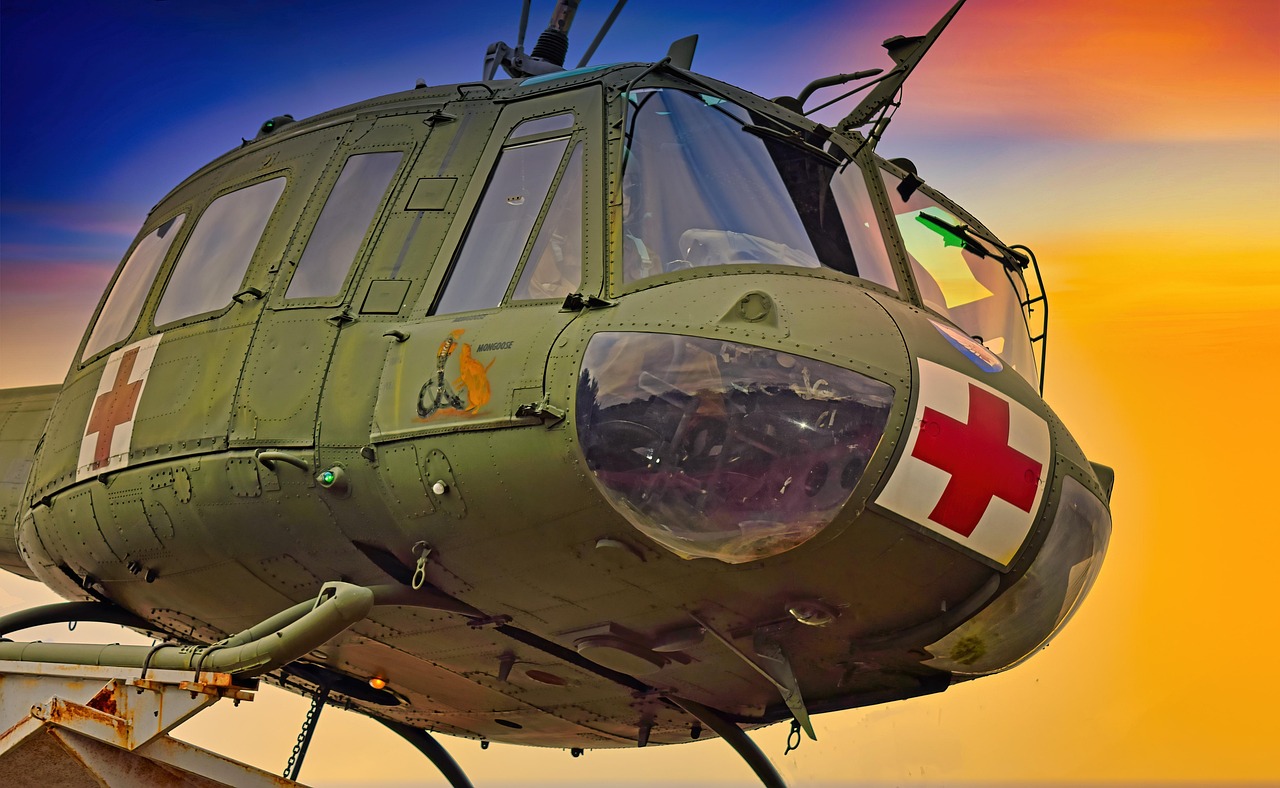
One of Vietnam’s most important medical revolutions came from the widespread use of helicopters for casualty evacuation. The “Dustoff” system could move wounded service members far faster than ground transport over difficult terrain. According to U.S. military histories, thousands of casualties were evacuated by helicopter, often reaching advanced care in under an hour.
That speed changed the math of survival. Soldiers who might have died from blood loss, chest wounds, or abdominal trauma in earlier wars now had a realistic chance of reaching surgeons alive. Fast evacuation did not replace good field care, but it multiplied its effect by shrinking the time between injury and definitive treatment.
Civilian emergency systems paid attention. The growth of helicopter EMS programs and regional trauma transport networks in later decades reflected lessons first demonstrated at scale in Vietnam. Today, when a severely injured patient is flown from a highway crash to a trauma center, that system owes a clear debt to what wartime medics and evacuation crews proved was possible.
Bleeding Control, Airway Care, And Shock Management Advanced Fast
Vietnam pushed medics to refine the practical priorities of trauma treatment: stop bleeding, protect the airway, support breathing, and treat shock. Those principles sound standard now because they became standard through repeated experience. In jungle combat, medics saw in the starkest possible terms that a patient could survive a terrible wound if those first steps happened quickly and correctly.
Hemorrhage control was especially important. Medics used pressure dressings, bandaging, and rapid assessment to buy time until surgery, and their field experience helped strengthen later civilian emphasis on immediate bleeding control. Modern public training campaigns that teach bystanders to control severe bleeding echo a lesson combat medics knew intimately: blood loss can kill in minutes.
Airway care and shock recognition also became more disciplined. A patient who looked stable could suddenly deteriorate, so medics had to watch mental status, breathing effort, skin signs, and pulse quality closely. Those habits carried into trauma protocols used by EMTs, paramedics, flight crews, and ER teams, where early pattern recognition remains one of the most valuable skills in emergency care.
Vietnam Helped Build The Modern Trauma Team Mindset
Another lasting contribution was organizational, not just technical. Vietnam showed that trauma survival depends on a chain, not a single hero: field treatment, evacuation, surgery, blood support, nursing, rehabilitation, and communication all had to work together. That systems approach became a defining feature of modern trauma centers.
By the 1970s and 1980s, civilian medicine increasingly formalized emergency medicine as a specialty and developed dedicated trauma programs. The American College of Surgeons advanced trauma verification standards, and hospitals began building coordinated trauma teams with clear roles. Those structures reflected a wartime lesson that improvisation alone is not enough when minutes decide outcomes.
Case reviews from both military and civilian settings reinforced the same conclusion. Better outcomes came when teams used shared protocols, rapid handoffs, and repeated training. The combat medic’s world was chaotic, but the lesson it delivered was surprisingly orderly: survival improves when every step from point of injury to operating room is connected and practiced.
Lessons From Vietnam Still Shape Training Today
Many features of current emergency training carry Vietnam’s fingerprints. Triage drills, trauma algorithms, mass-casualty planning, and the expectation that prehospital providers can make lifesaving decisions all reflect shifts accelerated by that war. Even when protocols have evolved, the underlying idea remains familiar: treat immediately, transport intelligently, and never waste early minutes.
Military medicine continued to develop after Vietnam, especially through later conflicts in Iraq and Afghanistan, where tourniquet use, hemostatic dressings, and Tactical Combat Casualty Care gained new prominence. But those advances did not appear from nowhere. Vietnam helped establish the culture of studying battlefield outcomes carefully and converting hard lessons into doctrine.
Civilian emergency medicine adopted the same habit. Trauma registries, after-action reviews, simulation training, and evidence-based updates all grow from the belief that emergency care must keep learning from real cases. That mindset, sharpened in Vietnam, is one reason modern emergency medicine is faster, more structured, and more accountable than the fragmented systems that came before it.
The Legacy Is Measured In Lives Saved Far From War

The deepest legacy of Vietnam’s combat medics is not military pageantry or medical nostalgia. It is the number of civilians who survive car wrecks, shootings, falls, and industrial accidents today because emergency care became faster and smarter. The battlefield did not invent compassion or surgery, but it radically accelerated the science of what to do first.
You can see that legacy in every ambulance that radios ahead, every trauma bay that activates a team before the patient arrives, and every flight crew lifting off for a critical transfer. You can see it in emergency physicians who think in sequences, priorities, and minutes. Those habits were forged when medics had to act decisively with almost nothing except training and nerve.
That is why Vietnam changed emergency medicine forever. Combat medics did more than keep wounded soldiers alive long enough to reach help; they helped teach the modern world how to build systems that rescue people in the worst moments of their lives.