Infantry weapons are built for marching, digging in, and trading fire across open ground. Aircrews live by different rules. A downed pilot needs something light enough to stow under a seat, tough enough to survive a bailout, and versatile enough to bring back dinner. Defensive gunners in bombers needed the opposite: a fast-firing weapon that fit a cramped turret. Designers answered both needs between 1932 and 1986, with weights from 1 to 21 pounds and rates of fire up to 1,000 rounds a minute. The seven guns below show how flying changed the rules, from folding survival rifles to a pistol made for cosmonauts. Each one was a quiet answer to a very specific problem.
1. M6 Aircrew Survival Weapon: The Folding Over-Under
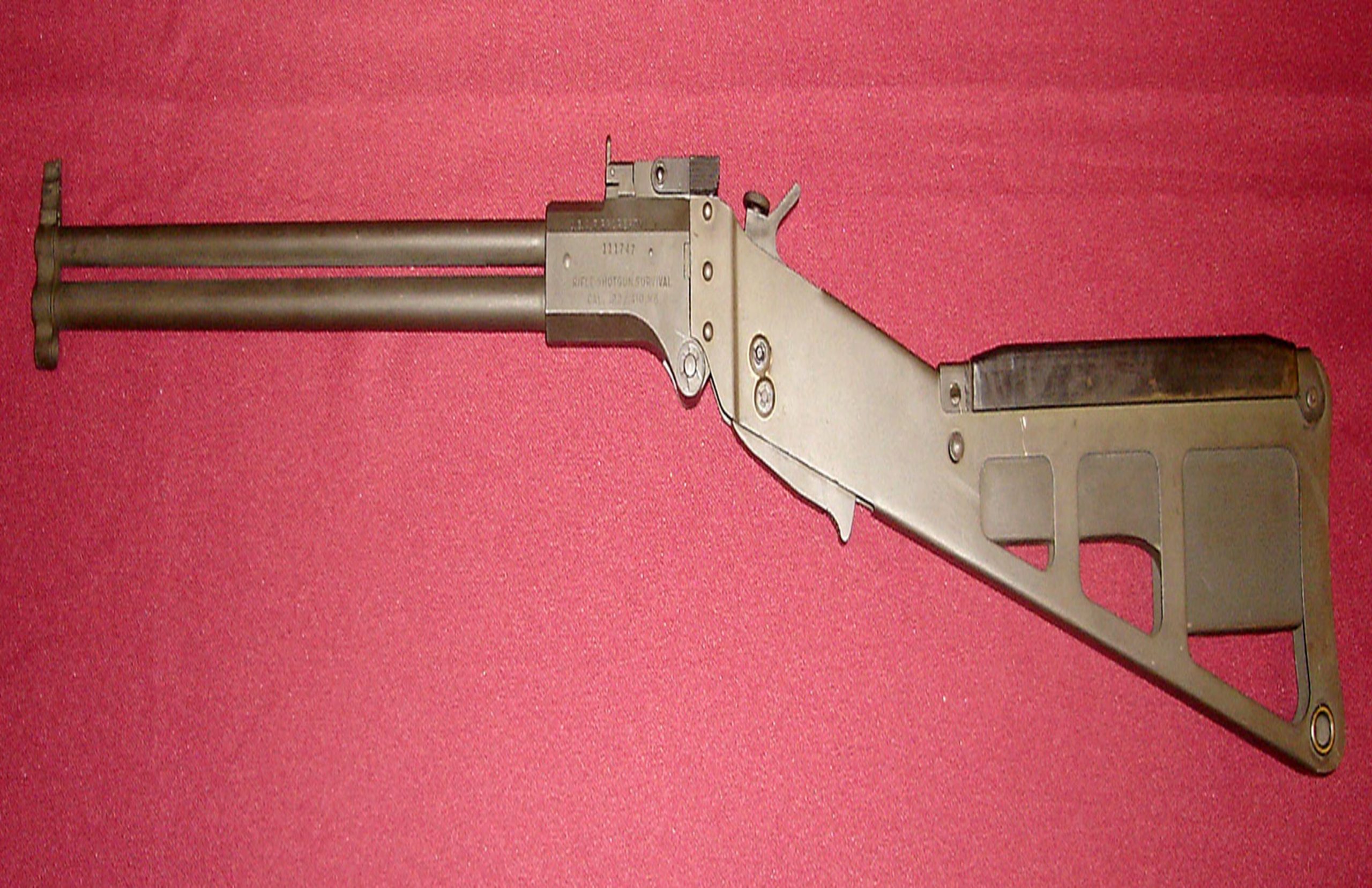
Few survival tools were as clever as the M6 Aircrew Survival Weapon, adopted by the U.S. Air Force in 1952. It pairs a .22 Hornet rifle barrel over a .410 shotgun barrel, each 14 inches long. A folding skeleton stock shrinks the package to about 15 inches, and the whole gun weighs roughly 4 pounds. The Hornet’s 45-grain bullet leaves near 2,300 feet per second, enough for rabbits, grouse, and coyote-sized game. The .410 covers close-range birds and snakes. Stowed beside an ejection seat or in a survival kit, it stayed out of the way until needed. Collector examples often sell above $1,500, and U.S. buyers must complete National Firearms Act paperwork first.
2. ArmaLite AR-5: The Floating Survival Rifle
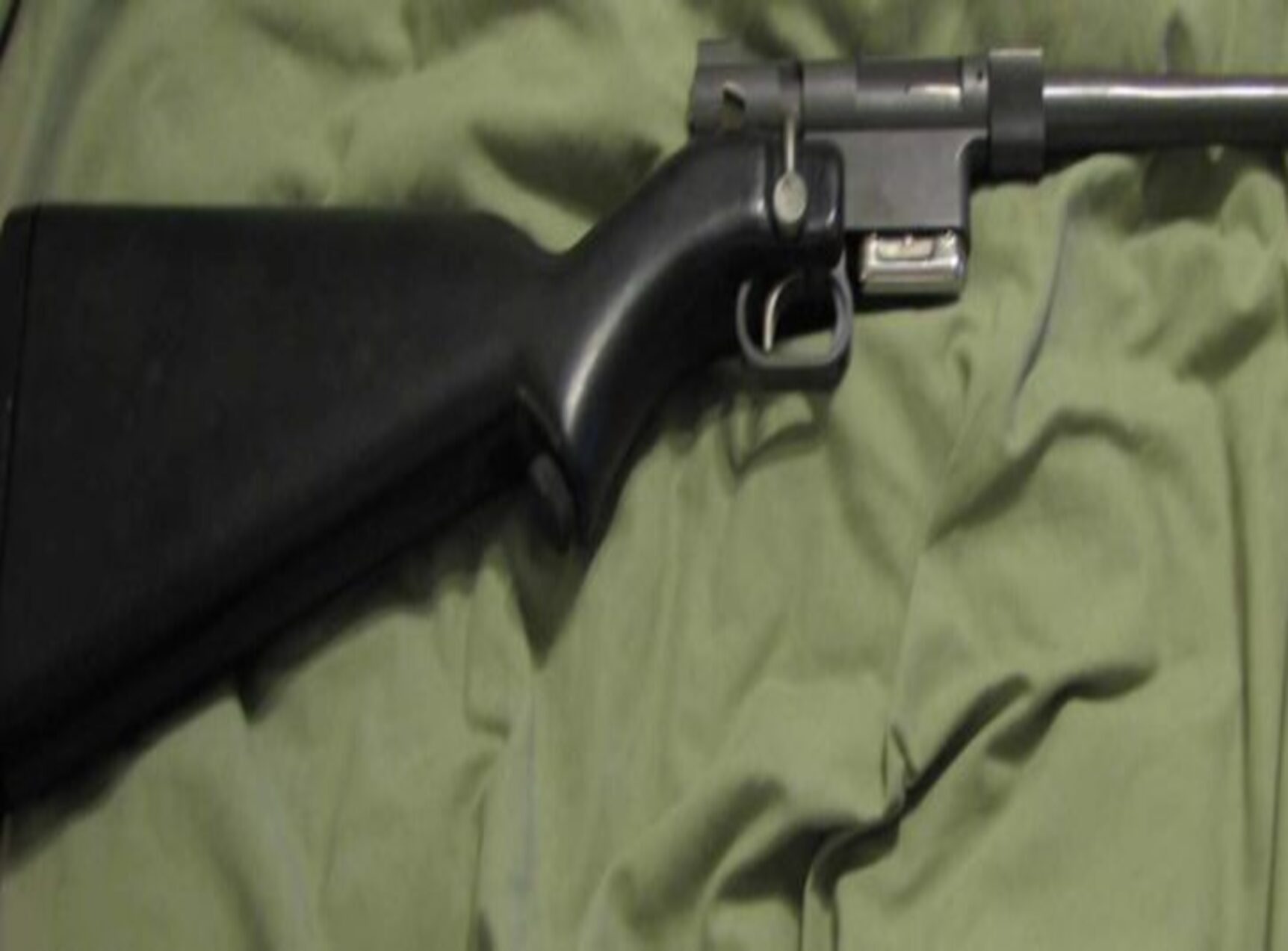
The ArmaLite AR-5 shows how far designers would go to save weight. Adopted by the Air Force in 1956 as the MA-1, this bolt-action .22 Hornet weighs only about 2.5 pounds. Its 16-inch barrel and receiver detach and slide into the hollow stock, making a bundle near 14 inches long that even floats on water, which mattered after an ocean bailout. A 45-grain Hornet bullet travels around 2,400 feet per second, flat enough for hits at 100 yards. A small detachable magazine feeds it. The design came from a Cold War need to arm bomber crews who might drift for days. Collectors usually pay between $1,500 and $2,500, and original magazines can be difficult to find.
3. Sauer M30 Luftwaffe Drilling: The Three-Barrel Lifeline
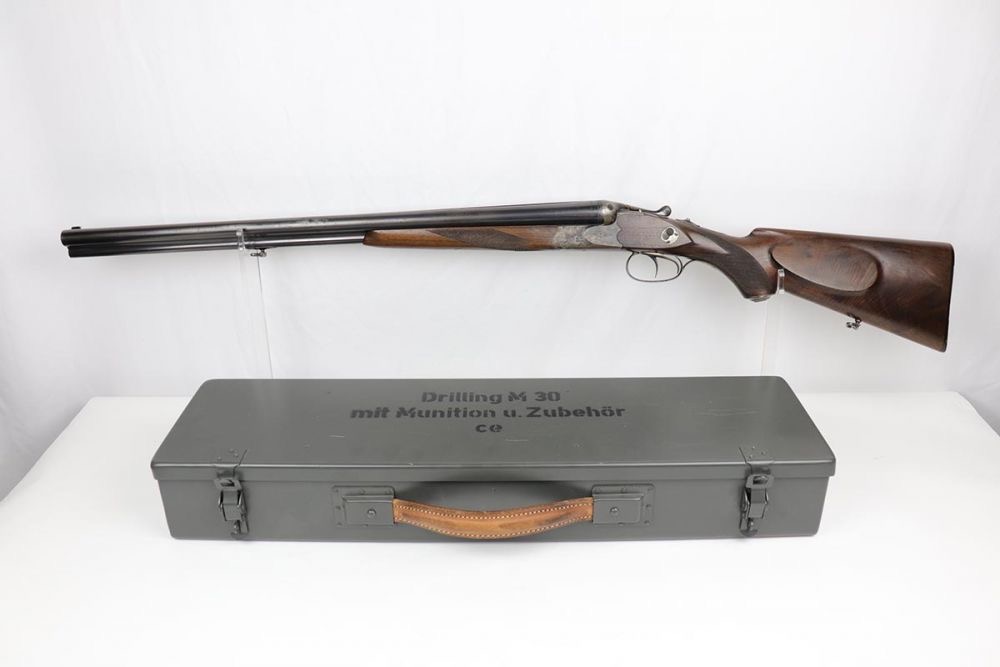
Germany took a very different approach with the Sauer M30 Luftwaffe Drilling, introduced in 1941. Drilling means triple, and this gun carries three barrels: two 12-gauge shotgun tubes side by side over a 9.3x74R rifle barrel. The rifle round pushes a 285-grain bullet at about 2,300 feet per second, enough for big game. It was meant for crews who might go down in remote country, where a shotgun fed the camp and a rifle handled larger animals. Weighing about 7 pounds, it feels hefty beside American takedown guns. Its military markings make it as much a history piece as a working gun. Roughly 2,500 were made, and surviving examples often fetch well over $10,000.
4. Vickers K: The Open-Cockpit Rapid-Fire Gun
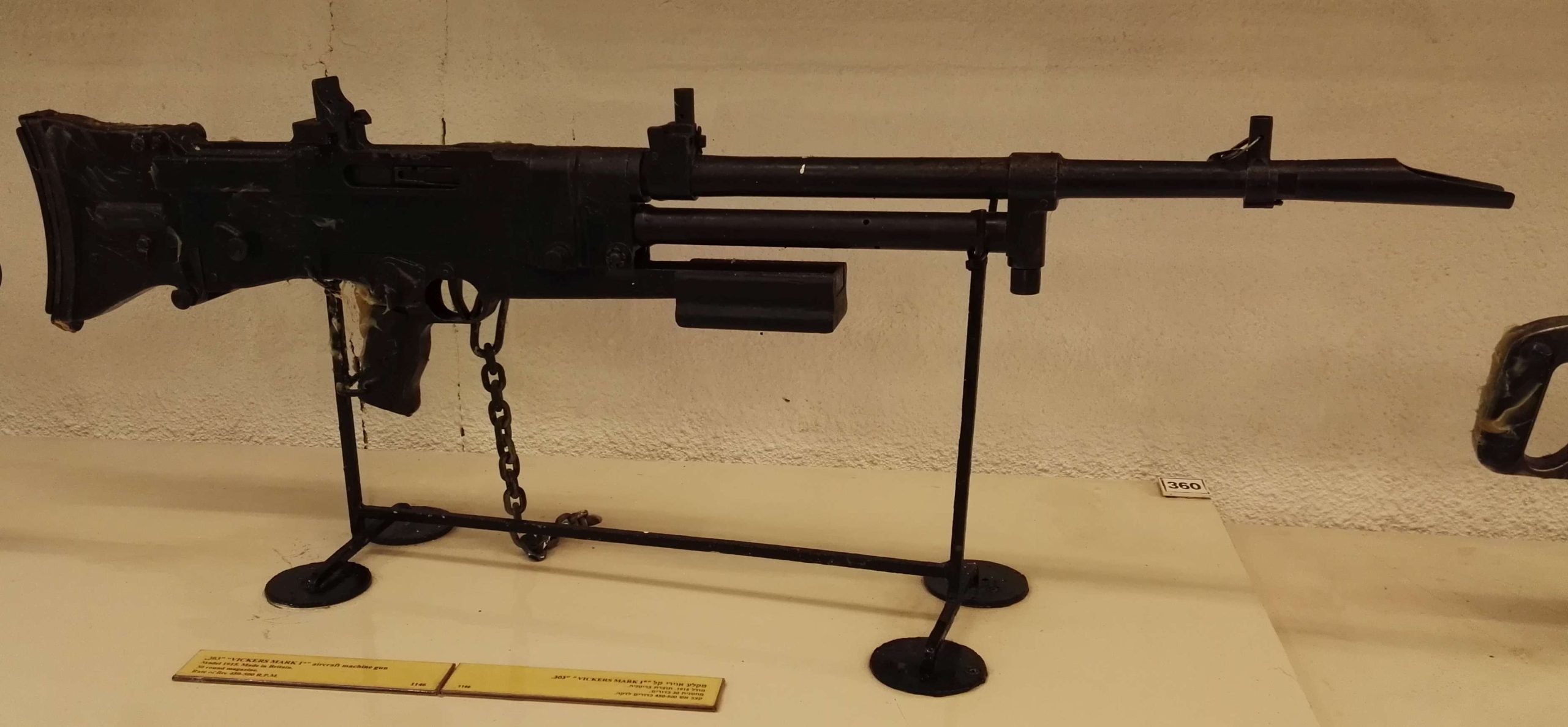
The Vickers K, adopted by the Royal Air Force in 1935, was built for observers leaning out of open cockpits and bomber hatches. Firing .303 British ammunition, it cycled at roughly 1,000 rounds per minute, which gave gunners a dense burst in the few seconds an enemy fighter stayed in range. A top-mounted pan magazine held up to 100 rounds, a design that spared the gunner from fumbling with belts in a freezing slipstream. The weapon weighs close to 21 pounds, light for a machine gun with that firepower. Its 174-grain bullet leaves the muzzle near 2,400 feet per second. Later, ground units borrowed it for jeeps and boats, but its heart remained airborne.
5. Smith & Wesson Model 12: The Featherweight Sidearm
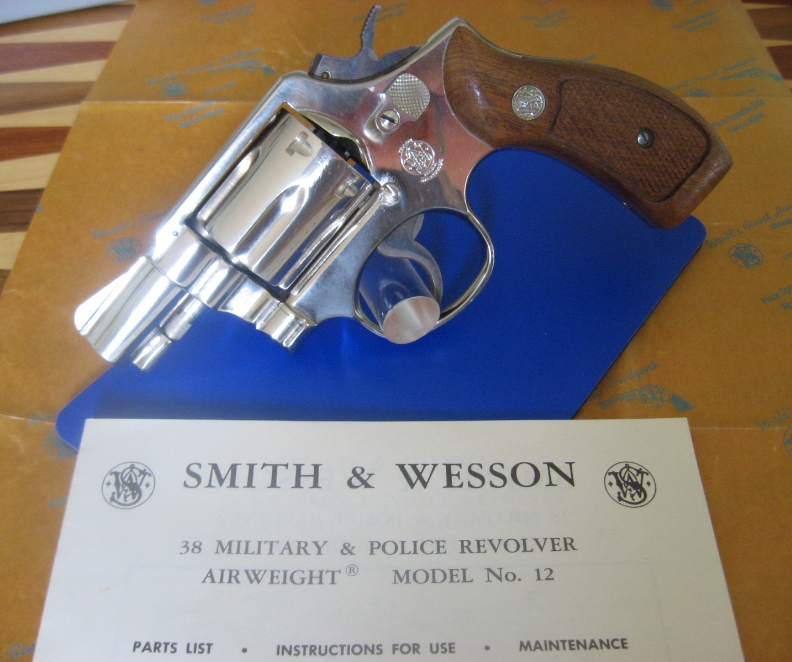
The Smith & Wesson Model 12 earned its place on this list through weight loss. Ordered by the Air Force in the early 1950s, it is a six-shot .38 Special with a 2-inch barrel and an aluminum-alloy frame, so it tips the scale near 18 ounces, roughly 12 ounces lighter than a steel-framed Military & Police. Aircrew wore it in a shoulder holster beneath a flight suit, where every ounce mattered over long missions. A 158-grain lead round-nose load leaves the short barrel around 750 feet per second, adequate for close defense. Recoil is sharp but manageable. That tradeoff suited pilots who rarely expected to fire it. Military-marked examples sell for roughly $700 to $1,100 today.
6. Luftwaffe MG 15: The Drum-Fed Gunner’s Tool
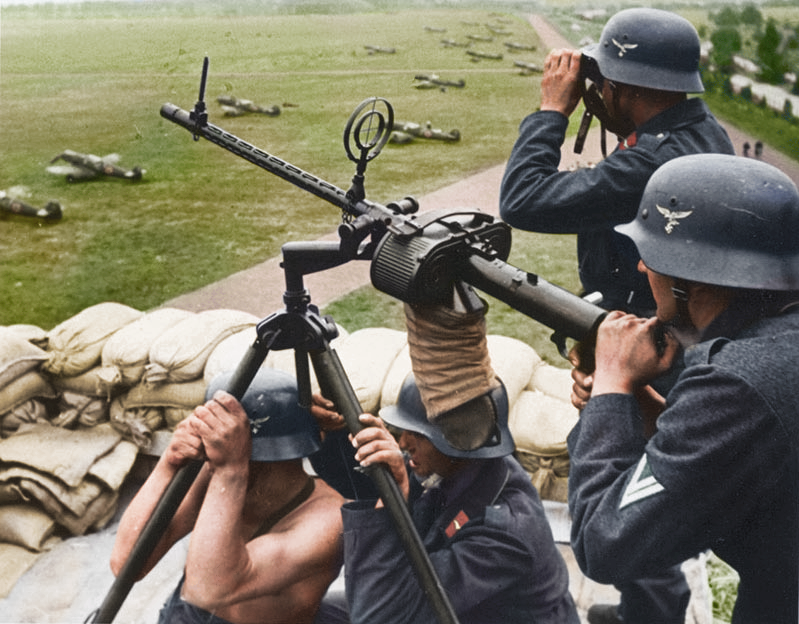
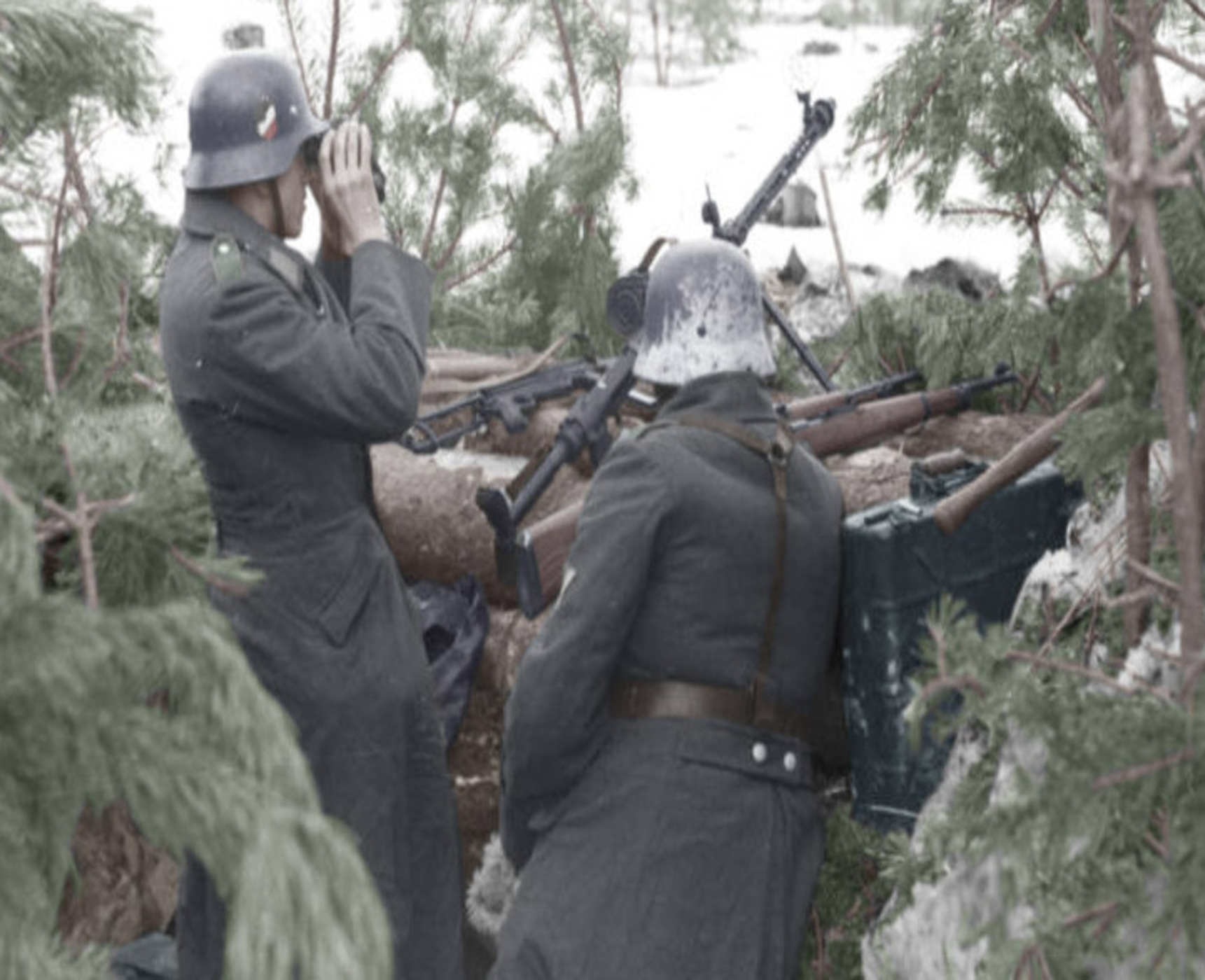
Luftwaffe gunners relied on the MG 15, a flexible 7.92x57mm machine gun that entered service in 1932 and rode in bombers such as the Heinkel He 111 and Junkers Ju 88. It fed from 75-round saddle drums, and at roughly 1,000 rounds per minute a gunner could empty one in about 4.5 seconds, so fresh drums stayed close at hand. The weapon weighs near 18 pounds, and its muzzle velocity of about 2,400 feet per second kept the bullet path flat at combat distances. Swung by hand on a pivot, it demanded steady nerves and a cool head. A good crew could change drums while a fighter circled for a second attack. Intact examples are rare today, which is why most survive only in museums.
7. TP-82: The Cosmonaut’s Survival Pistol
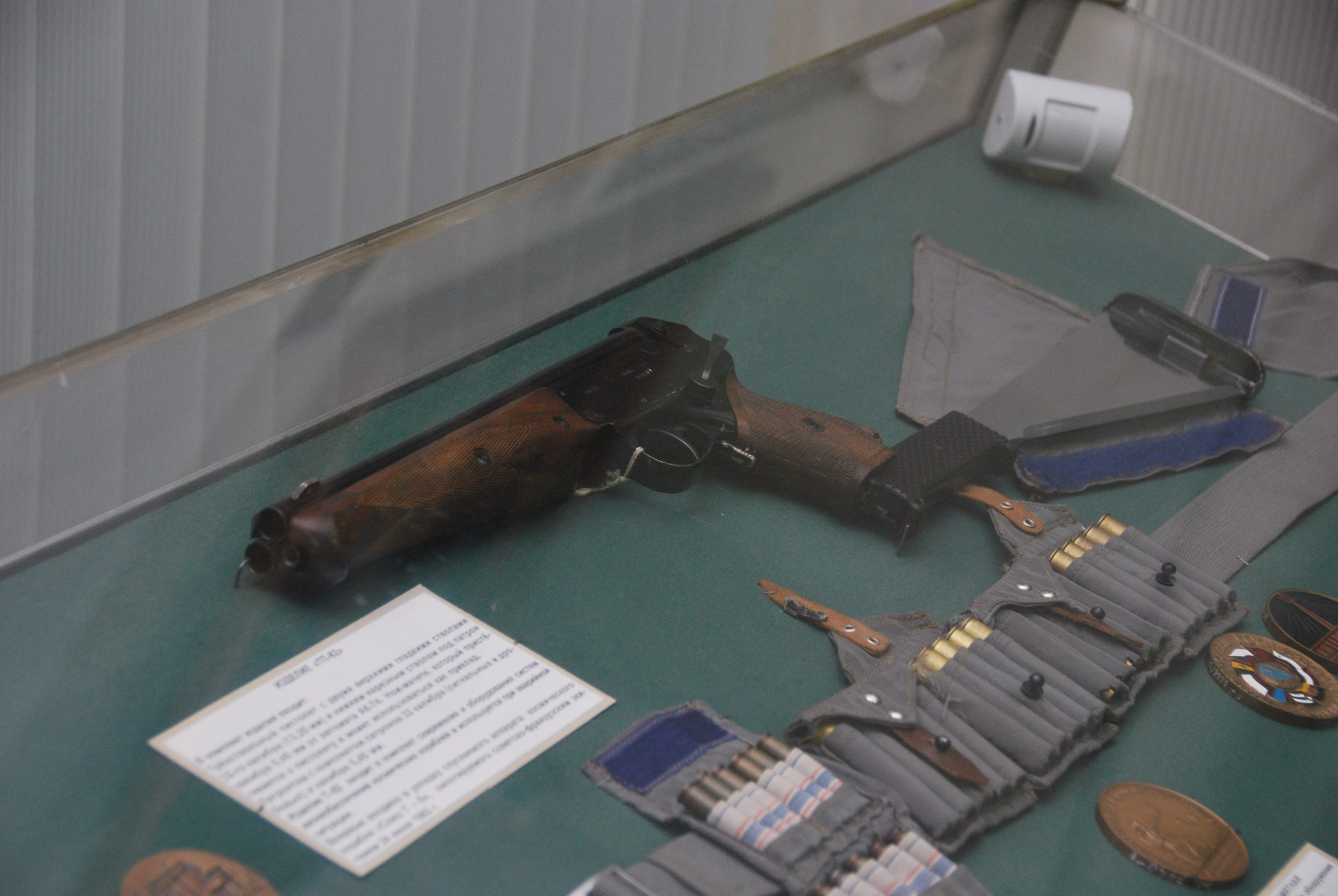
The Soviet TP-82 closes the list because it was made for crews who flew higher than any bomber ever could. Issued with Soyuz capsules from 1986, it is a three-barrel pistol, with two 12.5x70mm smoothbore barrels, roughly equal to 20-gauge, over one 5.45x39mm rifled barrel. That mix let one pistol hunt small game and stop larger animals. A detachable shoulder stock turns it into a short carbine and contains a machete blade for clearing brush. The idea was simple: if a capsule landed off course in the Siberian forest, crews might wait days for rescue and needed to hunt, signal, and fend off predators. Cosmonauts carried it until about 2007, when it was retired.