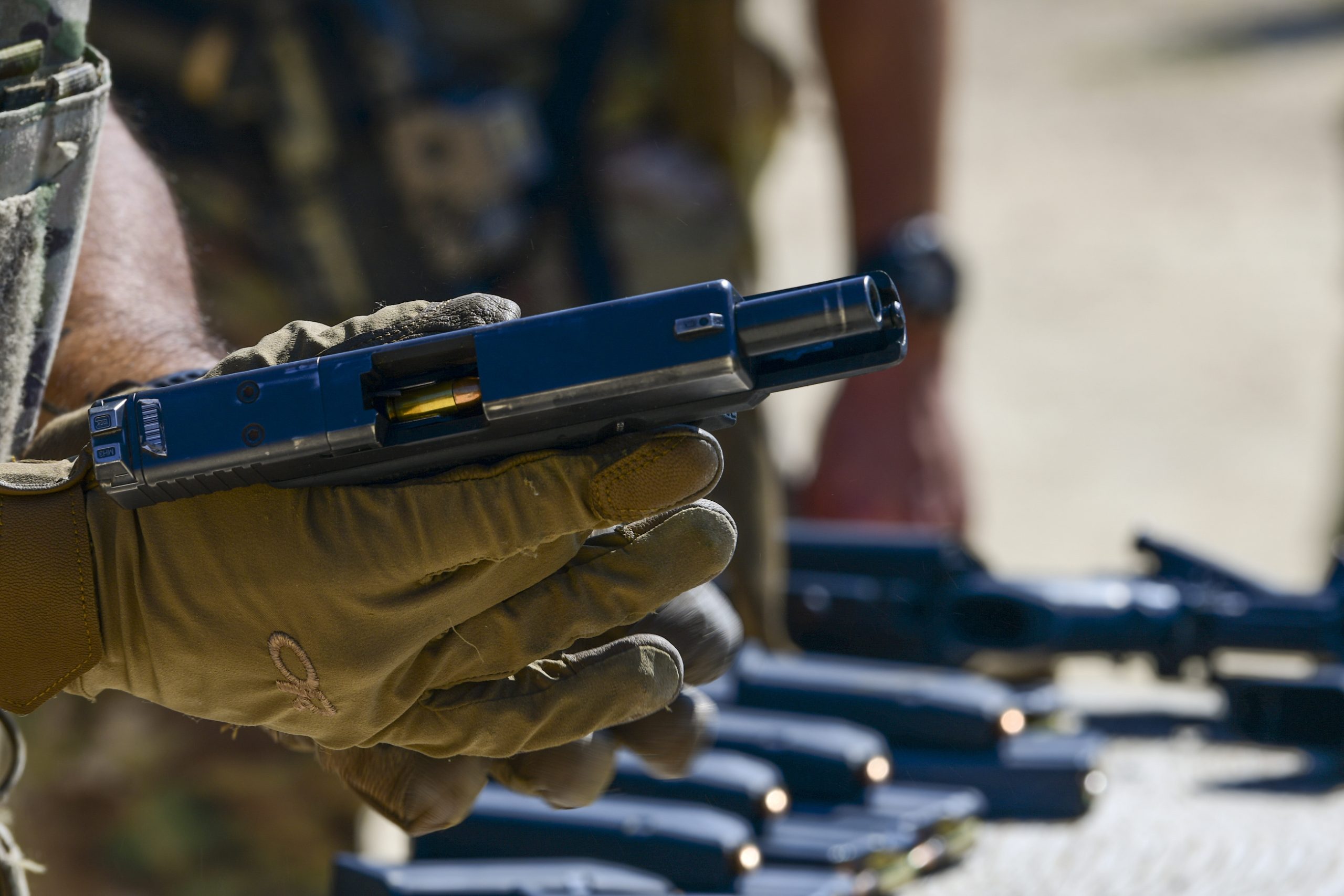
A rifle barrel looks simple from the outside. In modern manufacturing, it is anything but.
The idea that changed barrel making

Cold hammer forging transformed barrel production because it let manufacturers shape the chamber and rifling in one tightly controlled operation. As Daniel Defense describes the process, a mandrel goes into the bore, and opposing carbide hammers compress the steel around it, forming the internal geometry with no added external heat.
That “cold” part matters. The work is done primarily through force rather than furnace heating, which helps preserve dimensional control while still changing the steel’s structure through compression. Daniel Defense says the result is a remarkably consistent chamber and a defect-free bore.
Before that approach became widespread, many barrels were cut, broached, or button rifled in separate steps. Those methods still produce excellent barrels, especially in precision applications, but cold hammer forging offered something factories love: repeatability at scale.
Once manufacturers realized they could turn out large numbers of durable, uniform barrels with the right machinery and expertise, the economics of rifle production started to change.
Why manufacturers embraced it

The biggest reason companies invested in hammer-forge lines was consistency. Daniel Defense has argued that chamber-to-bore alignment is one of the most critical contributors to accuracy, and forming both at the same time gives manufacturers a major quality-control advantage.
Durability was the other selling point. FN repeatedly highlights cold hammer-forged, chrome-lined barrels in service rifles and machine guns because those barrels are expected to handle hard use, high heat, and long firing schedules. Its M240B description specifically pairs cold hammer forging with a hard-chromed bore for longer life.
That combination made the process especially attractive for military-style rifles and duty carbines. A premium forge is expensive, but once installed, it supports high output with very consistent results, which is exactly what large-volume manufacturers want.
In other words, cold hammer forging did not merely improve barrels. It fit the broader industrial push toward tighter tolerances, faster throughput, and fewer production variables.
The military effect on the commercial market
Military demand helped legitimize the process in the eyes of civilian buyers. FN’s long-running M240 program and its continued use of cold hammer-forged barrels in military and law-enforcement products reinforced the idea that forged barrels were built for punishment, not just marketing copy.
Heckler & Koch made a similar impression for decades. HK catalogs and manuals have long described the company’s cold hammer-forged barrels as delivering long service life and strong accuracy, sometimes pairing the process with polygonal bore designs to reduce fouling and simplify maintenance.
That reputation carried over into the commercial rifle world. Buyers shopping for AR-pattern rifles began to treat “CHF barrel” as a premium feature, much like chrome lining or a free-floated handguard.
Manufacturers noticed quickly. What was once a niche specification became a selling point on factory rifles aimed at everyone from patrol officers to weekend shooters.
What it changed on the factory floor
Cold hammer forging did more than alter barrel specs; it changed plant design. Daniel Defense openly notes that the process requires massive machines, floor space, coolant systems, skilled setup, and a lot of institutional knowledge. That means a company cannot fake its way into this category.
The upside is integration. When a manufacturer controls drilling, forging, inspection, finishing, and final assembly in-house, it can build a tighter feedback loop between engineering and production. Problems show up faster, tolerances get tracked more closely, and output becomes more predictable.
That helps explain why forged-barrel makers often emphasize metrology equipment and bore inspection just as much as the forge itself. The machine is impressive, but the real value comes from making the same good barrel over and over again.
Modern rifle manufacturing increasingly rewards exactly that kind of disciplined repeatability.
The limits and trade-offs people forget
Cold hammer forging is not magic. It is one excellent manufacturing method, not the only path to a superb barrel. Premium cut-rifled and button-rifled barrels still dominate many top-tier benchrest and custom precision niches because makers can optimize them for extreme uniformity and specific contours.
The trade-off is scale and intended use. Hammer forging shines when a company wants robust service barrels in meaningful volume, while other methods may be preferred for small-batch precision work or specialized competition rifles.
Cost is another factor. The equipment investment is enormous, which is why not every barrel maker adopts it. A forge line only makes business sense when output volume, product strategy, and quality systems are all aligned.
So the real revolution was not that cold hammer forging replaced everything. It is that it gave major rifle makers a powerful new manufacturing lane.
Why its influence still matters today
Today, cold hammer-forged barrels signal a broader shift in what buyers expect from factory rifles. People want carbines and bolt guns that can survive high round counts, resist wear, and still deliver reliable accuracy without hand-fitted custom-shop prices.
Manufacturers like Daniel Defense and FN helped normalize that expectation by proving forged barrels could be both industrial products and premium components. In some cases, companies now forge not just rifling and chamber dimensions, but major contour features as part of a highly controlled production flow.
That changed how rifles are marketed, built, and judged. A modern barrel is no longer just a tube with grooves; it is a central expression of manufacturing philosophy.
And cold hammer forging, more than any other barrel process, pushed the industry toward that mindset.