Modularity gets talked about a lot, but the term is often used too loosely. A rail, a red dot cut, or a new stock does not automatically make a firearm a modular platform.
Modularity starts with the core architecture

A firearm becomes modular when its basic structure is designed around interchangeable major components, not just add-ons. The key idea is that one core mechanism can support multiple configurations while preserving safe function, repeatable fit, and predictable performance.
That usually means the platform has a central serialized component or control unit that remains the legal and mechanical heart of the gun. ATF guidance on frames and receivers reflects how modern designs can use split or modular subparts, which matters because the regulated core is what ties the system together.
On pistols, the clearest example is the removable chassis or fire control unit. SIG describes the P320 around a removable FCU that lets users change size and caliber within the same family, while Beretta’s APX manuals describe a serialized internal chassis that allows the outer frame to be exchanged or customized.
A modular platform is not the same as accessory compatibility

Lots of guns accept lights, optics, slings, or muzzle devices. That is useful, but it is not platform-level modularity. Accessory compatibility changes what attaches to the firearm; modularity changes the firearm’s underlying configuration.
A handguard with M-LOK slots, for example, expands mounting options but leaves the operating system, receiver structure, and caliber architecture untouched. That is customization, not deep modular design.
The distinction matters because genuine modularity affects mission role. A true modular rifle or pistol can shift from compact carry to duty size, from one barrel length to another, or from one chambering to another with factory-supported parts and known tolerances. According to FN, the SCAR family was built around a common multi-caliber architecture, which is a very different claim from simply offering rail space.
The best modular systems use defined interfaces
Behind every successful modular platform is a set of repeatable mechanical interfaces. Engineers design attachment points, pin locations, rail geometry, locking surfaces, and feed relationships so replacement parts line up the same way every time.
That sounds simple, but it is the hard part. If tolerances stack badly, point of impact can shift, reliability can drop, or wear can accelerate. Good modularity means the gun was designed from the start for swapping parts, not retrofitted later because the market wanted options.
The AR-15 is a classic example of interface-driven design. Its upper and lower receiver split allows broad variation in barrel length, caliber family, and furniture while keeping a common control layout. That is why the AR became a platform rather than just a single rifle model.
Barrel, caliber, and size changes reveal real modularity

The strongest proof of modularity is whether a design can accept meaningful role changes. Swapping a grip panel is nice. Swapping a barrel assembly, magazine pattern, or full-size grip module is far more significant.
FN’s support material includes barrel change guides for SCAR rifles, and in 2024 FN also announced SCAR 17S barrel assemblies chambered in 6.5 Creedmoor. That is a documented example of a manufacturer extending a platform through major configuration changes rather than cosmetic variations.
Pistols show the same principle in a smaller package. On chassis-based handguns, the shooter can keep the same serialized core while moving to different grip sizes, slide lengths, and intended uses. That kind of scaling is one of the clearest signs that the firearm was conceived as a system.
Controls, ergonomics, and logistics matter too
Modularity is not only about parts swapping. It also includes whether the user experience stays consistent across configurations. If the trigger reach, controls, manual of arms, and maintenance procedures remain familiar, the platform saves training time and reduces user error.
That is a huge advantage for agencies, military units, and ordinary owners with multiple roles in mind. One manual of arms across compact, duty, and competition-style setups is more efficient than learning three unrelated guns.
Logistics also improve when parts commonality is high. Shared magazines, shared internal components, and standardized maintenance procedures lower inventory burden and simplify support. That is one reason military and law-enforcement buyers often value modular systems: they are not just flexible for the shooter; they are easier to sustain.
A truly modular firearm is designed as a system
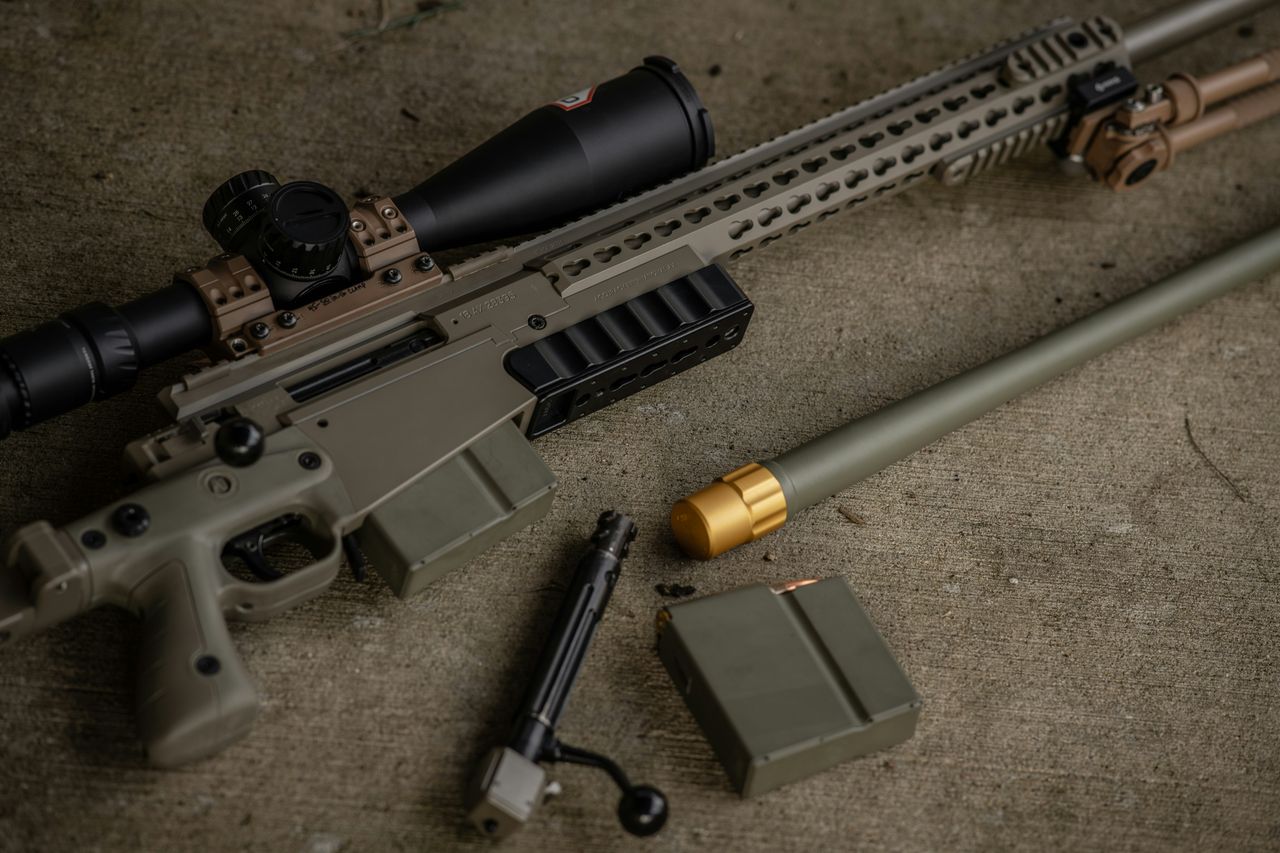
The simplest test is this: can the firearm change in a meaningful way without becoming a different gun in everything but name? If the answer is yes, and the manufacturer intended those changes through supported, repeatable component swaps, you are looking at real modularity.
If the only changes are optics, lights, grips, or paint, the gun is customizable, not truly modular. There is nothing wrong with that, but it is a different category.
So when people talk about a modular platform, the real design principles are clear: a central core, standardized interfaces, interchangeable major assemblies, preserved reliability, and consistent handling across versions. That is what turns a firearm from a product into a platform.