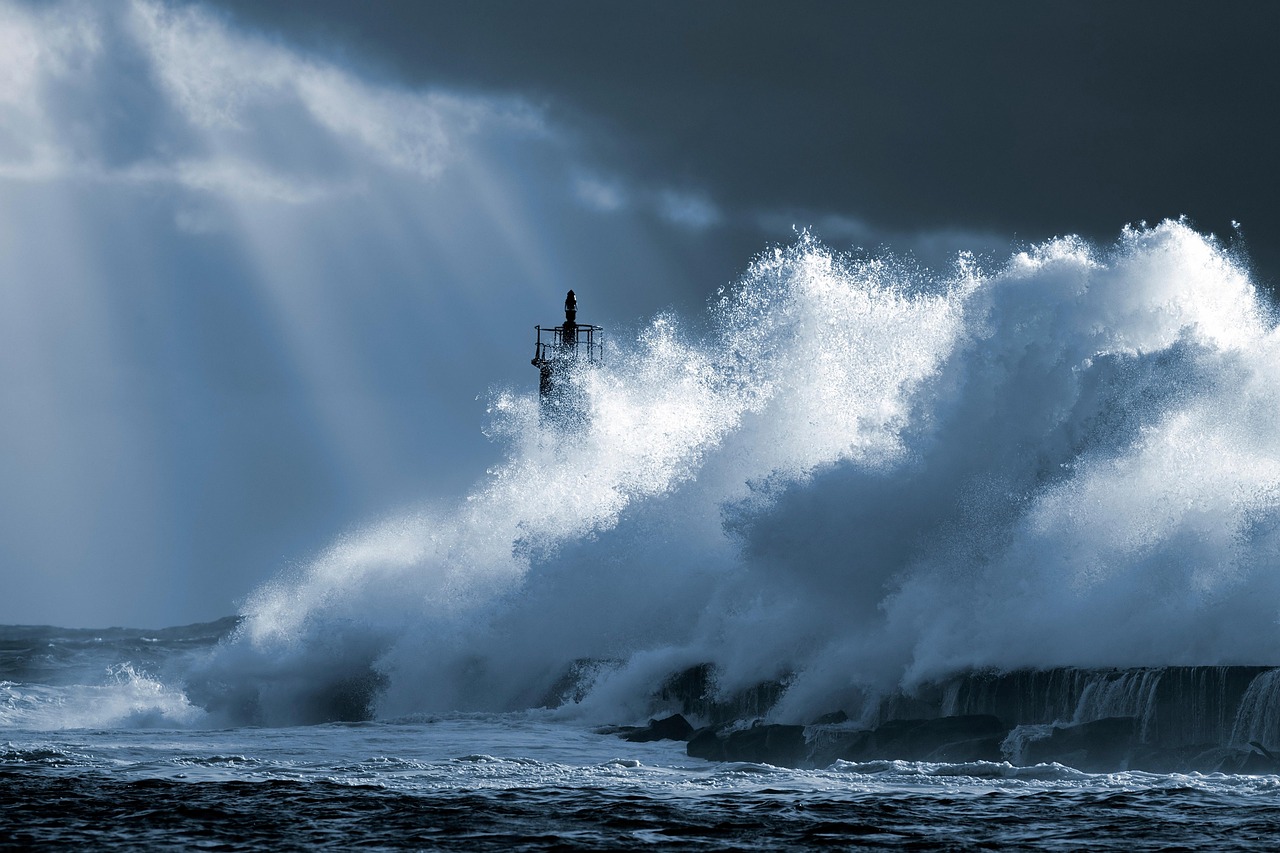
History sometimes turns on armies, generals, and firepower. In June 1944, it also turned on a storm.
The Invasion Was Supposed To Begin Earlier
D-Day was originally set for June 5, 1944, not June 6. That date mattered because the invasion needed a rare mix of moonlight, tides, and dawn timing to support airborne drops and amphibious landings.
The weather, however, refused to cooperate. Allied planners faced strong winds, rough seas, and heavy cloud over the English Channel, conditions that threatened everything from landing craft control to bomber accuracy.
According to the Met Office and U.S. military histories, General Dwight D. Eisenhower postponed the assault by 24 hours after receiving a bad forecast on June 4. That delay was not a small scheduling tweak. It was a strategic gamble with enormous consequences.
Why Weather Mattered So Much On D-Day

The Normandy invasion depended on precision across sea, air, and land. More than 5,000 ships and about 13,000 aircraft were committed, and each part of that force was vulnerable to bad weather in a different way.
High winds could swamp landing craft or scatter formations before they reached the beaches. Low cloud could disrupt naval gunfire spotting, limit air support, and make it harder for airborne troops to drop on target.
Even the tides mattered. Engineers wanted low tide at first light so assault troops could spot and avoid German beach obstacles before the rising water hid them. A storm did not just make the invasion unpleasant. It threatened to make it fail.
The Forecast Team Found A Tiny Opening
The man at the center of the decision was Group Captain James Stagg, chief meteorological adviser to Eisenhower. He led a mixed Allied team that included British and American forecasters using different methods and often disagreeing sharply.
What gave the Allies an edge was information. The Met Office says Allied forecasters had broader Atlantic observations than the Germans, helping them detect a brief ridge of higher pressure moving in behind the storm.
Stagg advised that June 6 would be marginal, but workable. That was enough. Eisenhower made the final call in the early hours of June 5, knowing the break in the weather would likely be temporary and imperfect.
The Germans Read The Storm Differently
The same storm that alarmed Allied planners also lulled German commanders. With fewer Atlantic observations, German forecasters concluded that bad weather would continue and that a major cross-Channel assault was unlikely.
That judgment had real operational effects. Some senior German officers were away from their posts, and parts of the German command structure were slower to react when the invasion began.
Eisenhower later said Allied success owed much to better meteorologists than the Germans had. That may sound like a throwaway line, but it captures the central fact: weather intelligence became battlefield advantage before the first ramps dropped.
June 6 Was Bad Enough And Better Than The Alternative
Even on June 6, conditions were far from ideal. Seas remained rough, airborne drops were scattered, and many troops hit the beaches disoriented, wet, and under intense fire.
Omaha Beach showed how little margin for error existed. Strong currents, confused landings, and fierce German resistance turned that sector into a near disaster despite the invasion moving ahead on the forecast window.
Yet the alternative may have been worse. Eisenhower’s official report said June 1944 brought the roughest Channel seas and highest winds seen in June for 20 years, and delaying could have meant waiting weeks for the next suitable tide and moon combination.
The Storm After D-Day Proved The Warning Was Real
If anyone doubted how dangerous delay would have been, the weather soon settled the argument. A major Channel storm struck between June 19 and June 22, smashing landing operations and wrecking the artificial Mulberry harbor at Omaha.
That later storm damaged hundreds of craft and seriously disrupted the Allied build-up in Normandy. It was exactly the kind of severe weather Stagg feared if the invasion slipped beyond the narrow June 6 opening.
Met Office archival material goes even further, noting that Stagg later believed a longer delay could have produced catastrophe. That assessment is dramatic, but the evidence makes clear the weather window was not imaginary luck. It was fleeting reality.
One Storm Changed More Than The Schedule
The storm did not win D-Day by itself. Allied logistics, deception, firepower, and sheer human courage carried the invasion forward once the landings began.
But the storm changed the timing, and timing changed everything. It forced Eisenhower to pause, helped conceal Allied intentions, and then handed him a slim operational opening the Germans did not recognize in time.
That is why this episode still matters. D-Day is often remembered as a triumph of overwhelming force, yet it was also a reminder that history can pivot on a forecast, a weather chart, and one commander willing to act inside a storm’s brief break.