Camouflage still sells a powerful idea. The question is whether it still solves a problem often enough to justify the obsession.
Why camouflage became such a big deal in the first place

Camouflage earned its reputation honestly. In military history, concealment meant survival, and in hunting it meant getting close enough for a clean shot. Long before it became a print on hats, truck seat covers, and coffee tumblers, it was a practical answer to being seen too soon.
That original logic still holds in some settings. If a turkey hunter is working inside 40 yards, or a bowhunter is set up at eye level with sharp-eyed game, breaking up the human outline can absolutely help. Animals do not react only to color. They react to movement, silhouette, shine, and contrast, which is why a still hunter in muted clothing often does better than a fidgety hunter wearing the latest pattern.
What changed is scale. Once camouflage moved from utility to culture, it stopped being only a field tool and became part of outdoor identity. Brands learned that a pattern is more than fabric decoration. It is a badge that signals seriousness, tribe, and aspiration.
That is why camo spread so far beyond the hunt. The same print that once lived in duck blinds now appears in workwear, streetwear, and premium technical apparel. When a product can sell both function and belonging, marketers know they have something bigger than necessity.
In hunting, effectiveness is real but often overstated

The honest answer for hunters is that camouflage works, but not always in the way ads suggest. In many common hunting situations, scent control, wind direction, noise discipline, and patience matter more than the exact leaf pattern on your jacket. Plenty of experienced hunters have filled tags in plain wool, brown canvas, or dark green layers that were never sold as specialized camouflage.
Research on deer vision helps explain why. Penn State’s Deer-Forest Study notes that deer rely heavily on blue and yellow wavelengths and are less sensitive to longer wavelengths like orange and red. Iowa’s Department of Natural Resources says blaze orange, which looks glaringly bright to people, can appear more like gray or light tones to deer.
That does not mean clothing is irrelevant. It means pattern alone is rarely the deciding factor. Deer and elk often bust hunters because they move at the wrong moment, skyline themselves, or ignore the wind. For waterfowl, concealment of face, hands, boat edges, and blind openings can matter more than whether the jacket uses Pattern A or Pattern B.
This is where marketing often outruns reality. Ads can imply that one proprietary pattern changes everything, when in the field, the difference may be marginal unless the hunter is already doing the important things right. In practice, many hunters are buying improved fabrics, quieter materials, and better weather protection, with the camouflage print acting as the emotional closer.
Safety rules tell a different story than advertising does

One of the clearest signs that camouflage is not always the top priority is how many hunting regulations emphasize visibility instead. State agencies across the country require blaze orange or blaze pink during firearm seasons because being seen by other hunters is a major safety benefit. Minnesota says blaze clothing has helped make hunting one of the safest outdoor activities. Illinois, Indiana, and Colorado all make clear that camouflage-patterned orange often does not meet the legal requirement, or only qualifies under strict conditions.
That is a useful reality check. If perfect concealment were the only thing that mattered, regulators would not insist on high-visibility outerwear. The fact that they do shows that effective hunting and safe hunting are not the same as disappearing completely.
It also undercuts one of the most common fears among beginners, which is that wearing blaze orange ruins the hunt. Wildlife agencies regularly explain that deer do not see orange the way humans do, so the safety tradeoff is far smaller than many newcomers assume.
In other words, camouflage may help at the margins, but safe visibility is often the non-negotiable. That should tell consumers something important about priorities. In real-world hunting, the hierarchy is usually legality first, safety second, then concealment tactics, with branded pattern choice coming much later.
The premium camo boom is really about performance gear.r
A lot of modern “camo spending” is not actually about camouflage. It is about technical apparel. The rise of premium hunting brands turned the market toward layering systems, moisture management, insulation, lighter fabrics, and quieter face materials. Sitka itself frames its approach around scientific understanding of animal vision and gear performance, not just traditional visual mimicry.
That distinction matters because many hunters are paying for comfort and durability more than for concealment. A jacket that breathes on a climb, sheds sleet, and stays quiet when drawing a bow can genuinely improve outcomes. Not because the camo print is magical, but because the hunter can stay in the field longer and move more effectively.
Industry reports also show how marketing has expanded the category through endorsements, product launches, and premium positioning. Recent market analyses describe innovation, partnerships, and branded expansion as major growth drivers in hunting apparel.
So yes, camouflage often functions as a sales engine. But that does not mean the whole purchase is fake value. The smarter criticism is that companies frequently bundle real garment technology with inflated claims about pattern superiority. Consumers may come for the promise of invisibility, while the actual benefit they receive is better clothing.
For the military, camouflage is absolutely still a necessity
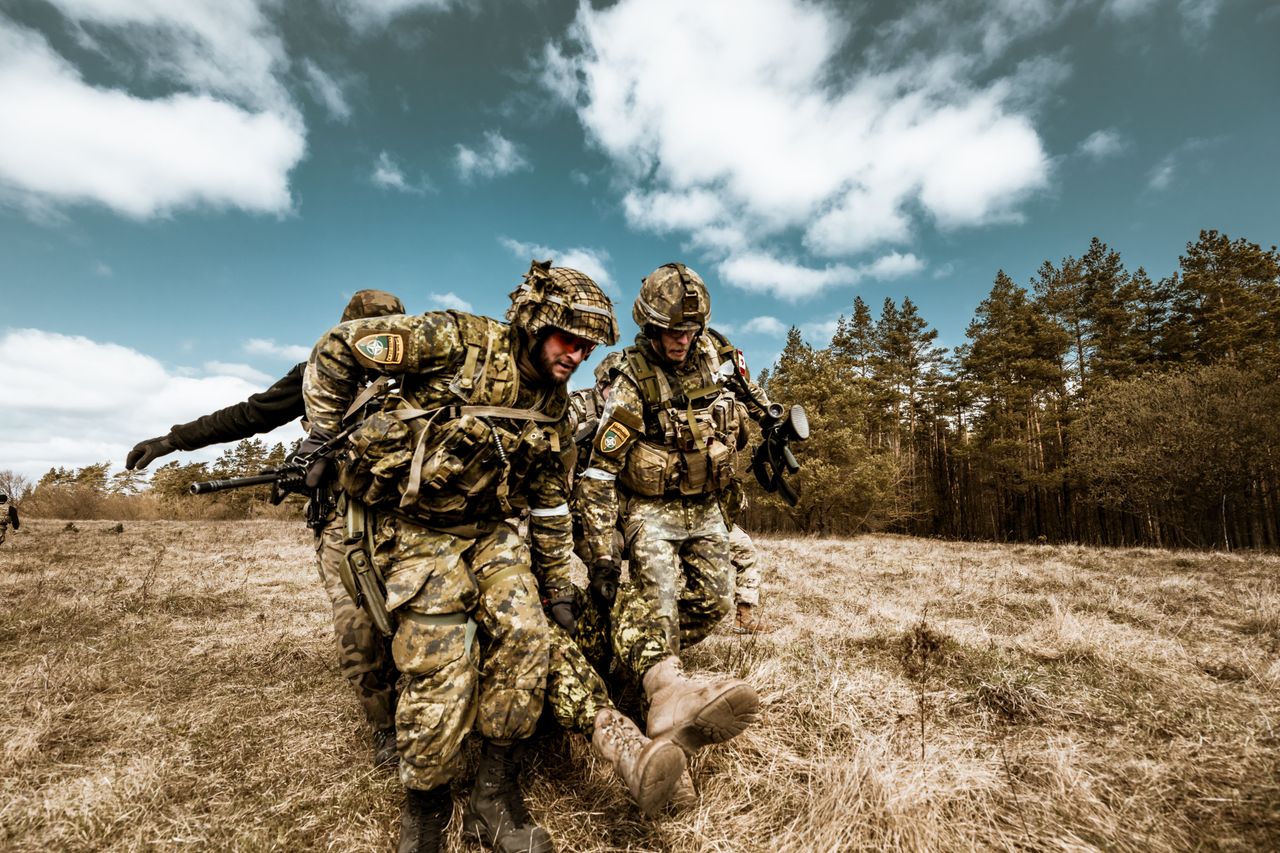
If the question is about armed forces rather than civilians, the answer changes fast. On the modern battlefield, camouflage is not a nostalgic style choice. It is an active research priority because visual concealment alone is no longer enough. Forces now have to worry about drones, thermal imagers, radar, electro-optical sensors, and satellite-supported detection.
The U.S. Army’s 2026 research budget describes a need for novel camouflage and concealment materials because the battlefield presents detection threats across a wide range of wavelengths. The European Defence Agency said in March 2025 that smart land camouflage projects were advancing specifically because thermal, radar, and visible detection systems have become more capable. Switzerland’s armasuisse announced 2025 tests of multispectral camouflage systems for the same reason.
That is the opposite of marketing fluff. Itis ans adaptation to a surveillance-heavy environment where being spotted can mean immediate targeting. Inference is appropriate here: the more sensor-rich warfare becomes, the less “old camo” alone can solve the problem, and the more important multispectral concealment becomes.
So camouflage has not become unnecessary. It has become more sophisticated. In military use, the debate is not whether camouflage matters. It is whether existing systems can keep up with the next layer of detection technology.
Camo as culture, fashion, and identity
Camouflage also survives because it means something emotionally. It signals toughness, rural identity, military association, rebellion, or authenticity depending on who is wearing it. That cultural power gives the pattern a life far beyond its field utility.
Fashion coverage has noted repeated waves of camouflage returning during moments of social unease and style reinvention. The Guardian, citing museum conservator Sarah Scaturro’s work on camo in fashion, described the pattern’s recurring movement outside military settings during periods of instability.
Outdoor consumers are not immune to that symbolism. Wearing camo can feel like participation in a tradition, even if the day’s actual activity is riding an ATV, sitting at deer camp, or stopping at a gas station before sunrise. In that sense, camouflage behaves like a uniform for belonging.
There is nothing inherently wrong with that. People have always bought clothes that project competence before they fully possess it. The issue comes when identity spending gets mistaken for fieldcraft. A $400 patterned shell cannot substitute for learning thermals, reading signs, picking a stand, or sitting still. Camo can communicate experience, but it cannot manufacture it.
So has camouflage become more marketing than necessity?

For the average consumer, yes, often. For many hunters, camouflage is useful but secondary to movement, scent, terrain, and safety compliance. For campers and general outdoors people, it is mostly aesthetic unless they have a specialized need like wildlife photography, predator control, or close-range concealment.
For serious turkey hunters, archery hunters, and waterfowlers, the answer is more balanced. Concealment can matter enough to justify thoughtful camo choices, especially when combined with face masks, gloves, and careful setup. But even there, the market tends to exaggerate the advantage of one branded pattern over another.
For the military, however, camouflage remains an operational necessity, just in a far more advanced form than the public usually imagines. The real frontier is not printed leaves on fabric. It is multispectral signature management against drones, thermal optics, and radar.
So the best conclusion is this: camouflage is both overmarketed and still legitimate. The trick is knowing which version you are buying. If you are purchasing identity, say so. If you are purchasing performance, focus on fabric and function. And if you are betting everything on pattern alone, the marketing department has probably already won.