
Railroad work once meant long stretches away from towns, isolated depots, valuable freight, and occasional confrontations far from immediate help. Depending on the era, railroad employees, guards, and law enforcement officers protecting railway property carried everything from compact revolvers to military surplus rifles. Some firearms became associated with railroad security through documented service, while others gained their connection through the wider history of American rail travel and law enforcement. Today, these guns attract collectors for their mechanical designs, production histories, surviving markings, and links to a vanished working world. Their appeal often lies in the details that distinguish an ordinary firearm from one with a compelling historical story.
1. Winchester Model 1866
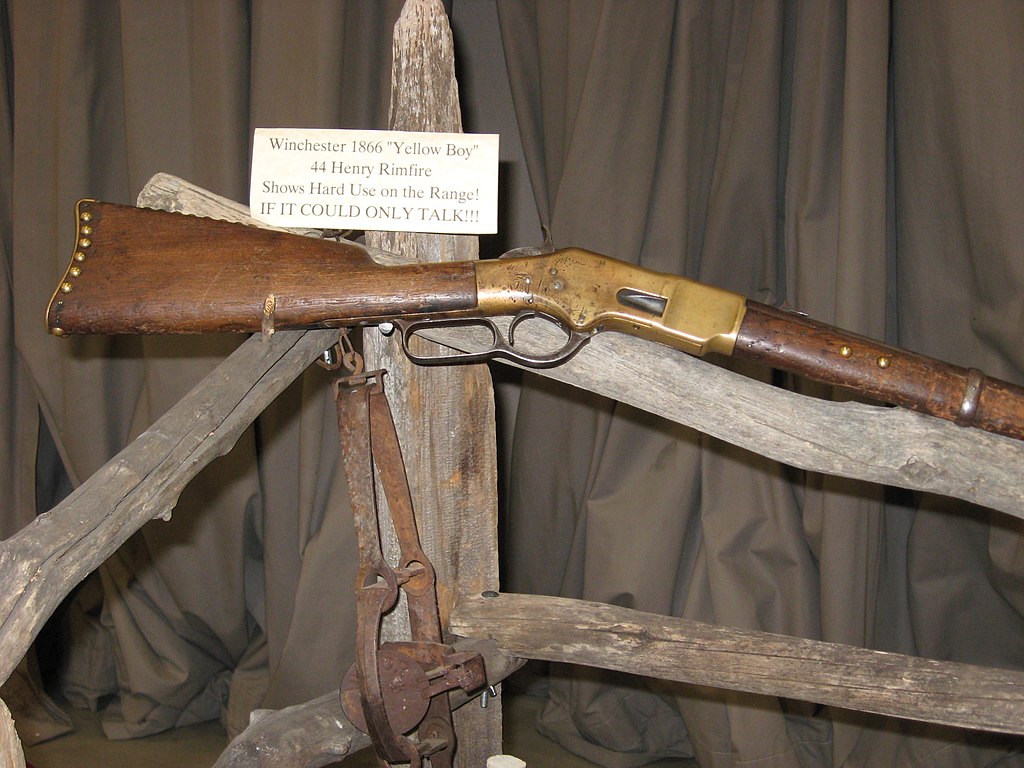
The Winchester Model 1866 arrived in 1866 with a brass receiver, a lever action, and a tubular magazine, making it a landmark in repeating rifles. Union Pacific’s museum preserves one marked with the railroad’s initials on its stock, a direct link between the design and railroad history. Construction crews and guards worked across isolated stretches where a repeating arm could serve practical purposes, though assignments varied by employer and location. Collectors prize surviving railroad-marked examples because provenance turns a familiar rifle into evidence of a specific working world.
2. Colt Single Action Army
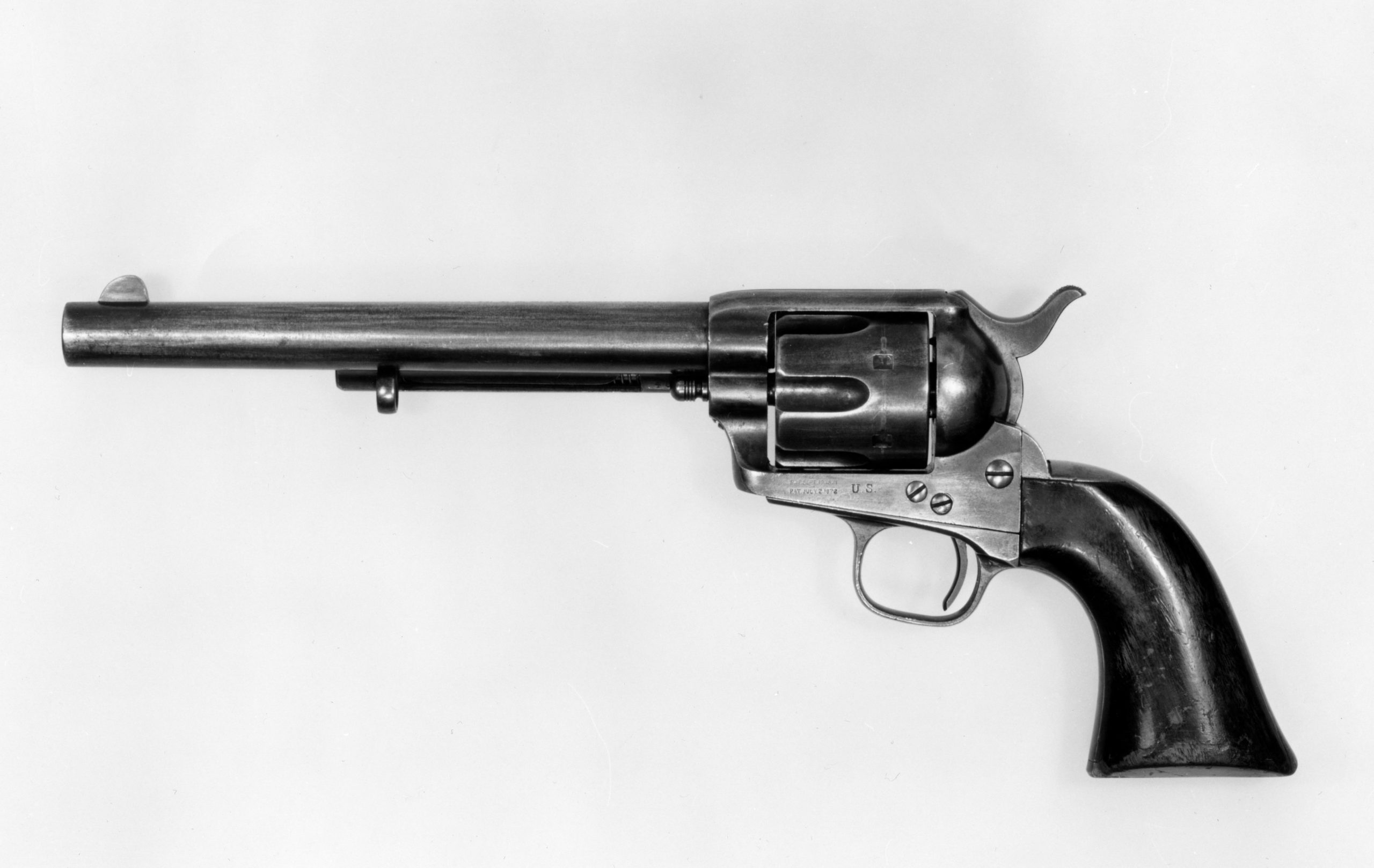
Introduced in 1873, Colt’s Single Action Army became one of the best-known revolvers of the American West. Its single-action mechanism and six-shot cylinder made it a recognizable sidearm for lawmen and some armed express guards connected with rail transport. It was not issued to every railroad employee, and individual ownership was common, so a railway connection needs evidence. Collectors check original finish, matching serial numbers, period grips, and documented ownership. A genuine link to a railroad agent or express service can make the history more compelling than the famous name alone.
3. Winchester Model 1873

Winchester introduced the Model 1873 in 1873, and its lever-action design helped make repeating rifles familiar. Railroad special agents and guards worked in regions where such arms were known, although no single rifle was universal. The model’s appeal comes from its place in frontier life. Collectors examine caliber, barrel length, factory markings, condition, and records tying a specific example to a railroad. A documented service history stands apart from a later gun with only a railroad story. Original sights and unaltered wood also matter.
4. Colt Army Special
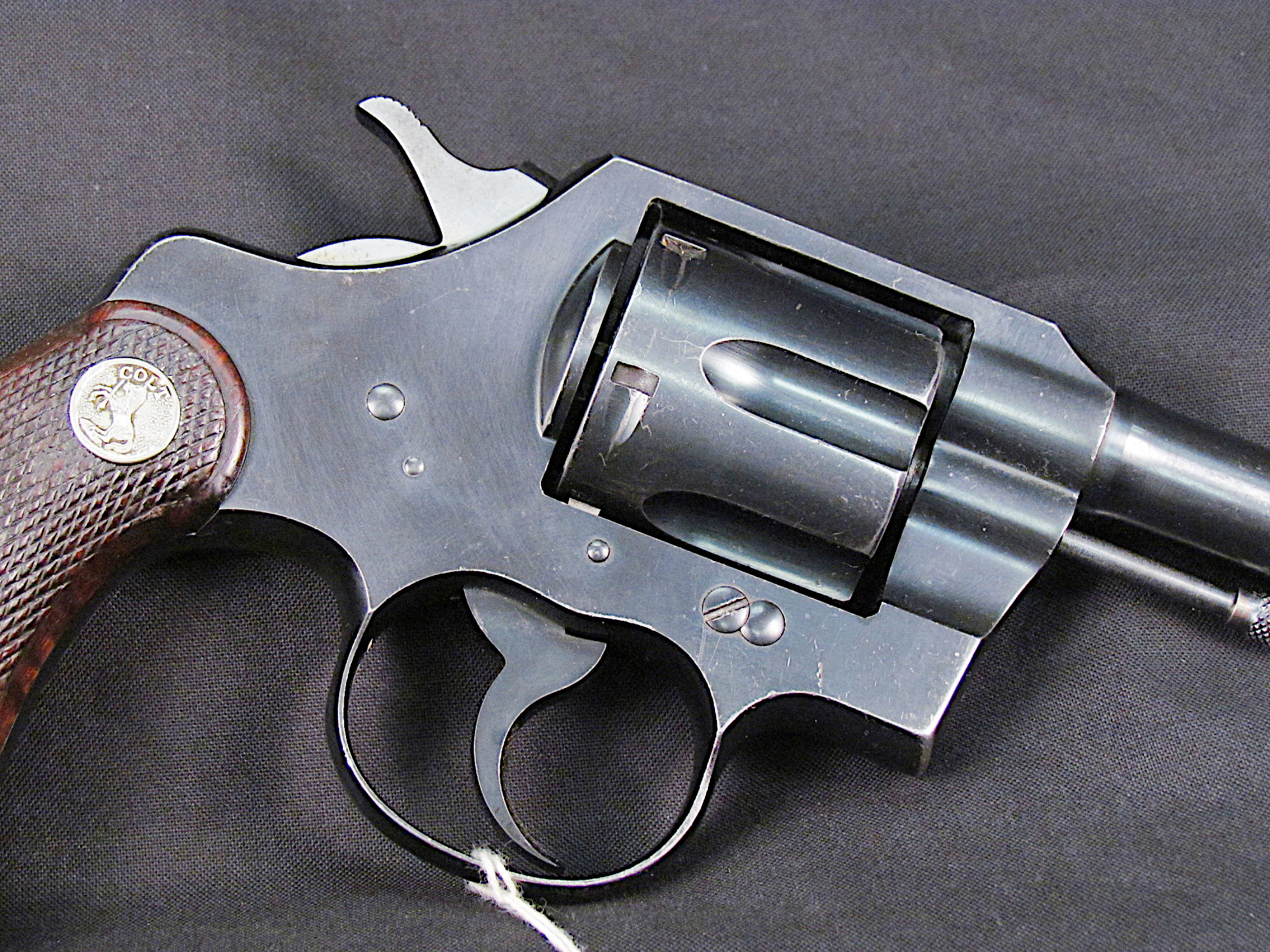
Colt’s Army Special revolver offers one of the clearest documented railroad links. A .38 Special example shipped on June 16, 1922, was among 10 guns sent to Union Hardware in Los Angeles for Union Pacific, and railroad records indicate the revolvers were in service before 1927. The timing followed the major 1922 rail strike, when security concerns rose. The model was introduced in 1908 and later renamed the Official Police in 1927. For collectors, factory letters and railroad paperwork can establish provenance far more convincingly than wear or an old holster alone.
5. Winchester Model 1892
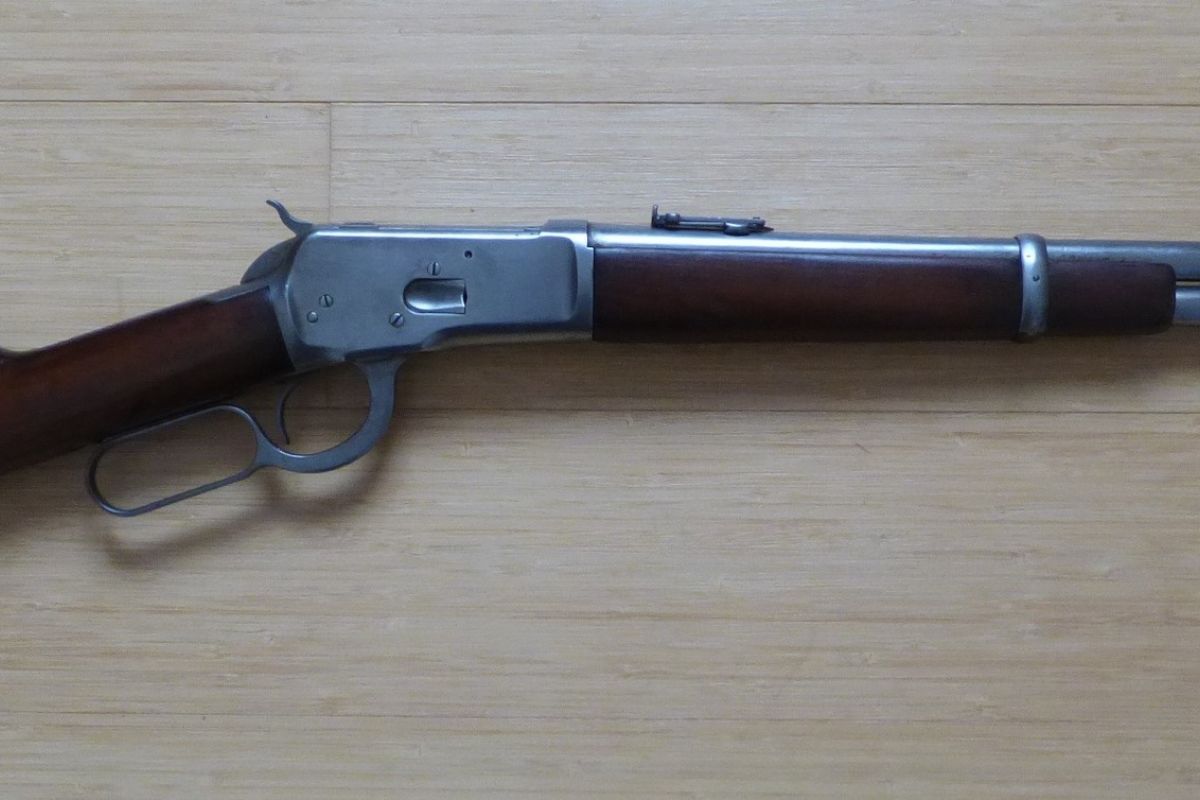
Designed by John Browning and introduced in 1892, the Winchester Model 1892 was a compact lever-action rifle. Its manageable size made it a practical choice in some frontier settings, although individual railroad use should be verified rather than assumed. The model remained in production until 1941. Collectors look at chambering, barrel configuration, serial number, and condition. Railroad markings or reliable ownership records can elevate an ordinary example into a distinctive historical piece. The strongest examples retain period-correct parts and a traceable chain of ownership.
6. Remington Double-Barrel Shotgun

Express guards protecting cash, payrolls, and valuable freight often favored shotguns, and Remington was among the makers supplying them. By 1874, breech-loading shotguns offered a practical change from muzzle-loaders: the break-open action allowed cartridges to be inserted without loading powder and shot down each barrel. Twelve-gauge double-barrel guns became familiar tools for armed messengers on trains. Collectors value period examples for maker’s marks and documentation. A shortened barrel alone does not prove railroad service, and altered guns require legal and historical scrutiny.
7. Winchester Model 1897
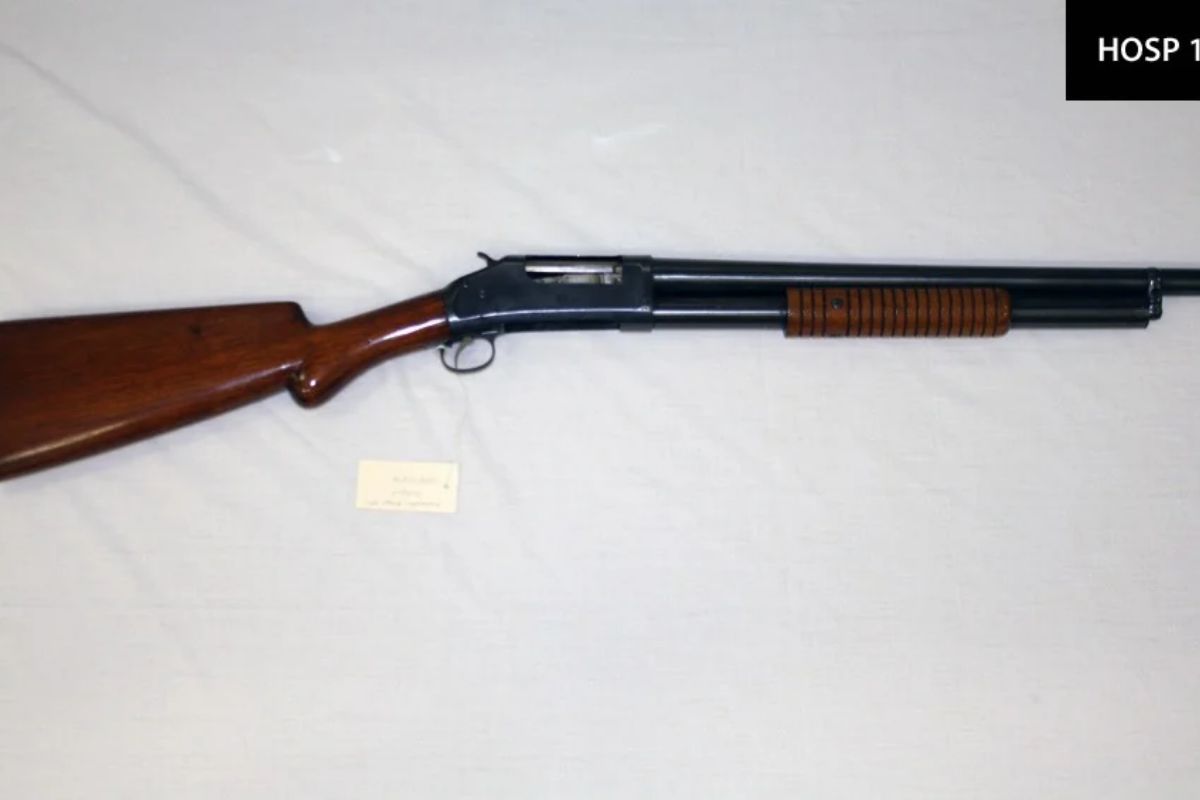
Winchester’s Model 1897 appeared in 1897 and became a widely recognized pump-action shotgun. Its military service connects it to the wider history of guarding transport, especially during wartime. Not every railroad worker carried one; armed guards, railway police, and government mail protection had different duties and equipment. Collectors distinguish sporting models from documented military or security examples by checking markings, configuration, and records. A credible service history matters because the model’s long production life created many variations. Wartime provenance can add particular interest.
8. Springfield Model 1873 Trapdoor Carbine
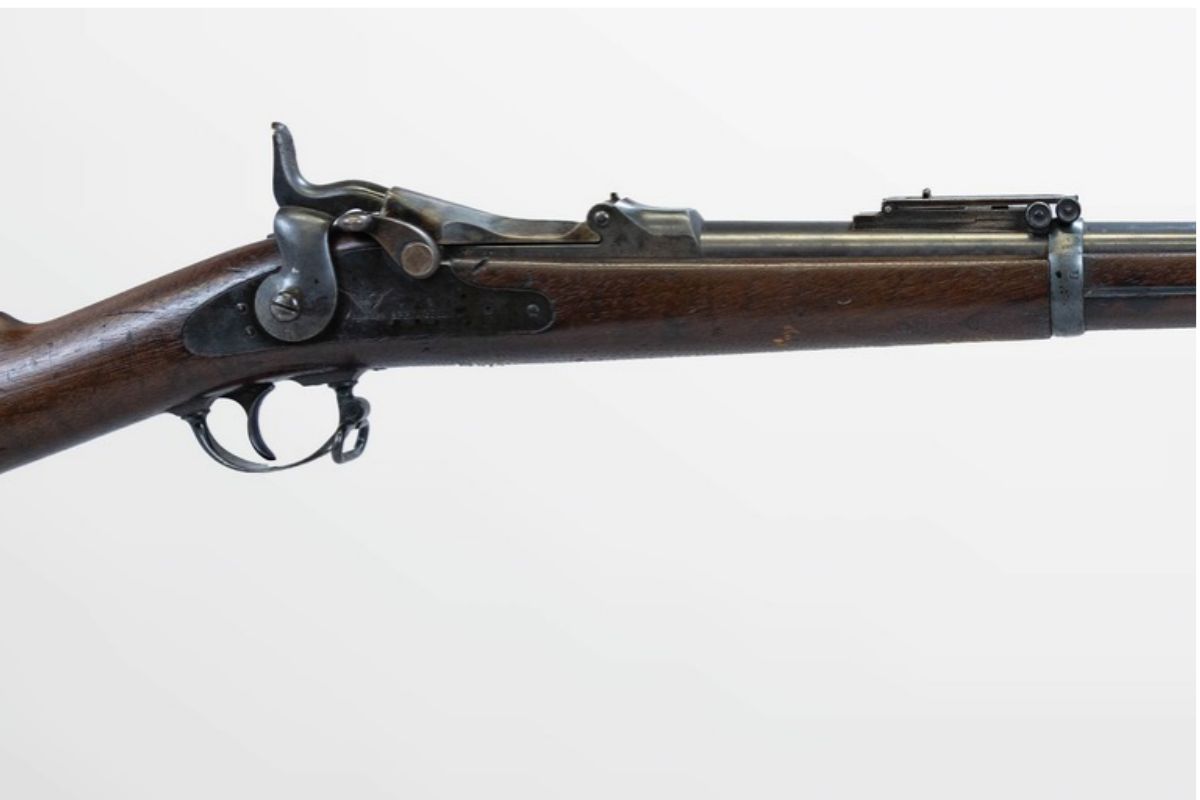
The Springfield Model 1873 Trapdoor family represents single-shot military arms used by U.S. troops during western rail expansion. Soldiers, rather than ordinary railway employees, often protected surveyors and construction crews. The carbine’s hinged breech and .45-70 Government cartridge mark a transition from muzzle-loaders to metallic-cartridge service rifles. Collectors study arsenal marks, inspection stamps, and serial details. Its railroad connection usually comes through military protection of railway expansion, not standard employee issue.
9. Smith & Wesson Model 3
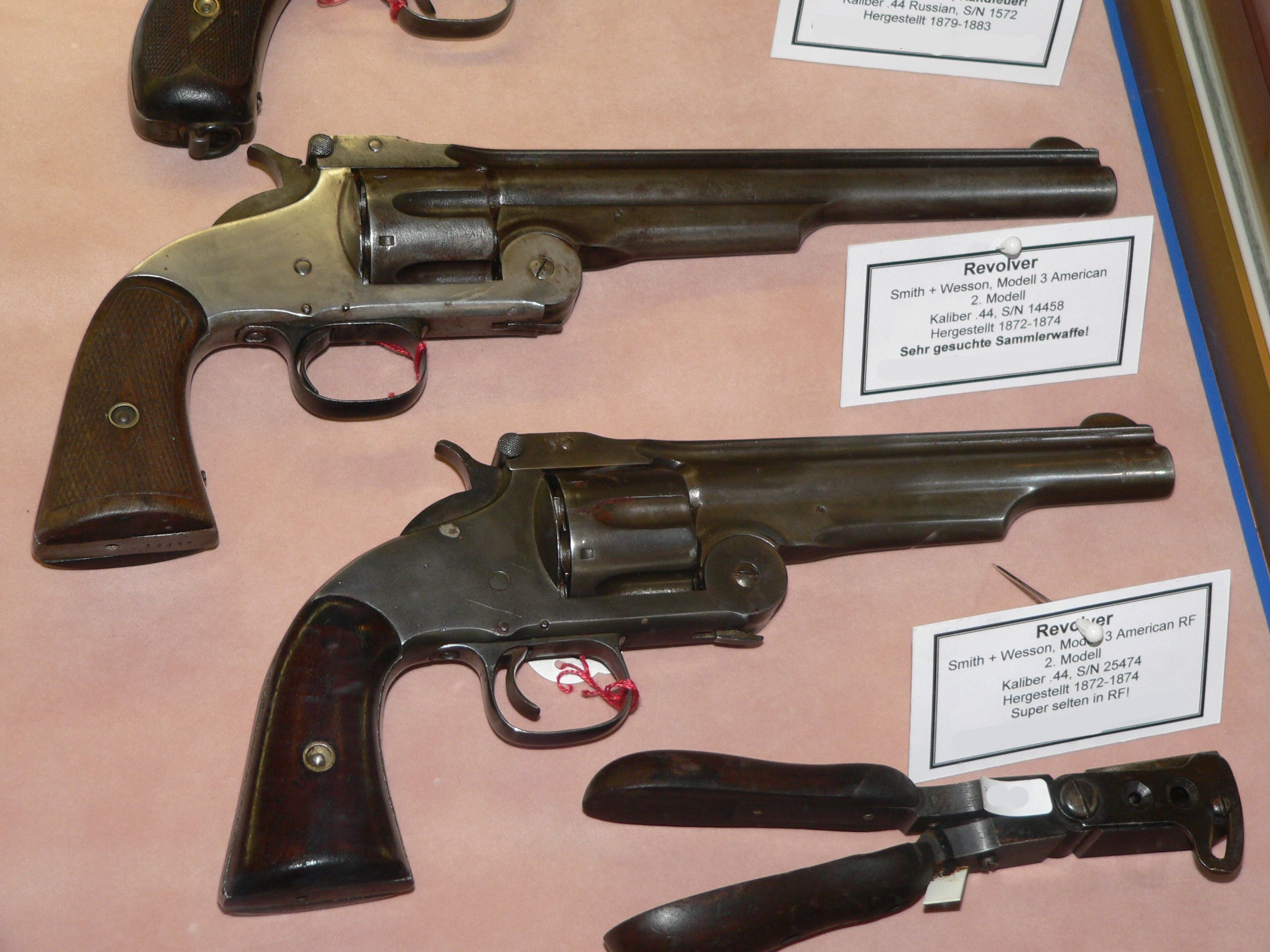
Smith & Wesson’s Model 3, introduced in 1870, was a cartridge revolver with a break-open design that exposed the chambers for reloading. Variants served military customers, and similar revolvers circulated among frontier lawmen during railway expansion. That broad association does not prove a particular gun belonged to a railroad worker; documents or clear markings are needed. Collectors value original finish, intact hinge and latch parts, correct grips, and a verifiable variant. Its appeal lies in the engineering shift toward practical metallic-cartridge handguns.