Prisoners of war were usually disarmed after capture, but some historical conflicts produced unusual situations in which captured soldiers were later assigned guard duties over other prisoners. In some cases, former prisoners served in auxiliary units or under supervision, while in others, armed guards were recruited from local forces or collaborating formations rather than being prisoners themselves. Understanding the distinction matters when examining the weapons involved. The following nine firearms explore historical examples connected to prisoner guarding, wartime detention, and the complicated relationship between captivity and military service.
1. Karabiner 98k: Germany’s Standard Service Rifle
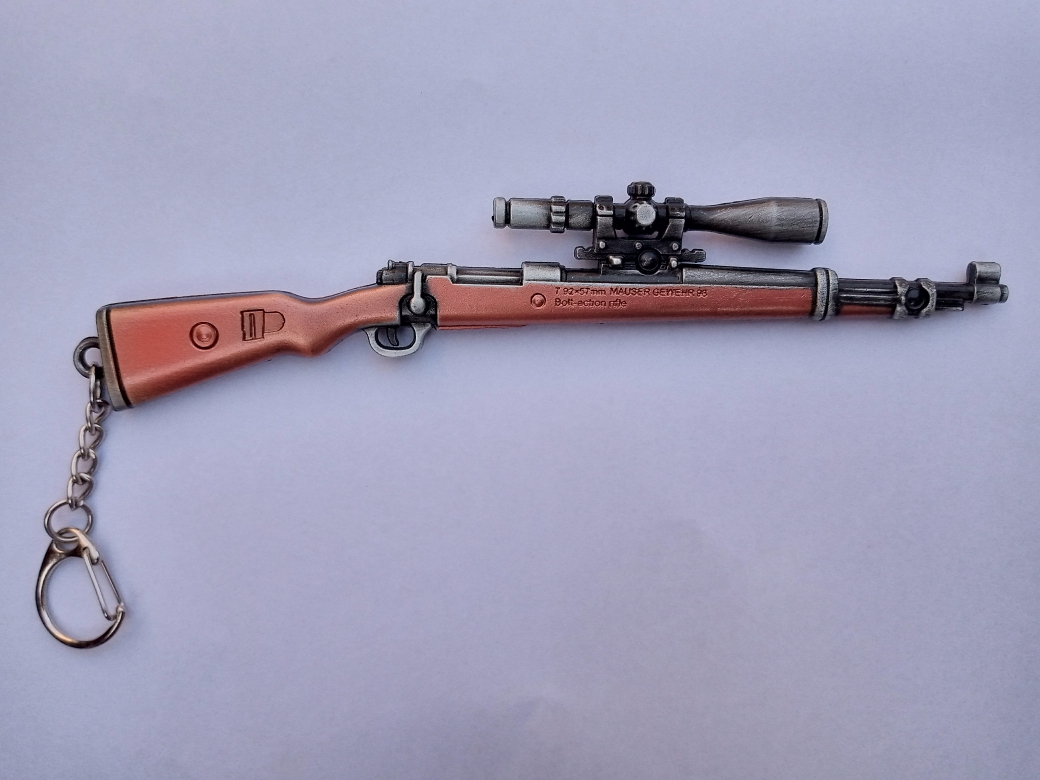
The Karabiner 98k was Germany’s principal service rifle during World War II, with production exceeding 14 million by the end of the conflict. Chambered in 7.92×57mm Mauser, it used a five-round internal magazine and a bolt-action mechanism. German forces also employed captured soldiers in auxiliary roles, including support and security duties, although their equipment varied considerably. Former Soviet prisoners recruited into German service could encounter German-issued weapons, but the Karabiner 98k should not automatically be described as a standard rifle issued to POWs guarding other prisoners. Its significance lies in its widespread use across the German military system.
2. Mosin-Nagant M1891/30: A Familiar Rifle in Captured Hands
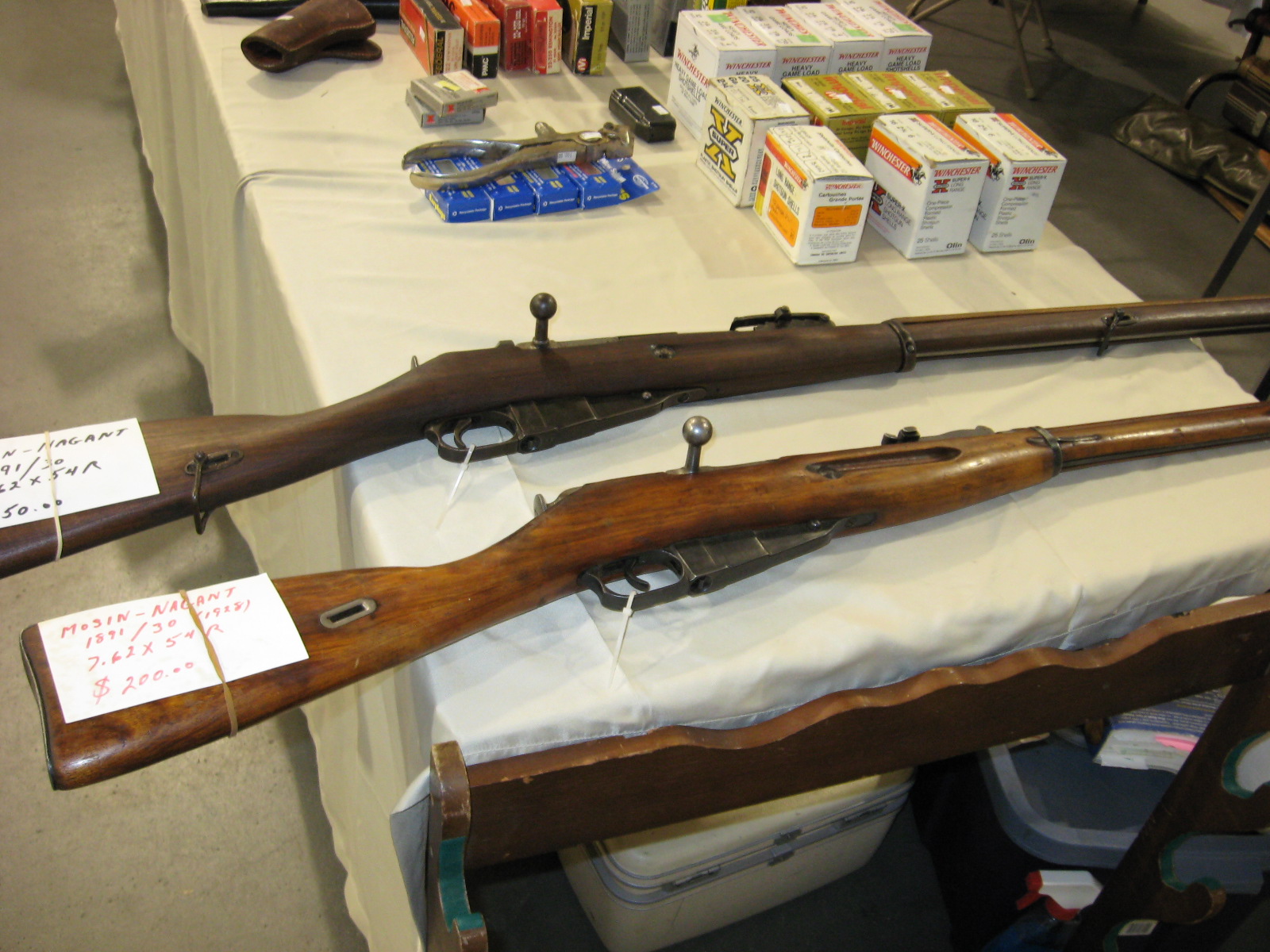
The Mosin-Nagant M1891/30 was one of the Soviet Union’s principal infantry rifles during World War II. Chambered in 7.62×54mmR, it featured a five-round internal magazine and a bolt-action design. German forces captured enormous quantities of Soviet weapons during the invasion that began in June 1941. Some Soviet prisoners subsequently entered German-controlled auxiliary formations, where captured Soviet equipment could remain useful. However, a soldier’s previous service with the Red Army does not prove that he was issued this rifle for guarding fellow POWs. The Mosin-Nagant illustrates how captured equipment could move between opposing military organizations.
3. SVT-40: The Soviet Semi-Automatic Rifle
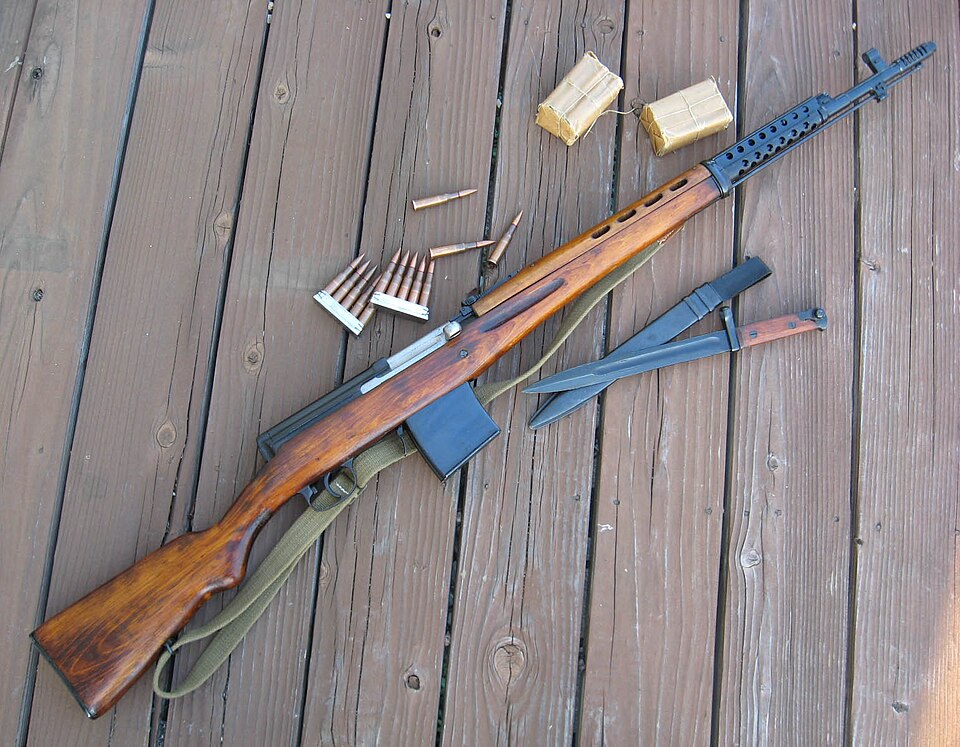
The SVT-40 was a Soviet semi-automatic rifle introduced in 1940 and chambered in 7.62×54mmR. Its detachable magazine held 10 rounds, giving it a faster potential rate of fire than a conventional bolt-action rifle. Soviet forces used it during the opening years of World War II, and German troops captured substantial numbers during their advance eastward. Captured examples were sometimes reused by German forces, including in secondary roles. Former Soviet soldiers who entered auxiliary service operated under varied arrangements, but evidence of a captured rifle’s reuse does not establish a specific prisoner-guard issue. The SVT-40 is an example of how battlefield losses complicated wartime equipment supply.
4. MP 40: Germany’s Recognizable Submachine Gun
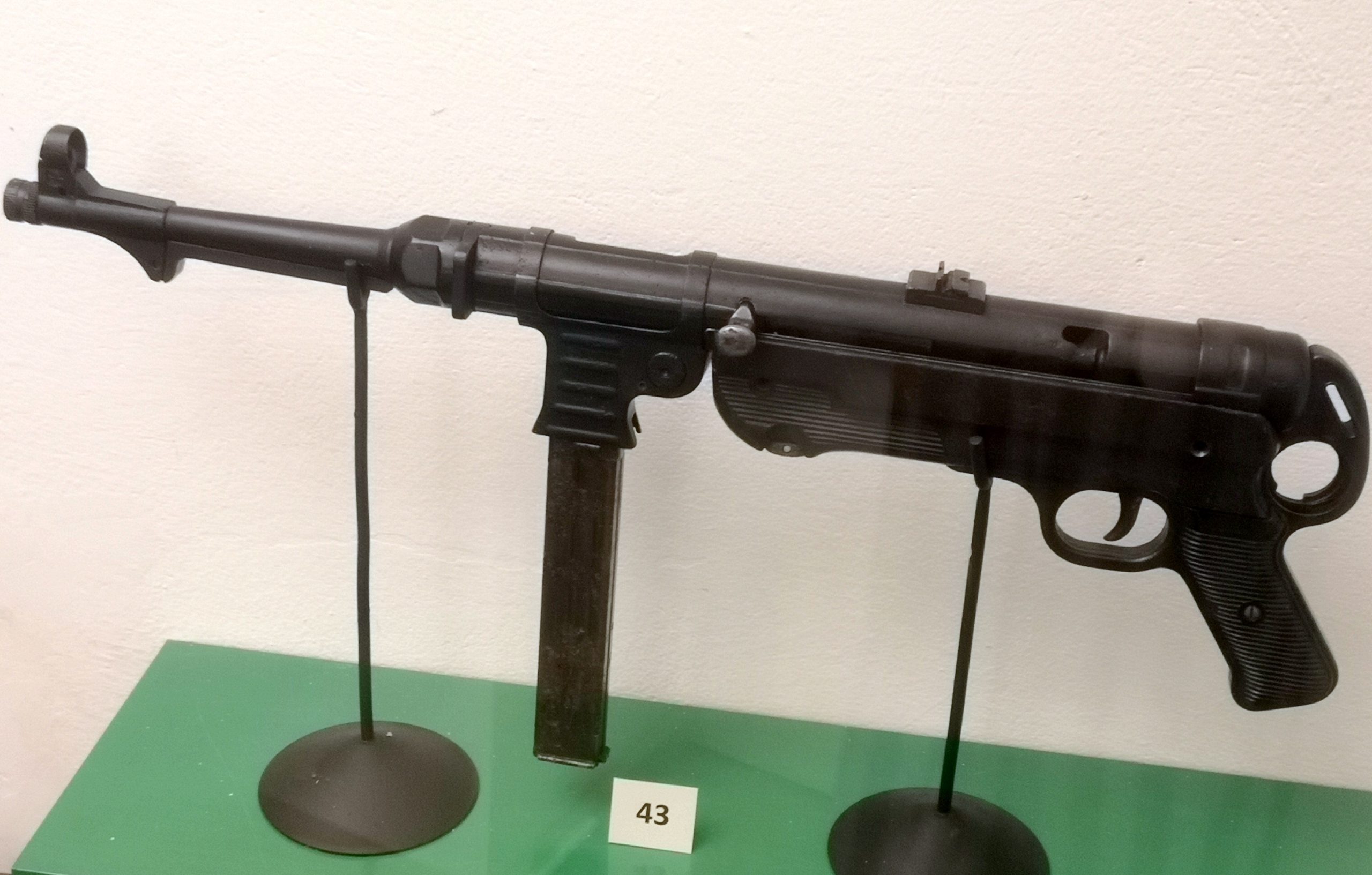
The MP 40 became one of the most recognizable German firearms of World War II. Chambered in 9×19mm Parabellum, it used a 32-round detachable magazine and fired automatically or semiautomatically depending on the operator’s trigger control. Its compact construction suited German military personnel who needed a shorter firearm than a full-length rifle. German-controlled auxiliary formations sometimes received German weapons, but the MP 40 was not a universal issue arm for captured soldiers assigned to prisoner-security work. Its presence in a wartime photograph would need to be evaluated alongside unit records, uniforms, and the circumstances shown before drawing conclusions about the bearer’s status.
5. Gewehr 98: The Older German Service Rifle
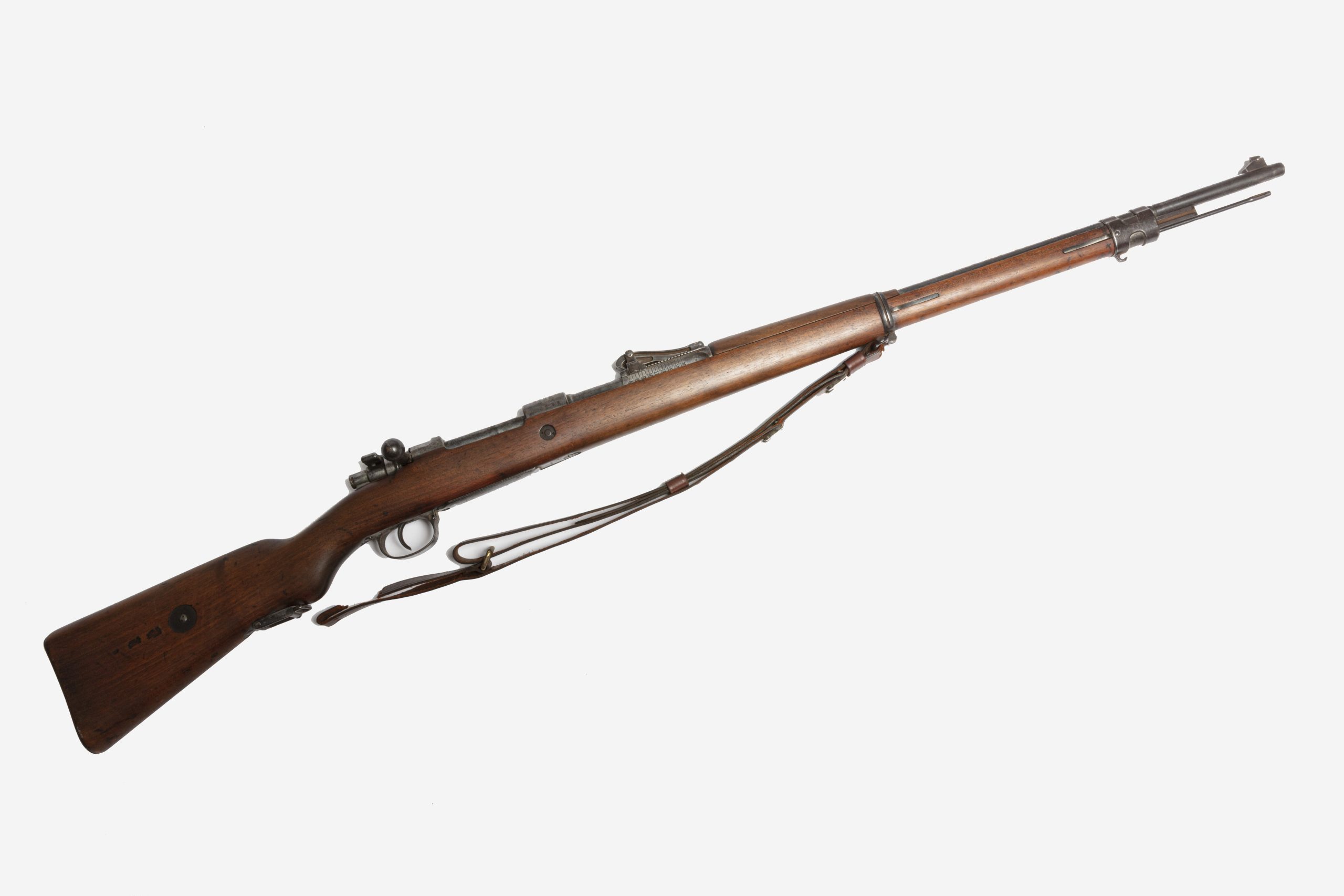
The Gewehr 98 entered German military service in 1898 and remained an important historical predecessor to the Karabiner 98k. Chambered in 7.92×57mm Mauser, it used a five-round internal magazine and a manually operated bolt. Although newer rifles gradually replaced it in frontline roles, older weapons could remain in storage, training establishments, or secondary service. Wartime Germany also relied on auxiliary personnel for duties beyond ordinary frontline combat. However, the existence of older rifles in military inventories does not establish that former POWs received them for guarding other captives. The Gewehr 98 is best understood as part of the broader legacy of German military equipment rather than a confirmed standard guard weapon.
6. Mannlicher M1895: A Rifle Carried Across Changing Fronts
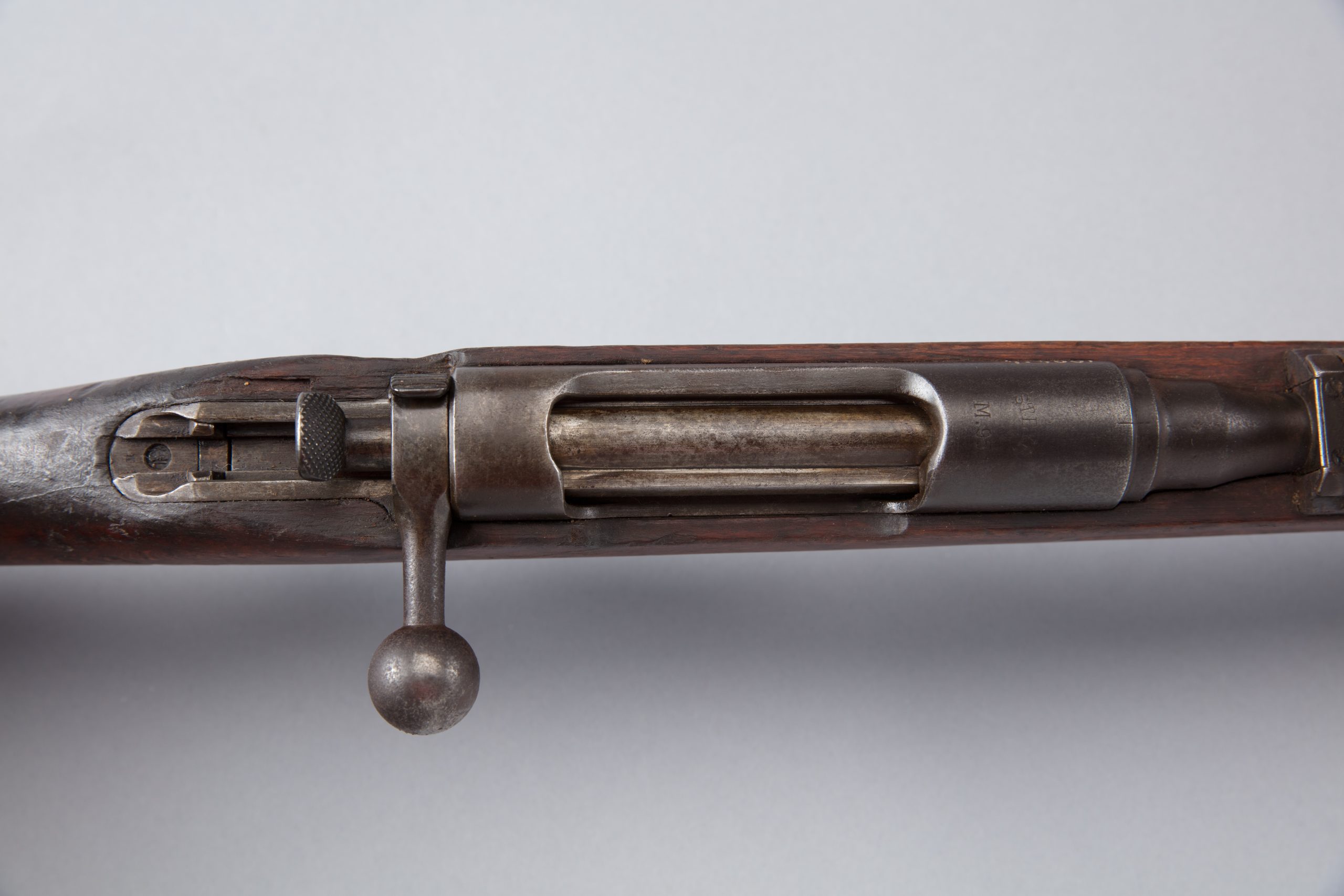
The Mannlicher M1895 was an Austrian-designed straight-pull bolt-action rifle used by Austro-Hungarian forces during World War I and retained in various forms after the empire dissolved in 1918. Depending on the version and cartridge, it could hold five rounds in an internal magazine. Weapons from former imperial arsenals continued to circulate across Central and Eastern Europe, where political borders and military alliances changed repeatedly. During later conflicts, older rifles could find their way into reserve or secondary units. Nevertheless, a Mannlicher rifle’s appearance in a prison camp or security setting would not by itself establish that its bearer was a POW assigned to guard other prisoners.
7. Lee-Enfield No. 4: Britain’s Wartime Infantry Rifle
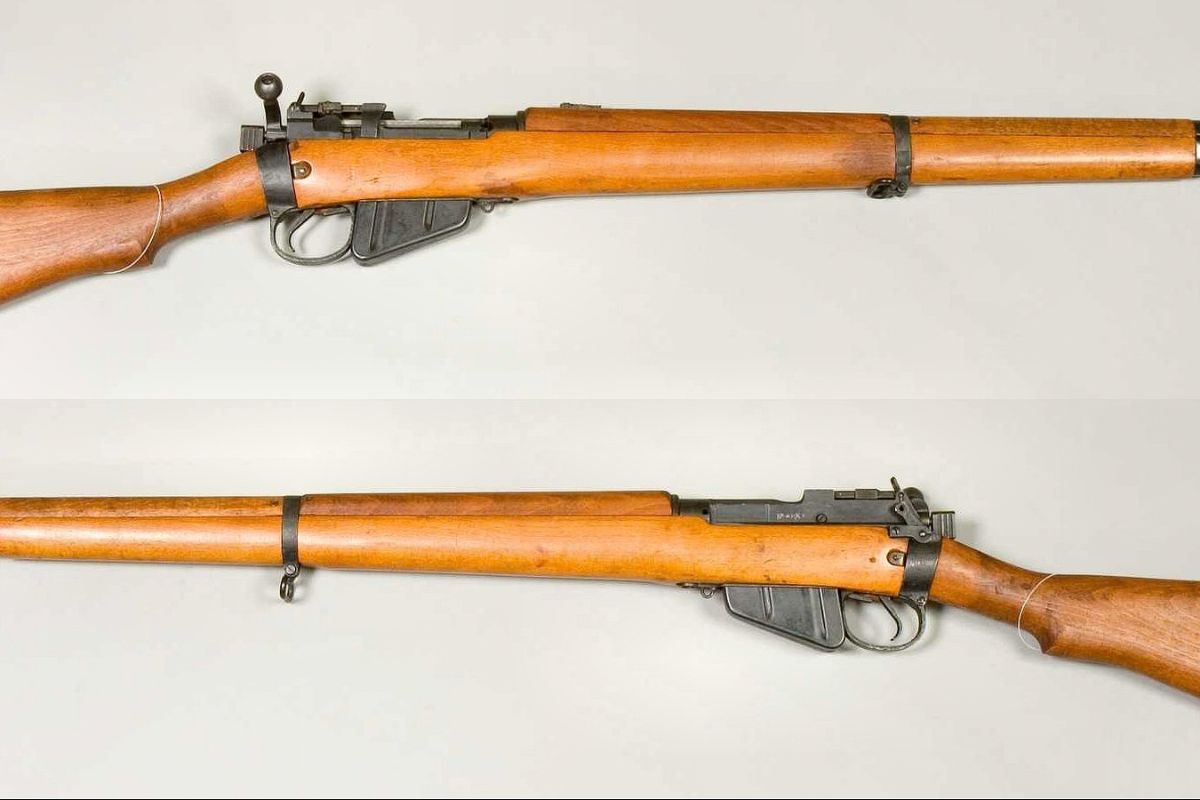
The Lee-Enfield No. 4 became a major British and Commonwealth infantry rifle during World War II. Chambered in .303 British, it featured a 10-round magazine and a bolt-action mechanism designed for rapid, reliable operation. British forces used it extensively, while allied and Commonwealth formations relied on related Lee-Enfield models. Prisoner camps operated under different national systems, and guard personnel were not necessarily drawn from captured enemy soldiers. Some captured troops later entered auxiliary organizations, but that history should not be confused with the ordinary issue of British rifles. The Lee-Enfield is relevant to the wider study of wartime detention and military logistics, not as proof of a routine POW-guard program.
8. MAS-36: France’s Compact Bolt-Action Rifle
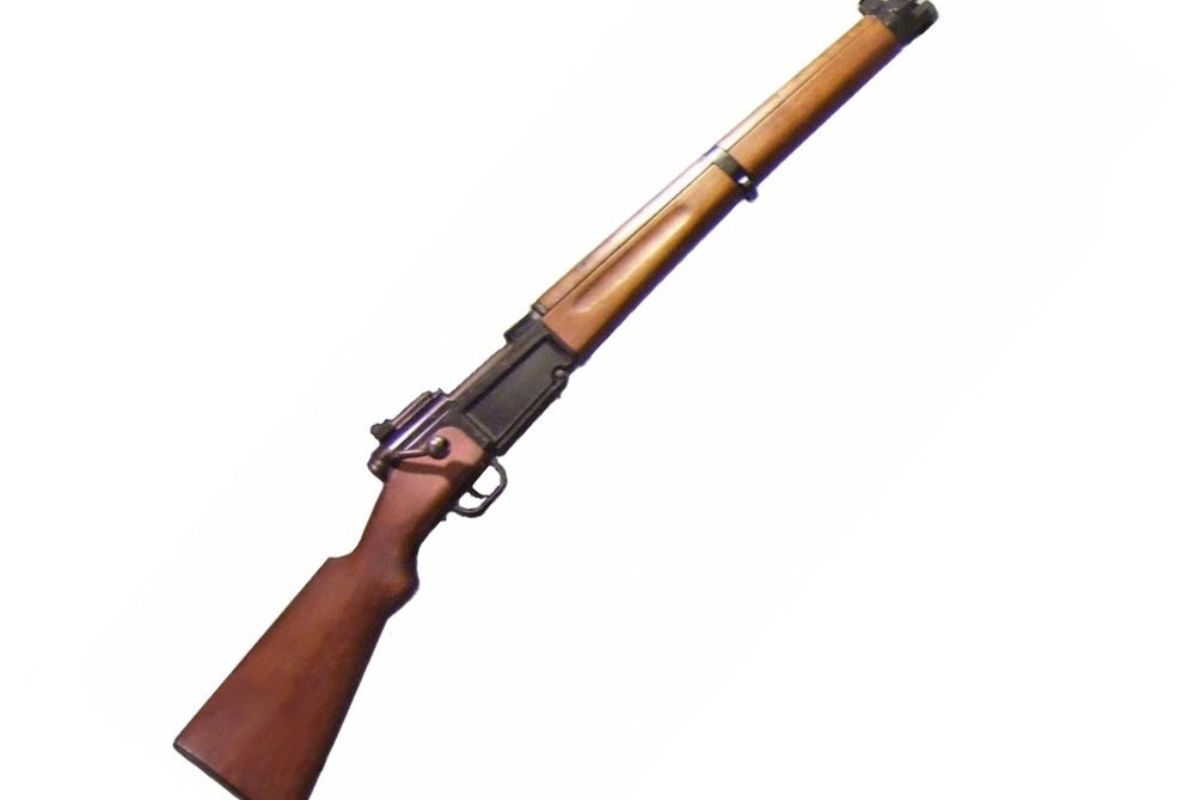
France adopted the MAS-36 rifle in 1936 as a modern infantry weapon. Chambered in 7.5×54mm French, it used a five-round internal magazine and a bolt-action design with a distinctive forward-angled bolt handle. Production and distribution continued through the upheaval of World War II, while French military equipment passed through several different authorities and formations. Captured or inherited firearms could later appear in secondary military roles, particularly when supplies were limited. Yet the MAS-36 cannot be confidently identified as a standard weapon issued to POWs guarding fellow prisoners without specific documentary evidence. Its history demonstrates why a firearm’s national origin alone cannot establish who carried it or under what circumstances.
9. Arisaka Type 99: Japan’s Standard Infantry Rifle
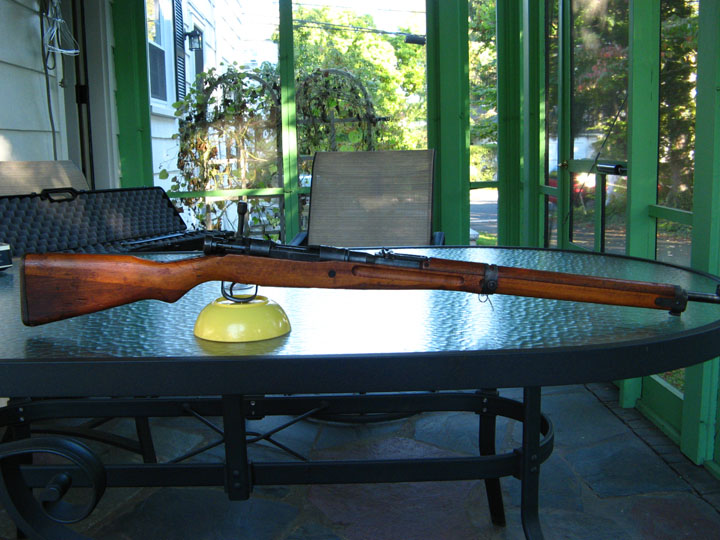
Japan introduced the Type 99 rifle in 1939, and it became an important infantry weapon during World War II. Chambered in 7.7×58mm Arisaka, it used a five-round internal magazine and a bolt-action mechanism. Japanese forces employed it throughout the Pacific and Asian theaters, while Allied forces captured examples during combat. Prisoner detention arrangements varied sharply between the different belligerents, and captured soldiers were not routinely transformed into armed guards simply because weapons were available. Any claim that a Type 99 was issued to a POW for guarding other captives would require evidence from a particular unit or camp. The rifle remains a useful example of the equipment surrounding wartime captivity.