A proper British field gun is hard to explain until you carry one all day. Then it makes instant sense in the hands, on the shoulder, and in that split second before the bird folds.
What makes a British field gun feel right
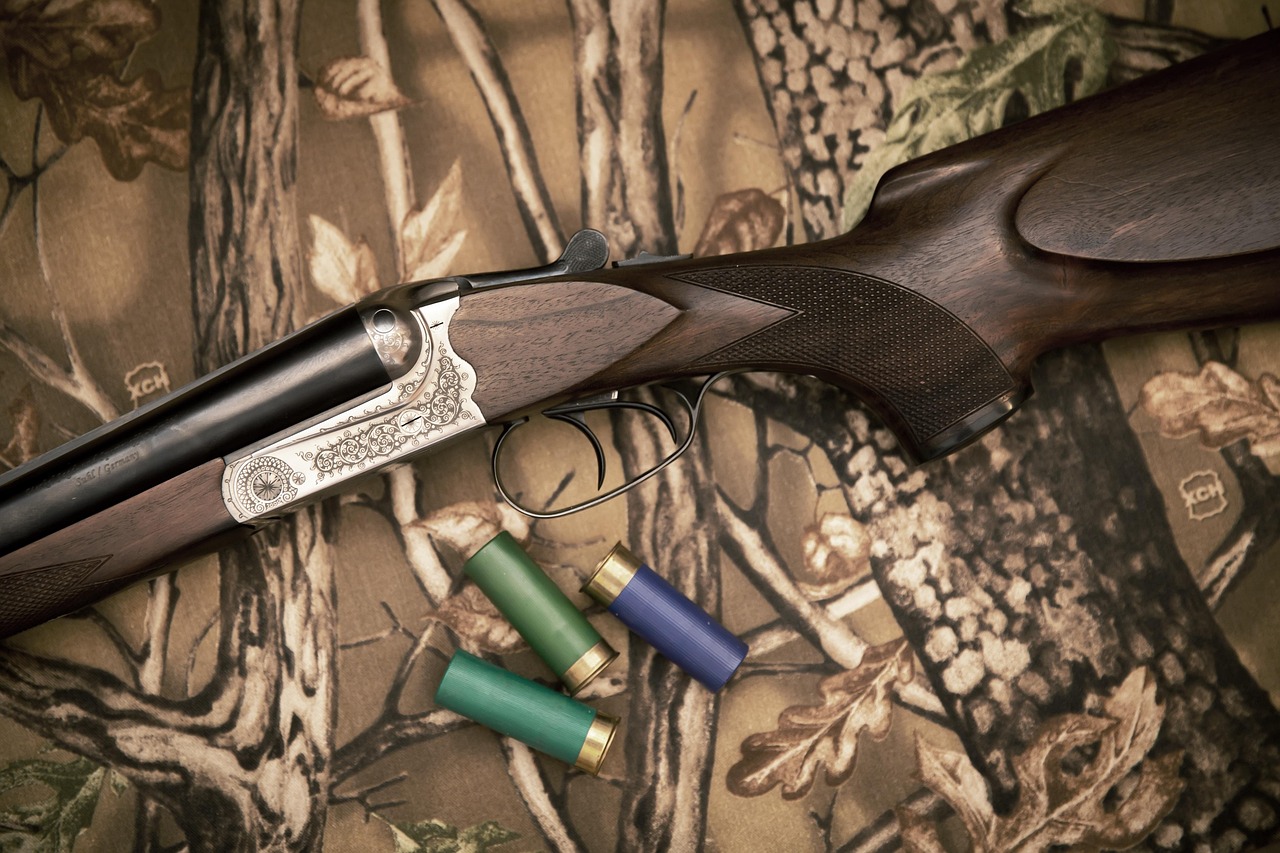
The British idea of a field gun was never about brute durability alone, and it certainly was not about excess weight. It was about building a shotgun that comes alive between the hands, mounts without drama, and keeps moving with the bird instead of fighting the shooter. That is why classic British makers obsessed over stock dimensions, barrel regulation, trigger pulls, and overall balance long before modern fit charts became common.
A lot of that feel comes from restraint. Traditional game guns were usually kept trim, with straight grips, splinter forends, and barrels commonly around 28″ or sometimes 30″ depending on period and purpose. Westley Richards has described its modern droplock game gun as lively and instinctive in handling, and that phrase captures the British standard better than any catalog superlative ever could. Purdey, Holland & Holland, and Boss built reputations on the same idea, even when their internal mechanics differed.
There is also a cultural piece to this. Driven shooting rewarded a gun that could be carried comfortably, brought up quickly, and fired almost as a continuation of the body. John Dickson became synonymous with its round action, while William Evans built a name on accessible London quality after its founder trained with both Purdey and Holland & Holland. That lineage matters because British field-gun feel was shaped by craftsmen passing down one solution after another, not by one company acting alone.
The London trio that still set the standard
If you ask most shooters to name the archetype, they will start with the London best guns: the Purdey sidelock, the Holland & Holland Royal, and the Boss side-by-side. These are not interchangeable, even if outsiders lump them together. Each has its own personality, but all three define that unmistakable mix of balance, polish, and effortless response that people mean when they talk about a proper game gun.
The Purdey side-by-side remains central because the Beesley self-opening system gave the gun a uniquely eager feel at the hinge. Purdey still lists the sidelock side-by-side among its bespoke models, and the company’s history notes how Ernest and Harry Lawrence refined the Woodward action into Purdey’s best over-and-under as well. In the field, though, the classic Purdey side-by-side is still the reference point for many shooters who want a gun that seems to finish the mount for them.
Holland & Holland’s Royal is equally important, but often feels a touch more measured and stately. Holland & Holland remains one of the defining names in fine British gunmaking, and its Royal side-by-side has long stood for elegant handling combined with superb finish and consistency. Where some guns feel merely light, a good Royal feels composed, which is a different and more difficult trick.
Boss completes the trio because its guns have always had a reputation for extraordinary refinement and clean design language. Boss is especially celebrated for the over-and-under it introduced in the early 20th century, but its side-by-sides also carry that same pared-back elegance. When experienced shots talk about a gun feeling alive rather than busy, they are often describing the kind of discipline these London houses made famous.
Why the action matters as much as the name

Brand prestige gets the attention, but action design is where much of the gun’s character actually lives. A sidelock side-by-side tends to feel different from a boxlock, and both differ again from a triggerplate or detachable-lock design. None is automatically better in every context, but each changes how weight sits in the hand, how the gun opens, and how it carries through the target.
That is why the Westley Richards droplock belongs on any serious list. The company notes that the Anson & Deeley boxlock of 1875 became the world’s most popular sporting-gun action, and Westley’s 1897 hand-detachable lock took that foundation in a more sophisticated direction. The modern droplock still uses the principles that made it famous, with removable lockwork, a snap lever, and the Model “C” Doll’s Head third fastener all reinforcing the sense of mechanical certainty.
A modern 20-bore Westley droplock example listed by the company weighed 5lb 12oz with 28″ barrels, double triggers, and a straight hand stock. Those numbers matter because they show how British makers still understand the old formula: keep the gun light enough to carry, long enough to swing, and plain enough in layout to disappear in use. A field gun is not supposed to feel like machinery. It is supposed to feel like timing.
This is also where John Dickson’s round action earns its place. Dickson says it is synonymous with one action only, and that reputation is no accident. The round action’s triggerplate layout and famously compact, graceful body create a very distinct sensation between the hands, one many upland and walked-up shooters still consider close to ideal.
The nine shotguns that still define the category

The first four are almost compulsory: the Purdey sidelock side-by-side, the Holland & Holland Royal sidelock, the Boss side-by-side, and the Westley Richards droplock. If you want to understand British field-gun feel, these are foundational. They are not just famous names; they are complete expressions of how a sporting gun should balance, open, and recover for the second shot.
The next three broaden the picture. John Dickson’s Round Action brings Scottish elegance and wonderful compactness. William Evans side-by-sides represent the more attainable side of London tradition, backed by a house founded in 1883 by a man who had worked for both Purdey and Holland & Holland. Then there is Atkin, Grant & Lang, a name with roots in several great London lineages and a long association with classic best-quality game guns.
The final two add mechanical character. Rigby’s Rising Bite, more often discussed in rifle circles, also produced distinctive shotguns built around the 1879 Rigby-Bissell patent, an action celebrated for strength and elegance. And no list of defining British field guns feels complete without the Woodward over-and-under, whose slim, graceful form influenced later best-gun design so deeply that Purdey’s own history specifically credits Ernest and Harry Lawrence with improving the Woodward action into its best over-and-under.
So the nine are these: Purdey sidelock side-by-side, Holland & Holland Royal, Boss side-by-side, Westley Richards droplock, John Dickson Round Action, William Evans side-by-side, Atkin Grant & Lang best gun, Rigby Rising Bite shotgun, and Woodward over-and-under. Together they cover the main British answers to the same question: how should a game gun feel when it matters most?
What these guns teach modern shooters

One lesson is that light does not mean whippy. British makers chased lively handling, but they also guarded against nervous balance. That is why so many truly admired field guns seem to float into the line without overswinging. The best examples carry enough barrel presence to stay honest, while keeping the action and stock trim enough that the gun never feels clubby.
Another lesson is that fit outranks theory. A shooter can admire a famous sidelock all day, but if the drop, cast, and length are wrong, the magic vanishes. Bespoke British gunmaking has always revolved around this point. Westley Richards still builds to customer measurements, and the old London houses remain associated with individualized stocking because a field gun must point where the eyes go, not where the catalog says it should.
Finally, these guns show that refinement is cumulative. Double triggers, splinter forends, straight grips, and sensible barrel lengths each seem like small choices in isolation. Together they create a shotgun that carries easier, mounts faster, and interferes less with instinctive shooting. That is why even modern repeaters and stack-barrels are often judged against a standard set more than a century ago by British doubles.
For anyone shopping today, the practical takeaway is simple. Ignore vanity first, shoulder the gun, and ask whether it feels calm, quick, and natural. If it does, you are getting close to what the best British field guns have always been trying to achieve.
The tradition is alive because the formula still works

The surprising thing is not that these guns survive in collections. It is that the best ideas behind them still guide new builds. Purdey continues to offer bespoke sidelock side-by-sides and over-and-unders, Holland & Holland still stands at the center of fine British gunmaking, John Dickson remains defined by the round action, and Westley Richards continues to build roughly 25-30 sporting firearms a year in Birmingham using its historic designs and patents. That is not nostalgia alone. It is market proof that the old formula still satisfies demanding shooters.
Some names have changed shape with time. William Evans, for example, consolidated its business into Bisley after closing its London store on January 31, 2026, but it still trades on the enduring appeal of the classic side-by-side and the service culture that long defined London gunmaking. The address can change without changing the ideal. A proper field gun still needs to feel personal before it feels prestigious.
That may be the real reason these nine guns still matter. They remind us that a field shotgun is not supposed to impress on a rack nearly as much as it impresses in motion. When a gun carries all morning easily and meets the bird exactly where your eyes expect it, you stop thinking about brand mythology and start understanding why the British got this formula so right in the first place.