Tiny pistols have always fascinated firearm designers because reducing a handgun means finding space for every essential component. The result can be an unusual visual contrast: a very small frame sitting beside ammunition that suddenly looks much larger than expected. During the 20th century, European manufacturers became especially creative with vest-pocket pistols, using cartridges such as .25 ACP and 4.25mm Liliput. These eight examples show just how far compact handgun design could go.
1. Fritz Mann Model 1920
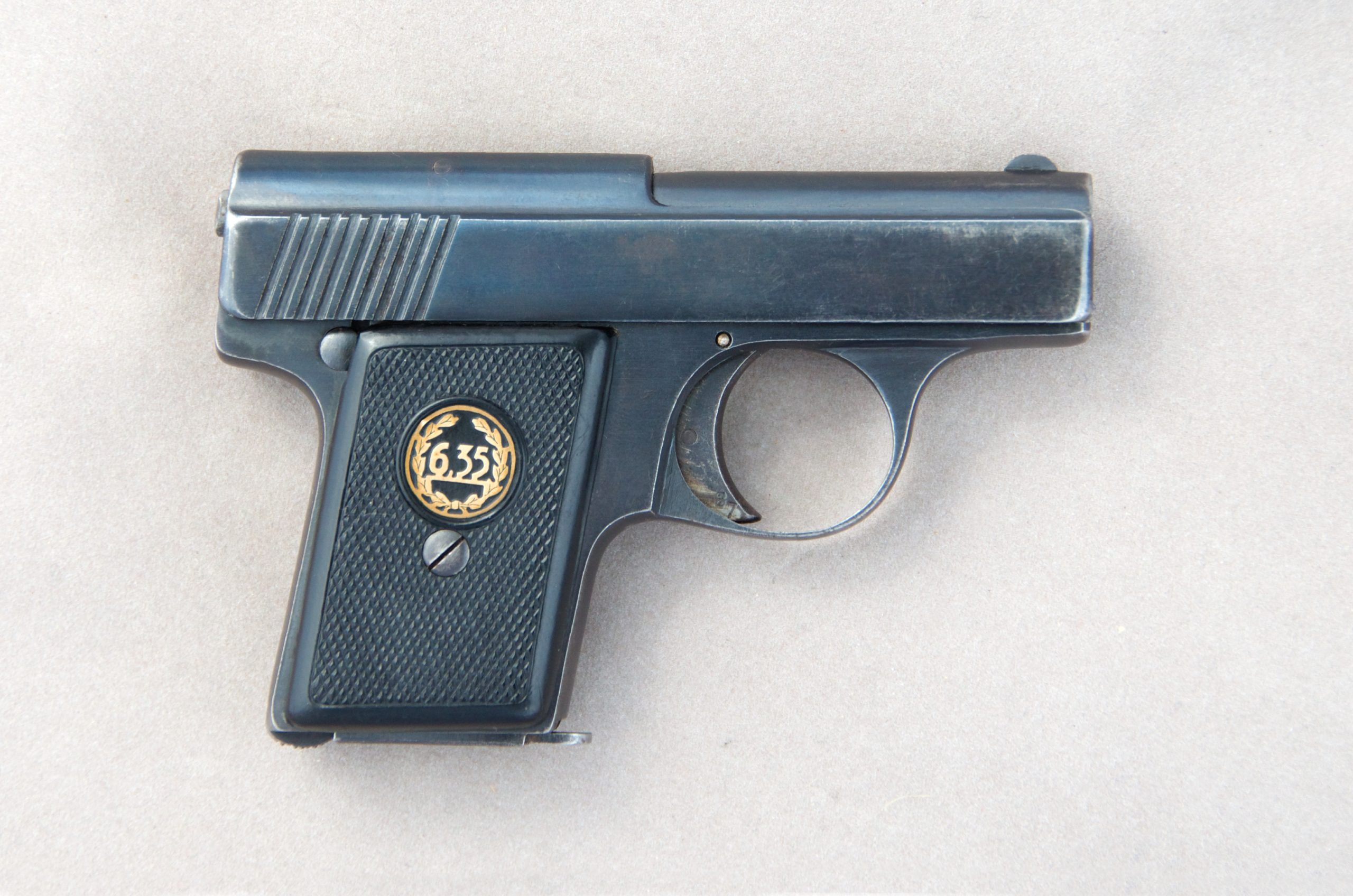
The Fritz Mann Model 1920 pushed the .25 ACP concept toward an almost absurd level of compactness. Built in Germany, it measured about 4.09 inches long, 2.72 inches high, and only 0.71 inches wide, while its 6.35×16mm cartridge looked substantial beside the slim frame. A 5-round magazine fed the blowback pistol, which used a grooved chamber to delay the breech. Mann reportedly produced fewer than 20,000 examples before production ended in 1924. Its unusual design shows how far makers went to shrink a pistol without abandoning centerfire ammunition.
2. Walther Model 9
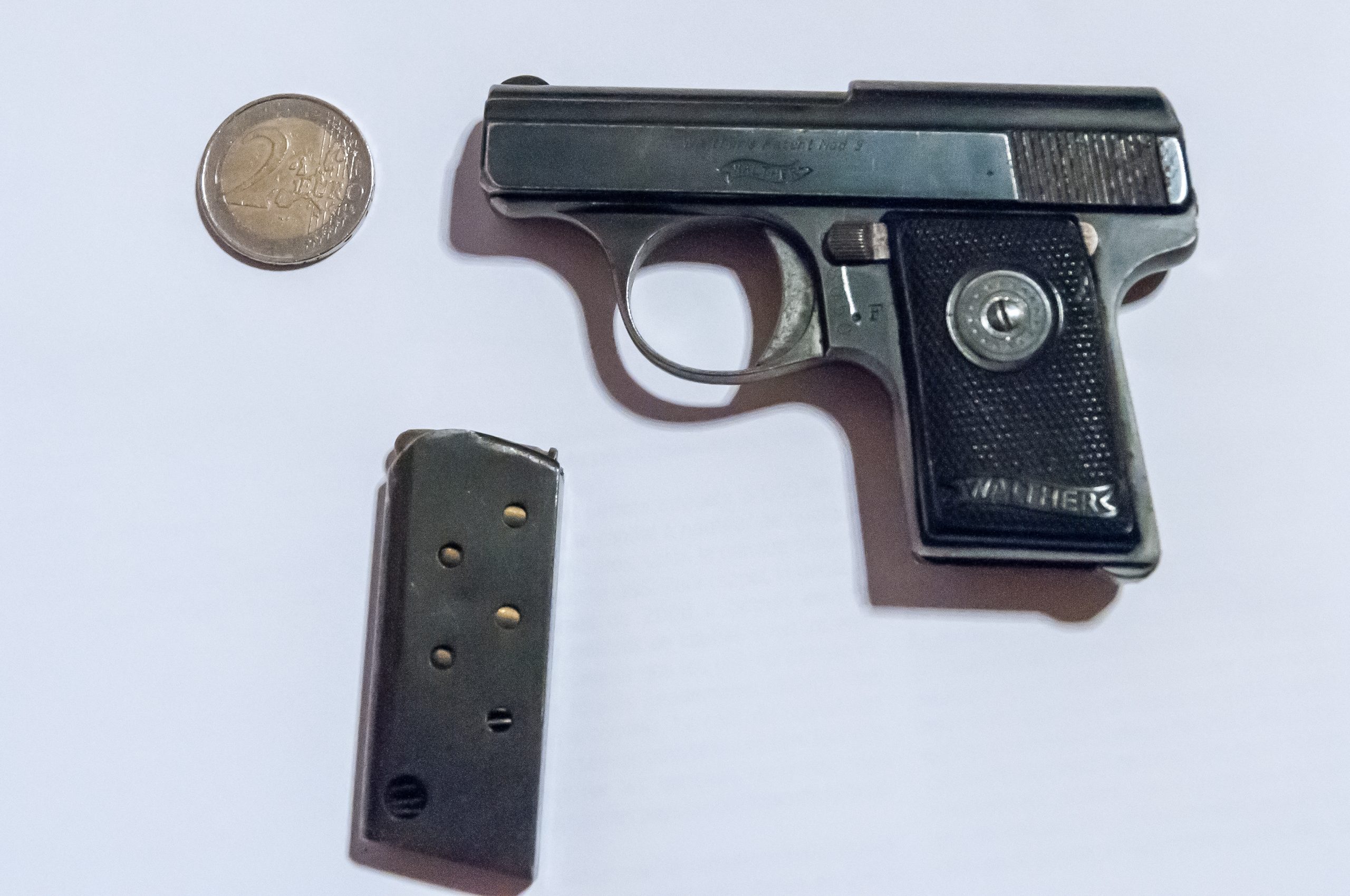
Walther’s Model 9 was another tiny .25 ACP pistol where the ammunition seems oversized next to the gun. Produced from 1921 to 1945, it was only about 3.9 inches long, 2.76 inches high, and 0.67 inches wide. The six-round magazine sat inside an exceptionally small frame, while a striker-fired blowback action helped keep the profile simple. Walther built roughly 200,000 examples, and thousands reportedly reached German military service during World War II. The 6.35mm cartridge was short, yet its case and bullet still looked surprisingly large beside this miniature pistol.
3. Menz Liliput
The Menz Liliput earned its name honestly. Developed in Germany around the 4.25mm Liliput cartridge, the pistol measured roughly 4.1 inches long and about 0.75 inches wide in one documented configuration. Its ammunition was only 14.91mm long, but the tiny grip and short barrel made each cartridge appear oversized when handled beside the pistol. Production began in the 1920s, and later versions also appeared in .25 ACP. The 4.25mm round used a 12-grain bullet and was notable as one of the smallest centerfire cartridges produced during the 1930s. Later.
4. FN Baby Browning
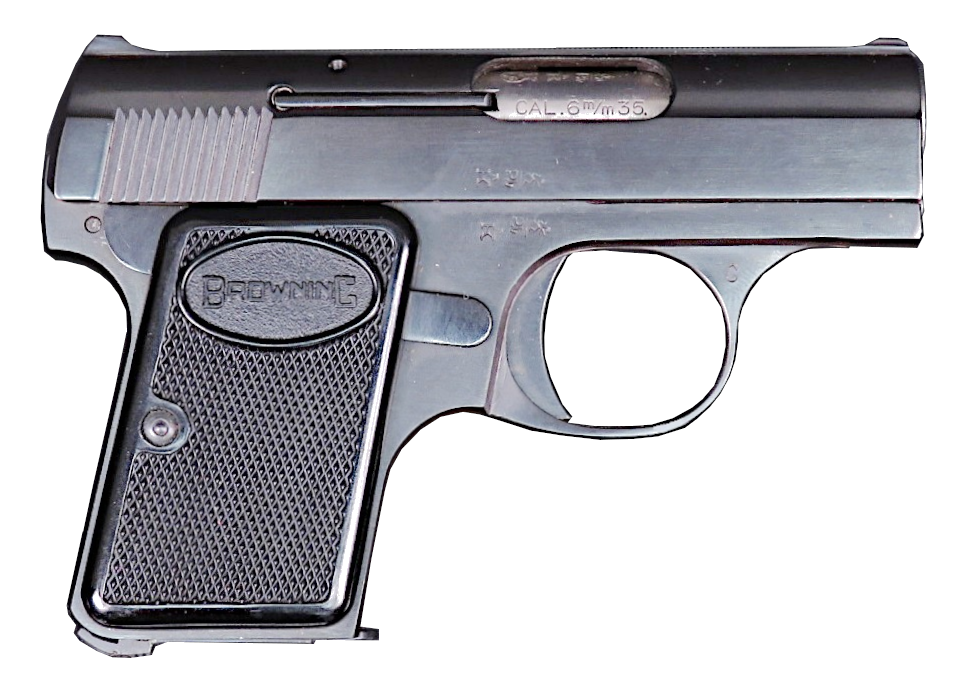
The FN Baby Browning is one of the best-known examples of a pocket pistol making ordinary ammunition look surprisingly large. Introduced in 1931, it was about 4.1 inches long, 2.8 inches high, and 0.8 inches wide, yet it fired the 6.35×16mm .25 ACP cartridge. Its six-round magazine and 2.1-inch barrel were packed into a 9.7-ounce pistol. Dieudonné Saive refined Browning’s earlier vest-pocket concept into an exceptionally neat package. Production continued for decades, helping make this little Belgian pistol an enduring symbol of the micro-pistol era.
5. Bernardelli Vest Pocket
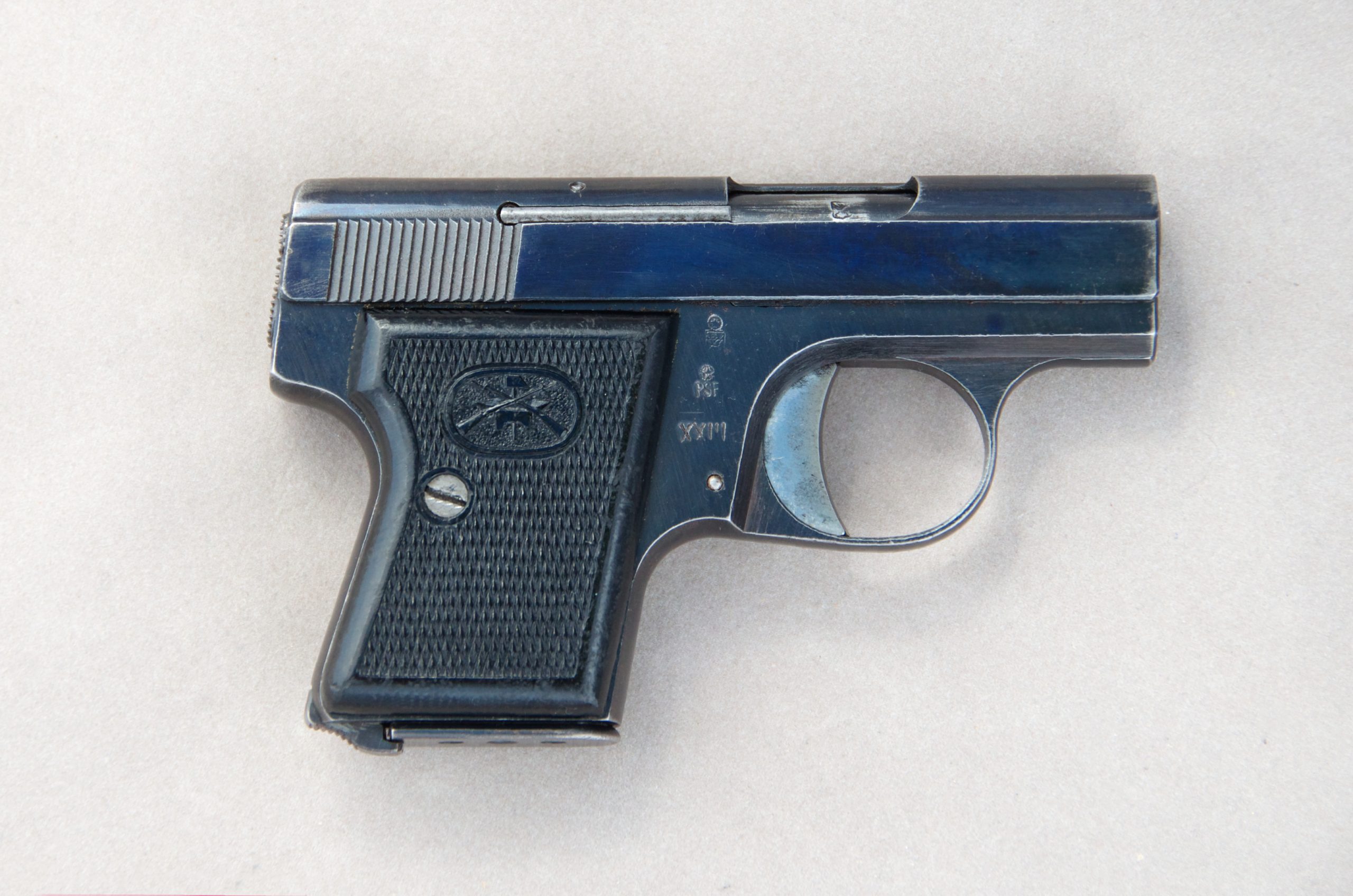
The Bernardelli Vest Pocket belonged to the same miniature .25 ACP world, but its proportions made the cartridge stand out against the compact frame. Examples are listed at roughly 4.18 inches long, 2.70 inches high, and 0.78 inches wide, with a six-round magazine. The pistol was designed around the 6.35mm Browning cartridge, a round measuring about 16mm overall. That combination left little room for excess metal, producing the slim profile expected from a true vest-pocket gun. Its appeal came from compact dimensions, straightforward operation and discreet carry rather than power.
6. MAB Model B
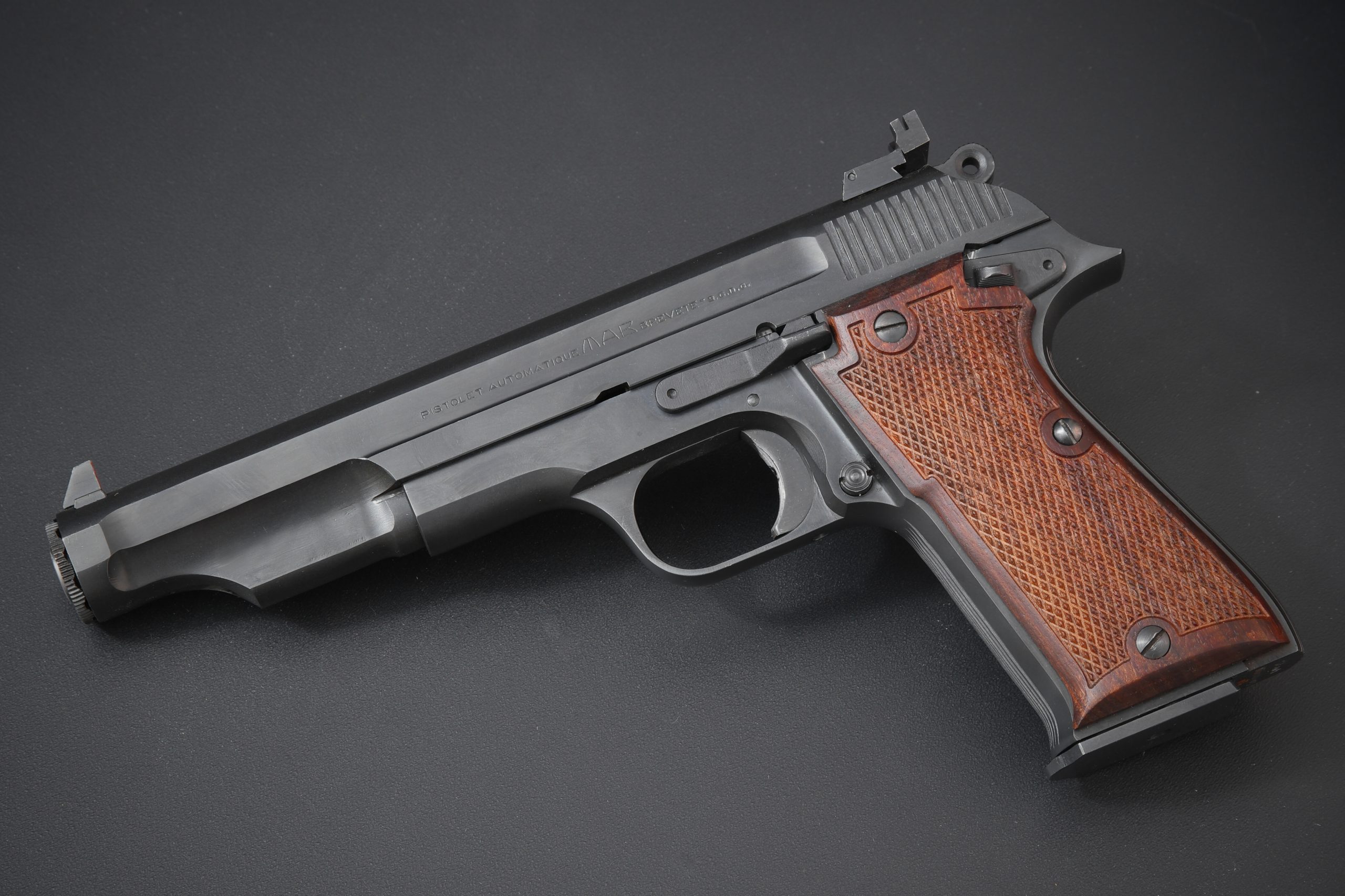
France’s MAB Model B was small enough to make its .25 ACP ammunition look almost disproportionate in photographs. One commonly cited specification gives it an overall length of about 4.24 inches, a height near 2.92 inches, and a width around 0.86 inches. It used the familiar 6.35mm Browning cartridge and a compact magazine, keeping the entire package close to classic vest-pocket proportions. The design followed the European fascination with tiny defensive pistols during the 20th century. Its size, rather than ballistic performance, was the main attraction for buyers seeking maximum concealability.
7. Unique Mikros Model K
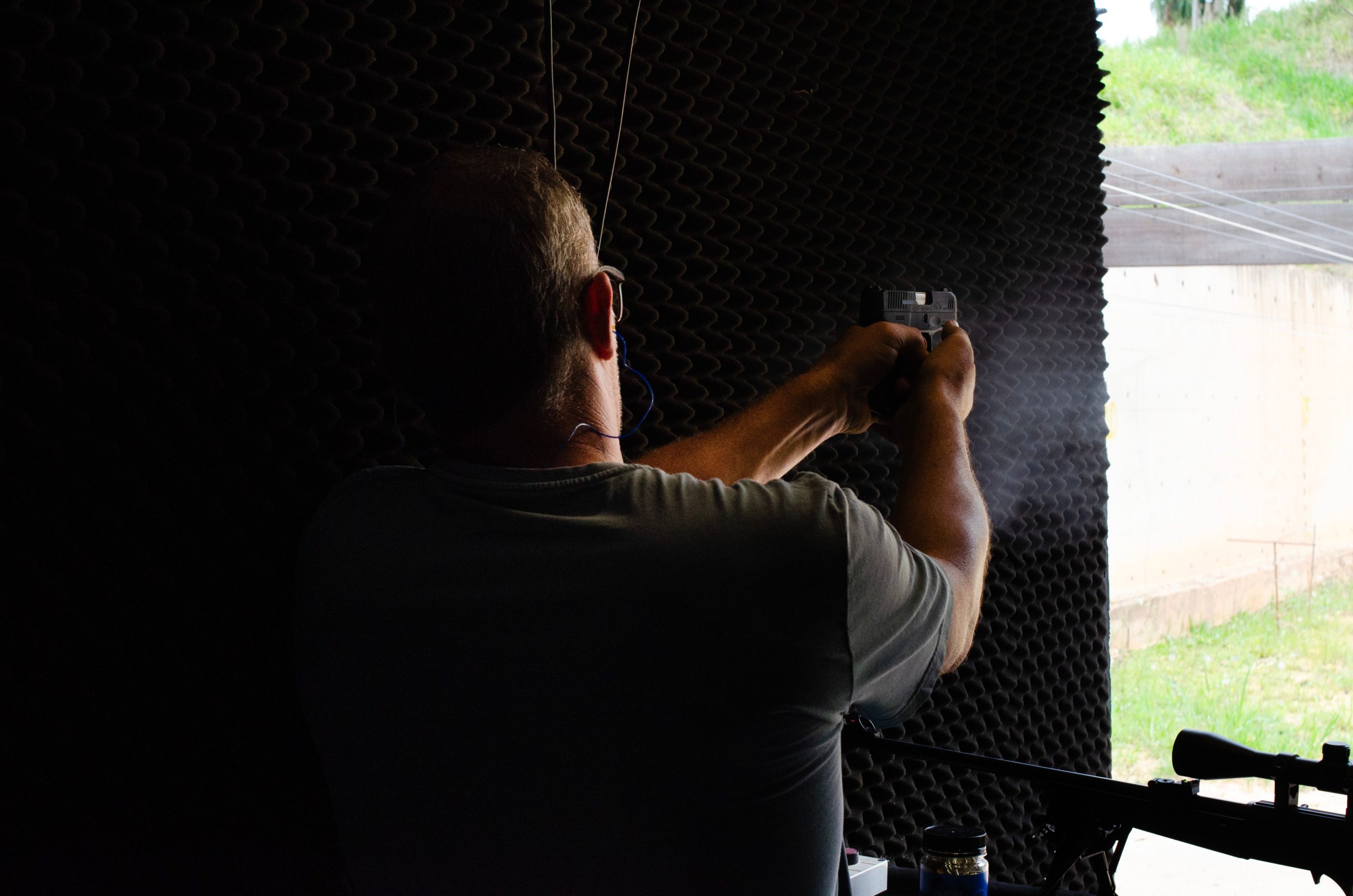
The Unique Mikros Model K was another French pocket pistol built around the diminutive .25 ACP cartridge. At roughly 4.4 inches long, 2.94 inches high, and 0.87 inches wide, it remained remarkably small while still accepting the 6.35mm Browning round. Its proportions show the engineering challenge clearly: the pistol had to provide enough space for the chamber, operating parts, and a six-round magazine while staying narrow enough for a pocket. Like many European vest-pocket designs, the Mikros prioritized portability and simplicity. The result was a compact pistol in which every millimeter of frame had a purpose.
8. Beretta 950 Jetfire
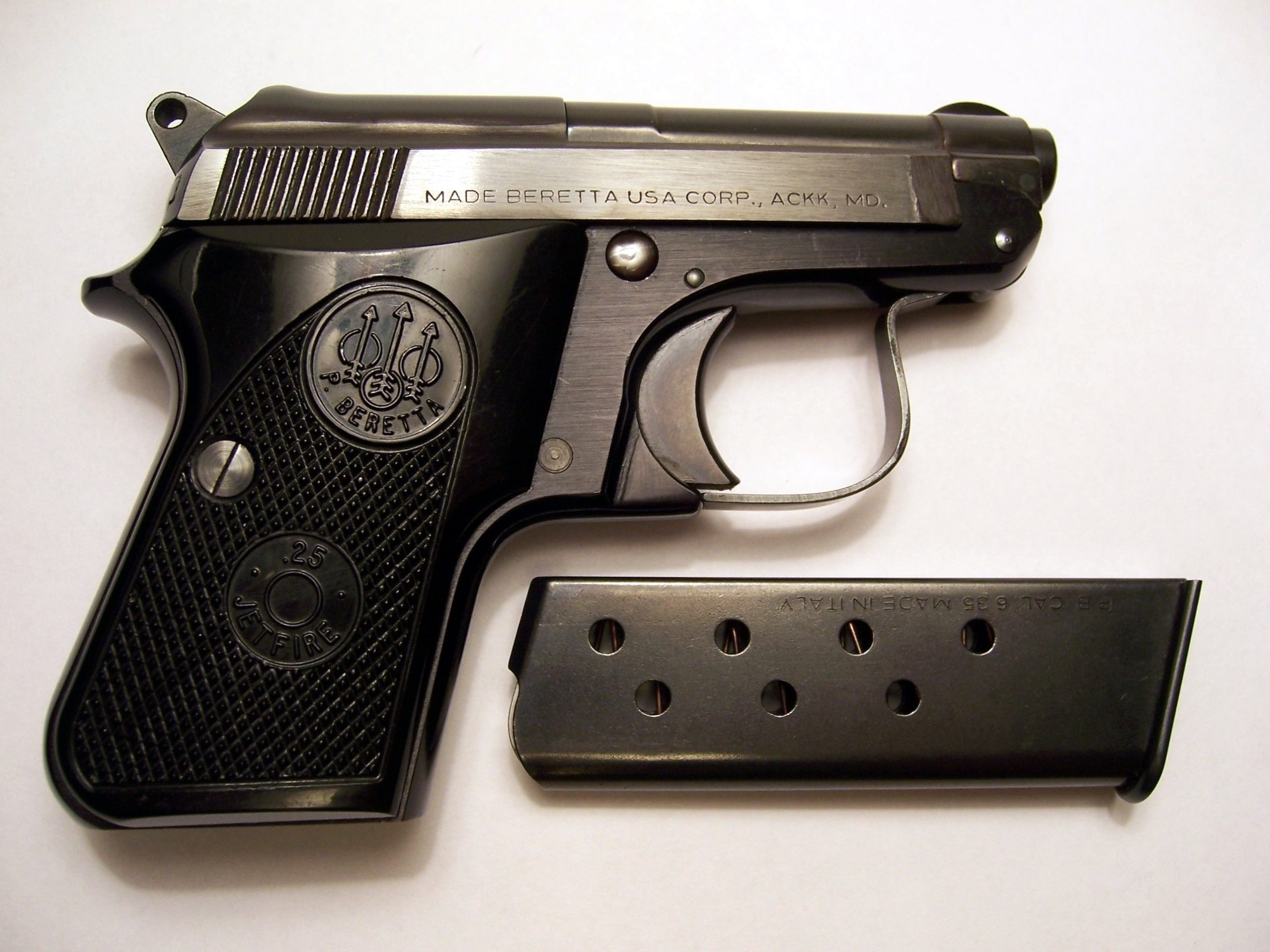
Beretta’s 950 Jetfire was slightly larger than several vest-pocket .25s, but its compact aluminum frame still made the 6.35mm cartridge look substantial. The pistol measured about 4.7 inches long, 3.4 inches high, and 0.9 inches wide, with an 8-round magazine in its .25 ACP version. Introduced in 1952, it used a simple blowback action and Beretta’s distinctive tip-up barrel, allowing a cartridge to be placed directly into the chamber. Production continued until 2003. Its combination of light weight, compact dimensions, and recognizable design made it one of the most famous small .25 ACP pistols.