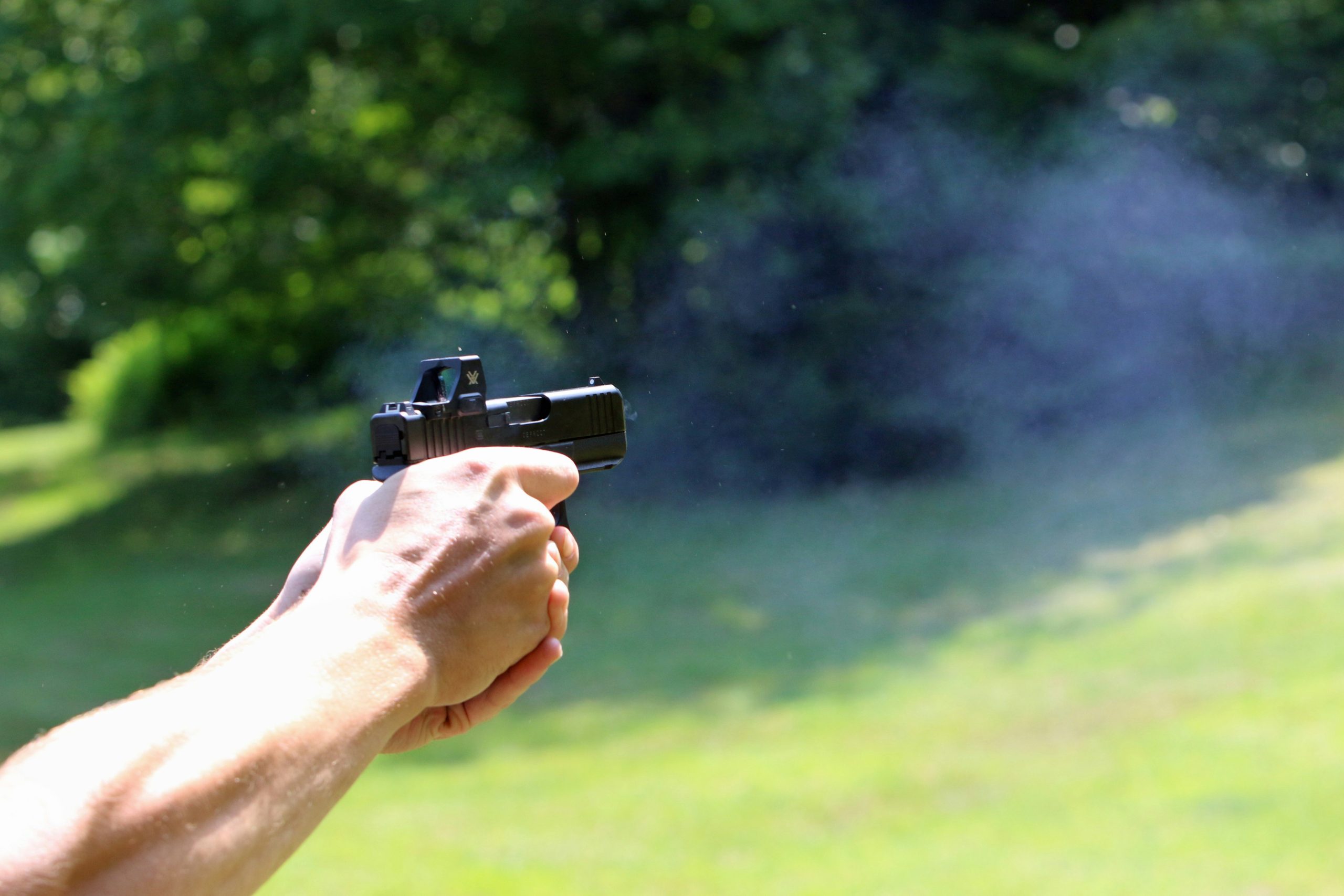
A handgun’s magazine release may look like a small component, but its design can influence the pistol’s overall ergonomics, appearance, and ease of use. Manufacturers have used several approaches, including traditional push buttons, reversible controls, ambidextrous arrangements, and paddle-style levers. These differences reflect the intended handling characteristics of each model and the design priorities behind it. The eight handguns below illustrate how magazine release mechanisms vary across well-known pistol families, with attention to their actual configurations rather than appearance alone.
1. Walther P99
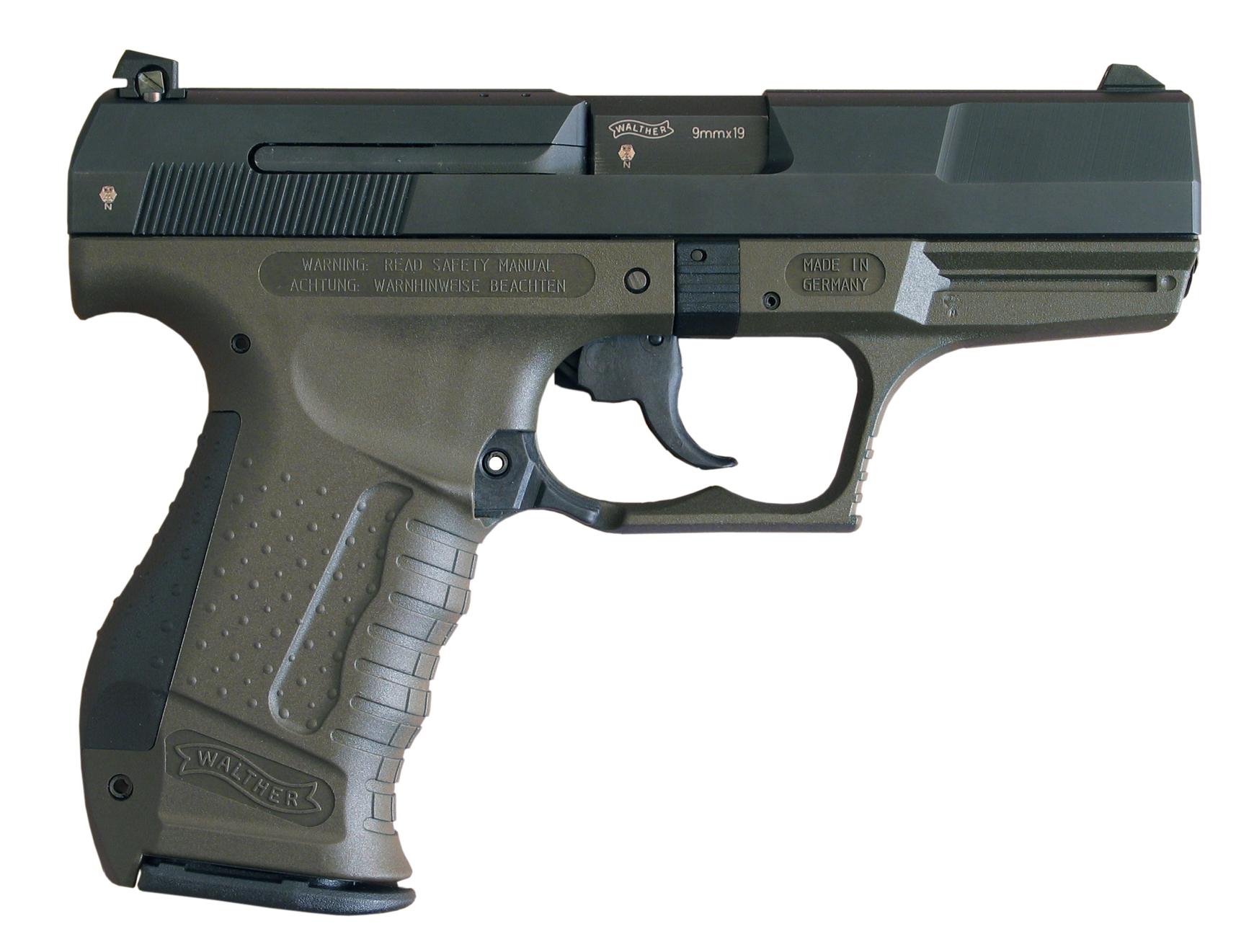
The Walther P99 stands out for its paddle-style magazine release, which is integrated into the rear portion of the trigger guard. Unlike a conventional push button, this lever can be operated from either side, making the design suitable for left- and right-handed users. Introduced in 1997, the P99 helped popularize this alternative among modern polymer-framed pistols. Its standard 9mm version commonly uses a 16-round magazine, although capacity varies by model and market. The distinctive control also gives the pistol a cleaner side profile than many button-release competitors.
2. Heckler & Koch P30
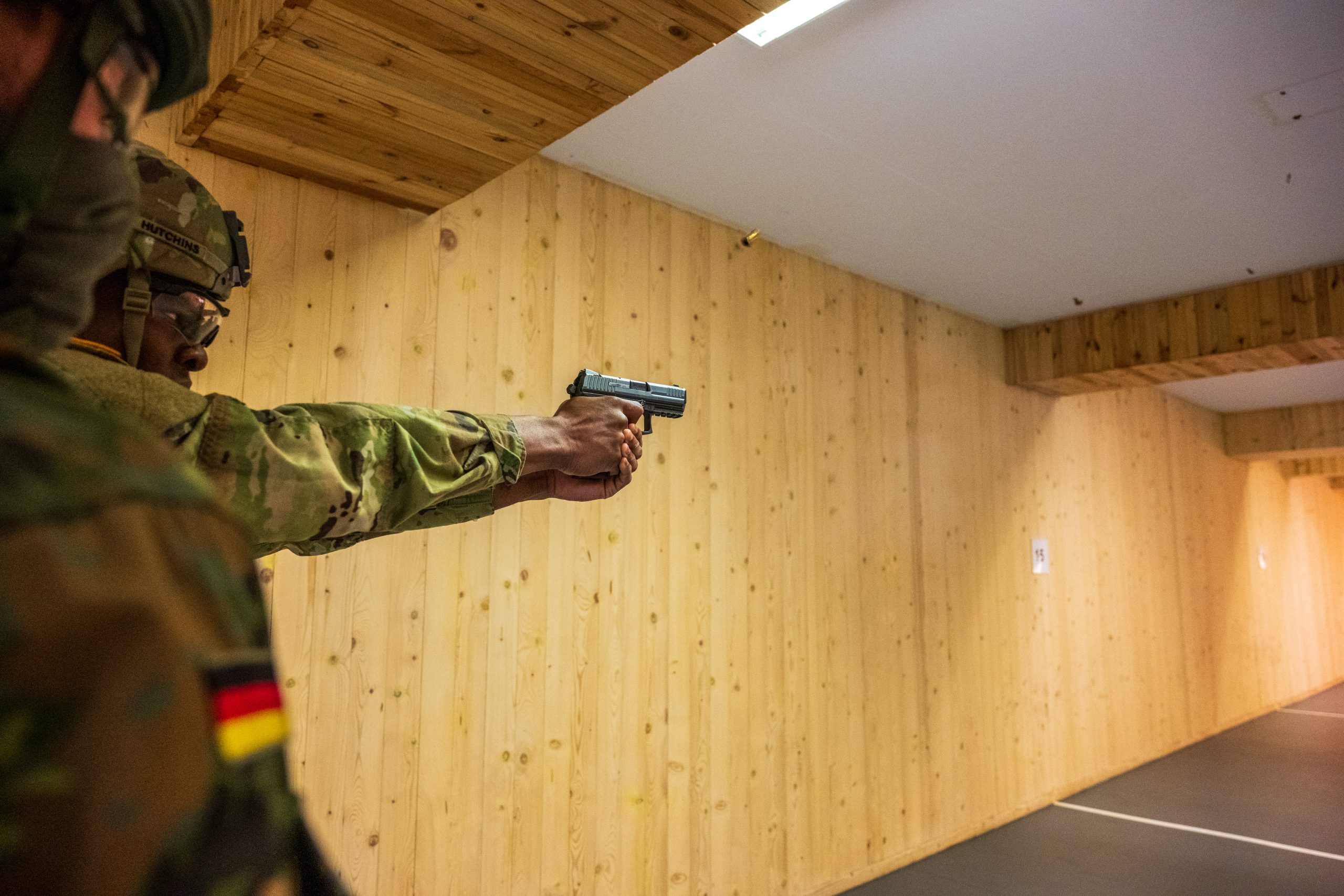
The Heckler & Koch P30 uses an ambidextrous paddle magazine release positioned at the base of its trigger guard. This arrangement allows the release to be operated from either side without requiring a conventional side-mounted button. The P30 family was introduced in the mid-2000s and is chambered in 9mm, with standard magazine capacities of 15, 17, or 20 rounds, depending on the configuration. Its sculpted grip, interchangeable backstraps, and replaceable side panels complement the control layout. The paddle release is a defining feature of this pistol’s handling design.
3. Glock 17
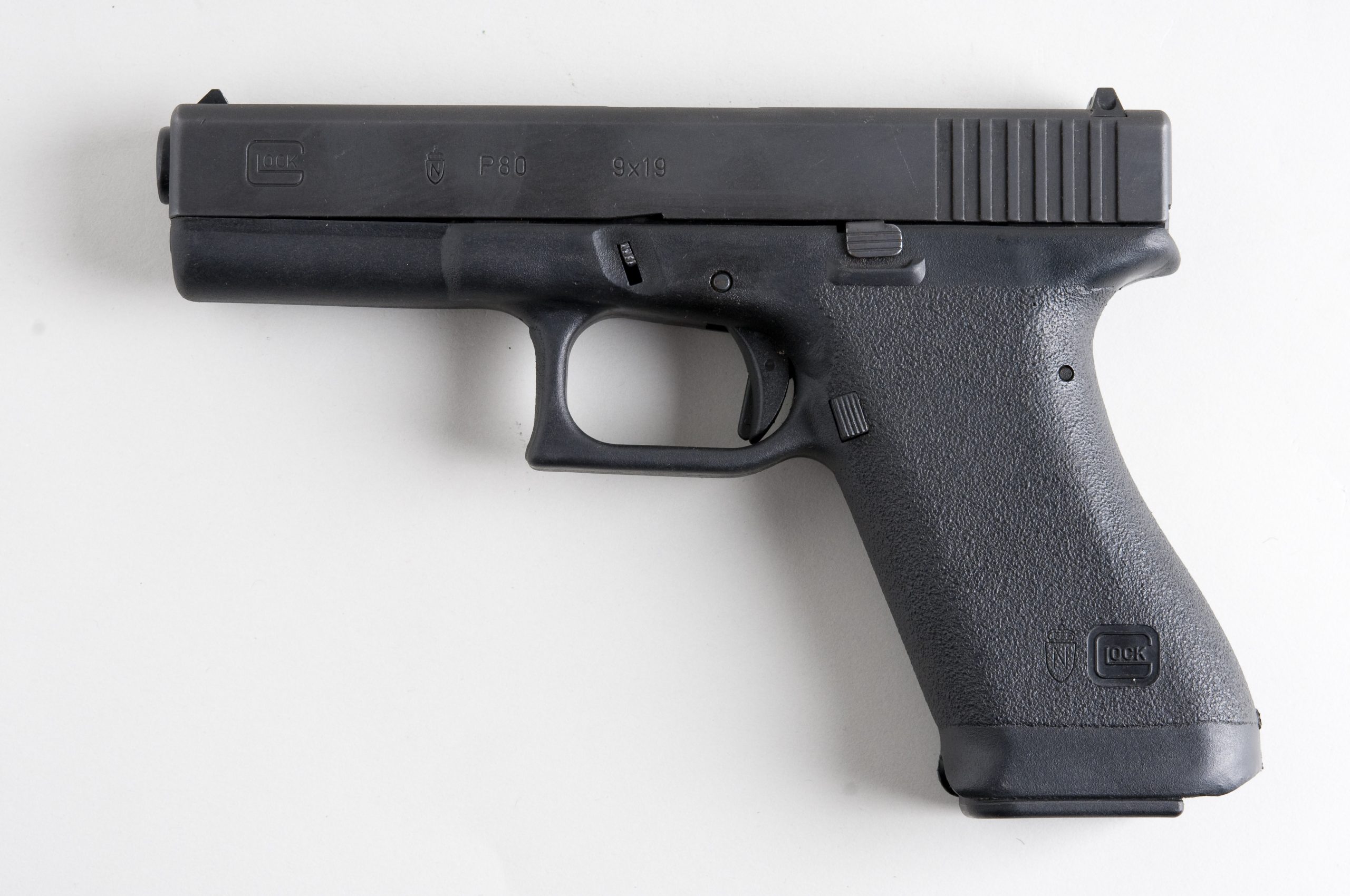
The Glock 17 illustrates the familiar side-mounted magazine release used throughout much of the company’s pistol range. On standard configurations, the rectangular button sits on the left side of the frame, while newer versions may feature an ambidextrous slide stop or other revised controls. The Gen 4 and Gen 5 Glock 17 models offer a reversible magazine catch, allowing the release button to be configured for left-handed users. Introduced in 1982, the 9mm pistol is commonly supplied with a 17-round magazine. Its simple, compact release remains one of the most recognizable features of Glock’s design.
4. Beretta 92FS
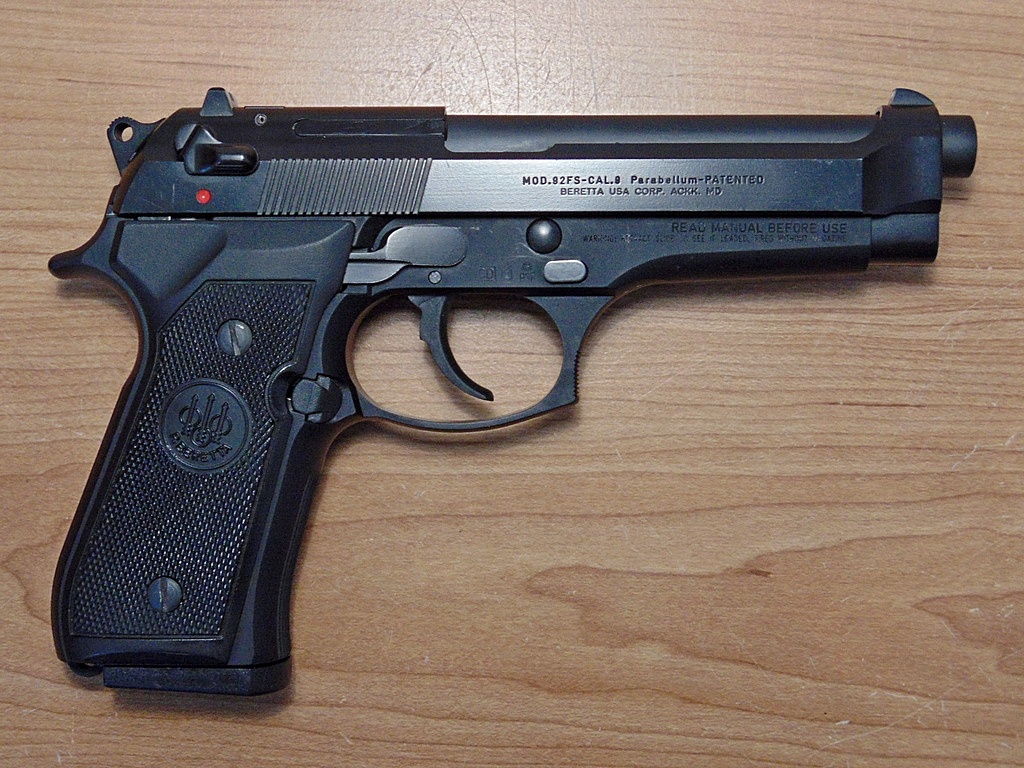
The Beretta 92FS combines a traditional metal-frame design with a reversible magazine release button located behind the trigger guard. The control can be switched to accommodate left-handed users, although the exact procedure depends on the model and should follow the manufacturer’s instructions. Introduced in the 1980s, the 9mm 92FS typically uses a 15-round magazine, with other capacities available. Its open-top slide, exposed hammer, and distinctive curved grip give it a recognizable appearance. The reversible button demonstrates how a classic service pistol can offer adaptable controls without adopting a paddle-style mechanism.
5. Colt Government Model 1911

The Colt Government Model 1911 represents the classic push-button magazine release found on many traditional semi-automatic pistols. Its circular button is positioned on the left side of the frame, behind the trigger, and engages a catch that retains the magazine. The original design dates to 1911 and was developed around the .45 ACP cartridge, typically using a single-stack, 7-round magazine in its traditional configuration. Modern variants may have different capacities and enhanced controls. The standard release is visually understated, but its long history makes it an important reference point when comparing magazine release designs across generations.
6. CZ 75 B
The CZ 75 B features a conventional push-button magazine release on the left side of its steel frame, positioned behind the trigger guard. Its design differs from the paddle systems found on several European pistols, retaining the familiar button arrangement associated with many service handguns. Introduced in 1975, the CZ 75 family is chambered in 9mm and other calibers, depending on the variant. The standard 9mm CZ 75 B commonly holds 16 rounds. Its distinctive slide rails, which fit inside the frame, and curved grip make it recognizable, while its magazine catch reflects a more traditional approach to control placement.
7. FNX-45
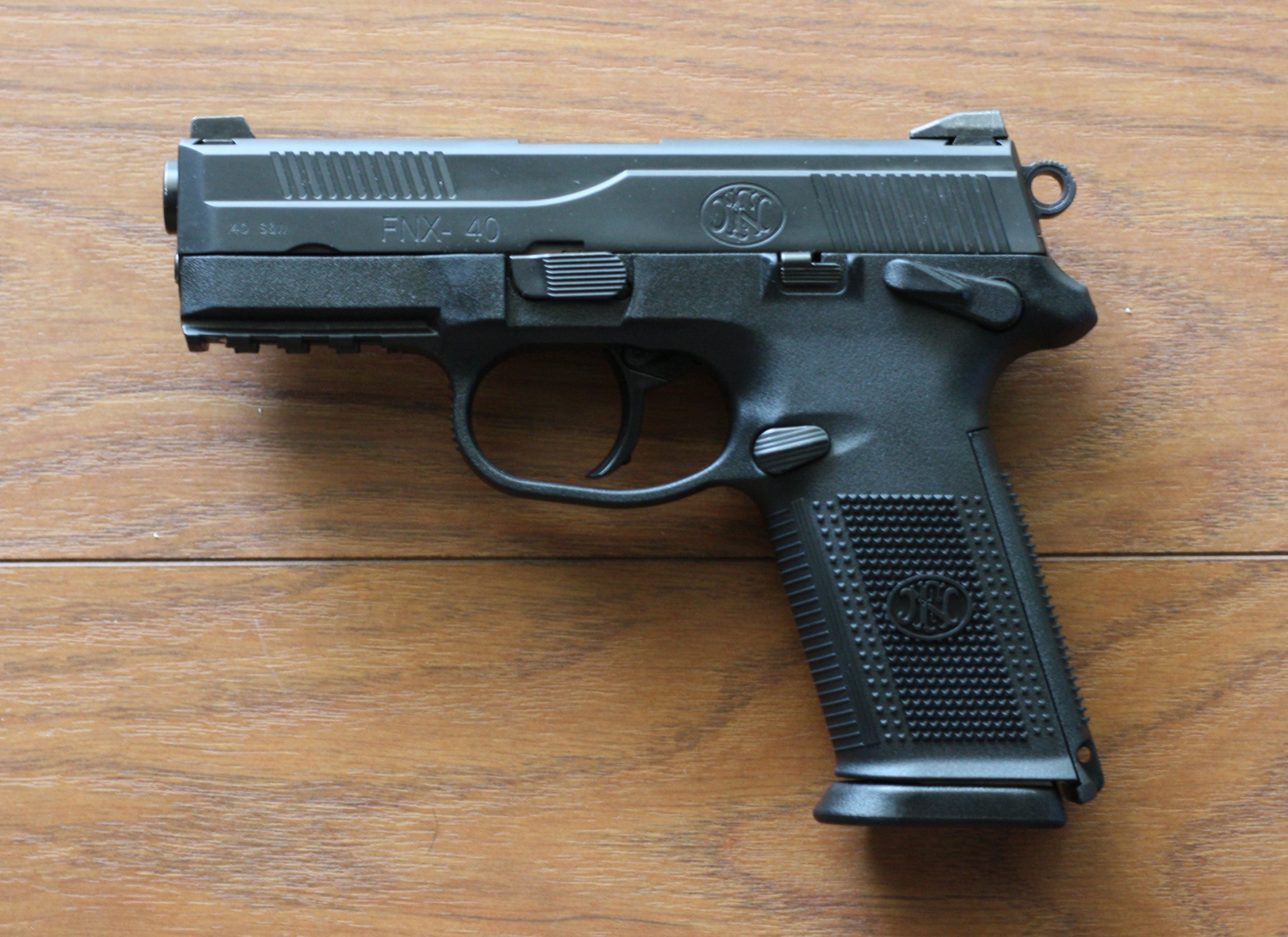
The FNX-45 showcases an ambidextrous magazine release in a modern polymer-framed handgun. Its controls are designed to accommodate both left- and right-handed users, and the pistol also features an ambidextrous manual safety. Chambered in .45 ACP, the standard FNX-45 commonly uses a 15-round magazine, an unusually high capacity for this cartridge. The model’s broad grip accommodates its double-stack magazine, while the paired release controls distinguish it from pistols with a single, reversible button. Exact specifications vary across FNX variants, so the standard FNX-45 should not be confused with the compact or tactical models.
8. SIG Sauer P226
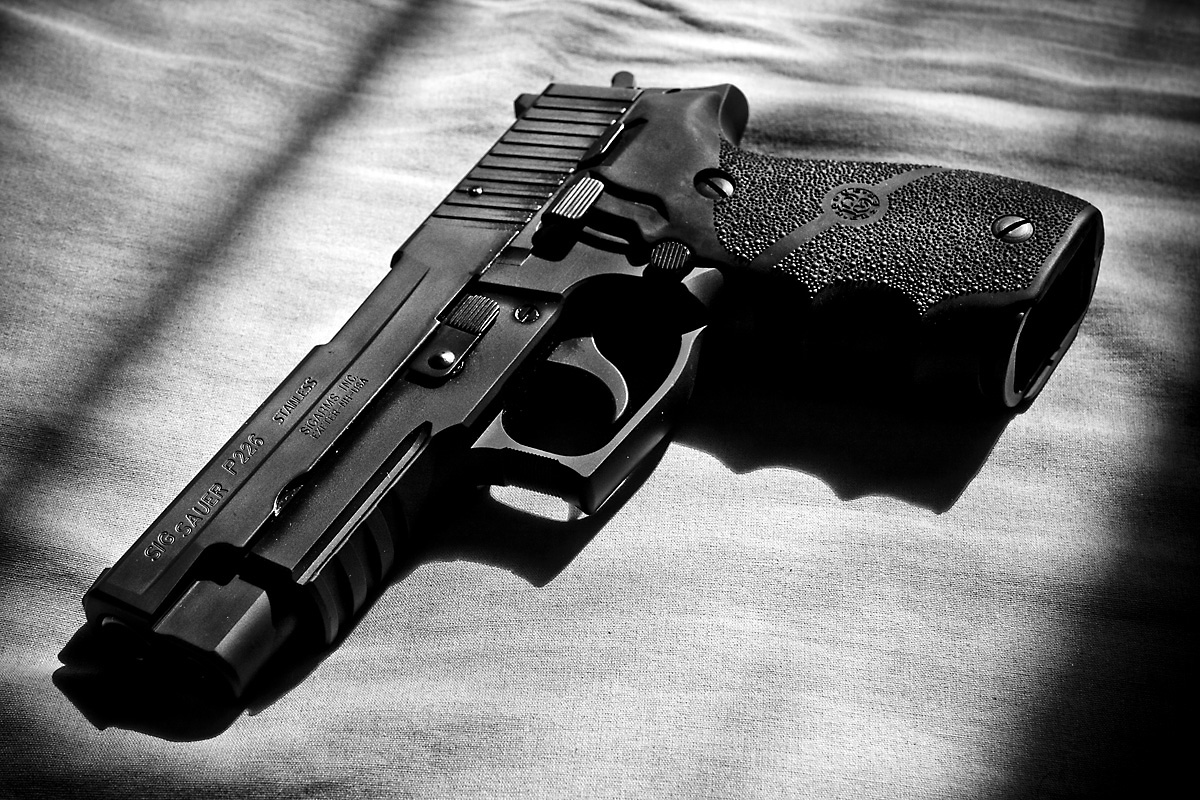
The SIG Sauer P226 uses a traditional push-button magazine release positioned behind the trigger guard on the left side of the frame. Unlike the paddle systems of some competing pistols, its design retains a familiar button-operated layout. Introduced in the 1980s, the P226 became a well-known service pistol and is available in several chamberings, including 9mm, .40 S&W, and .357 SIG. The standard 9mm version commonly uses a 15-round magazine, though capacities vary by generation and market. Its metal-frame construction and established service-pistol profile make it a useful example of a conventional magazine catch in a full-size handgun.