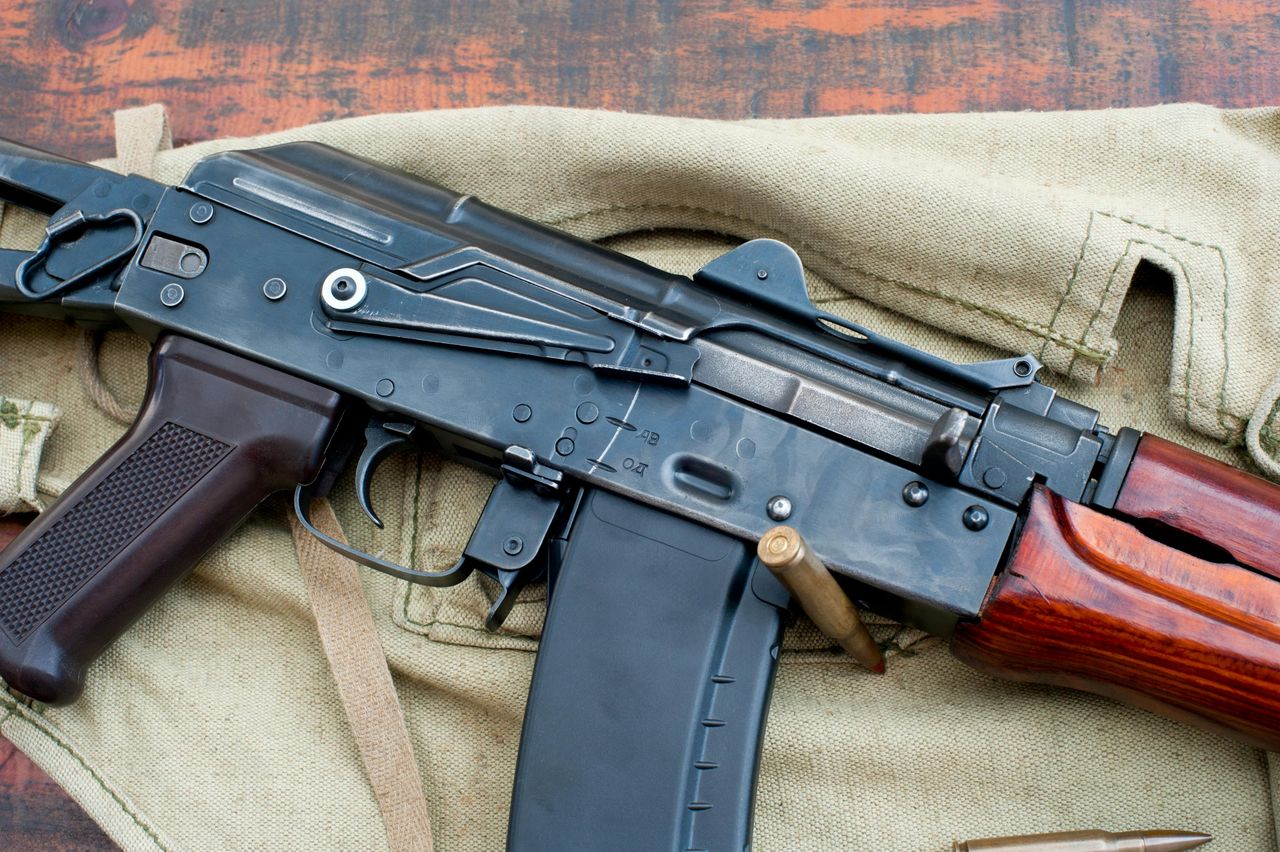
For a rifle designed in the shadow of World War II, the AK-47 has shown astonishing staying power. Decade after decade, sleeker and more advanced weapons have been pitched as its replacement, yet the Kalashnikov pattern keeps turning up in wars, militias, armies, and popular culture alike. This gallery explores the practical reasons behind that longevity and why simple, rugged engineering still wins in much of the world.
A design built for abuse

The AK-47 earned its reputation the old-fashioned way: by continuing to work when conditions were filthy, wet, dusty, or freezing. Its loose tolerances and long-stroke gas system were never about elegance. They were about making sure the rifle kept cycling when cleaner, tighter designs started choking.
That matters more than spec-sheet perfection. In ideal range conditions, many rifles perform beautifully. On muddy roads, in desert wind, or after rough handling, reliability becomes the whole story. The AK’s survival is tied to that brutally practical promise: if a user needs a rifle that goes bang after neglect, this one has a long history of delivering.
It is simple to learn and maintain

One reason the AK spread so far is that it asks relatively little of the person holding it. Field-stripping is straightforward, the controls are easy to understand, and the manual of arms can be taught quickly to recruits with limited training time.
That simplicity matters in places where armies are underfunded, militia forces are improvised, or logistics are inconsistent. A rifle that can be maintained with basic tools and a modest amount of instruction has a huge advantage. The AK doesn’t demand a highly resourced support system to stay in service, and that has helped it remain useful long after more modern alternatives arrived.
Mass production made it nearly impossible to displace

The AK-47 and its descendants were produced on a staggering scale. Not just in the Soviet Union, but under license and without license across multiple continents. Once that many rifles, magazines, and spare parts are in circulation, replacement becomes less a technical question and more an economic one.
Governments and armed groups tend to keep using what they already have, especially when it is cheap and abundant. A newer rifle may be lighter, more accurate, or more modular, but those benefits can look abstract next to warehouses full of functioning Kalashnikovs. The AK’s longevity owes a lot to sheer industrial momentum that later challengers never fully overcame.
It thrives where logistics are weak

Modern rifles often assume something important: a reliable support network. They perform best with consistent ammunition, replacement parts, proper lubrication, and trained armorers. The AK was far more forgiving in environments where those things were irregular or absent.
That gave it an edge in remote battlefields and unstable states. If supply chains break down, if maintenance schedules slip, or if ammunition quality varies, the rifle still has to function. The AK’s endurance is tied to its compatibility with imperfect systems. In much of the world, that is not a minor detail. It is the reason a weapon remains viable year after year.
Its ammunition became a global standard

A rifle is only as useful as the ammunition feeding it, and the AK benefited from the broad spread of 7.62×39mm, followed later by 5.45×39mm in some variants. For decades, ammunition compatible with Kalashnikov-pattern rifles was widely manufactured, traded, stockpiled, and reused.
That created a self-reinforcing cycle. The more rifles in circulation, the more incentive there was to make more ammunition; the more ammunition available, the easier it was to keep those rifles relevant. New weapons trying to replace the AK often faced a hard reality: introducing a better rifle is one challenge, but replacing an entire ammo ecosystem is something much bigger.
It balances ruggedness with acceptable performance
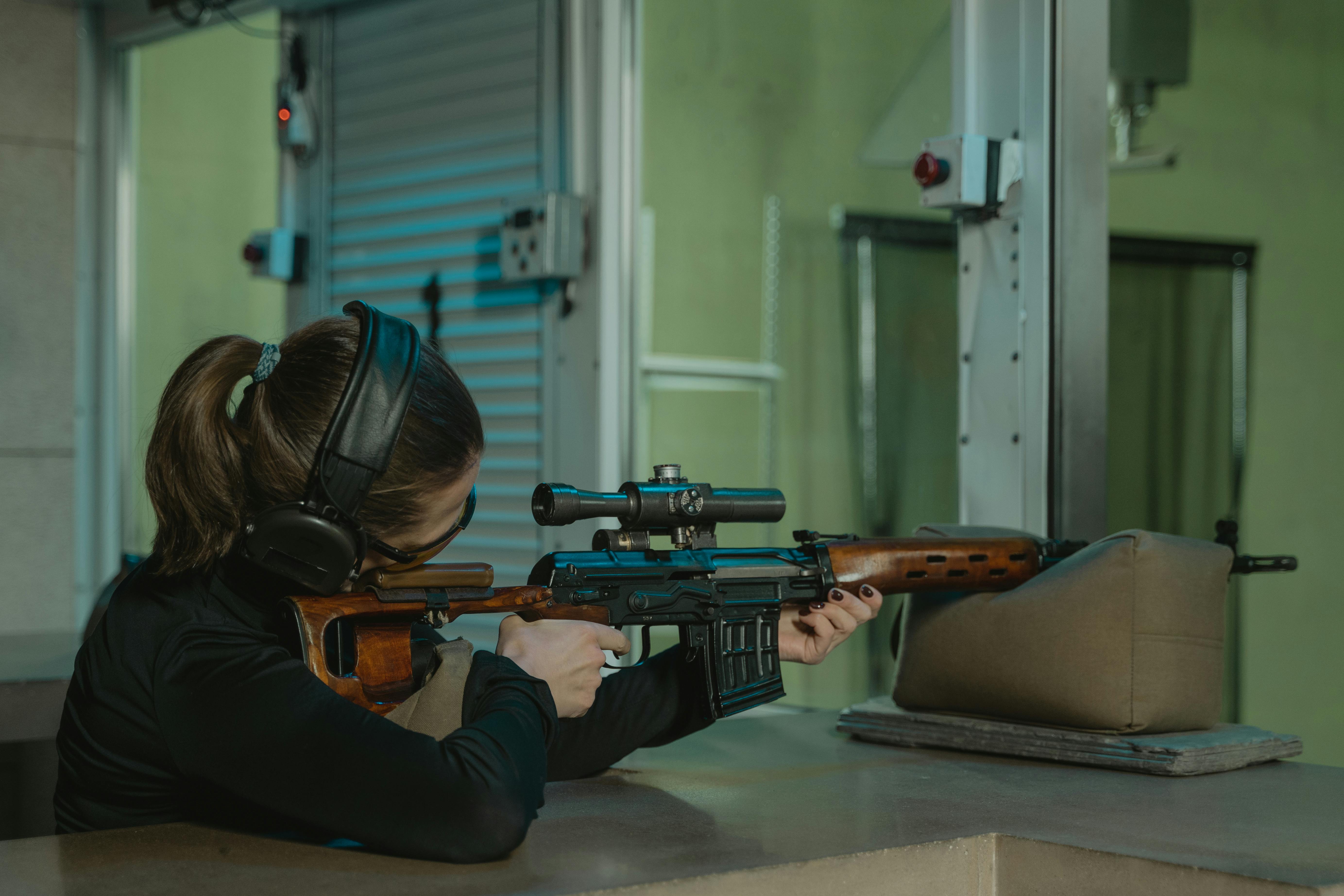
The AK-47 was never famous because it was the most precise rifle on the battlefield. It lasted because it was accurate enough for the ranges at which many fights actually happen, while offering durability that users trusted. That tradeoff has proved more durable than enthusiasts sometimes expect.
Plenty of replacement rifles promised tighter groups, lighter recoil, or improved ergonomics. Those are real advantages, especially for professional forces. But for many users, the AK’s combination of dependable function, adequate combat accuracy, and hard use survivability was more persuasive than incremental gains on paper. It did not need to be perfect. It only needed to be good enough, every time.
Politics and alliances spread it everywhere

The AK’s story is also geopolitical. During the Cold War, Soviet influence, allied governments, and revolutionary movements helped move Kalashnikov-pattern rifles around the world. It was not merely a weapon but an export of strategy, ideology, and military partnership.
Once a country adopted the platform, training pipelines, spare-parts inventories, and doctrine often followed. That kind of institutional adoption is difficult to reverse quickly. Even when governments later sought modernization, many kept older AK variants in reserve, in second-line service, or with police and paramilitary units. Its staying power came not only from engineering, but from decades of political distribution that embedded it deeply in state and non-state arsenals.