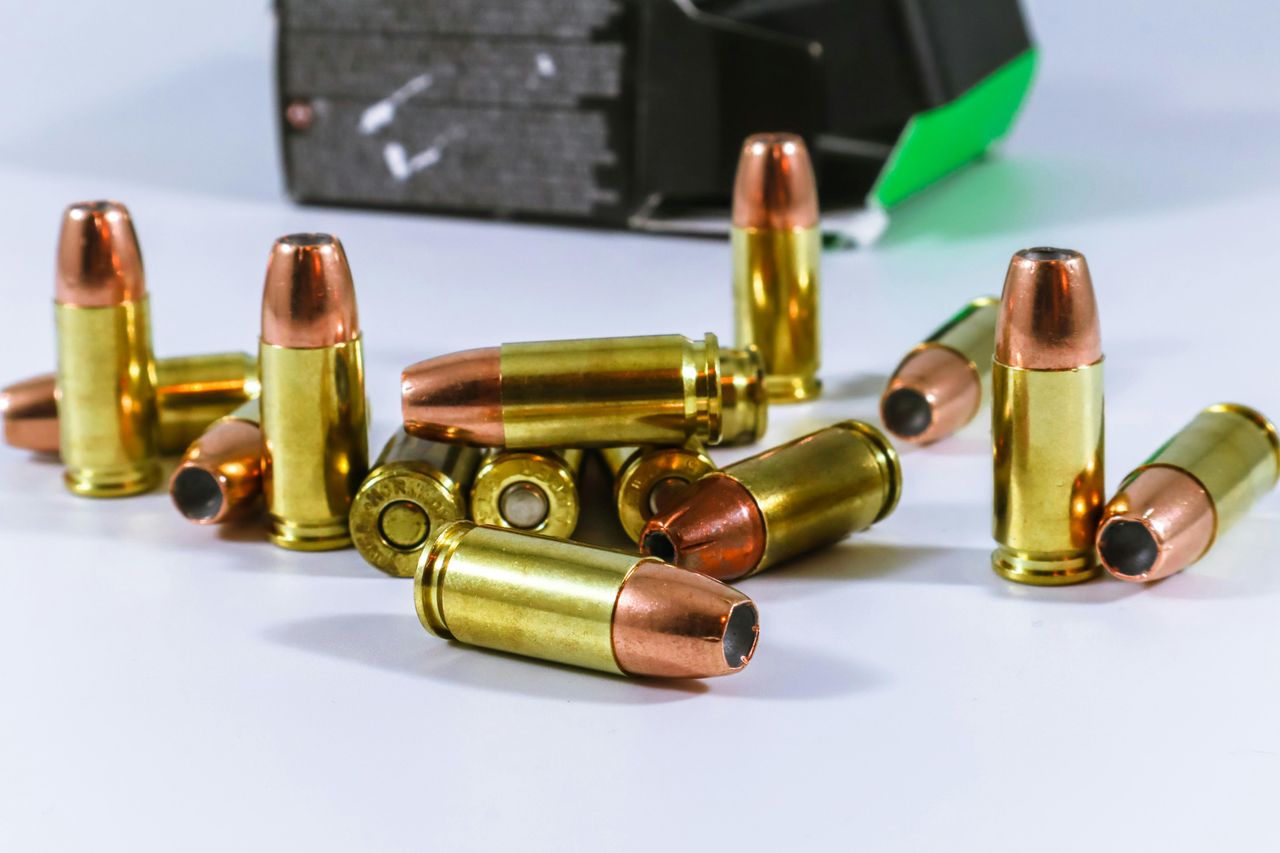
Some cartridges fade into history. The .45 ACP never seems to get the message.
It was built for a problem people still understand
The .45 ACP was born from a very specific lesson: military users wanted a handgun round that hit harder than the revolver and pistol cartridges that had failed to stop determined attackers quickly. John Browning designed the cartridge in the early 1900s, and it was paired with the Colt 1911, a pistol that would become one of the most recognizable sidearms ever made. That origin story matters because it gave the round a simple identity from day one: big bullet, moderate speed, serious impact.
Even now, that basic formula is easy for shooters to grasp. A standard .45 ACP load typically throws a 230-grain bullet at roughly 830 to 850 feet per second. On paper, that does not look flashy next to modern high-velocity rounds, but it produces a broad, heavy projectile with a reputation for authority. Many gun owners still trust what they can easily visualize, and a slow, fat bullet is easy to visualize.
That old mission has aged better than critics expected. Modern defensive ammunition has narrowed the practical gap between service calibers, but it has not erased the appeal of a round designed around decisive close-range performance. The .45 ACP survives partly because its original purpose still makes intuitive sense to ordinary people, police veterans, competitive shooters, and armed citizens alike.
Ballistics did not kill it because real-world use is more complicated.

For decades, each new challenger arrived with a promise: flatter trajectory, more magazine capacity, less recoil, lower cost, or better terminal performance. The 9mm, .40 S&W, 10mm Auto, and even newer boutique handgun rounds have all been pitched at different times as the cartridge that would finally make the .45 ACP irrelevant. Yet handgunning is rarely decided by one statistic.
In gelatin testing and modern law enforcement analysis, good hollow points in 9mm, .40, and .45 often end up performing within a fairly tight practical band when they penetrate and expand as intended. The FBI’s post-1980s testing approach helped shift the discussion away from myths and toward repeatable standards. Under those standards, the .45 ACP is not magical, but it also is not exposed as a fraud. It remains fully credible.
That matters because a cartridge does not have to dominate every category to stay alive. It only has to remain good enough while offering something people value. The .45 ACP still offers a larger diameter bullet, manageable operating pressures, and a long record of acceptable field results. Once a round keeps clearing the bar, replacing it becomes much harder than enthusiasts assume.
The recoil story is more nuanced than people think.

One reason the .45 ACP endures is that its recoil is often described badly. People hear “.45” and assume punishing kick, but many shooters experience it as more of a push than a snap, especially in full-size steel pistols. Compared with high-pressure rounds that produce a sharper impulse, the .45 ACP can feel surprisingly controllable in the right gun. That distinction matters for confidence and follow-up shots.
The classic 1911 is a big reason for this reputation. A steel-framed Government model soaks up recoil, presents a slim grip for many hands, and often delivers a crisp trigger that helps shooters run the gun well. The cartridge and pistol developed together, and that harmony still sells people on the round. Even today, many first-time shooters are surprised by how comfortable a full-size .45 can be.
Of course, compact polymer .45s can be lively, and nobody should pretend the round is easier to master than 9mm in similarly sized pistols. But the popular claim that it is simply too much for ordinary shooters misses the bigger picture. In service-size handguns, the .45 ACP remains very shootable, and that keeps its user base much wider than raw recoil charts would suggest.
The 1911 keeps the cartridge alive, but it is not the only reason.n
If the .45 ACP had never been paired with the 1911, it might have become just another historical cartridge. Instead, it became the default chambering for one of the most beloved handgun platforms ever produced. The 1911 is part sidearm, part mechanical icon, and part American folk object. As long as people keep buying 1911s, the .45 ACP will keep moving off shelves.
But the cartridge has outlived the idea that it belongs only in old single-action pistols. Glock, SIG Sauer, Smith & Wesson, HK, FN, and many others have chambered modern duty and carry pistols in .45 ACP. That matters because it gave the round a second life beyond nostalgia. Shooters who do not care about history can still find a contemporary striker-fired or double-action pistol in the caliber.
There is also a thriving suppressor niche. The .45 ACP is naturally subsonic in many standard loads, which makes it attractive for suppressed use because it avoids the crack associated with supersonic bullets. For enthusiasts who want a heavy, quiet handgun round, the .45 ACP remains one of the most practical and proven options, and modern pistol design has kept that advantage relevant.
Culture, identity, and trust are powerful forces in gun buying.

Gun people often talk like they are making purely technical decisions, but they are not. Cartridges carry stories, loyalties, and generational trust. The .45 ACP benefits from all three. Veterans remember it, instructors learned on it, competitors respect it, and countless owners grew up hearing some version of “they all make holes, but the .45 makes a big one.”
That sort of reputation can outlast any spreadsheet. A person choosing a defensive handgun is not selecting a laboratory instrument alone. They are choosing something they must believe in under stress. Confidence matters, and the .45 ACP has accumulated more than a century of confidence. Even when data shows several calibers can work well, many shooters still gravitate toward the one they feel least likely to second-guess.
Manufacturers understand this emotional layer very well. That is why the caliber keeps appearing in anniversary pistols, premium carry guns, custom 1911s, and tactical models. The .45 ACP sells not just because it functions, but because it means something. In a market where identity drives many purchases, that kind of symbolic weight is a serious survival trait.
The cartridges that were supposed to replace it all had tradeoffs.

The 9mm came closest to displacing the .45 ACP everywhere, and in many institutional settings it largely did. Better ammunition, lower recoil, cheaper training costs, and higher capacity made it the logical choice for most police agencies and many civilians. According to years of FBI-influenced thinking, shot placement and penetration matter more than caliber tribalism. That case is strong, and the 9mm earned its dominance honestly.
But dominance is not extinction. The .40 S&W was once sold as the ideal middle ground, only to lose favor as agencies concluded that 9mm offered similar practical results with easier qualification and less wear on guns. The 10mm Auto delivers serious power, yet its recoil, gun size, and cost keep it niche. Smaller high-speed rounds can be excellent, but they rarely erase the appeal of a big, proven bullet.
That is the recurring story. Every replacement solves something, but introduces compromises of its own. The .45 ACP survives because many shooters are perfectly willing to give up extra rounds for a larger projectile, or accept slightly higher ammunition cost for a cartridge they trust. Replacement is easy to claim in advertisements. It is much harder to achieve the habits of real people.
It survives because being old is not the same as being obsolete.
The most important reason the .45 ACP has refused to die is simple: it still works, not in a romantic, legend-only sense, but in the plain mechanical sense that matters most. It feeds reliably in mature platforms, benefits from a huge range of modern bullet designs, and remains effective within the realistic distances where handguns are used. Old does not automatically mean surpassed.
Its staying power also reflects the broader truth that handgun calibers are often separated by margins, not abysses. Once a round is accurate enough, controllable enough, and effective enough, the rest comes down to mission and preference. The .45 ACP cleared that threshold generations ago and has never really fallen below it. The burden of proof is on the supposed replacement, not on the survivor.
So the .45 ACP keeps going because it occupies a stubbornly durable intersection of performance, history, shootability, and identity. It is not the universal answer, and it never was. But every time the gun world declares it finished, shooters keep buying ammo, carrying pistols, and proving that a century-old cartridge can still hold its ground just fine.