Some firearms become memorable because of their battlefield history, while others stand out simply because designers refused to follow familiar patterns. These seven took unusual approaches to layout, ammunition, recoil, feeding, or cycling. Some reached military service, some remained experimental, and others became collector favorites. What connects them is their unmistakable engineering. Each challenged expectations about what a firearm should look like or how its basic mechanism should work.
1. FN P90
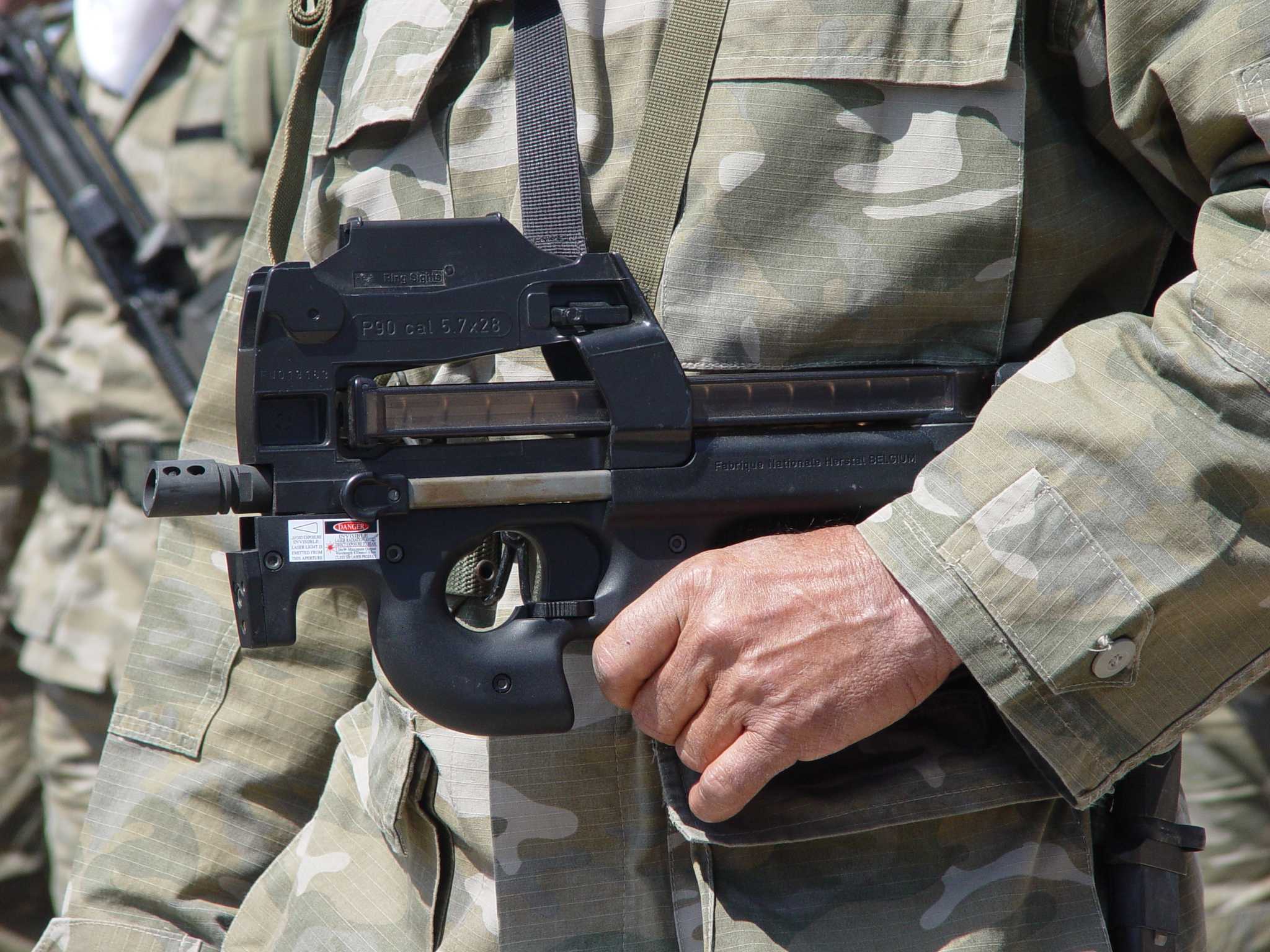
The FN P90 looks unlike a conventional rifle because almost every part was arranged around compactness. Introduced in 1990, it uses a bullpup layout, a thumbhole-style grip, and a top-mounted 50-round magazine that feeds cartridges sideways into the chamber. The weapon is 500 mm long while its barrel measures 263 mm, and its 5.7×28 mm cartridge was developed alongside it. Its distinctive shape became instantly recognizable through military use and television, turning an unusual engineering solution into a pop-culture icon. That compact profile was central to its purpose.
2. Heckler & Koch G11
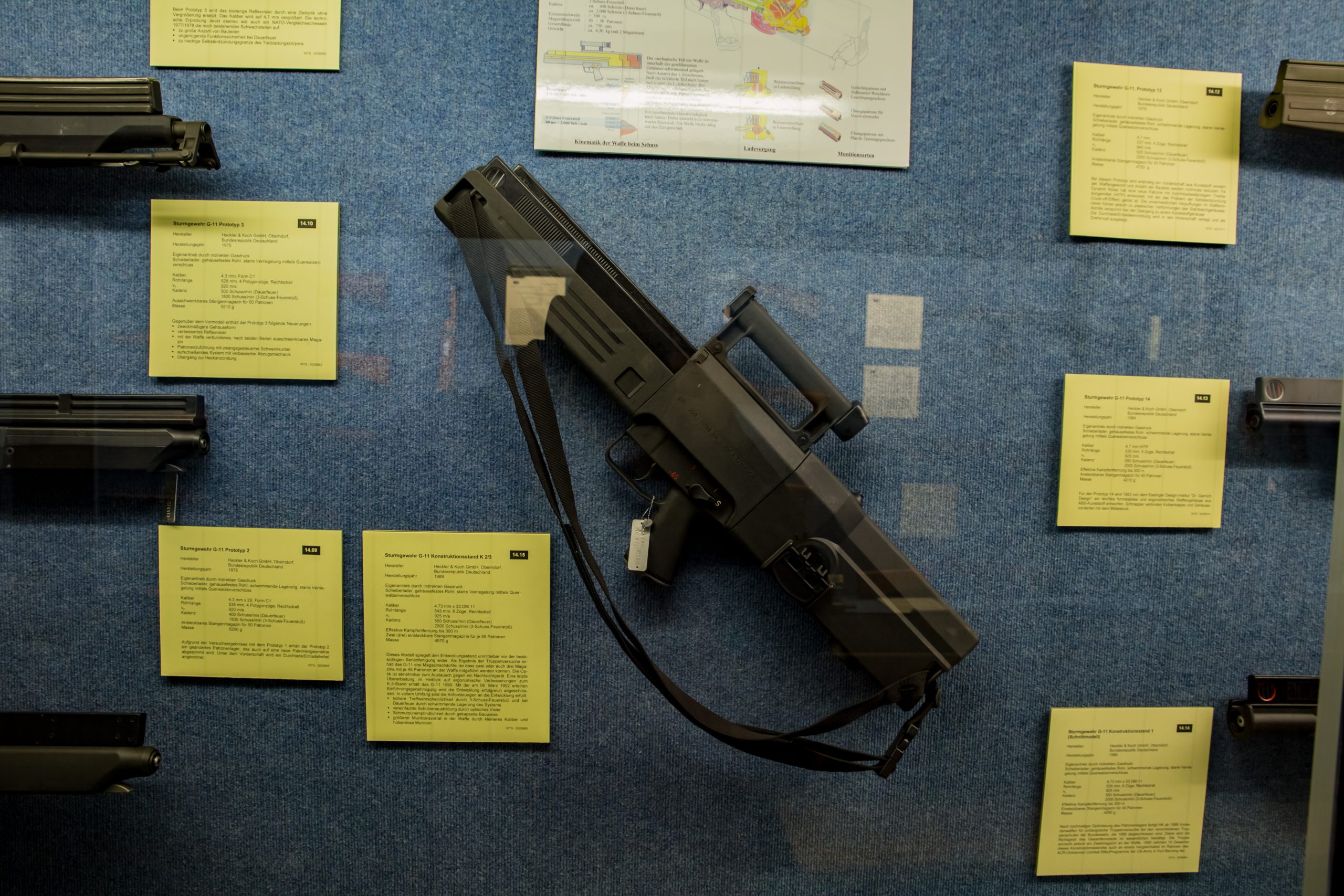
The Heckler & Koch G11 pushed rifle design into territory few production weapons ever reached. Developed for West Germany, it used 4.73×33 mm caseless ammunition, eliminating the conventional brass case and allowing a 50-round magazine. The rifle’s feed system rotated cartridges into position before firing, while its compact bullpup layout kept overall length near 750 mm. Prototypes also explored a high-speed three-round burst. Although the G11 never became a standard service rifle, its radical combination of caseless ammunition, unusual feeding, and futuristic styling made it legendary.
3. Gyrojet Pistol
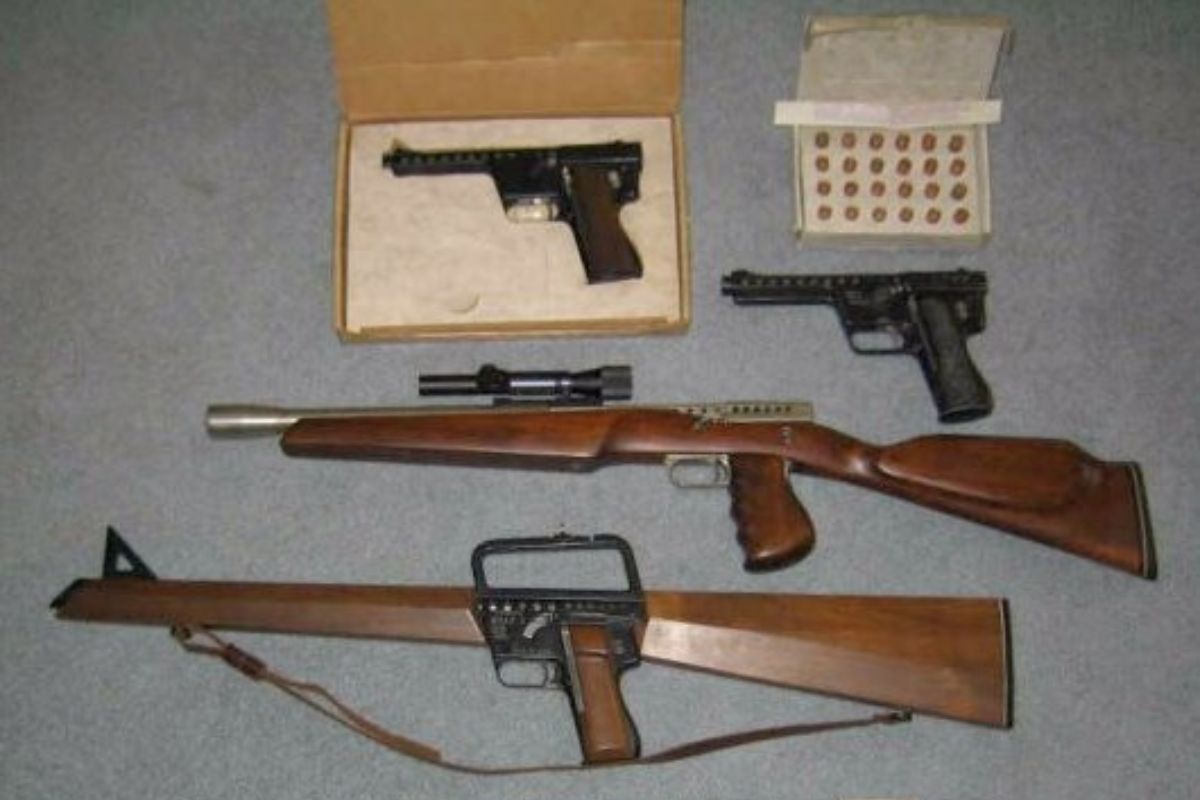
The Gyrojet pistol replaced the normal bullet-and-case system with a small rocket. Developed by MB Associates in the 1960s, its 13 mm Mark I projectile carried solid propellant and gained speed after leaving the weapon, rather than starting at its highest velocity. The pistol held 6 rounds and produced very little recoil, but accuracy, ignition reliability, ammunition cost, and slow initial acceleration limited its usefulness. Fewer than 2,000 Gyrojet weapons were reportedly produced, making the design an enduring example of ambitious Cold War experimentation.
4. Dardick Series 1500

The Dardick Series 1500 looked like a revolver, but its ammunition system was completely different. Introduced in 1954, it used triangular plastic cartridges called Trounds and a three-chamber cylinder with open sides. A magazine in the grip supplied fresh rounds as the cylinder rotated, combining ideas from revolvers and self-loading pistols. The commercial pistol offered a 15-round capacity, an unusual figure for its era. Production ended in 1962, yet the Dardick remains memorable because its triangular ammunition solved a problem designers had been attacking in more conventional ways.
5. Chiappa Rhino
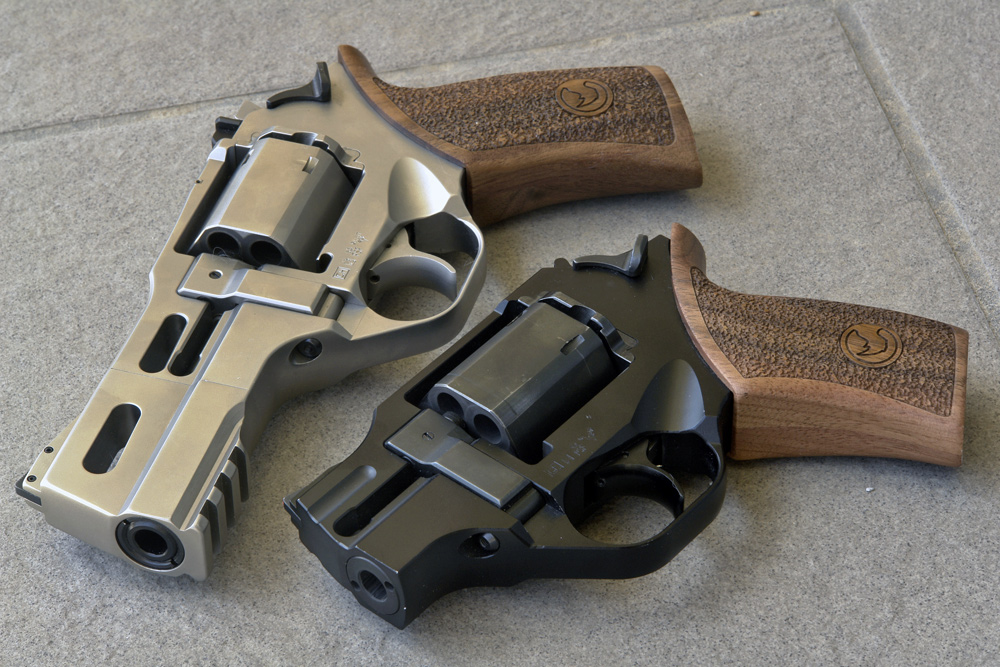
The Chiappa Rhino became famous for turning the classic revolver layout upside down. Instead of firing from the top chamber, the barrel lines up with the bottom chamber, placing the bore closer to the shooter’s hand and reducing the leverage that normally creates muzzle rise. Designed by Emilio Ghisoni and Antonio Cudazzo, the Rhino entered production in 2010 in several configurations. Models range from compact 20-series versions to longer 60-series guns, with common chamberings including .357 Magnum and 9×19 mm. Its flat-sided cylinder and hidden hammer add to the futuristic appearance.
6. Mateba 6 Unica
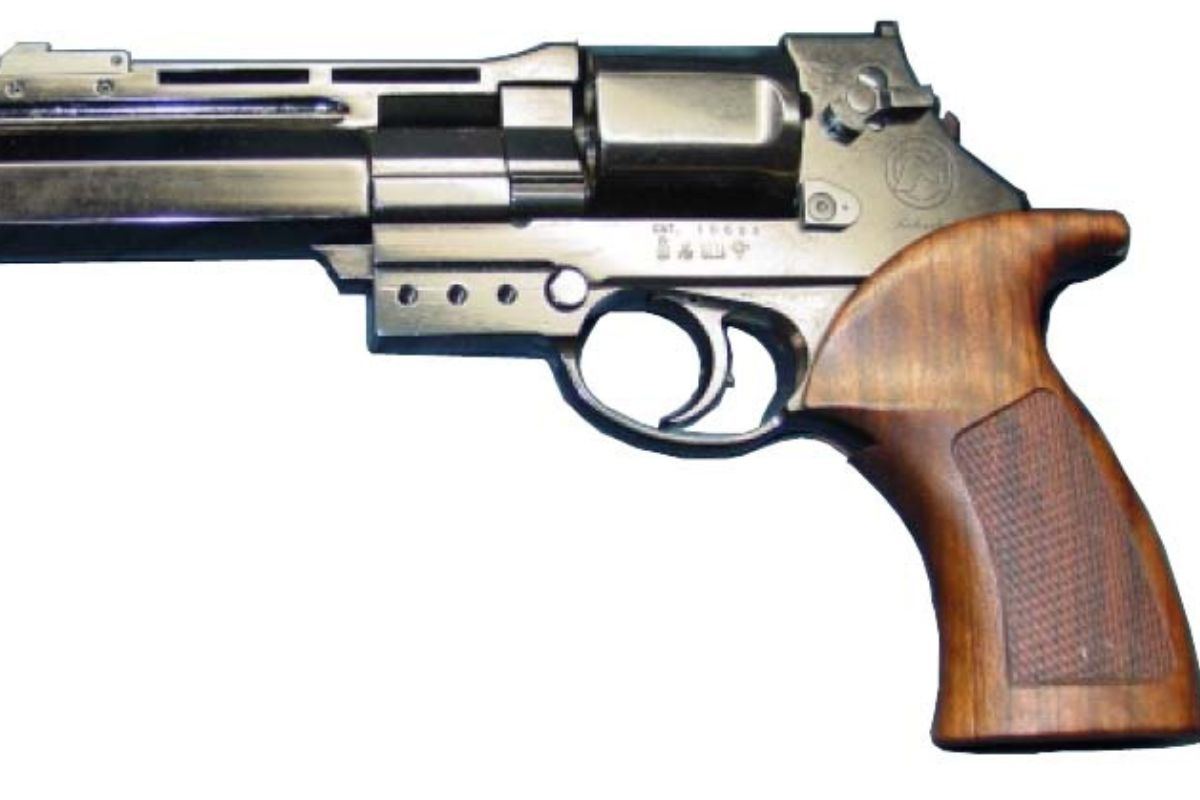
The Mateba 6 Unica may be the strangest revolver ever sold in meaningful numbers because it cycles itself. Designed by Italian engineer Emilio Ghisoni, the recoil-operated handgun lets its upper assembly move rearward, cocking the hammer and rotating the six-shot cylinder for the next round. Even more unusual, the barrel aligns with the cylinder’s bottom chamber instead of the top. Produced roughly from 1997 to 2005, the Model 6 appeared in calibers including .357 Magnum, .44 Magnum, and .454 Casull, giving its science-fiction appearance genuine mechanical substance.
7. Pancor Jackhammer
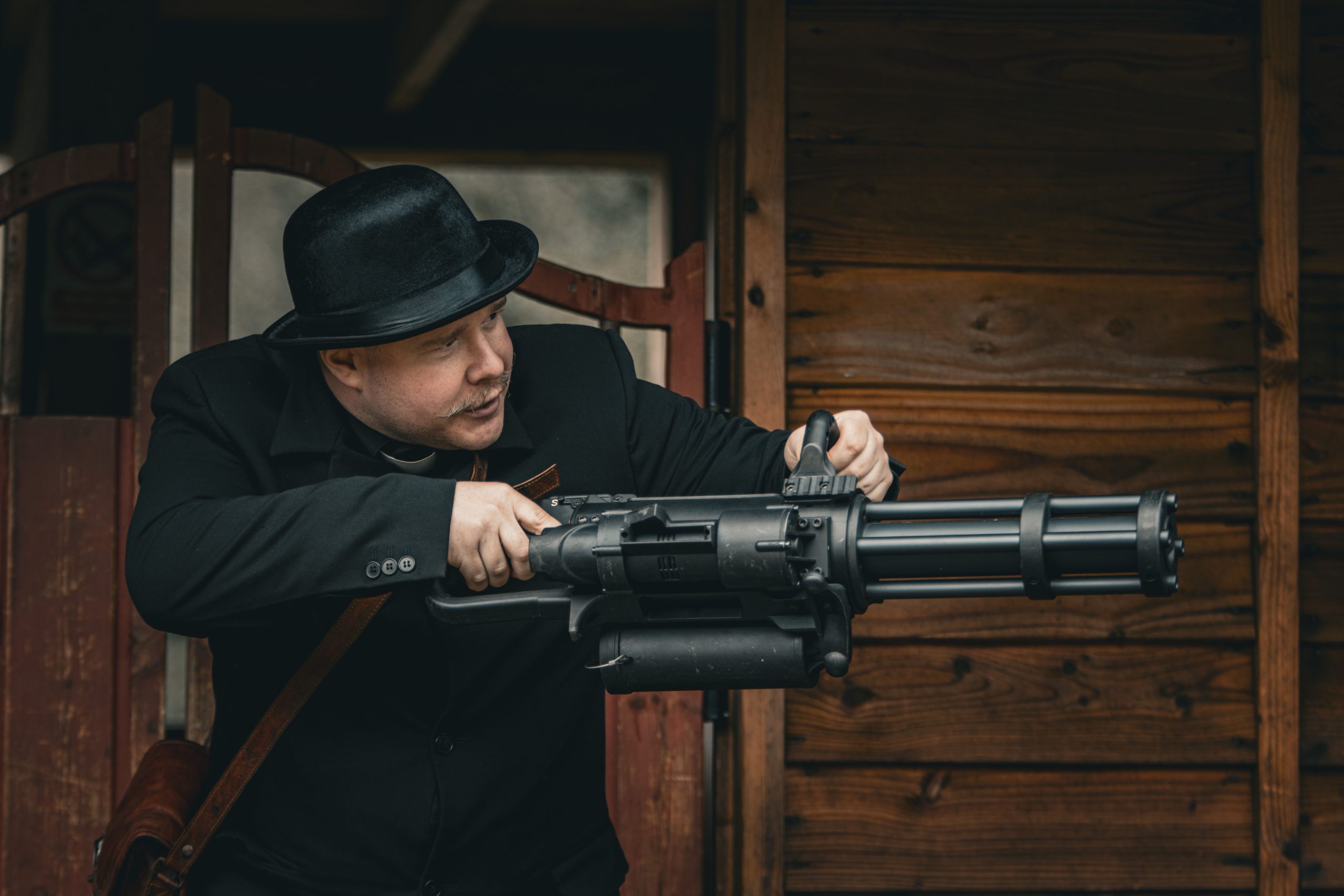
The Pancor Jackhammer looked more like a movie prop than a conventional shotgun, yet its designer pursued a serious combat concept. Developed by John A. Anderson, it used a bullpup layout and a distinctive rotary magazine intended to speed ammunition changes compared with traditional pump shotguns. Its compact body hid a large magazine, but it never became a widely issued production firearm. Testing reportedly destroyed 2 of 3 prototypes, and many additional display models were nonfunctional. Its limited development helped turn the Jackhammer into a legend of unconventional firearm design.