
Bullpup shotguns have always looked like the future, but a few standout models did more than turn heads. They challenged old assumptions about how compact, capable, and versatile a shotgun could be. From military inspired experiments to range favorites and practical defensive platforms, these seven designs helped change the conversation for shooters everywhere.
High Standard Model 10
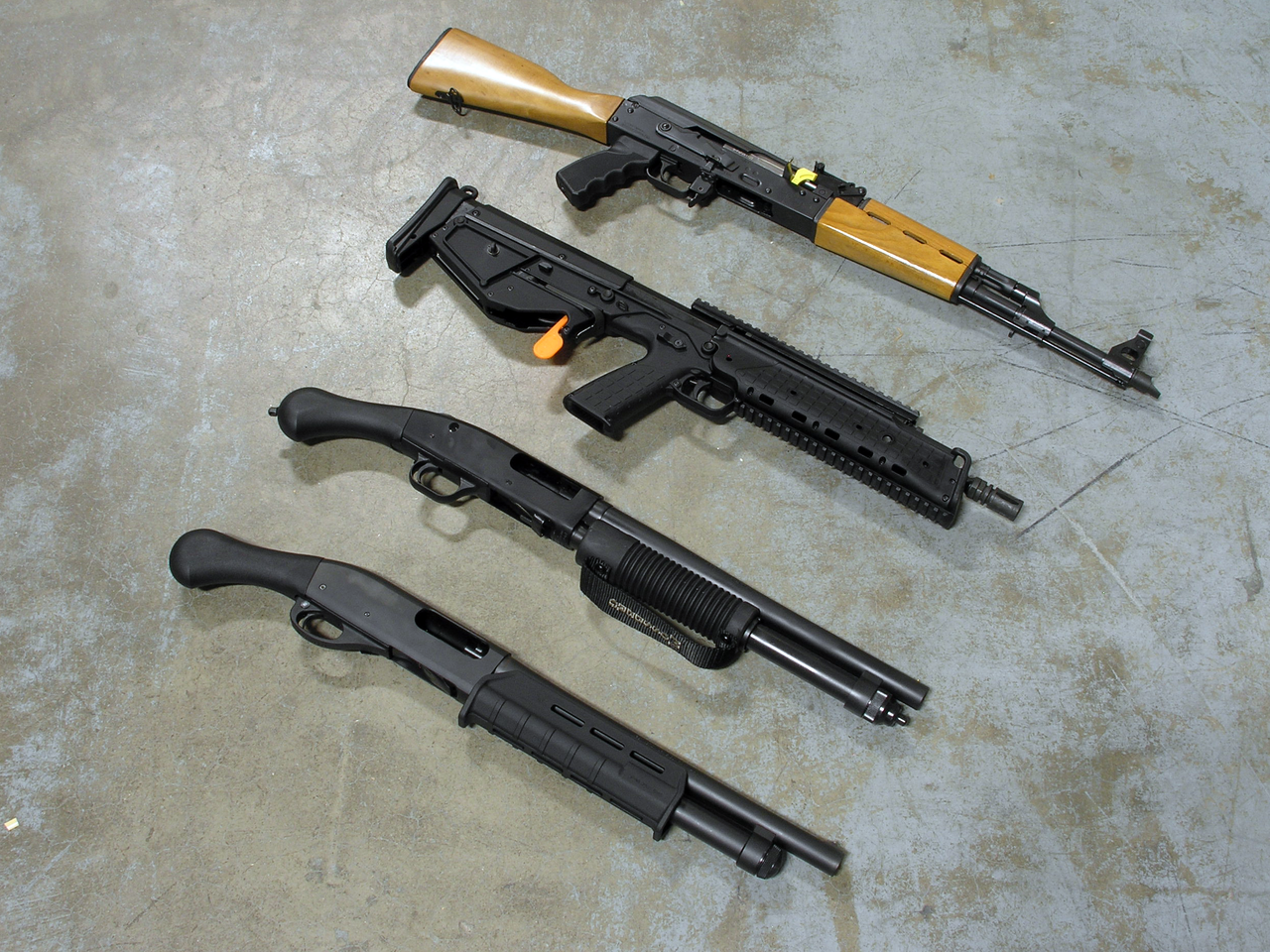
The High Standard Model 10 is one of the earliest bullpup shotguns most enthusiasts point to when tracing the concept’s roots. Developed from the Flite King action in the 1960s, it pushed the action and magazine behind the trigger to create a shorter overall package long before that layout felt mainstream.
It looked unconventional, even by the standards of its day, and that was exactly the point. The Model 10 showed shooters that a shotgun did not have to follow a traditional stock-and-receiver formula to remain functional.
Its law enforcement ambitions were a little ahead of the market, but its influence lingered. More than a commercial smash, it became proof that compactness and firepower could coexist in a radically different silhouette.
Franchi SPAS-15
The Franchi SPAS-15 brought a European sense of tactical styling to the bullpup shotgun idea and made it feel more serious to a broader audience. Building on the reputation of the SPAS family, it arrived with a detachable box magazine and a format that looked purpose-built for modern defensive roles.
For many shooters, the SPAS-15 was a mental shift as much as a mechanical one. A shotgun could be compact, magazine-fed, and still project the authority of a fighting arm rather than a sporting tool.
It was never a common sight on every range, but its visual impact mattered. The SPAS-15 helped popularize the idea that a shotgun could borrow cues from military rifles without losing its own practical strengths.
Pancor Jackhammer

Few firearms have achieved legendary status quite like the Pancor Jackhammer, even though most people know it more from prototypes and media appearances than from real-world use. Its futuristic bullpup layout, drum-fed design, and automatic operation made it seem less like a shotgun and more like a leap into science fiction.
That mystique is part of why it changed perceptions. The Jackhammer invited shooters to imagine the shotgun as a high-capacity, highly specialized platform capable of departing completely from familiar hunting and riot-gun traditions.
Even in limited existence, it left a deep cultural mark. It became a symbol of how bold the bullpup shotgun concept could be when designers stopped trying to make it look conventional.
Neostead 2000
The Neostead 2000 took a different route to innovation by focusing on capacity and compactness in a manually operated package. Designed in South Africa, it used dual magazine tubes and a bullpup layout to deliver a lot of onboard ammunition without stretching the gun’s length.
That made shooters rethink what a pump shotgun could be. Instead of accepting a long front-heavy profile as inevitable, the Neostead suggested that clever packaging could preserve control while adding flexibility.
Its unusual manual of arms meant it was never going to be a casual purchase for everyone. Still, it proved that bullpup design was not just about aesthetics, because it could solve practical problems in a distinctly modern way.
Kel-Tec KSG
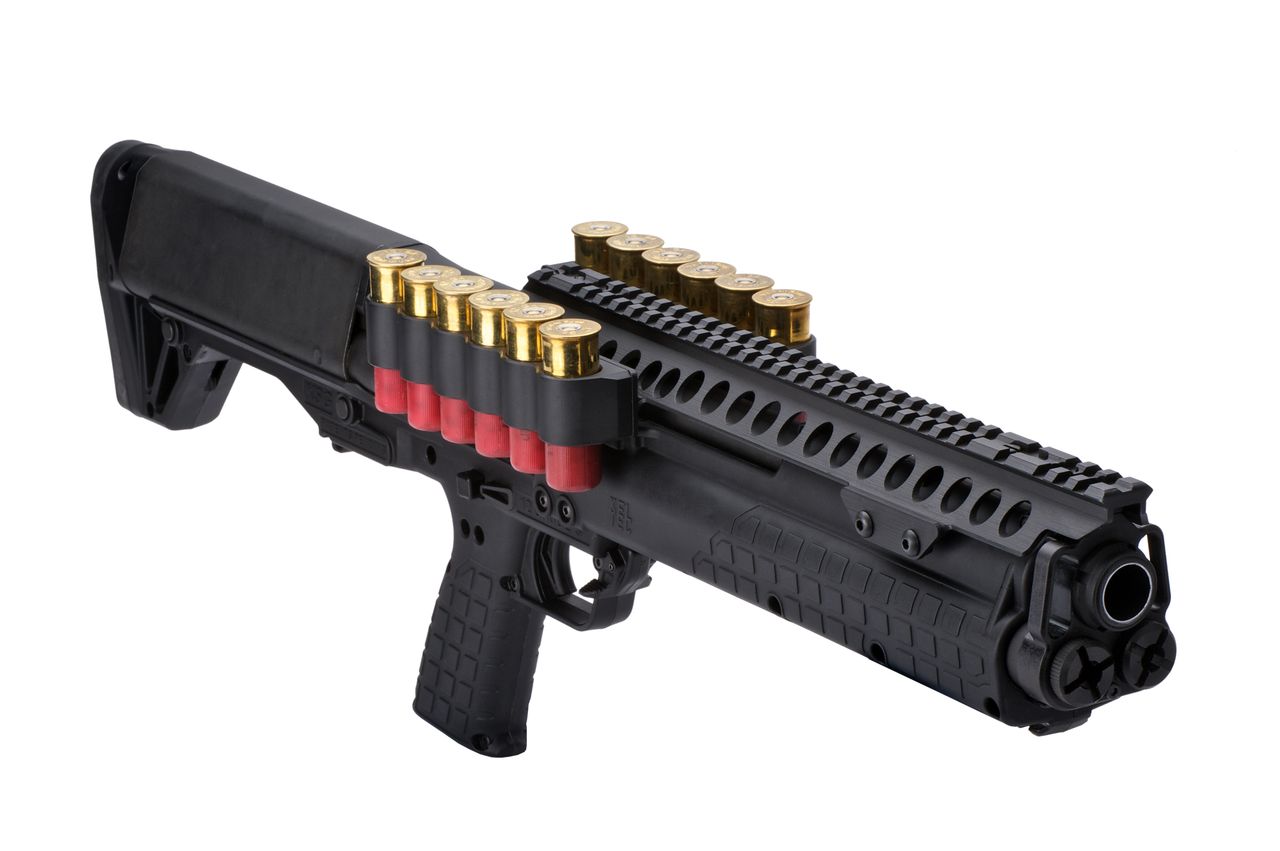
The Kel-Tec KSG is the bullpup shotgun that probably did the most to bring the format into ordinary conversation. Compact, pump-action, and famously equipped with dual magazine tubes, it offered eye-catching capacity in a package short enough to stand apart from the traditional home-defense shotgun.
Its popularity came from more than novelty. The KSG gave buyers a gun they could actually find, discuss, accessorize, and compare, which moved the bullpup concept from fringe curiosity to serious consumer option.
Like many disruptive designs, it sparked debate about ergonomics, recoil, and controls. But that debate itself was evidence of its importance, because the KSG made shooters evaluate shotguns through a fresh lens of size versus capability.
UTAS UTS-15
The UTAS UTS-15 arrived with bold styling and a feature list that seemed designed to push every conversation forward at once. Its bullpup layout, dual magazine tubes, polymer-heavy construction, and integrated visual elements gave it a distinctly 21st-century personality that was hard to ignore.
For some shooters, it represented the promise of the next-generation shotgun. For others, it was a reminder that innovation has to balance ambition with reliability and user confidence.
Either way, the UTS-15 mattered because it kept the category visible. It reinforced the idea that bullpup shotguns were no longer isolated experiments, but part of an ongoing effort to rethink how defensive shotguns should look and handle.
IWI Tavor TS12
The IWI Tavor TS12 gave the bullpup shotgun concept a polished, mature expression from a company already associated with compact rifle design. Its semi-automatic action and rotating tubular magazine system made it feel both innovative and refined, rather than merely unconventional for the sake of appearances.
That distinction helped win over skeptical shooters. The TS12 suggested that a bullpup shotgun could be thoughtfully engineered, relatively intuitive, and genuinely practical for enthusiasts who wanted capacity without excessive overall length.
It also arrived at a time when the market was ready to take the category more seriously. In many ways, the TS12 showed that bullpup shotguns had evolved from curiosities into credible modern platforms.