It sounds almost unbelievable. America’s famous Springfield 1903 was, in important ways, German enough that the US government ended up paying for it.
The rifle America wanted after a military embarrassment

The story begins with a shock to American military confidence during the Spanish-American War. In Cuba in 1898, US troops carrying the Krag-Jorgensen rifle faced Spanish forces armed with the 7x57mm Mauser Model 1893. The contrast was painful. Spanish troops could reload faster with stripper clips, their rifles had stronger actions, and their ammunition delivered flatter trajectories and better battlefield performance at long range.
American officers and ordnance experts studied those fights closely. Reports from San Juan Hill and other engagements made it clear that the Krag, while reliable and accurate, was behind the state of the art in several important ways. The Krag’s side-loading magazine was slower to recharge, and its single locking lug arrangement was not considered as robust as the dual front-locking system used in Mauser rifles. In a period when military powers were racing to modernize, those details mattered enormously.
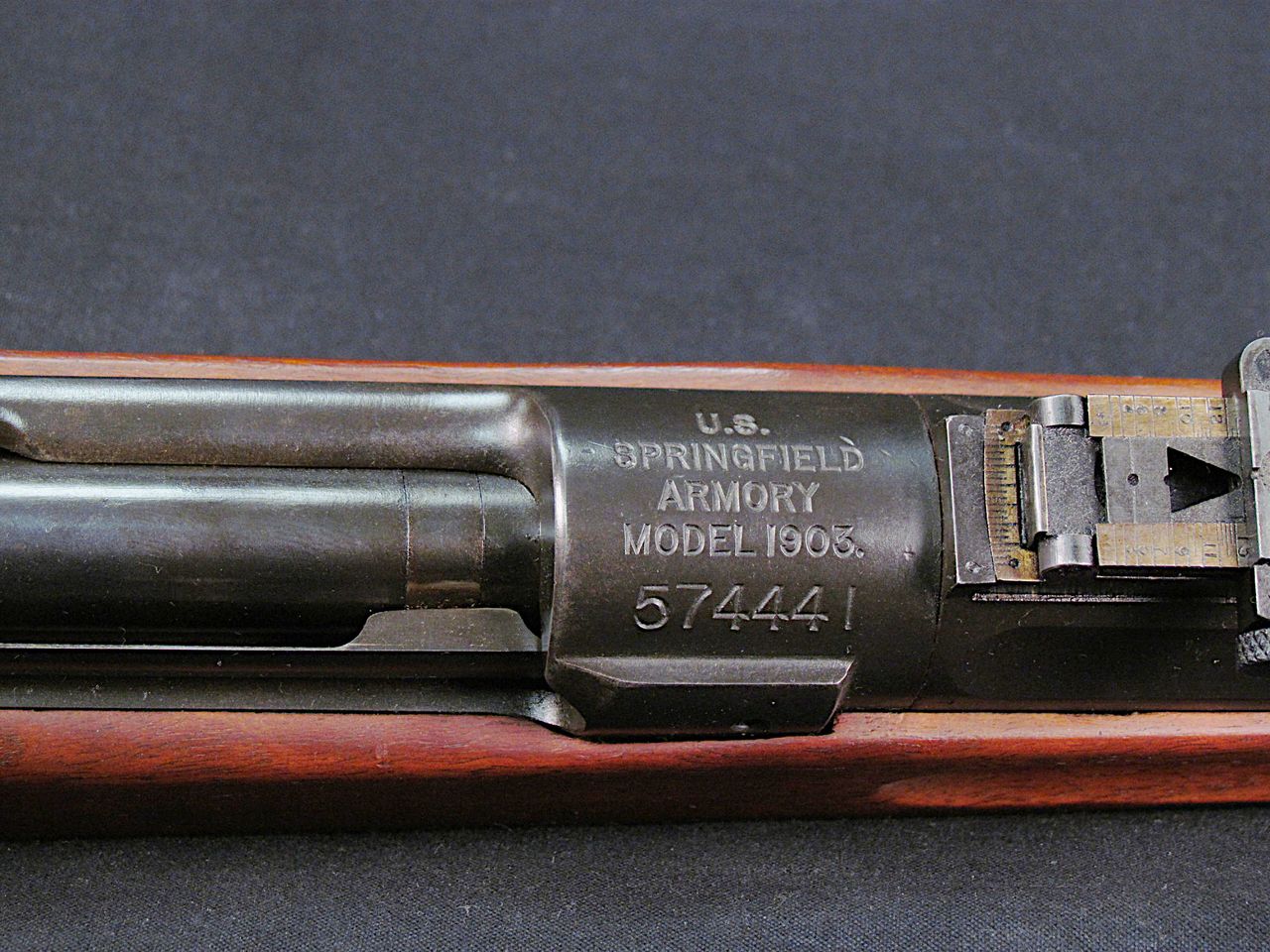
The US Army Ordnance Department did not simply want a slightly improved rifle. It wanted a replacement that captured the best contemporary features in one package. Engineers at Springfield Armory began work on what would become the United States Rifle, Caliber .30, Model of 1903. From the start, the design reflected lessons learned directly from Mauser-pattern rifles that had impressed American observers in combat.
That does not mean the Springfield 1903 was a crude copy with a new stamp on the receiver. It had its own dimensions, manufacturing methods, sights, stock design, and later a distinctly American cartridge evolution. But in the areas that mattered most to patent law, especially the magazine system and clip-loading arrangement, the new rifle tracked very closely with Mauser’s protected inventions. That overlap would become more than an academic issue.
How the Springfield 1903 borrowed from the Mauser system

To understand why royalties were paid, it helps to separate general inspiration from patentable features. By 1903, bolt-action rifles around the world shared many broad similarities. But patents did not protect the entire idea of a military bolt rifle. They protected specific mechanical solutions. In the Springfield’s case, the most important issue involved the magazine design and the method of charging it with stripper clips, both areas in which Mauser held enforceable rights.
Paul Mauser and his company had refined a highly effective repeating rifle system in the late 19th century. The controlled-feed bolt, staggered-column box magazine, and charger loading arrangement made Mauser rifles fast, durable, and practical under field conditions. The Spanish Model 1893 and later German developments demonstrated how effective that system could be. The United States, after evaluating captured rifles and combat reports, incorporated very similar concepts into the Springfield 1903.
One of the central points of contention was the Springfield’s use of a clip-fed internal magazine that was functionally close to Mauser’s patented arrangement. American designers made modifications, but not enough to erase the resemblance where the law was concerned. This was not merely a case of taking a general idea from a rival. It was the adoption of technical features that patent law recognized as Mauser property in the United States.
The fact that Springfield Armory was a government arsenal did not shield the rifle from patent claims. Governments could and did find themselves in patent disputes, especially when protected industrial designs were manufactured domestically. Deutsche Waffen und Munitionsfabriken, often called DWM, controlled Mauser interests relevant to the dispute and pressed the issue. Once the legal and technical review was made, the US government recognized that the rifle used patented features and negotiated compensation rather than risk a deeper and more damaging conflict.
Why the US government chose to pay royalties
Paying royalties to a foreign arms concern might sound politically impossible today, but in the early 1900s it was a practical decision. The United States needed a first-rate service rifle quickly, and the Springfield 1903 was already moving through adoption. Redesigning key elements to avoid infringement would have cost time, money, and perhaps performance. The Army was not interested in stepping backward just to avoid writing checks.
Patent law was also a serious matter in the industrial age. Major powers copied one another constantly at the conceptual level, but patented details still carried legal and financial weight. The United States had its own inventors and manufacturers to protect, so ignoring Mauser’s claims outright would have undermined principles that Americans relied on in other industries. In that sense, paying royalties was not a sign of weakness. It was an acknowledgment that modern military procurement existed inside a wider world of commerce, law, and engineering.
The royalty arrangement is often summarized simply: the US paid Mauser interests for each rifle produced using the infringing features. The commonly cited figure is $200,000 in total compensation before World War I interrupted further payments. That number varies a bit in retellings depending on what is counted, but the basic point is consistent across standard histories of the rifle. The government accepted that Mauser held valid patent rights and compensated accordingly.
There was also a diplomatic dimension. Before 1914, the United States and Imperial Germany were not wartime enemies. This was a commercial dispute involving intellectual property, not a moral struggle over rearmament. Paying a royalty to a German rights holder in peacetime did not carry the same political symbolism it would later acquire in hindsight. Only after the First World War began did the arrangement become frozen by the larger rupture in international relations.
What changed when war broke out and patents met geopolitics
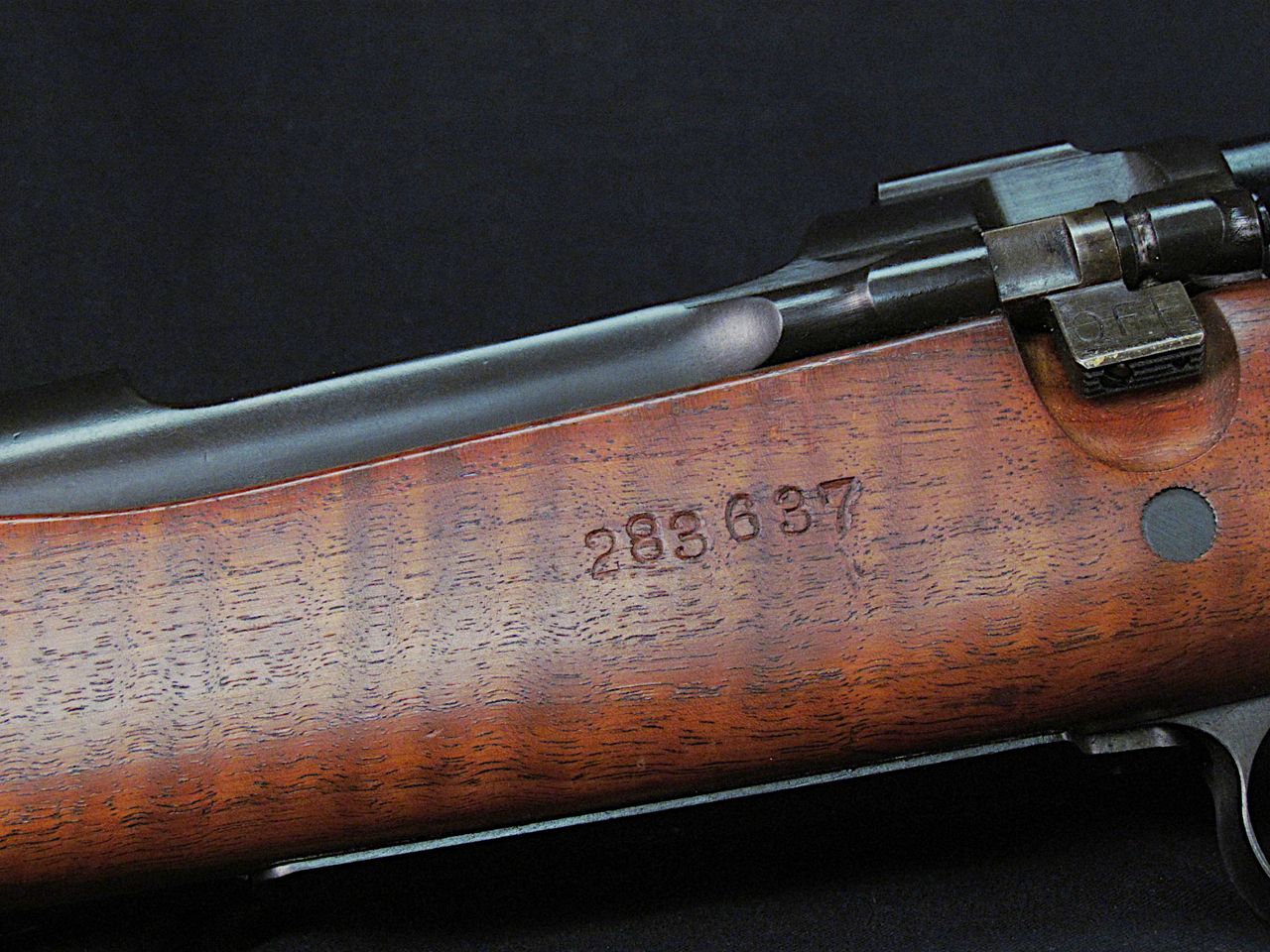
When World War I erupted in Europe in 1914, the royalty question moved into a different political atmosphere. Once the conflict widened and especially after the United States entered the war in 1917, continuing to send money tied to rifle production to German interests was no longer realistic. Wartime legal controls and the seizure or suspension of enemy-owned rights altered the situation dramatically. Patent enforcement in peacetime and wartime were simply not the same thing.
By then, the Springfield 1903 had already established itself as America’s standard service rifle, though wartime production pressure would also bring the M1917 Enfield into broad use. The irony remained: one of the nation’s signature rifles was born partly from lessons learned against Spanish Mausers and partly from engineering features so close to Mauser’s patents that money had changed hands. But the war cut off the neat continuity of that arrangement.
The episode also highlights a broader truth about military technology. Nations often build their next weapon by studying the enemy’s last successful one. That happened with artillery, machine guns, battleships, and aircraft, and it certainly happened with bolt-action rifles. Designers borrowed, adapted, improved, and sometimes infringed. In the case of the Springfield 1903, the borrowing was close enough that legal liability attached before geopolitics overrode normal commercial practice.
Historians of small arms often point out that the United States was hardly alone in this pattern. Mauser systems influenced rifles across the world, from Latin America to Europe and beyond. The Mauser action became one of the foundational bolt-rifle designs of the era, copied both legally and otherwise because it worked so well. The Springfield 1903’s royalty story stands out not because imitation was unusual, but because the paper trail made the imitation unusually visible and costly.
Why the Springfield 1903 still matters in American firearms history
The Springfield 1903 remains one of the finest military bolt-action rifles ever fielded by the United States. It combined excellent accuracy, strong construction, and a sleek profile that made it respected by soldiers, marksmen, and later collectors. Variants served through World War I, continued into World War II in sniper and training roles, and left a deep mark on American rifle culture. Its reputation survived long after the royalty dispute faded from public memory.
What makes the story enduring is the way it punctures a simple national myth about weapons development. People often imagine service rifles as purely domestic creations, especially iconic ones. The Springfield 1903 was indeed built in America, issued by America, and used by American troops. Yet some of its most important mechanical ideas came from a German design lineage that the US government could not legally pretend was its own.
There is also a useful lesson here about innovation itself. Breakthroughs in arms development rarely appear from nowhere. They usually emerge from an international conversation of competition, observation, reverse engineering, patent claims, and incremental improvement. The Springfield 1903 was not less significant because it owed something to Mauser. If anything, its success shows how quickly the US military absorbed battlefield lessons and translated them into a better rifle, even at the price of swallowing some national pride.
So why did the US pay Germany royalties for its own service rifle? Because the Springfield 1903 was, in crucial patented respects, built on Mauser solutions that American designers adopted after seeing their effectiveness in war. The United States wanted the best rifle it could get, patent law said those features belonged to Mauser, and for a time the government paid up. That uneasy mix of admiration, necessity, and legality is exactly what makes the Springfield 1903 story so memorable.