It did not take long for the Springfield Prodigy to start arguments. The moment Springfield announced it in September 2022, it landed right in the middle of one of the most emotional debates in handgun culture.
It Challenged The Very Idea Of What A 1911 Should Be
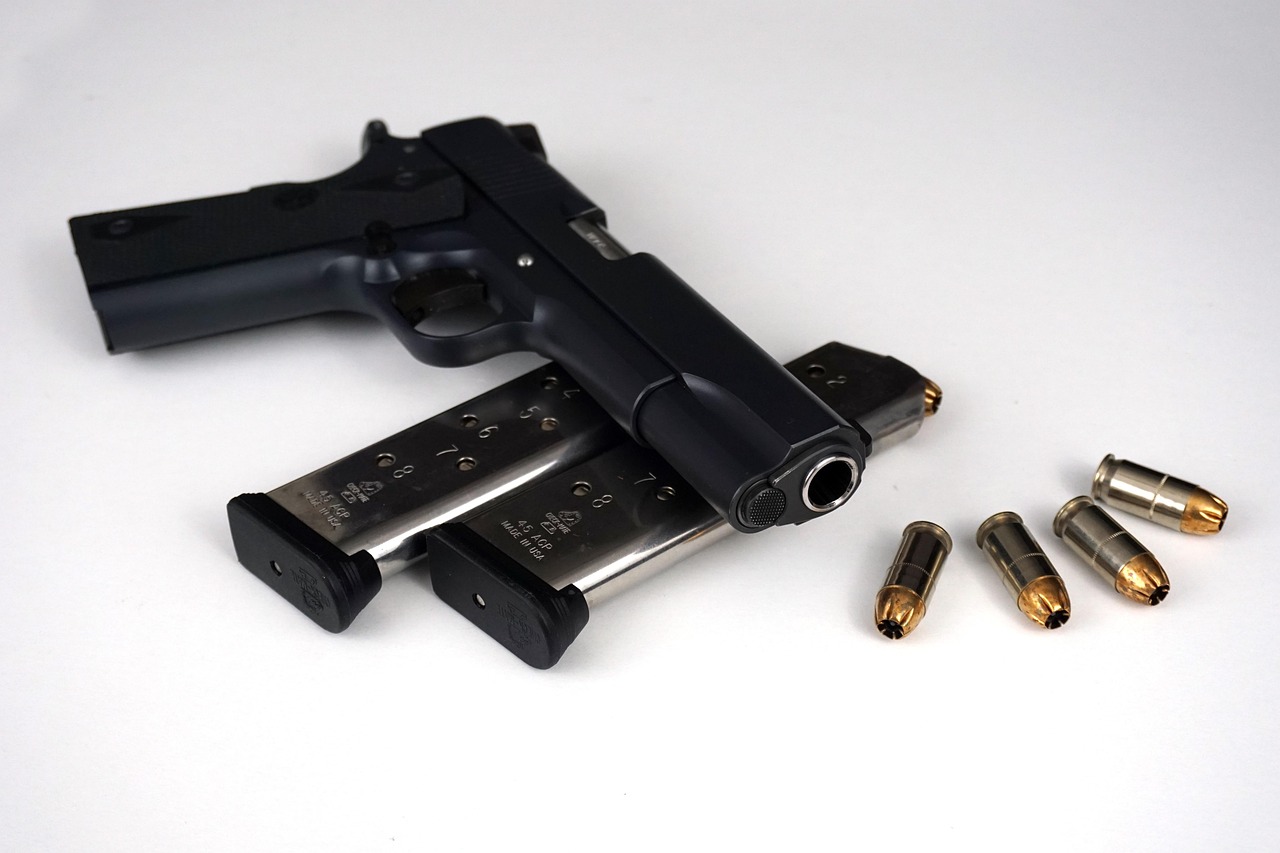
For a lot of shooters, the 1911 is not just a design. It is a creed. It is steel, slim lines, a single-stack magazine, a crisp trigger, and a manual of arms that has survived wars, competition circuits, and generations of gunsmithing lore.
The Prodigy showed up and immediately broke that image. Springfield launched it as a 9mm double-stack 1911 DS with a polymer grip module on a forged steel frame, optics-ready cuts, a rail, and 17+1 or 20+1 capacity depending on magazine choice. According to Springfield’s launch announcement on September 1, 2022, it was the company’s first offering in a new 1911 DS family, and that wording mattered because it signaled a platform shift, not a one-off experiment.
To modern shooters, that sounded practical. To traditionalists, it sounded like somebody had taken a classic roadster and turned it into a turbocharged hatchback with a touch screen. Yes, it might be faster. That was not the point.
The split started there. One camp saw evolution. The other saw dilution. And once that line was drawn, everything else about the Prodigy got judged through it.
Springfield Went After A Sacred Price Gap
The second reason the Prodigy caused such an immediate reaction was money. Springfield announced both the 5-inch and 4.25-inch versions with a starting MSRP of $1,499, or $1,699 with a HEX Dragonfly optic package. In the double-stack 1911 world, that was a loud statement.
For years, the 2011-style market had been associated with higher-end pistols from makers like Staccato, the company that emerged from STI’s rebrand in 2019 and completed the companywide Staccato transition in 2020. That world had a reputation for premium pricing, premium tuning, and a certain exclusivity. The Prodigy was aimed straight at buyers who wanted that format without paying full boutique money.
That move thrilled some shooters because it promised access. A broader audience could finally get into the double-stack 1911 space without jumping into the deeper end of the price pool. According to NRA coverage of double-stack 1911s, imported and more affordable models have helped open the category to a wider audience, and Springfield’s entry fit that trend neatly.
But loyal 1911 owners often read price cuts differently. To them, cheaper access can also mean compromised fitting, looser tolerances, or corners cut where traditional 1911s are supposed to shine. The Prodigy was not merely less expensive. It threatened to redefine what “good enough” meant in a category built on refinement.
It Mixed Old-School 1911 Culture With New-School Duty Features

The Prodigy also touched a nerve because it was clearly built around modern use cases rather than nostalgia. Springfield gave it the Agency Optic System, suppressor-height iron sights, an ambidextrous thumb safety, a Picatinny rail, a bull barrel, and a grip texture borrowed from the company’s polymer pistol line. That is a very different personality from a blued Government Model with wood stocks.
In practical terms, Springfield was trying to answer a simple market question: what if a shooter wants a 1911 trigger with current-day capacity and red-dot compatibility? That is exactly the lane that has helped the Staccato-style pistol gain so much traction in the duty and defensive world. Staccato’s own brand story emphasizes duty-ready 2011 pistols and notes that the Staccato name was first introduced in 2019 as part of that shift.
That appeal is obvious if you shoot USPSA, train around red-dot pistols, or simply prefer a higher-capacity handgun that still points like a 1911. But many traditional 1911 owners never wanted their beloved platform turned into a do-everything tactical tool.
To them, the Prodigy looked like proof that manufacturers no longer trusted the original formula to sell on its own. The pistol was not insulting the 1911. It was suggesting the 1911 needed updating, and that was enough to irritate purists on day one.
The Polymer Grip Was More Than A Material Choice

If you want to understand why emotions ran hot, look at the grip module. The Prodigy uses a polymer grip attached to a forged steel receiver, which is standard logic in the 2011-pattern world. It helps keep weight manageable while allowing a wider magazine body and modern ergonomics.
From a performance standpoint, that is sensible engineering. Plenty of serious shooters accept polymer where it brings a real advantage in texture, shape, cost, or magazine geometry. In fact, the basic steel-frame-plus-polymer-grip formula is part of what made the Staccato and similar designs commercially viable.
But long-time 1911 fans do not always judge pistols by engineering logic alone. They judge them by feel. A classic 1911 is supposed to feel like a single piece of steel history in the hand. The Prodigy, by contrast, felt to some people like a hybrid that belonged more to the modern competition and tactical era than to the Browning lineage they admire.
That difference sounds superficial until you remember how much of gun culture is tactile. Grip angle, frame width, balance, and even the sound of the action cycling all carry meaning. The Prodigy did not just shoot differently from a traditional 1911. It announced, through touch alone, that it was playing a different game.
Early Reliability Complaints Hardened Both Sides Instantly
Then came the part that really cemented the divide: early reliability chatter. Some reviews were enthusiastic right away. Guns & Ammo reported getting past 2,000 rounds without a single issue in its review sample, which gave supporters ammunition to argue the Prodigy was the real deal.
At the same time, owner reports and forum discussions from late 2022 into 2023 frequently mentioned failures to return to battery, feeding issues, extractor tuning complaints, and general break-in frustration. Those conversations spread fast because the 1911 crowd notices fit-and-function details with almost obsessive attention. A striker-fired pistol might get more forgiveness for a rough launch. A 1911-pattern pistol usually does not.
That mattered because each side saw confirmation of what it already believed. Fans of the concept said early production hiccups were typical and fixable. Skeptics said the gun proved exactly why a lower-priced double-stack 1911 was risky in the first place.
Springfield worked to push back on that narrative. In February 2023, the company publicized a documented 10,000-round torture test for the Prodigy. That helped the pistol recover ground, but by then the first impression had already done its damage. In the 1911 world, first impressions linger.
The Prodigy Exposed A Generational Divide In Handgun Priorities
Underneath the technical arguments sat a deeper cultural divide. Older-school 1911 loyalty often centers on craftsmanship, tradition, caliber history, and the belief that eight or nine rounds of a beautifully fitted pistol are enough if the gun does its part. That perspective is about mastery as much as hardware.
Newer shooters often come to handguns through optics-ready carry guns, practical shooting sports, and training culture shaped by capacity, modularity, and accessory support. For them, the Prodigy made intuitive sense. Why cling to low capacity if the trigger and ergonomics can be preserved in a higher-capacity format?
That is why the launch hit such a nerve. The debate was never only about one Springfield pistol. It was about whether the 1911 should remain a classic object or become a flexible architecture. According to Springfield’s later announcements, the company kept expanding the line with 10-round compliant models in 2024, coyote brown variants, and the compensated Prodigy Comp, a clear sign that Springfield viewed the platform as a serious long-term family rather than a short-lived experiment.
Once a company starts building a family around a concept, the argument changes. Purists no longer see a novelty. They see a movement.
In The End, The Prodigy Was Successful Precisely Because It Was Provocative
The irony is that the Prodigy split 1911 owners because it understood the market almost too well. Springfield saw that many shooters love the 1911 trigger, the safety layout, and the shootability of the platform, but also want modern magazine capacity, optics compatibility, and a lower entry price than premium 2011-style guns usually demand.
That combination guaranteed controversy because it forced people to declare what they really value. If your loyalty is to the original form, the Prodigy feels like compromise. If your loyalty is to the shooting characteristics, it feels like progress. Both reactions are honest, and both explain why the announcement triggered debate before the gun had even built a track record.
The most telling part is that the Prodigy did not disappear. Springfield continued updating and expanding it, and the broader double-stack 1911 market kept growing. That suggests the pistol was not a fad but a marker of where part of the handgun world was already heading.
So yes, it split loyal 1911 owners the moment it was announced. That was almost inevitable. The Prodigy did not ask whether the 1911 could change. It assumed the answer was yes, and that was the real provocation.