Big ideas do not always come from experts. Sometimes they come from someone stubborn enough to draw the first version by hand and build it anyway.
A cameraman with an unlikely idea
The Barrett M82 story starts with Ronnie Barrett, not as a gunsmith or military engineer, but as a photographer running a studio in Tennessee. According to Barrett’s own company history, his inspiration struck in 1982 while photographing a patrol boat fitted with .50 caliber Browning machine guns. Seeing that firepower mounted on a boat triggered a simple question: why was there no practical shoulder-fired semi-automatic rifle built around the same cartridge?
That question mattered because the .50 BMG round was already well known for reach, power, and anti-materiel potential. What did not exist in any meaningful commercial way was a portable, semi-automatic rifle that could harness it for individual use. Barrett had no manufacturing background and no engineering credentials, which makes the next part of the story even stranger.
By the company’s account, he hand-drew the concept in three dimensions to show how the rifle should work. That detail is important because it captures the original spirit of the M82. This was not a polished defense-contractor program. It was a garage-born idea from someone who understood visual form, mechanical layout, and user need well enough to imagine a product before he knew how to industrialize it.
From garage sketch to working rifle
The first Barrett rifle was developed in Murfreesboro, Tennessee, and early accounts consistently describe it as a fast-moving prototype effort rather than a slow institutional project. Barrett’s design work focused on making a huge cartridge manageable in a shoulder-fired gun. That meant balancing recoil, action timing, weight, barrel movement, and durability in a package that a shooter could realistically deploy.
The M82 used a recoil-operated, semi-automatic system, which helped separate it from the bolt-action big-bore rifles many shooters now associate with extreme-range work. That choice was bold. A semi-auto chambered in .50 BMG promised faster follow-up shots and a very different role from traditional precision rifles. It pointed toward battlefield utility against equipment, light vehicles, hardened positions, and explosive hazards rather than pure paper-target accuracy.
Early production rifles were offered commercially in the early 1980s, with American Rifleman noting sales beginning in 1983. That was a critical step because it let the concept prove itself outside the bureaucracy of formal procurement. Instead of waiting for a military requirement to appear, Barrett built the rifle first and let the market catch up. Many famous firearms followed military demand. The M82 essentially created its own.
Why the M82 caught on
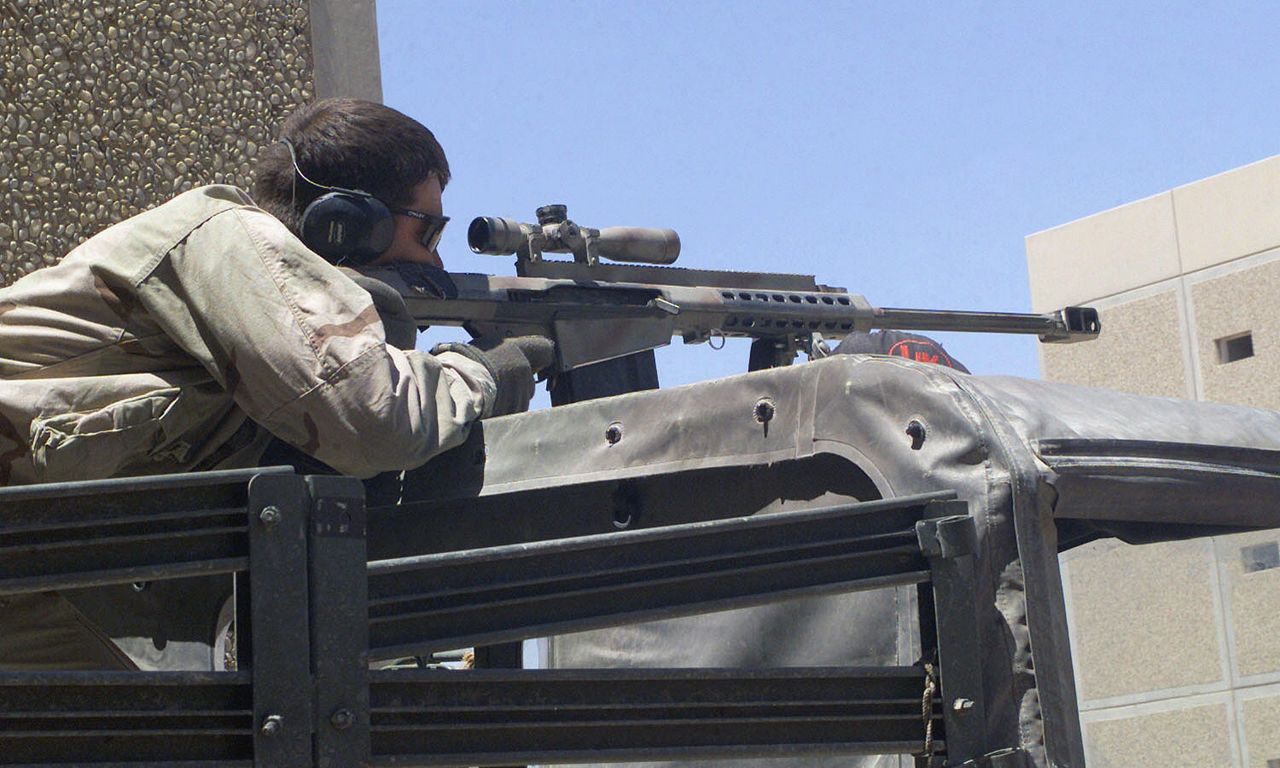
The Barrett M82 became influential because it solved a problem that militaries and specialized shooters did not fully appreciate until they saw it in action. A heavy semi-automatic rifle in .50 BMG gave operators reach and impact that conventional rifle calibers could not match. It could damage sensitive equipment, disable vehicles, punch through barriers, and engage targets at distances beyond standard infantry rifles.
That is why calling the M82 simply a sniper rifle misses part of the point. Several military and specialist sources describe it more accurately as an anti-materiel rifle. Its real strength was not just precision on personnel targets. It was the ability to attack the things around those targets: radar gear, communications equipment, engines, unexploded ordnance, and fortified positions.
The design also arrived at a useful time. By 1989, Barrett had landed a major early military sale to Sweden, a milestone repeated in company and industry histories. Once a national military bought in, the rifle gained credibility that commercial sales alone could never provide. Soon after, wider military interest followed, and the M82 began moving from a curious outlier to an established tool in the modern battlefield kit.
Combat service changed its reputation
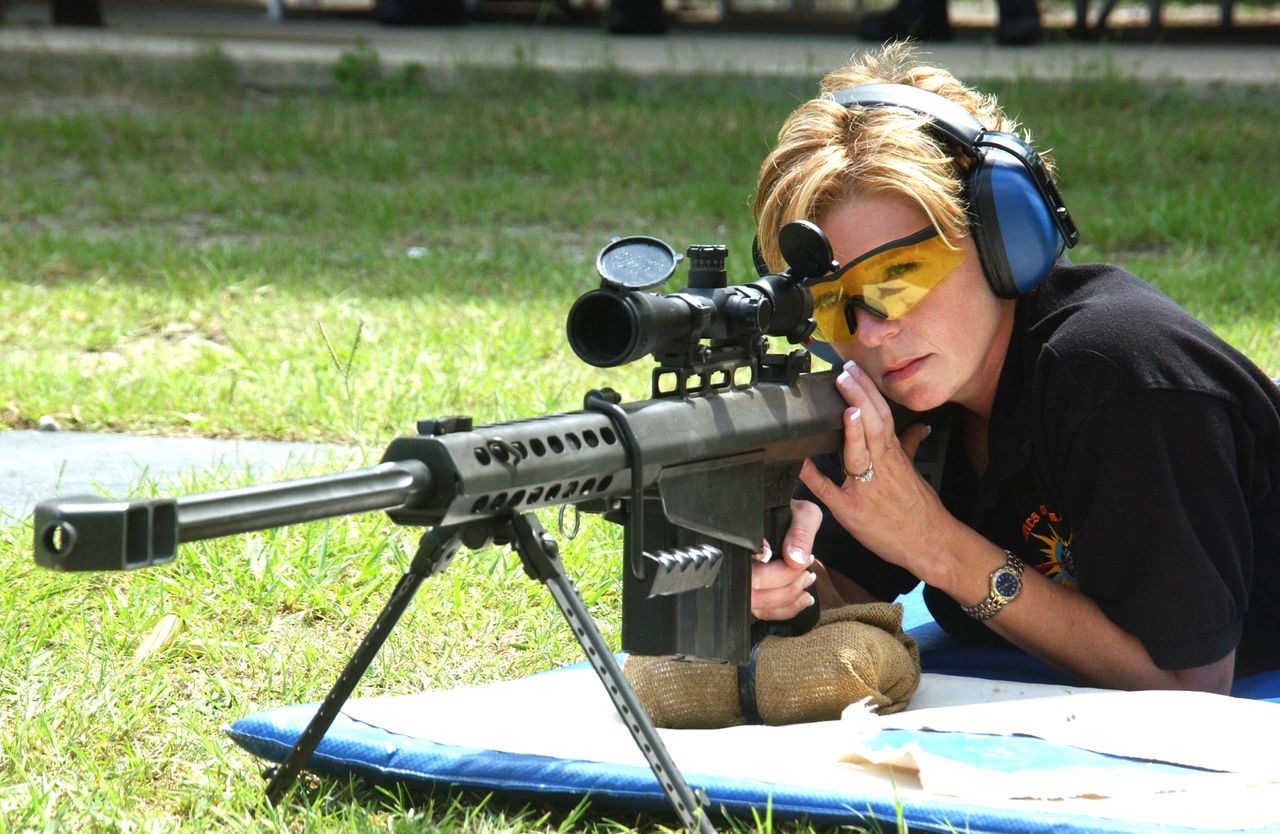
The M82’s combat reputation grew dramatically during the Gulf War era. Industry histories and firearms reporting point to Operation Desert Storm as the conflict that introduced many Americans to the rifle’s practical value. In that environment, a long-range, hard-hitting rifle had obvious use against equipment, bunkers, and battlefield targets that sat outside the comfort zone of standard small arms.
Its military life expanded from there. Barrett states that the Model 82A1 was later adopted by the U.S. Army as the M107, a designation that helped cement the platform as more than a niche specialty gun. American Rifleman also notes that variants of the rifle saw use across the U.S. armed forces, a remarkable outcome for a concept that began as one man’s sketch.
That service record matters because military adoption is the ultimate reality test for unusual firearms concepts. Plenty of bold designs look impressive at trade shows and disappear. The M82 endured because it filled a real operational role. Troops used it for standoff tasks where power and distance mattered more than portability, and that practical success is what transformed Barrett from inventor to institution.
The engineering idea inside the spectacle
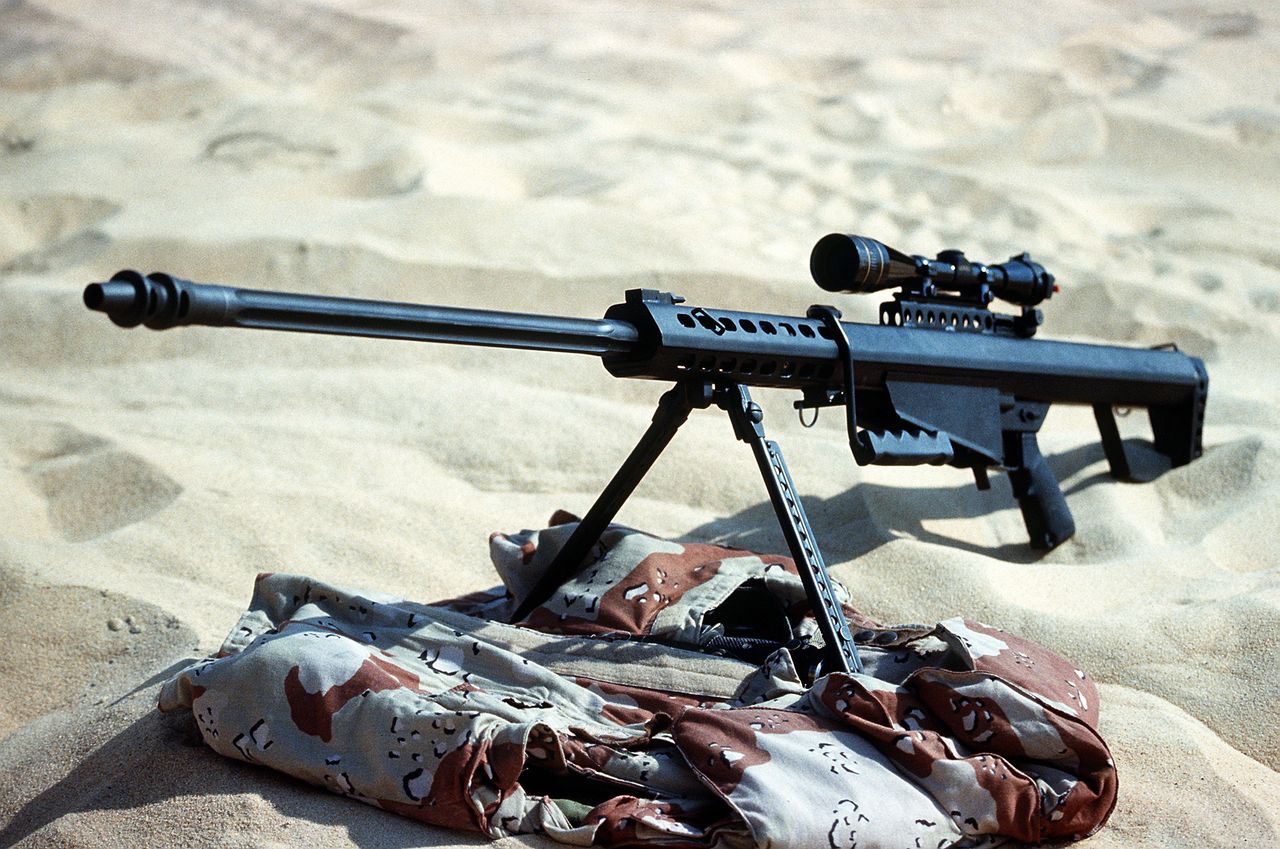
People often focus on the rifle’s sheer size, but the smarter way to understand the M82 is to look at how its design made the .50 BMG manageable. The rifle’s substantial weight, long-recoil operation, and large muzzle brake all work together to tame a cartridge that would otherwise be punishing in a shoulder-fired platform. The result is not soft shooting in any normal sense, but controllable enough to be useful.
This is where Ronnie Barrett’s lack of formal engineering background becomes more interesting, not less. He did not ignore engineering problems. He attacked them from the outside, with the eye of someone thinking first about function and user need. That outsider perspective can be powerful. Instead of inheriting old assumptions, he designed around the question in front of him: how do you make a semi-auto .50 rifle that actually works?
The answer was not elegance in the classic sporting-rifle sense. The M82 is big, mechanical-looking, and unapologetically industrial. Yet that is part of its brilliance. It looks like exactly what it is: a purpose-built machine for delivering massive cartridge performance at long range. In firearms design, utility often outlives refinement, and the M82 is a textbook example.
A rifle that became a cultural symbol
Over time, the Barrett M82 moved beyond military circles and became one of the most recognizable rifles in the world. Its silhouette is instantly identifiable even to casual observers. Movies, television, video games, and news coverage helped turn it into a symbol of extreme range and outsized power, often blurring the line between technical reality and pop-culture myth.
That visibility can distort public understanding, but it also says something about the design itself. Very few rifles become iconic on shape alone. The M82 did. In Tennessee, the rifle’s place in state manufacturing history became official when lawmakers designated the M82/M107 as the state rifle. That is an unusual honor and a sign that the gun had come to represent more than a product line.
Within the firearms world, the M82 also opened commercial and tactical doors for large-caliber precision shooting. It helped normalize the idea that .50 BMG rifles could exist outside crew-served machine gun roles. Later, big-bore rifles, whether semi-auto or bolt-action, entered a landscape that Barrett had already changed. The category did not fully exist at scale until the M82 made believers out of buyers.
The real lesson behind the Barrett M82
The most remarkable part of the Barrett M82 is not just that it fires .50 BMG from the shoulder. It is that the rifle came from a person with no gun engineering résumé, no established weapons factory, and no guaranteed customer. Ronnie Barrett saw an unmet need, trusted his instincts, and built a product that professionals eventually adopted on a global scale.
There is a broader lesson there about innovation. Expertise matters, but so does perspective. A photographer spends his life framing shapes, understanding mechanical objects visually, and thinking about how tools serve human intent. In a strange way, those habits may have helped Barrett imagine a rifle others had overlooked. He did not approach the problem like a committee. He approached it like a creator.
That does not mean the M82 was an accident or a lucky stunt. It survived because the concept was sound, the execution improved over time, and the rifle proved itself where it counted. The Barrett M82 remains one of the clearest reminders that sometimes the person who changes an industry is the one who starts outside it.