A captured weapon could be more than a battlefield trophy. For military engineers, it could become a physical reference for understanding another country’s manufacturing ideas, materials, dimensions, and design choices. During wartime, examining an enemy firearm sometimes led to a local copy, while in other cases the captured design was modified to suit different ammunition, magazines, factories, or military requirements. The eight examples below reveal how foreign weapons crossed borders and evolved into new forms. Not every case was literally built from one surviving sample, but each shows how captured or closely examined designs influenced another nation’s production.
1. Finnish KP m/44
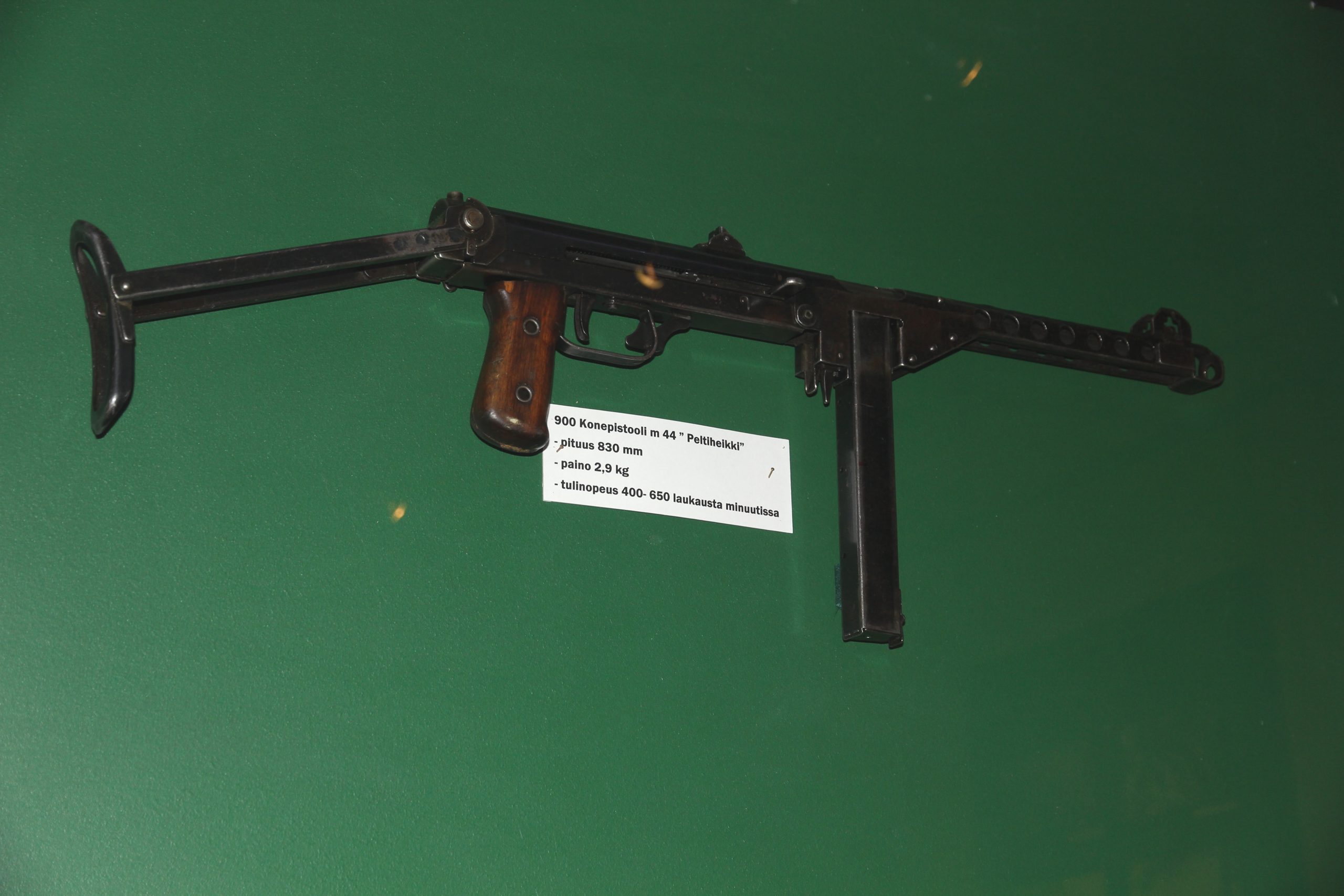
Finland’s KP m/44 is the clearest example of a captured gun becoming a local production model. During World War II, Finnish engineers studied a Soviet PPS-43 obtained as a battlefield capture and reproduced its compact stamped-steel layout. The Finnish version changed the chambering to 9×19mm and was arranged around Suomi magazines, reflecting local ammunition needs. The Soviet original used 7.62×25mm Tokarev, weighed about 3.9 kg, and had a 35-round magazine. The result was an adaptation, not a perfect clone, but its ancestry was unmistakable.
2. British Lanchester

The British Lanchester grew from close examination of the German MP28,II, a design Britain wanted to reproduce for naval use. Introduced in 1941, it retained the German gun’s basic blowback arrangement but followed British manufacturing practice and used 9×19mm ammunition. Its 50-round magazine made it distinctive, while the wooden furniture gave it a traditional appearance beside later stamped guns. About 80,790 Lanchesters were produced during the war. Its story shows how studying a foreign weapon could lead to a British service arm with its own manufacturing identity.
3. Spanish DUX 53
Spain’s DUX 53 represents a second-generation copy in a remarkable design chain. The weapon followed Finland’s KP m/44, which itself had been derived from the Soviet PPS-43. The Spanish gun inherited the compact stamped-metal concept but used the 9×19mm Parabellum cartridge. Produced around 1953, the DUX 53 shows how a wartime design could cross borders without remaining unchanged. Its ancestry is especially interesting because the Soviet original used 7.62×25mm and a 35-round magazine. The DUX story is reverse engineering by inheritance, rather than a simple one-for-one copy.
4. Chinese Type 54
China’s Type 54 was a domestic development of the Soviet PPS-43 pattern, with production beginning in the early 1950s. Chinese factories reproduced the stamped receiver, folding-stock arrangement, and operating concept, then adapted production for local conditions. It retained the 7.62×25mm Tokarev cartridge and commonly used 35-round magazines. It received official Type 54 designation in 1954, although earlier examples were marked “Replica 43.” It was not simply a Soviet firearm with new markings. It became a separately manufactured national version.
5. Mukden Type 2
The Mukden Type 2 is an unusual example because its starting point was a captured Japanese Nambu Type 2 submachine gun. Chinese forces obtained examples during World War II, and the Mukden arsenal later produced a simplified copy after the conflict. The Chinese version shifted to .45 ACP and used 20- or 30-round Thompson-pattern magazines, creating a hybrid rather than a strict reproduction. Production appears to have been limited to only a few hundred guns. Its story shows how engineers could take a captured mechanism, change the ammunition system, and preserve the basic operating idea.
6. German MP 3008
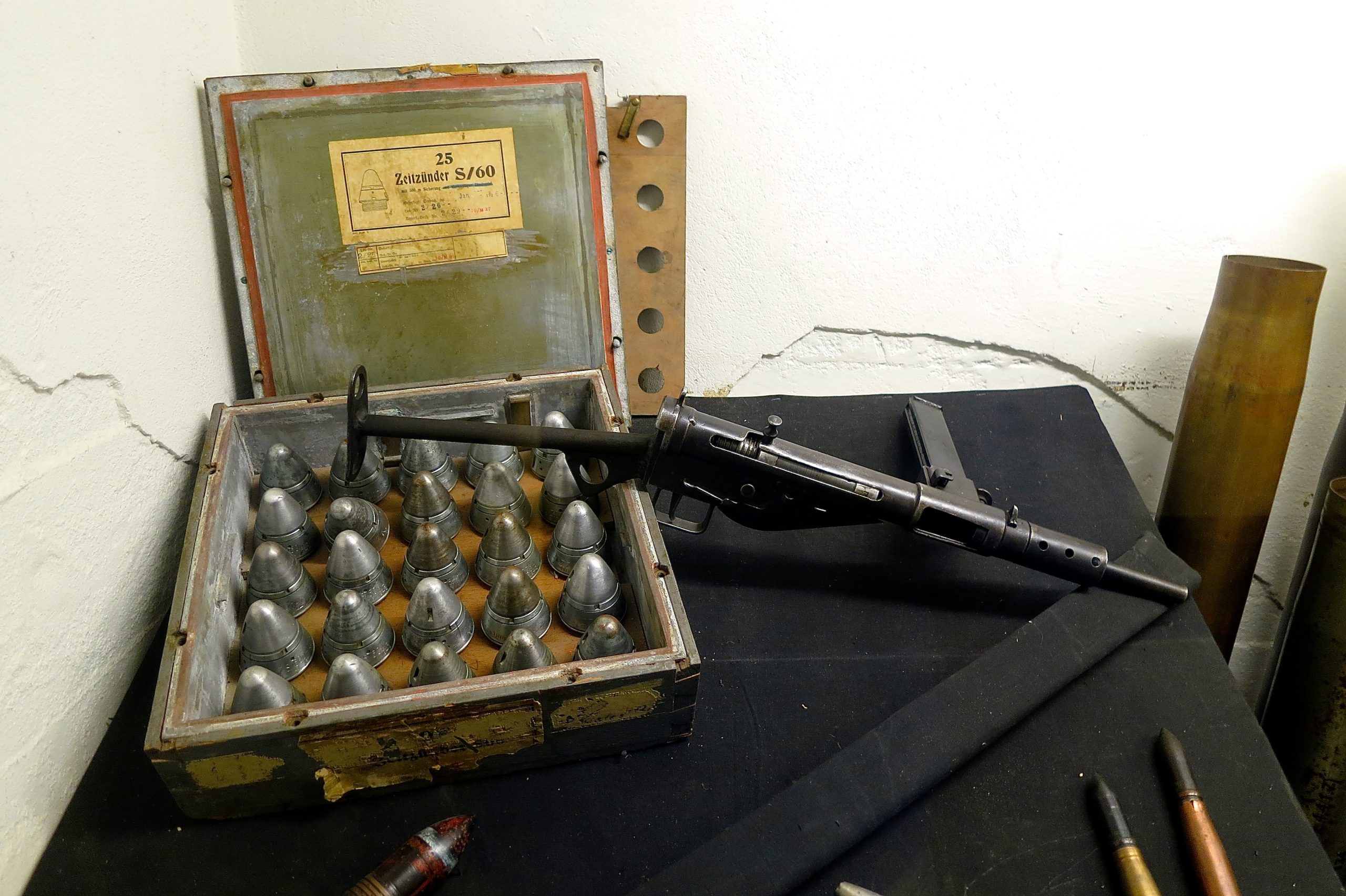
Germany’s MP 3008 emerged late in World War II when industry needed an inexpensive submachine gun that could be made with limited resources. Its design was heavily influenced by the British Sten, whose stamped construction offered an obvious manufacturing model. The German weapon kept the 9×19mm cartridge but altered details for local production. It was never simply a Sten with different markings. The MP 3008 illustrates a broader wartime pattern: captured or closely examined enemy equipment could reveal production shortcuts that engineers then reshaped into an emergency domestic design.
7. Polish PM wz.43

Poland’s PM wz.43 became a postwar production version of the Soviet PPS-43, showing how a wartime design could enter a national arms industry. Polish factories produced the weapon in several plants, with recognizable factory markings and later variations. The basic gun retained the Soviet 7.62×25mm cartridge, folding stock, and stamped construction. Production continued into the 1950s, and a fixed wooden-stock wz.43/1952 version also appeared. Unlike a workshop copy, the Polish program turned the captured-pattern weapon into a standardized industrial product with its own manufacturing history.
8. German MP 70

The German MP 709 is a lesser-known descendant of the Soviet PPS-43. German forces captured Soviet examples and studied the design closely enough for domestic production of a copy late in the war. The weapon retained the 7.62×25mm Tokarev cartridge and the PPS family’s compact stamped-steel character. It is often confused with the German MP 719(r), but that designation referred to captured original PPS-43s, not newly manufactured copies. The distinction matters: one number identifies battlefield captures, while the other represents Germany’s attempt to reproduce the Soviet pattern in Germany.