For years, suppressed pistols felt like movie props or specialist gear. Then the Osprey arrived and made them look, feel, and function differently in a way ordinary American shooters could immediately understand.
It looked unlike any pistol suppressor people had seen before

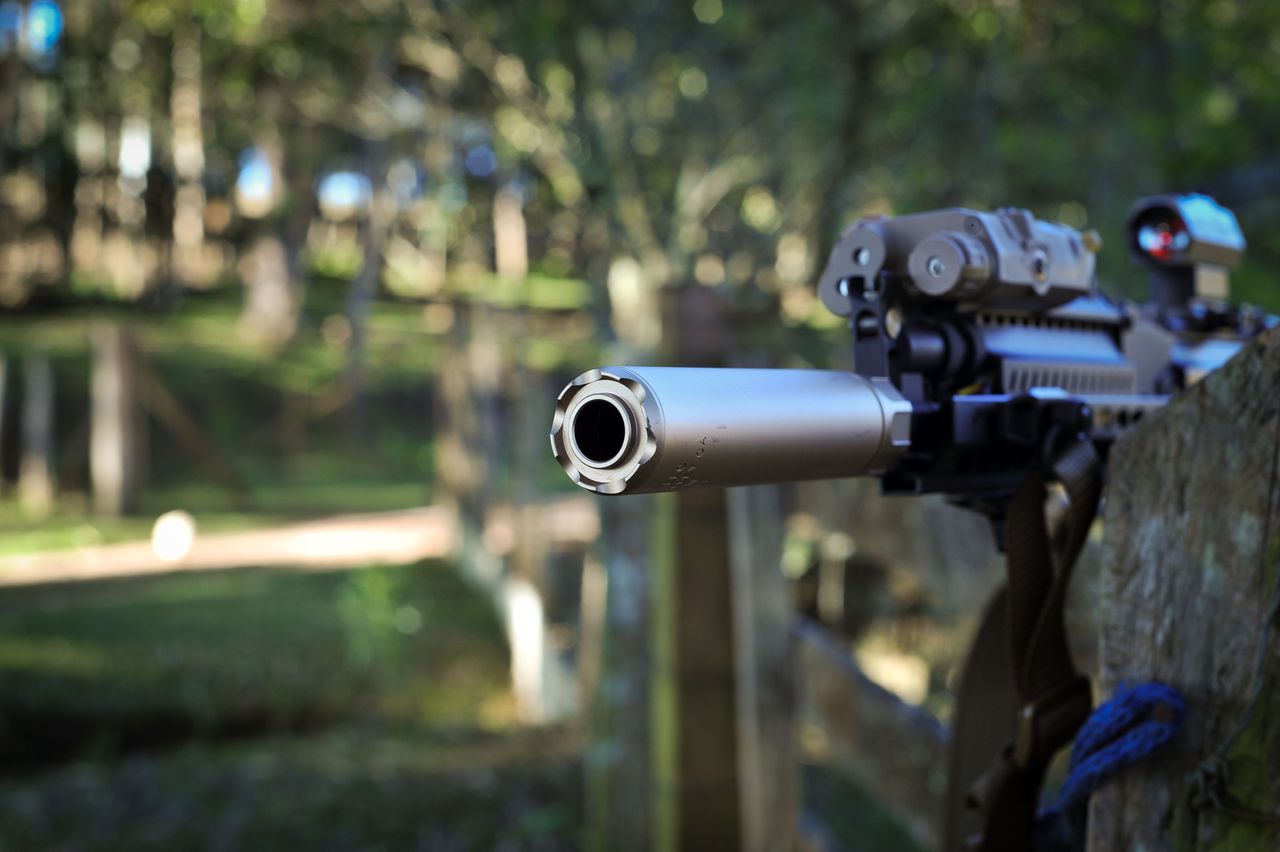
The first thing that changed public perception was simple: the Osprey did not look like a traditional silencer. Most handgun suppressors had the familiar cylindrical tube shape, which worked well enough but also sat high over the bore and often blocked the pistol’s factory sights. The Osprey’s eccentric, offset design broke that visual expectation in an instant. It looked modern, deliberate, and engineered around the way pistols are actually used.
That shape was not just cosmetic flair. By shifting the bulk of the suppressor below the bore line, SilencerCo created more internal volume while keeping the top profile lower. For many shooters, that meant a much better sight picture without immediately needing extra-tall suppressor sights. On a practical level, that solved one of the most annoying barriers to enjoying a suppressed handgun.
It also made the suppressor easier to recognize from across a room, a gun counter, or a magazine page. In a crowded market, the Osprey became instantly identifiable, which matters more than many people admit. Products that stand out visually tend to shape public imagination, and the Osprey did exactly that. It gave suppressed pistols a signature silhouette Americans began to associate with serious use rather than gimmickry.
It solved real user problems instead of selling fantasy.

American shooters are usually skeptical of gear that looks futuristic but delivers little at the range. The Osprey gained traction because it addressed practical complaints that owners of suppressed pistols had repeated for years. Sight obstruction, awkward handling, and the general sense that pistol silencers were more hassle than benefit had limited mainstream appeal. SilencerCo attacked those complaints directly.
The Osprey’s lower profile made host pistols feel less top-heavy than many people expected. While any added muzzle weight changes the balance of a handgun, the offset body often felt less visually bulky and less intrusive during presentation. For newer users, that reduced the intimidation factor. They could mount it and still feel like they were shooting a familiar sidearm rather than an ungainly experiment.
The suppressor also benefited from the era’s broader improvements in Nielsen devices, mounting systems, and centerfire pistol compatibility. People discovered that a quality setup could run reliably with common hosts such as Glock, Smith & Wesson M&P, SIG Sauer, and FN pistols when properly configured. That reliability mattered because every successful range session chipped away at the old idea that pistol suppressors were unreliable novelty items. The Osprey was not magic, but it showed that practical suppression on handguns was realistic for ordinary owners.
It turned suppression into a design conversation, not just a legal one.
Before products like the Osprey, public discussion around silencers in America often started and ended with legal restrictions, Hollywood myths, or tactical stereotypes. The National Firearms Act process, tax stamp, transfer wait times, and state law variation made suppressor ownership feel distant and bureaucratic. In that environment, it was easy for people to think of suppressors as obscure equipment for specialists. The Osprey helped shift attention toward design, ergonomics, and user experience.
Gun stores and shooting media suddenly had something concrete to talk about besides paperwork. Writers discussed sight picture, bore offset, first-round pop, host compatibility, and point-of-impact shift in a way general readers could grasp. That kind of conversation normalized suppressors as consumer products with tradeoffs, features, and intended uses. Once that happened, public understanding became less cinematic and more practical.
The Osprey also arrived during a period when suppressor education was improving. More instructors, reviewers, and retailers explained that suppressors do not make guns whisper-quiet and are primarily tools for hearing protection, comfort, and communication on the range. By giving those educational efforts a memorable flagship product, SilencerCo helped Americans rethink what a suppressed pistol was actually for. It became easier to see suppression as responsible equipment rather than suspicious equipment.
It benefited from perfect timing in gun culture and the media.

The Osprey did not change opinion through engineering alone. It appeared during a time when online gun videos, digital publications, social media photos, and internet forums were rapidly shaping buying behavior. A visually distinctive suppressor had an advantage in that environment because viewers could identify it immediately in a thumbnail, review table, or holster shot. The Osprey was made for the image-driven era, even if that was not the company’s only goal.
It also gained visibility as suppressors became more talked about in the mainstream firearms market. Companies were launching threaded-barrel pistols, suppressor-height sights, optics-ready handguns, and subsonic defensive or training loads. That broader ecosystem mattered. A suppressor can only change minds at scale when the host firearms and ammunition market makes ownership feel accessible and coherent.
On top of that, the Osprey bridged different customer groups. Enthusiasts appreciated the engineering and decibel performance. Casual range shooters liked the distinctive style and reduced visual bulk. First-time suppressor buyers often saw it as less intimidating than old-school tube designs. When one product speaks to experienced users and newcomers at once, it has a better chance of reshaping a category instead of merely serving it.
It made suppressed pistols seem more normal at the range.
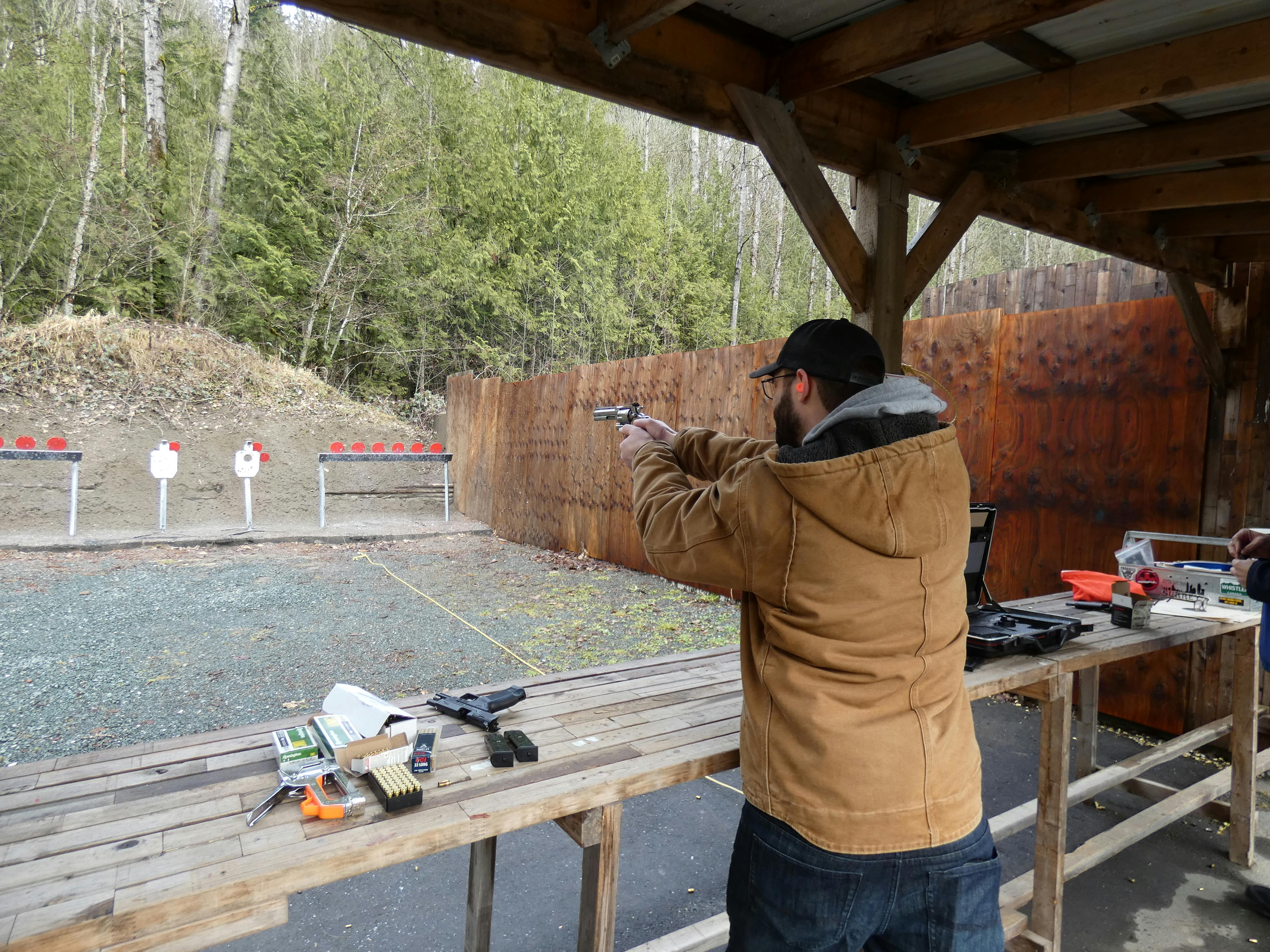
Normalization often happens quietly. A product appears often enough in classes, rental counters, YouTube reviews, and local shooting lanes that people stop treating it as exotic. The Osprey played that role for many Americans. Once shooters regularly saw one mounted on a full-size 9mm at a public range, the whole concept of a suppressed pistol became less mysterious.
That visibility had a practical effect on behavior. New buyers could watch someone actually use a suppressed handgun, hear the real sound signature, and notice the benefits in communication and comfort. They could also see the limitations, including extra length, changed balance, and occasional ammunition sensitivity. Honest exposure tends to build trust faster than advertising ever can.
Range owners and instructors helped reinforce this shift. Suppressed pistols are more pleasant in enclosed or busy training environments because they reduce blast and make coaching easier. While nobody seriously claims they remove the need for caution or hearing protection in every case, many shooters quickly understand the advantage after one magazine. The Osprey became one of the products that translated those benefits from theory into lived experience, which is how opinion really changes.
It challenged Hollywood myths about what silencers do.

American views of suppressors have long been distorted by film and television. In fiction, a silenced pistol often produces a tiny cough, allowing near-magical stealth. In reality, centerfire handguns remain loud even when suppressed, especially with supersonic ammunition. The Osprey helped correct that misunderstanding because it was popular enough that large numbers of ordinary shooters heard one in person and realized the truth for themselves.
That firsthand experience was important. When someone compares an unsuppressed pistol to a suppressed one, they usually notice reduced blast, softer concussion, and a less punishing shooting experience, not movie silence. They also learn that ammunition choice matters, with heavier subsonic 9mm loads often producing a more satisfying result than hotter, faster rounds. The Osprey became part of that educational moment for a generation of shooters entering the suppressor market.
In a strange way, the suppressor’s dramatic appearance also helped fight misinformation. Because it looked so obviously mechanical and purpose-built, it invited questions and explanations. People asked how it worked, why it was shaped that way, and what difference it actually made. Every one of those conversations pushed the topic away from fantasy and closer to basic acoustics, firearm mechanics, and responsible use.
Its legacy is bigger than one product line.e
The Osprey’s biggest impact may be that it forced the handgun suppressor market to think harder about usability. After it proved there was demand for suppressors designed around sight picture and real-world handling, consumers became less willing to accept awkward tube-first compromises. Even buyers who eventually chose other brands benefited from that pressure. The category had been nudged toward more thoughtful design.
Its influence also reached branding and public identity. SilencerCo managed to make a suppressor feel like a flagship consumer product rather than a niche accessory buried in technical jargon. That matters because broad cultural change often begins when specialized gear becomes understandable to non-specialists. The Osprey gave people a reference point, and reference points are how markets grow.
Today, Americans are still debating suppressor policy, public safety, and firearms culture more broadly. But on the narrower question of suppressed pistols, the conversation is much more mature than it once was. Thanks in part to the Osprey, many people now see a pistol suppressor as a practical tool with real tradeoffs and real benefits. That is a major shift, and it did not happen by accident.