Few rifles look more impressive on paper than the M14. Few service rifles have also done a better job proving that paper performance and battlefield usefulness are not the same thing.
It was built for a war the Army was no longer fighting
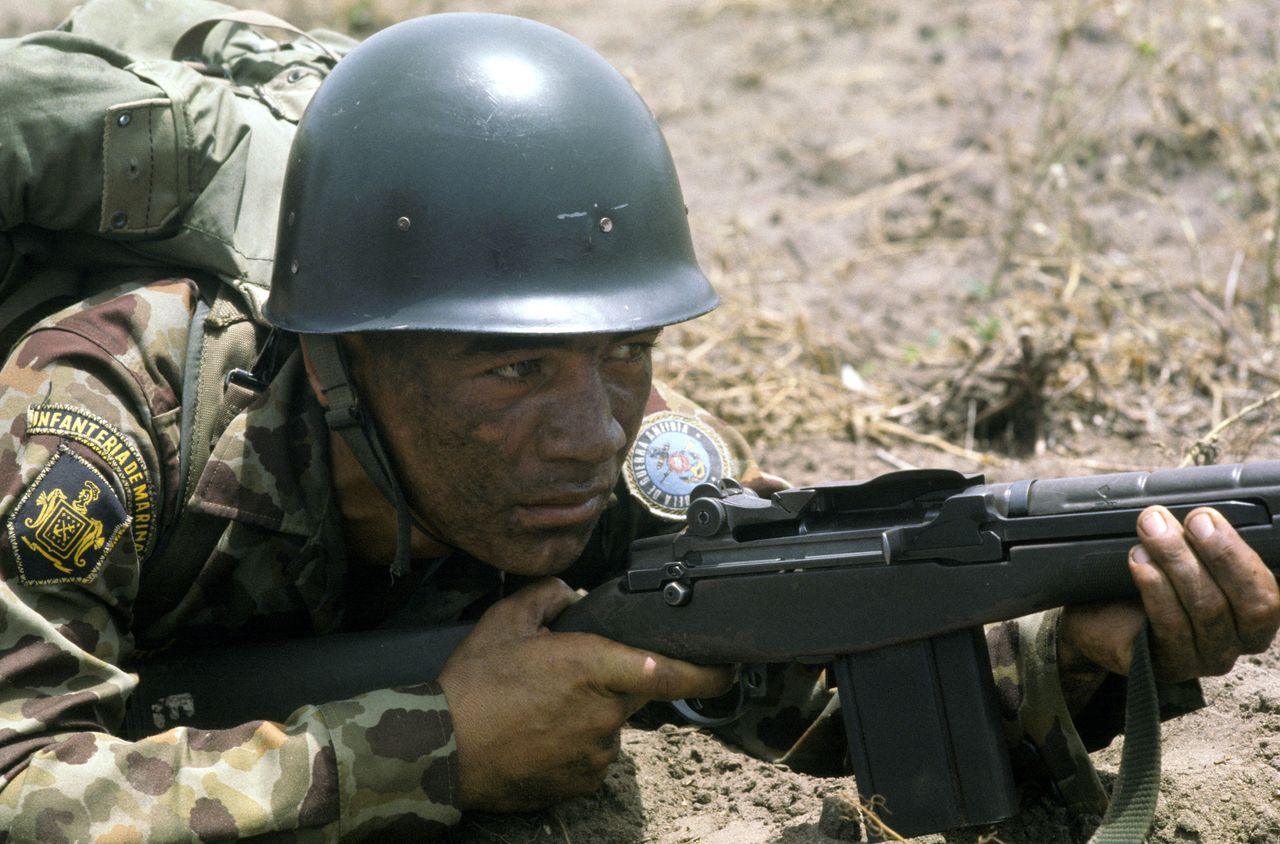
The M14 came out of a very old idea about infantry combat. Army planners wanted one rifle that could replace the M1 Garand, the M1 Carbine, the Browning Automatic Rifle, and even some submachine gun roles. That was a huge demand to place on a single shoulder weapon, and it pushed the M14 toward compromise from the start.
Official Army history makes clear that the rifle was intended to serve both as a standard rifle and as an automatic rifle in the squad. That sounded efficient, but it ignored post-World War II combat research showing most engagements happened at relatively short range. The Army still leaned hard toward long-range marksmanship and full-power ammunition, even as battlefield realities were moving in another direction.
What soldiers got was essentially an updated Garand chambered in 7.62x51mm NATO with detachable magazines and selective fire capability. According to Army University Press, it was only a marginal improvement over the M1 in practical terms, while remaining long and relatively heavy for a modern infantry rifle. In other words, the Army picked a rifle that looked right to senior leaders trained in an earlier era, not one optimized for the fights that were actually coming.
That is the core argument for why the M14 belongs in the discussion of the Army’s worst-issued rifles. It was not terrible because it lacked craftsmanship or power. It was terrible because it solved yesterday’s problem while handing tomorrow’s infantryman a weapon poorly matched to his battlefield.
The rifle was too heavy and too long for the job.
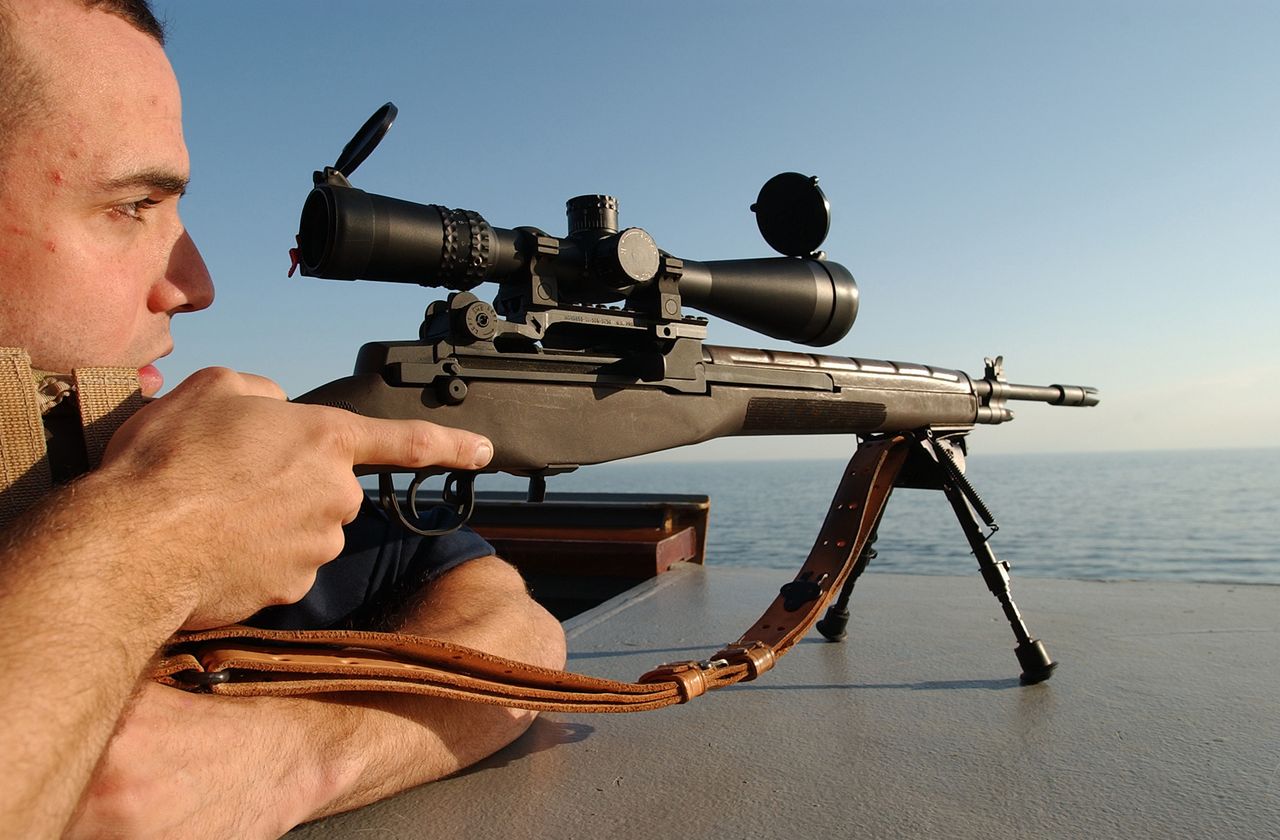
A service rifle lives or dies by how it carries, not just how it shoots from a bench. In Vietnam especially, the M14’s dimensions became a real burden. The Army’s own NCO Journal notes that its roughly 9-pound weight and full-length profile made it tiring on jungle patrols, where every inch and every ounce mattered.
That size problem was not just about comfort. Thick vegetation, helicopters, armored vehicles, and close movement through villages or brush all punished long rifles. Soldiers needed something fast to shoulder, easy to carry all day, and less likely to snag in confined terrain. The M14 was closer to a traditional battle rifle than a handy combat carbine, and the environment exposed that mismatch immediately.
The 7.62 NATO round also meant heavier ammunition. A soldier carrying M14 magazines packed less total ammo for the same weight than he could with the later 5.56 platform. That matters in real fighting. Fire superiority is not an abstract concept, and the rifle that makes resupply and sustained carry harder starts to work against the man holding it.
Plenty of old hands still admire the M14 for its balance and authority, and that admiration is not fake. But admiration from a firing line is different from affection during a soaked patrol in broken terrain. A rifle can feel rugged and still be the wrong tool, and the M14 often was.
Full auto capability existed, but it barely worked in practice.
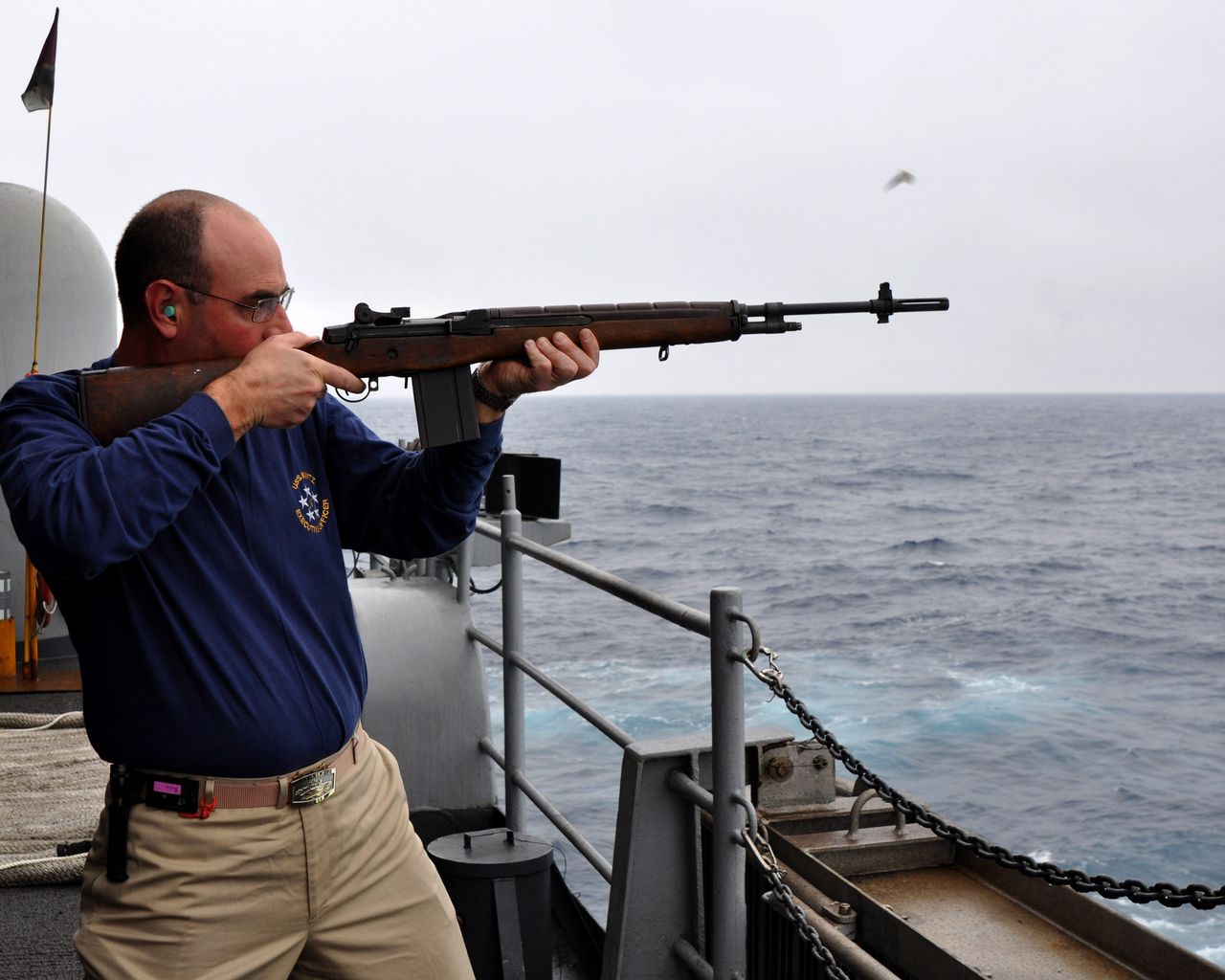
One of the M14’s biggest promises was that it could do double duty. It was supposed to be a rifleman’s weapon and, when needed, an automatic weapon for the squad. In reality, that idea collapsed under recoil physics. The Army’s own historical material says the rifle proved too light to function well as an automatic rifle, and that role ultimately fell to the M60 machine gun.
This was predictable. A relatively light shoulder rifle firing a full power 7.62 cartridge is going to climb hard in automatic fire. The NCO Journal describes exactly that problem, noting the cartridge and weight combination made the weapon difficult to keep on target when fired automatically. A selective fire rifle is not much comfort if the automatic setting is more theory than battlefield advantage.
That failure mattered because the rifle had been sold partly on versatility. If you promise one gun can replace multiple weapons, then that gun needs to perform multiple roles credibly. The M14 did not. It shot well in semiautomatic mode, but as an automatic rifle it was a disappointment, which meant the Army carried the complexity of the concept without gaining the full tactical benefit.
This is one reason the rifle’s defenders and critics often talk past each other. Defenders judge it as a semiautomatic marksman’s rifle. Critics judge it as the general issue combat rifle it was supposed to be. By the second standard, the M14 came up short in one of its most important advertised features.
Vietnam exposed every weakness at once
Some weapons are merely imperfect until a specific war reveals all their faults in a hurry. Vietnam did that to the M14. Dense jungle, humidity, long foot movement, and short-range contacts all favored a lighter, shorter rifle with controllable rapid fire. The M14 brought the opposite profile into that environment.
Army historical material notes that the wood stock had a tendency to swell in the heavy jungle moisture. Fiberglass stocks were produced to solve the issue, but the rifle was discontinued before enough of those improved stocks reached widespread field use. That is exactly the sort of detail that separates handsome arsenal thinking from combat reality. Moisture does not care how elegant the procurement logic sounded in Washington.
At the same time, the Army was learning that infantry squads needed lighter loads and more flexible firepower. The later M16, despite its own infamous early problems, quickly won favor in part because it was lighter and shorter, making it better suited to jungle fighting, according to the Army’s NCO Journal. That comparison is painful for the M14 because it shows soldiers did not just want something different. They wanted relief from very specific burdens.
A rifle does not have to explode to fail its user. It can simply make his work harder every hour of every day. In Vietnam, the M14 often did exactly that, and a combat rifle that drains energy, limits carried ammunition, and fights the terrain is a rifle failing in slow motion.
The rollout was troubled before the rifle was fully fielded.
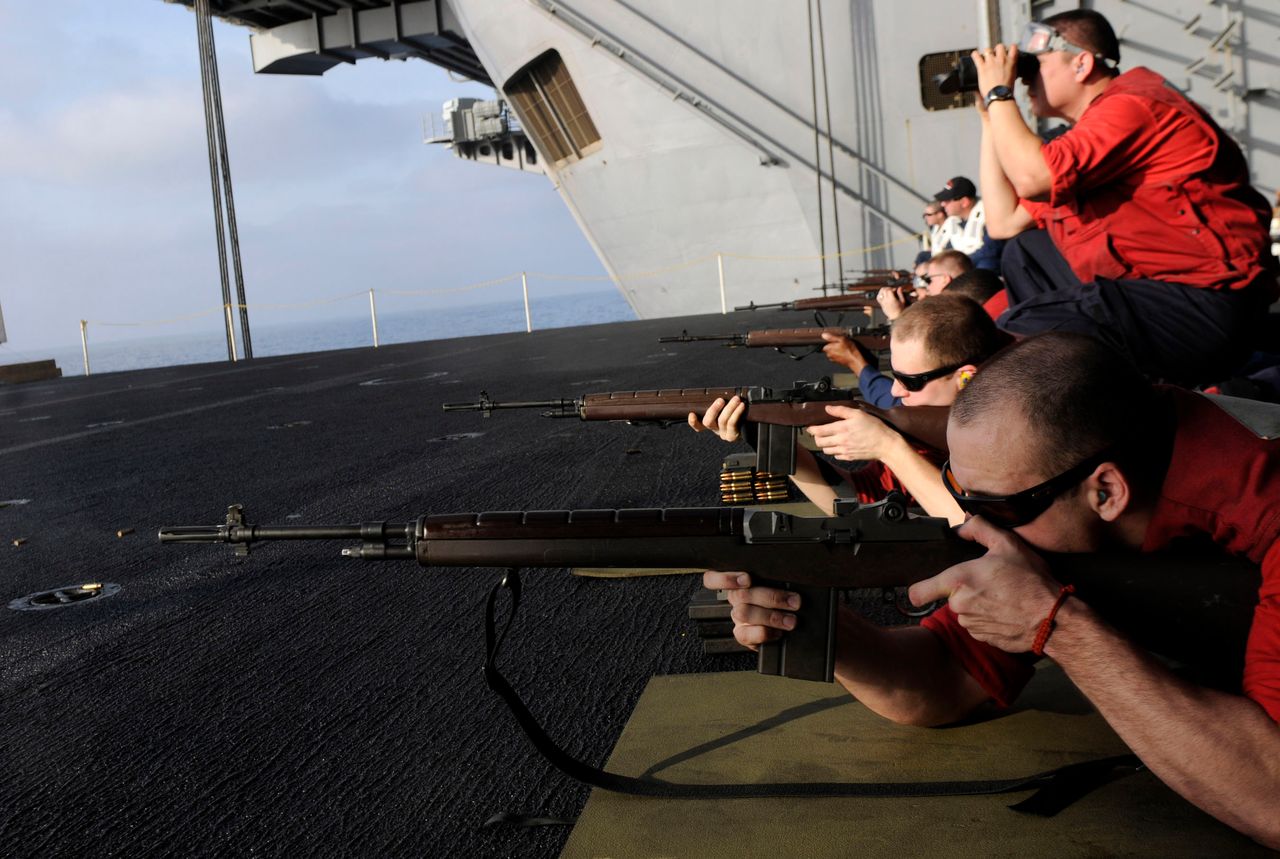
Bad rifles are not always bad only because of ballistics or ergonomics. Sometimes they are bad because the institution cannot build, issue, and sustain them properly. The M14 had those problems too. Army University Press reports that soon after standardization in 1957, manufacturing issues became serious enough that by 1960 Springfield Armory had produced only 4,245 rifles, a tiny fraction of what was needed to equip the force.
Other producers also struggled with technical delays. That meant the Army had chosen a new standard rifle and still could not put enough of them in soldiers’ hands quickly. This was not a small hiccup. It undercut confidence in the weapon, complicated planning, and left the service in an awkward transition where older M1 Garands still lingered because the supposed replacement had not arrived in sufficient numbers.
The result was almost absurd. As Army reporting later noted, the M14 was the general issue battle rifle from about 1960 to 1964, making it one of the shortest-lived standard U.S. service rifles. That is a strikingly brief run for a weapon meant to define an era. The Army essentially committed to a platform, struggled to manufacture it at scale, and then began moving away from it before its potential could even be fully redeemed.
Short service life does not automatically mean a weapon was bad. But when that short life comes paired with production trouble, role confusion, and poor battlefield fit, it starts to look less like bad luck and more like a systemic mistake.
Its strengths were real, but they belonged to narrower roles.
To be fair, the M14 was not useless. In fact, its virtues are exactly why some shooters still love it. It was durable, powerful, and capable of excellent accuracy. The Army has repeatedly leaned on rebuilt M14 variants for designated marksman and precision support roles, especially in Afghanistan and Iraq, where longer engagement distances brought some of the rifle’s strengths back into relevance.
Army reporting from the late 2000s described units training on upgraded M14s as long-range patrol weapons, and Anniston Army Depot has overhauled enhanced battle rifle variants with strong accuracy standards. That second life matters because it proves the rifle itself was not junk. It had genuine capability when used in the right niche.
But that is also the prosecution’s case in one sentence: a good niche rifle can still be a bad general issue rifle. A weapon suited to a marksman, a sniper support mission, or open terrain overwatch is not automatically a smart choice for every infantryman. The M14’s afterlife as a specialist tool highlights how poorly suited it was to the universal role the Army originally demanded from it.
That distinction matters for general readers. When people hear criticism of the M14, they often think it is an insult to the rifle’s craftsmanship or accuracy. It is not. The criticism is that the Army issued a specialized answer to a general problem, then expected ordinary soldiers to absorb the consequences.
Why it still has a serious claim to the worst label
Calling the M14 the worst rifle the Army ever handed to soldiers is a deliberately sharp claim, but it is not a crazy one. The case rests on more than nostalgia wars between wood and aluminum, or 7.62 versus 5.56 arguments. It rests on a simple standard: did the rifle match the combat environment, the squad’s needs, and the Army’s own promises? Too often, the answer was no.
The M14 was heavy for its era, long for close terrain, difficult to control on automatic, expensive in carried ammunition, and compromised by environmental and production issues. It was also fielded during a period when combat evidence was already pushing toward lighter, handier rifles. That is not just a technical failure. It is an institutional one. The Army did not merely adopt a rifle. It adopted the wrong philosophy of rifle.
There have been worse individual weapons in terms of reliability scandals or outright design disasters, and critics can make strong cases for other contenders. But the M14 stands out because it was not an obviously broken rifle. It was a respectable rifle that was wrong in all the ways that matter most when your life depends on it.
That may be the harshest verdict of all. The M14 was not the worst because it was cheap junk. It might be the worst because it was an elegant, powerful, deeply serious answer to the wrong question.