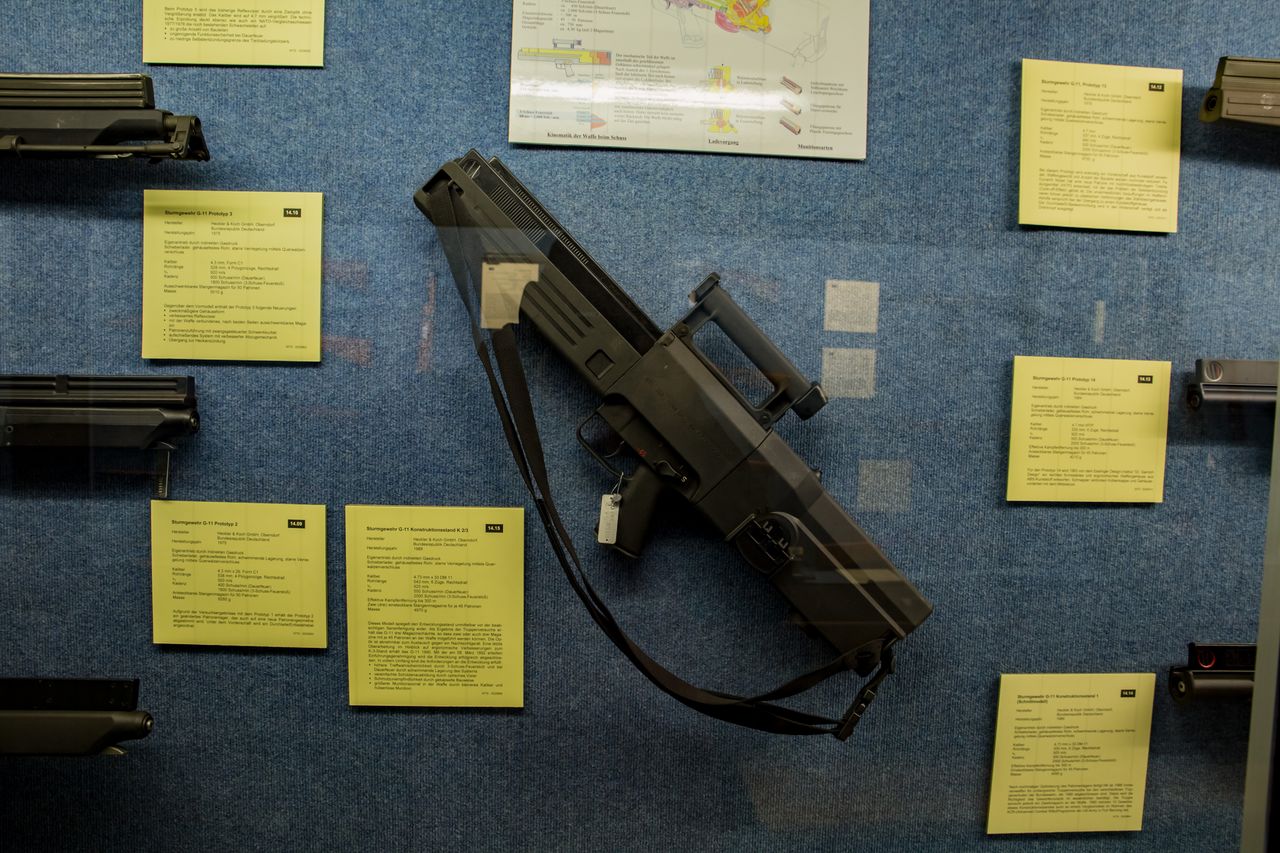
It looked like science fiction, but the HK G11 was a very real answer to a very old infantry problem. Its strangest feature was also its boldest: ammunition with no metal case at all.
The Big Idea Behind the G11
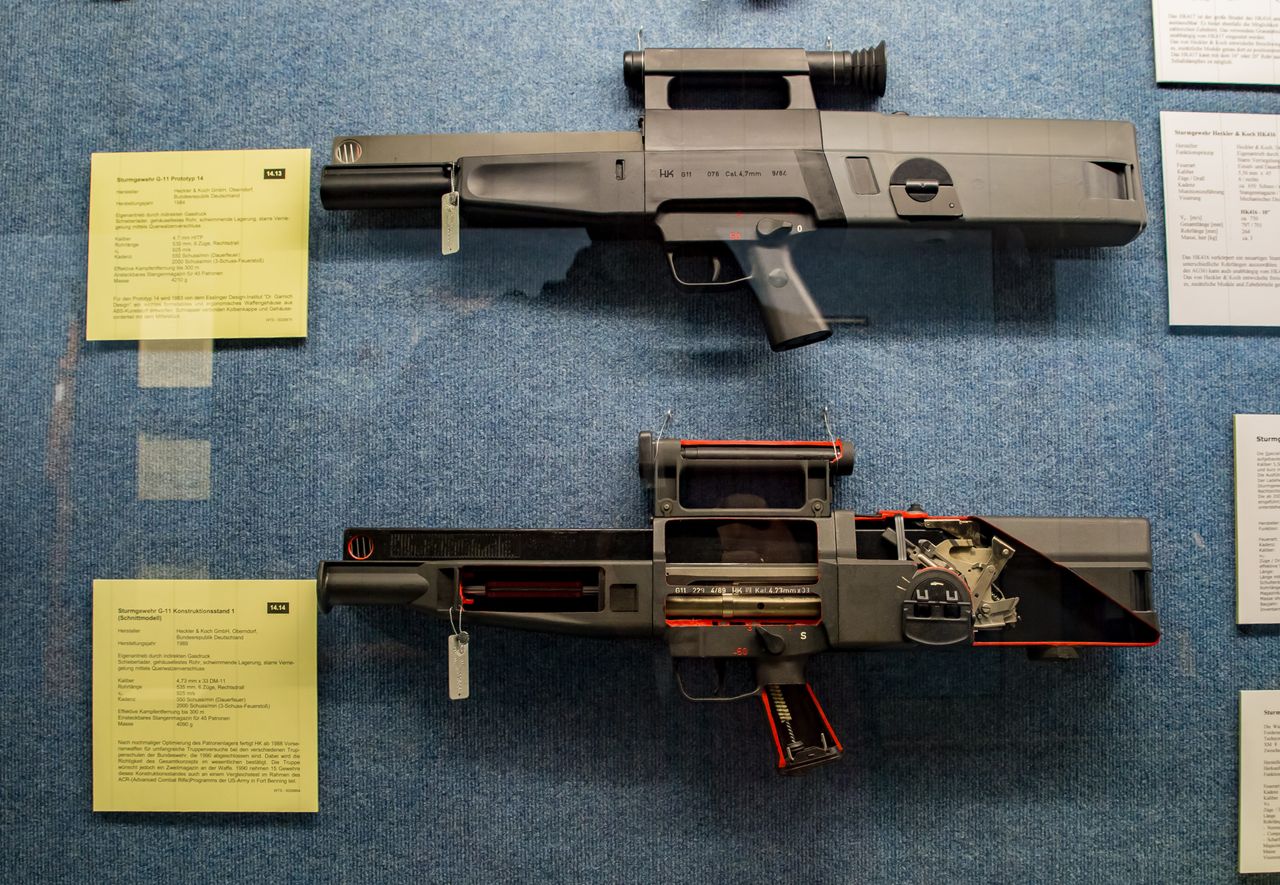
Most rifles fire cartridges built around a brass or steel case. That case holds the powder, primer, and bullet together, then gets extracted and ejected after firing.
The G11 threw that formula out. Heckler & Koch, working with Dynamit Nobel, built the rifle around a 4.73x33mm caseless round in which the propellant itself formed a solid block around the projectile. According to U.S. Army Infantry material, the concept produced ammunition that was shorter, narrower, and lighter than standard 5.56mm service rounds.
That mattered because armies always want soldiers to carry more ammunition without carrying more weight. Caseless ammunition promised exactly that.
What “Caseless” Really Meant
“Caseless” did not mean the round was loose powder stuffed behind a bullet. It was a carefully engineered package in which the propellant body replaced the usual brass shell.
U.S. Army documentation describing the G11 round shows a projectile embedded in a solid combustible propellant block, along with a primer and a rear cap. When the round fired, there was no empty case to throw out, because the ammunition body was meant to burn as part of the shot.
In theory, that eliminated one whole cycle from the rifle’s operation. No extraction and no ejection meant fewer moving steps and a fundamentally different weapon layout.
Why Engineers Thought It Was the Future
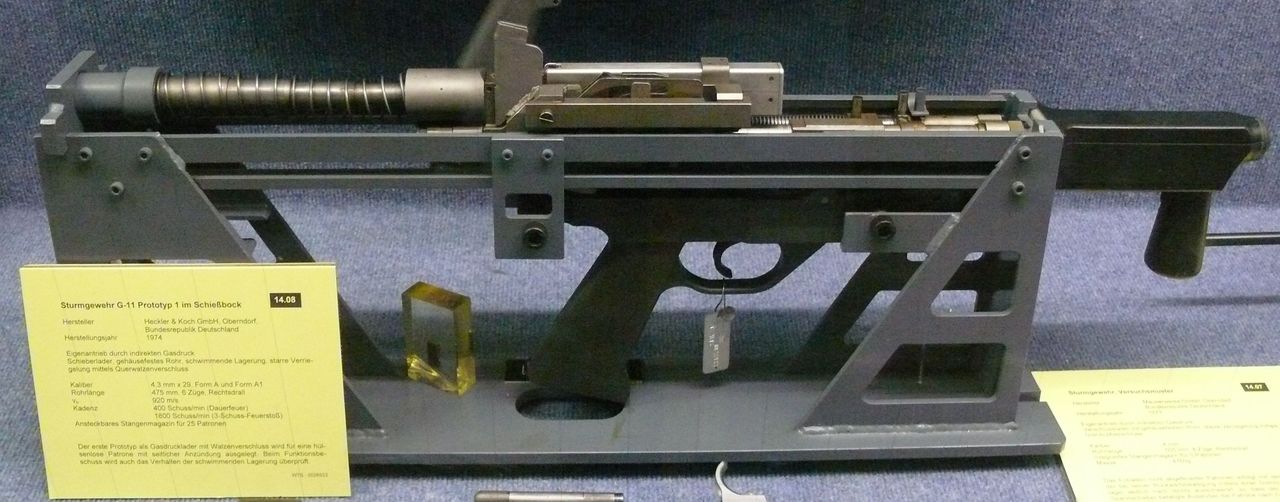
The military appeal went beyond shaving ounces. Removing the case also removed a major source of wasted bulk in magazines and ammunition pouches.
Army reporting on caseless development noted that G11 test rounds exceeded 3000 feet per second. The design also supported an extremely fast 3-round burst concept, widely described as roughly 2000 rounds per minute, sending three shots before recoil seriously disturbed the shooter’s aim.
That was the G11’s real sales pitch. It was not merely weird ammunition. It was an attempt to increase hit probability in combat through a mix of lighter ammo, higher carried load, and hyper-fast burst fire.
The Rifle Had to Be Designed Around the Ammo
You could not just take caseless ammunition and feed it through an ordinary rifle. The G11 needed an entirely different internal mechanism to make the idea work.
Its most famous feature was a rotating chamber positioned above the trigger area. A round dropped into the chamber, rotated into firing position, and then ignited. Because there was no metal case to absorb heat and no case to extract, the weapon had to manage sealing, timing, and thermal stress in unusually complex ways.
That complexity is one reason the G11 still fascinates firearms historians. It was less an upgraded rifle than a completely new system.
The Biggest Problem Was Heat

Traditional cartridge cases do more than hold components together. They also carry some heat out of the gun when they are ejected.
Caseless ammunition loses that advantage. Heat stays in the weapon, raising the risk that ammunition could ignite unintentionally in a hot chamber, a problem known as cook-off.
Engineers attacked that with specialized propellant chemistry and mechanical solutions, and the G11 was tested extensively. But solving heat, sealing, durability, and manufacturing consistency all at once made the rifle expensive and difficult to push into full-scale service.
Why It Never Became the Next Standard Rifle
For a moment, the G11 came very close. It was seriously developed through the Cold War, appeared in NATO trials, and became one of the best-known advanced rifle projects of its era.
But timing killed it. U.S. Army Infantry reporting states that the collapse of the Soviet Union and German reunification created economic pressures that caused Germany to halt the program in 1990. Popular Mechanics similarly notes that reunification costs made adoption unrealistic just as the rifle matured.
In other words, the G11 did not die because the idea was silly. It died because revolutionary weapons are hardest to buy when budgets suddenly get conservative.
Why the G11 Still Matters Today
The G11 remains important because it proved caseless ammunition could work far better than many critics assumed. It was not a fantasy prop. It was a functioning military prototype backed by years of engineering.
It also left a deeper lesson for modern weapons programs. Radical gains in soldier performance usually demand changes to the entire system: ammunition, chamber design, recoil management, manufacturing, and logistics.
That is why the G11 still shows up whenever people talk about the future of small arms. It was a rifle built around the idea that even the cartridge case was negotiable, and for a brief moment, that future looked possible.