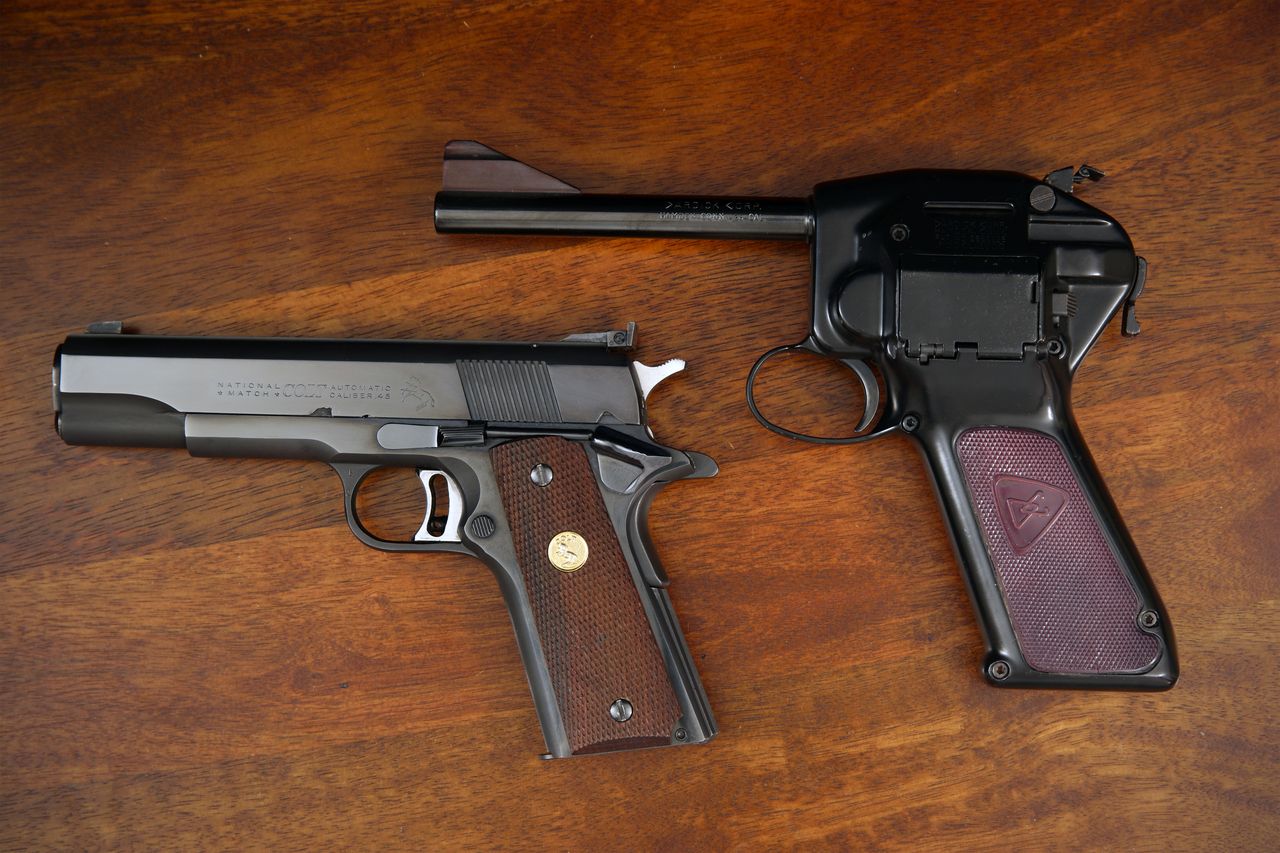
Few handguns look strange enough to demand an explanation. The Dardick pistol did, and its ammunition was even stranger.
The Gun Came First, Then The Shape
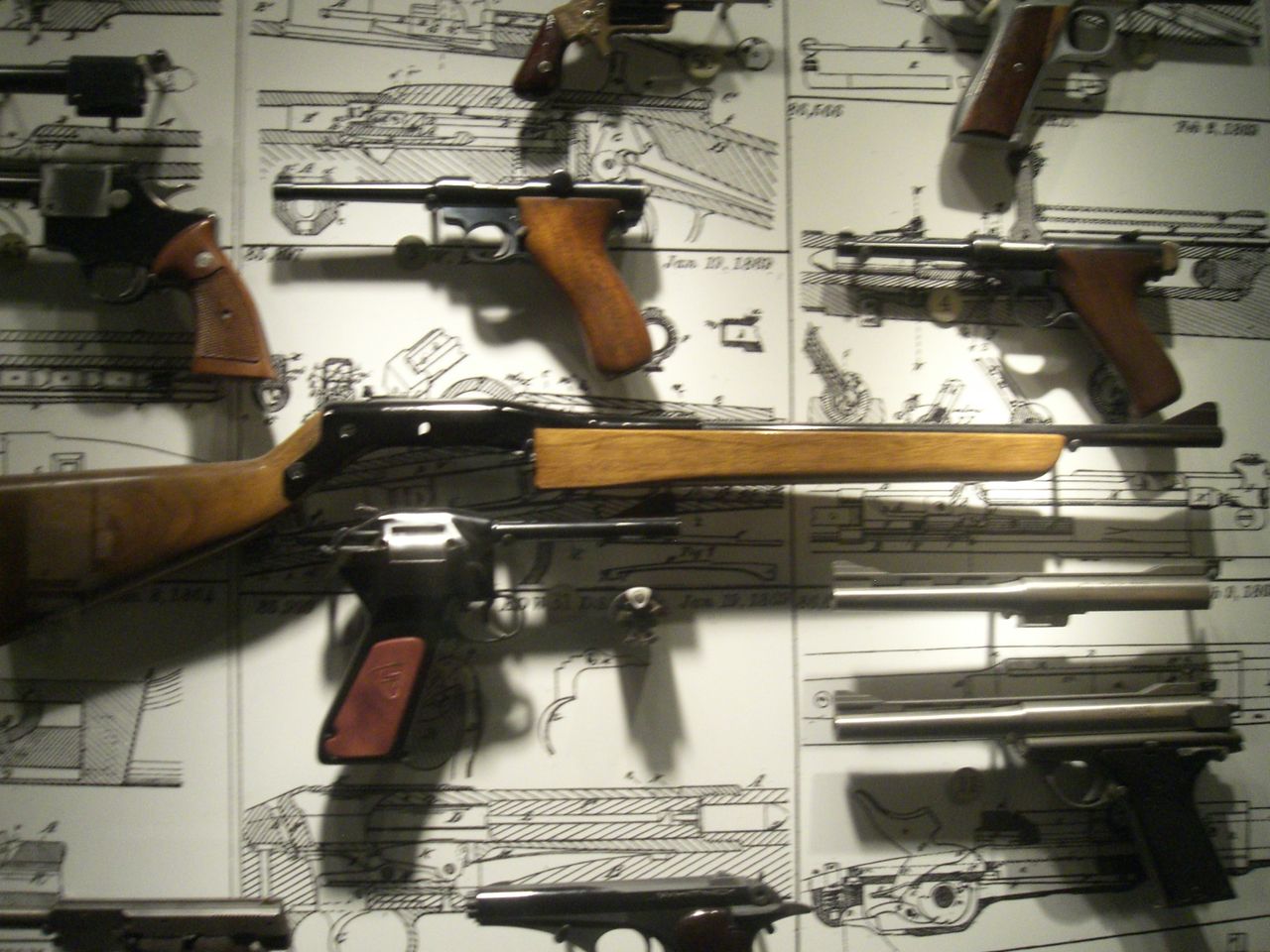
David Dardick was not trying to make odd ammunition just to stand out in a crowded market. He was solving a mechanical problem created by his “open-chamber” handgun, a design later covered in his late-1950s patents and described by American Rifleman as a split-chamber system.
In a normal revolver, each chamber is a complete tube that fully surrounds the cartridge. The Dardick used a rotating rotor with chambers that were open on one side so rounds could be fed from a grip magazine and spent cases dumped out as the mechanism cycled.
That meant a conventional round case was a poor fit. It needed too much support from the gun itself, and it was shaped for a closed cylindrical chamber, not for a chamber that was partly formed by the gun during firing.
Why The “Tround” Had Three Sides
The answer was the “Tround,” a triangular cartridge that matched the geometry of the Dardick’s rotor. American Rifleman noted that the gun’s fluted chamber formed two sides of the shape, while the frame completed the enclosure when the round reached firing position.
So the triangle was not mainly about ballistics. It was about packaging, feeding, and positioning. The unusual profile let cartridges stack efficiently in a box magazine, rise neatly into the open-sided rotor, rotate into alignment, and leave the gun without the extraction problems a conventional case might have caused.
That is the key point: the ammunition looked bizarre because the gun itself worked in a bizarre but carefully reasoned way. Shape followed mechanism.
A Revolver That Wanted Magazine Capacity
Dardick’s broader ambition was to combine advantages from two handgun families. According to American Rifleman, the commercial Series 1500 was a 15-round, magazine-fed, double-action revolver, an attention-grabbing concept in the 1950s when most revolvers held far fewer rounds.
The Tround made that possible. A cylindrical revolver cartridge does not naturally lend itself to compact, reliable box-magazine storage in the grip. The triangular case gave Dardick a more orderly way to feed revolver ammunition from below, almost like a self-loader, while retaining a rotating firing system.
Some versions were sold with interchangeable barrels and inserts, and period reporting notes that .38 Dardick was the main chambering, with provisions for .22 rimfire as well. That flexibility showed how seriously the concept was pursued.
Materials Mattered As Much As Geometry
The case shape alone was not enough. Because the Dardick’s chambers were open on the side during parts of the cycle, the cartridge case had to help contain pressure in a way ordinary brass cases were not designed to do in that system.
American Rifleman reported that some Trounds used special plastic cases, while earlier developmental examples included aluminum forms and even carriers for conventional ammunition. The projectile itself was conventional-looking, seated inside the triangular body by means of an internal sleeve arrangement.
In other words, Dardick was redesigning the cartridge as a structural component of the firearm. That was ambitious, but it also made the system more expensive, more proprietary, and harder for shooters to accept.
Why Shooters Never Embraced It

The Dardick was sold commercially from 1954 to 1962, but it never became a mainstream success, according to American Rifleman. The reasons were practical. Buyers were being asked to trust an unfamiliar gun, unfamiliar controls, and ammunition available nowhere else.
Oddball firearms can survive awkward ergonomics if ammunition is cheap and easy to find. The Dardick had the opposite problem. Its Tround was central to the design, but that also meant the entire platform lived or died on a proprietary consumable.
Collectors and historians now admire the creativity. Ordinary shooters, then as now, usually prefer simple logistics over ingenious theory.
The Real Legacy Of The Triangular Cartridge
What makes the Dardick memorable is that its strange ammunition was not decorative eccentricity. It was a deeply logical answer to a firearm architecture that departed from standard revolver and pistol thinking in almost every important way.
The triangular Tround existed because Dardick wanted open chambers, magazine feeding, rapid indexing, and a hybrid manual of arms. According to American Rifleman and Forgotten Weapons, the concept even attracted military interest beyond the commercial handgun itself.
That is why the ammunition looked like nothing else ever made: almost no other designer built a gun that demanded it. The Dardick remains a rare case where ammunition shape was the clearest window into the inventor’s entire mechanical philosophy.