Some pistols sell on marketing. The CZ 75 earned its reputation the slower, harder way.
It arrived with the right ideas before the market caught up
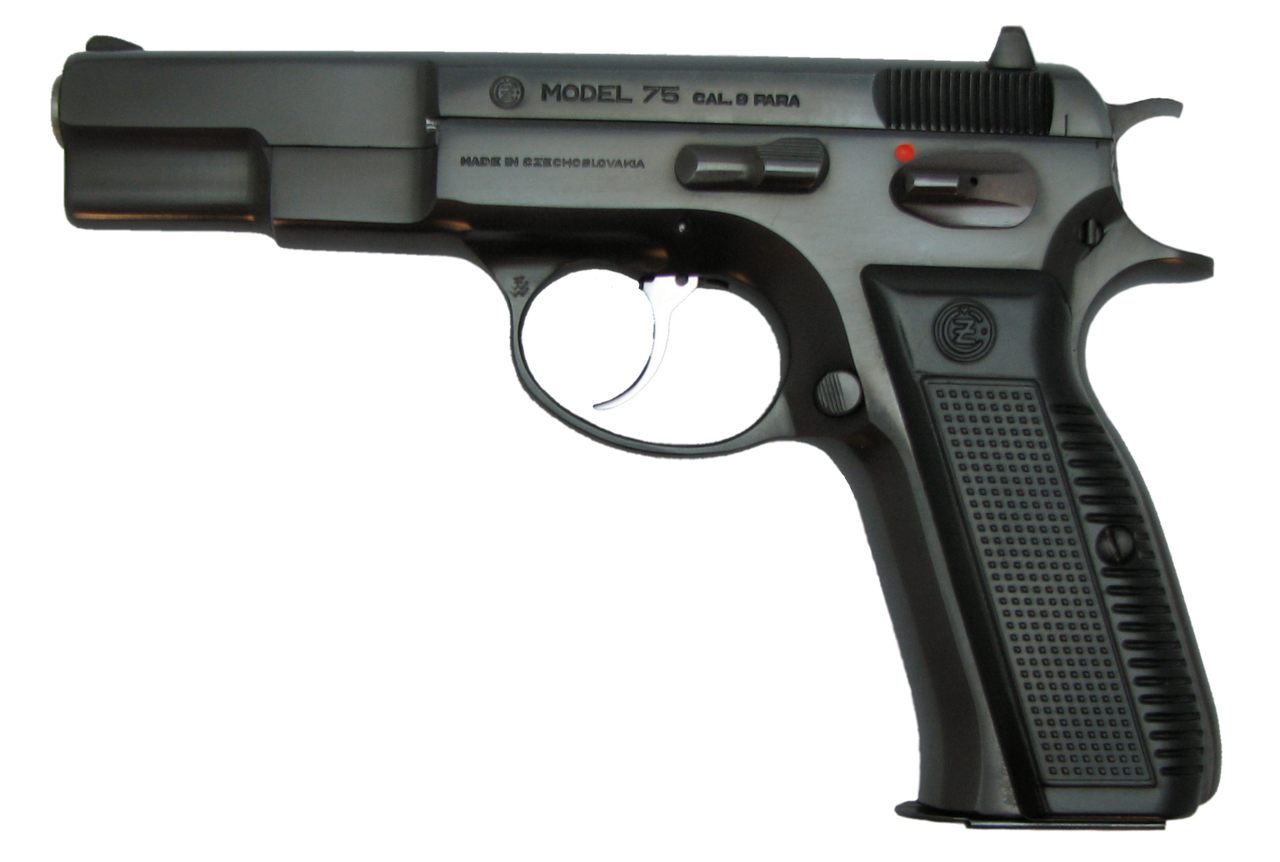
When Česká zbrojovka introduced the CZ 75 in 1975, it landed with a combination that now feels obvious but was unusually forward-thinking at the time. It offered a double-stack 9mm, steel construction, double-action/single-action operation, and the option to carry it cocked and locked like a single-action pistol. That blend gave shooters flexibility without making the gun feel gimmicky.
The design came from Josef and František Koucký, and period accounts describe it as a pistol built with export markets in mind. That mattered. In the Cold War era, the gun was admired widely but not distributed as freely in the U.S. as better-known Western rivals, which helped create the aura of a hidden gem.
That semi-mythic reputation grew because the pistol looked refined, shot softly, and seemed to combine traits shooters liked from multiple classics. It had capacity, practical controls, and a shape that felt less blocky than many service pistols that followed. In hindsight, it was early to a formula that the rest of the market would spend decades chasing.
The ergonomics are the real reason people fall for it
Ask longtime owners why they stay loyal, and the first answer is usually the grip. The CZ 75 has a famously natural hand fit, with a grip angle and contour that let many shooters point it instinctively. Even people who own flashier pistols often describe the CZ as the one that simply settles into the hand.
Its internal slide rails also contribute to the personality of the gun. Because the slide rides inside the frame rather than outside it, the bore axis feels lower in the hand and the reciprocating mass feels controlled. Reviewers from outlets like Guns.com have long pointed to that layout as one reason the pistol tracks so calmly in recoil.
There is a tradeoff, of course. The lower-profile slide gives you less surface to grab during manipulations. But that same feature is part of why the pistol feels so tight, smooth, and precise when shooting. For many fans, the handling difference is big enough that the drawback becomes part of the gun’s character rather than a deal-breaker.
It built its legend on the range, not in ad campaigns
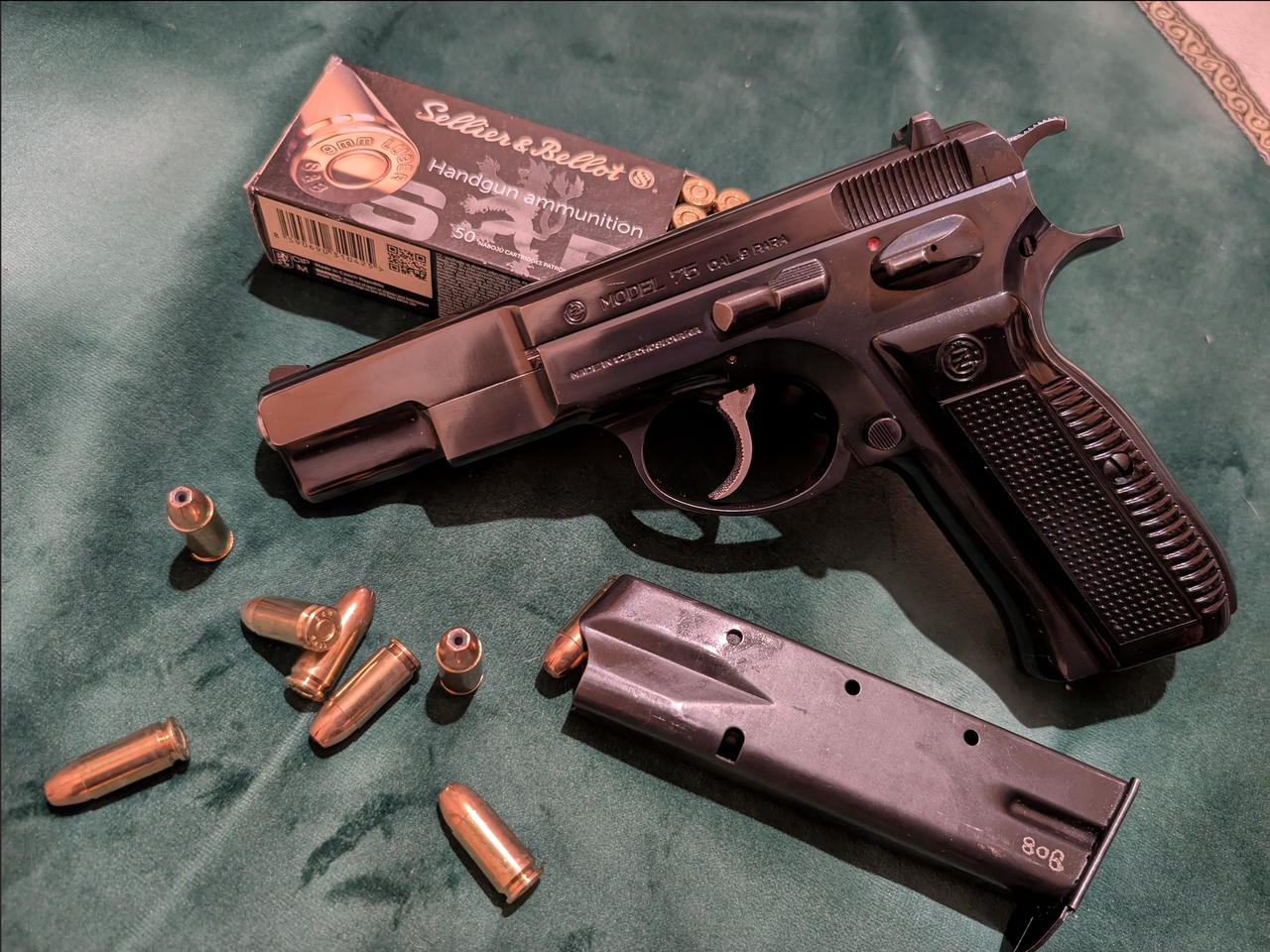
The CZ 75 family became especially influential once competitive shooters started proving what the platform could do. CZ’s own materials have highlighted how dominant the Shadow line became in IPSC, and the company has described the Shadow 2 family as the most popular and widespread pistols in that game. That kind of credibility matters more than slogans.
Competition success did two things for the CZ 75 name. First, it validated the platform’s accuracy, balance, and controllability under pressure. Second, it created an upgrade path: a shooter could start with a classic 75-pattern pistol, then move toward SP-01, Shadow, or other tuned variants without leaving the ecosystem.
That continuity helped create a true enthusiast culture. Owners didn’t just buy a pistol; they bought into a platform with parts, tuning potential, and a deep bench of variants. Bigger brands often chased broader audiences, while CZ quietly became the gun that experienced shooters recommended to other shooters.
Scarcity, clones, and copycats only made it cooler
One of the strangest parts of the CZ 75 story is that limited early patent protection outside Czechoslovakia helped the design spread. Because the pistol was difficult to patent broadly abroad under Cold War conditions, other manufacturers produced close derivatives and clones. That made the design one of the most copied in modern handgun history.
Italian maker Tanfoglio became the most important of those clone builders, and the design lineage spread further through guns like the Jericho and Baby Eagle. Even when buyers were not holding a pistol marked CZ, they were often experiencing the appeal of the original Czech layout. That widened the cult without diluting the mystique.
Scarcity in the American market during the early years also boosted its reputation. Shooters heard about the pistol before they could easily buy one, which is often the perfect recipe for obsession. By the time genuine CZ pistols became easier to get, the legend was already built.
It influenced famous pistols while staying oddly underrated
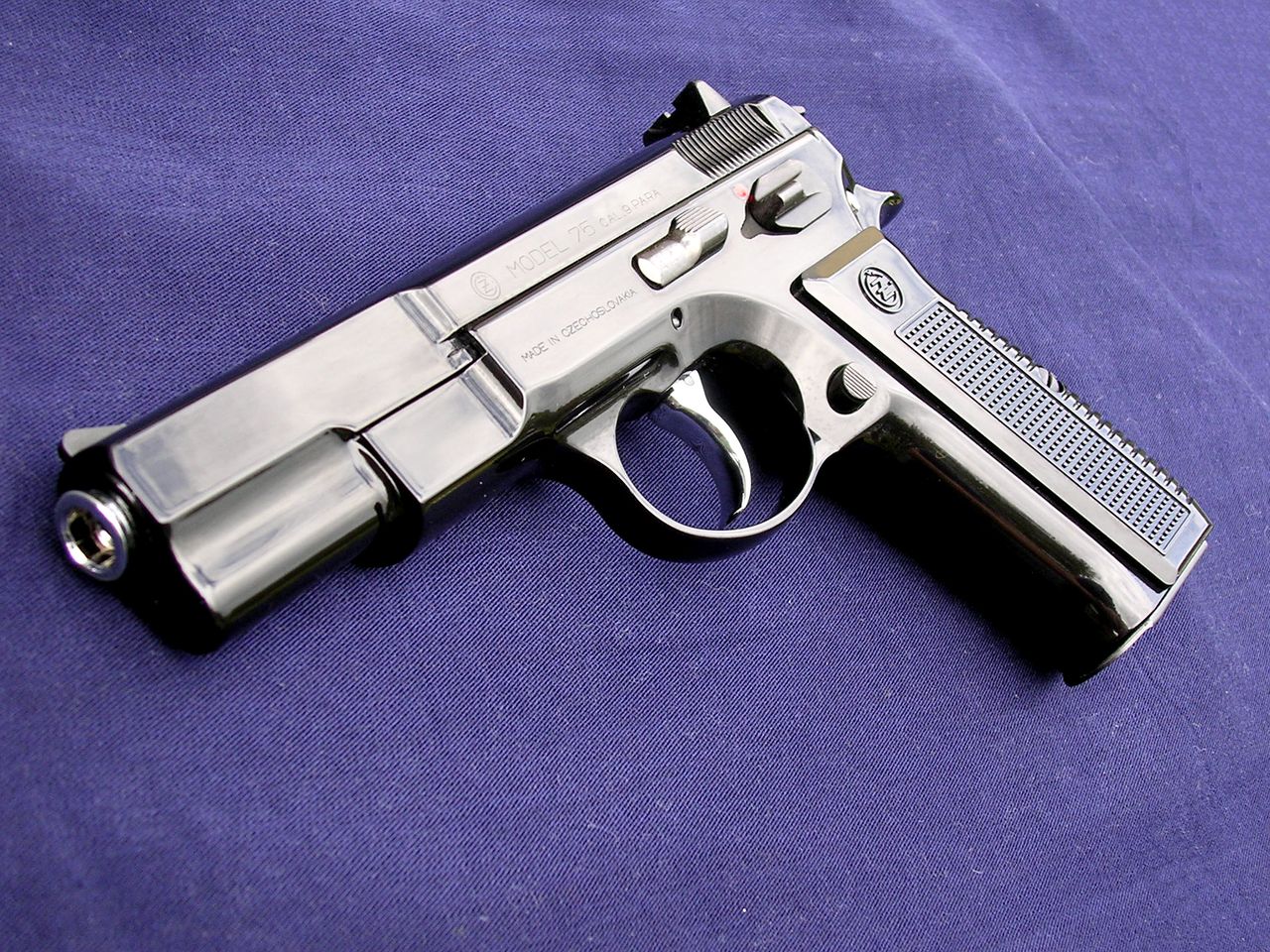
The CZ 75’s influence reaches well beyond its own sales. The Bren Ten, one of the most talked-about semiautomatic pistols of the 1980s, was explicitly inspired by the CZ 75 in both external form and mechanical layout, according to American Rifleman and other historical accounts. That is a remarkable level of influence for a pistol many casual gun owners still overlook.
Its descendants also proved the platform could evolve. The CZ P-01, a compact alloy-framed offshoot of the 75 family, earned praise for surviving brutal testing that included thousands of dry fires, decockings, field strippings, and a 15,000-round service-life requirement cited by NRA publications. That reinforced the idea that the 75 pattern was not just elegant, but durable.
Yet the pistol never became a Hollywood superstar on the level of the Beretta 92 or Glock 17. In a way, that helped. The CZ 75 stayed a shooter’s gun, admired more for how it performs than how often it appears on posters.
Why it still outshines bigger names to devoted shooters
The CZ 75 remains a cult favorite because it offers something many mainstream pistols do not: personality without sacrificing performance. It feels mechanical in the best sense, with steel weight, balance, and a sense of craftsmanship that owners notice immediately. It rewards practice and tends to leave strong impressions after a single range session.
There are newer pistols that are lighter, simpler, and easier to maintain at scale. There are also pistols with larger police contracts, louder brand identities, and bigger advertising footprints. But the CZ 75 keeps winning the affection contest because affection is exactly what it creates.
That is why it outshines bigger names for a certain kind of shooter. Not because it is the loudest, newest, or most famous option, but because it delivers that rare mix of fit, shootability, heritage, and earned credibility. Plenty of pistols are popular. Very few become beloved.