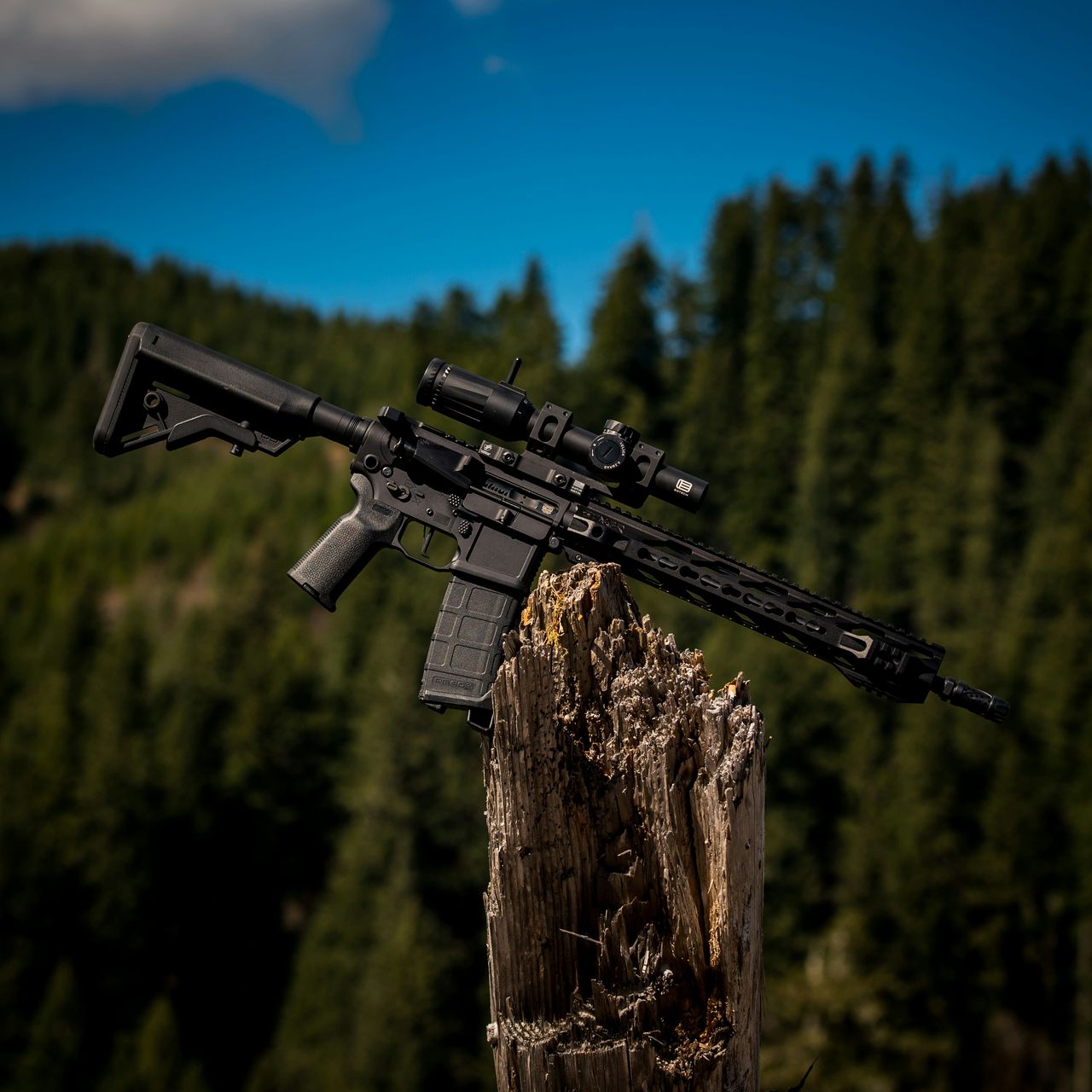
It is easy to mock the black rifle at deer camp. It is much harder to explain why it keeps coming back.
The argument against it is older than its hunting reputation
For many hunters, the case against the AR-15 starts with appearance. It looks tactical, modern, and out of step with the walnut-stock image that still defines hunting culture for many Americans. In many camps, that alone is enough to trigger skepticism before anyone talks caliber, legality, or performance.
That reaction is not trivial, because hunting has always been tied to tradition as much as utility. Lever guns, bolt actions, and pump rifles carry stories, family history, and a certain idea of what a proper field rifle should be. The AR-15 arrived carrying military associations, and that baggage has shaped the conversation for decades.
Critics also argue that it encourages the wrong mindset. They worry it prioritizes accessories over marksmanship, magazine capacity over restraint, and style over woodsmanship. Even when those claims are exaggerated, they reflect a genuine cultural divide between hunters who prize continuity and hunters who embrace newer tools.
Yet the rifle’s persistence suggests the old objections are no longer enough. In camp after camp, hunters who once dismissed it are at least willing to discuss where it fits. That shift did not happen because the arguments disappeared. It happened because field experience began to change minds.
Familiarity matters more than many critics want to admit

One major reason the AR-15 shows up in hunting camps is simple: millions of Americans already know how to run one. They understand the controls, the manual of arms, how to mount an optic, and how the rifle handles under stress. In practical shooting, familiarity is not a cosmetic advantage. It translates directly into safer, more confident use.
That matters especially for newer hunters who did not grow up on bolt guns. A person who learned to shoot on an AR platform at the range often enters hunting through the same system. Instead of mastering an entirely different rifle before their first season, they bring a tool they already trust and can operate efficiently in cold weather, low light, and awkward positions.
Instructors and hunter education mentors see this more often now. The modern entry path into shooting sports increasingly runs through AR-pattern rifles, not traditional sporting guns. As a result, the AR-15 is not an invasion from outside hunting culture for younger participants. It is part of how they arrived.
Critics sometimes dismiss that as convenience, but convenience in the field can improve outcomes. A hunter who instinctively works the safety, maintains cheek weld, and recovers from recoil quickly is better positioned to place an ethical shot. That practical reality has done more to legitimize the rifle than any marketing campaign.
The platform’s flexibility is a serious hunting advantage

The AR-15 also survives the debate because it is unusually adaptable. A hunter can change optics, stock length, trigger setup, sling arrangement, and upper configuration to match terrain, body size, and game laws with far less trouble than many traditional rifles. That modularity is not just a hobbyist obsession. In hunting, it often solves real problems.
Consider the range of legal and effective chamberings built on the platform. While .223 Remington remains controversial for some big game use and is illegal for deer in certain states, hunters also use AR-style rifles in .300 Blackout, 6.5 Grendel, 6mm ARC, .350 Legend, and .450 Bushmaster. Those options let the same basic rifle serve very different roles.
A compact setup with a low-power variable optic works in thick timber or from a blind. A different upper and optic can turn the rifle into a capable predator tool for coyotes across open fields. In states with straight-wall cartridge rules, calibers like .350 Legend and .450 Bushmaster helped make AR-platform hunting even more common.
That adaptability matters in camps where one rifle may need to do several jobs over the year. Hunters are not always buying a dedicated gun for every season and every species. The AR-15’s staying power comes partly from being one of the few platforms that can be tailored so precisely without demanding a completely new manual of operation.
Recoil, follow-up shots, and fit make it practical in the field

A lot of the AR-15’s staying power comes from how it shoots. Compared with many traditional hunting rifles, it often produces softer felt recoil, especially in lighter or intermediate chamberings. That can be a major advantage for smaller-framed hunters, teenagers, older shooters, and anyone sensitive to recoil after injury or years in the field.
Lower recoil is not just about comfort. It helps shooters keep the target in the optic, avoid flinching, and make better decisions after the shot. Ethical hunting is built on shot placement, and a rifle that encourages steadier shooting has a practical case even among people who dislike its aesthetics.
Fit is another overlooked factor. Adjustable stocks allow hunters to account for heavy winter clothing, body dimensions, or a shorter length of pull for younger shooters. Traditional hunting rifles can certainly be fitted well, but the AR platform makes that adjustment easy, fast, and affordable in a way many off-the-shelf bolt guns do not.
Follow-up shots are controversial to discuss because some hear the phrase and imagine careless shooting. In reality, experienced hunters know a quick second shot can matter when the first impact was good but not instantly anchoring. The AR-15’s handling and sight recovery make those moments more manageable, which is one reason practical hunters keep bringing it along.
It has found a real niche in predator and hog hunting
If deer camp remains divided, predator and hog hunting have been more welcoming to the AR-15 for years. These hunts often involve fast-moving targets, multiple animals, nighttime optics in legal settings, and terrain where a lightweight, optic-ready semiautomatic offers clear advantages. In that context, the rifle stops looking like a provocation and starts looking like a sensible tool.
Feral hog control in particular changed the conversation. In states where hog populations damage crops, tear up habitat, and reproduce aggressively, hunters and landowners often prioritize efficiency. A rifle platform that allows fast, controlled follow-up shots and easy mounting of thermal or red-dot optics has obvious appeal.
Coyote hunters reached similar conclusions earlier. Long walks, improvised shooting positions, and the need to transition quickly from a stationary setup to a fleeting shot all reward a light, familiar rifle. The AR-15 became common in that world not because of image, but because it worked consistently in the exact conditions hunters faced.
Once a platform proves itself in one hunting role, it often gains legitimacy in others. A hunter who trusts an AR on predators may reasonably ask why a properly chambered version would not also serve on deer where legal. That is how cultural resistance tends to erode, not all at once, but through repeated practical success.
Laws, ethics, and caliber debates still shape the controversy

None of this means every argument against the AR-15 is hollow. Caliber selection remains a real issue, especially when hunters assume any AR-pattern rifle is suitable for any game. State regulations vary widely, and some jurisdictions restrict minimum caliber, cartridge type, magazine capacity, or semiautomatic use for certain seasons and species.
Ethical concerns also deserve respect. A poor hunter with an AR is still a poor hunter, and no platform can compensate for bad judgment, weak shot discipline, or overconfidence. Critics are right to push back when the rifle is marketed in ways that blur the line between responsible hunting and tactical fantasy.
The strongest pro-AR case is not that it is ideal for everything. It is that, within legal limits and with the right chambering, it can be entirely appropriate for specific uses. Many wildlife agencies and state game departments effectively recognize that reality by regulating the details rather than banning the platform outright.
That distinction matters. The hunting world has slowly moved from asking whether the AR-15 belongs at all to asking when, where, and in what configuration it belongs. That is a more mature conversation, and it explains why the rifle keeps appearing in camps even while the debate around it remains heated.
Hunting culture changes slowly, then all at once
The AR-15 keeps showing up in hunting camps because hunting culture is changing in plain sight. The rifle fits how many people now enter shooting, how they train, what accessories they use, and what kinds of hunts they actually do. Once enough hunters have firsthand success with a tool, arguments based only on image begin to lose force.
That does not mean every old-school hunter will come around. Some will always prefer blued steel and walnut, and there is nothing wrong with that. Hunting has room for affection, ritual, and inherited taste, just as it has room for practical evolution.
What matters is that the AR-15 has moved beyond novelty in much of the country. For many hunters, it is no longer the rifle that does not belong. It is simply the rifle they already own, shoot well, and trust when a season opens.
That is the real answer to why it keeps showing up despite every argument against it. In the field, tools survive because they solve problems. The AR-15 keeps earning camp space not by winning every argument, but by proving useful enough that many hunters no longer care who still objects.