A crowded rifle rack can give the impression of endless variety. But with AR-15s, brand names often tell you less about what is actually inside the gun than most buyers assume.
The AR-15 market runs on shared parts, not pure originality.

One reason so many AR-15s feel familiar is that the platform was built around interchangeability from the start. Upper receivers, lower receivers, bolt carrier groups, barrels, handguards, and small parts can be sourced from different specialists and assembled into a complete rifle with very little drama. That means a company does not need to own a forge, a barrel shop, and a machine room to put its roll mark on a finished gun.
In practice, many brands are closer to assemblers, spec writers, and quality control operations than fully vertically integrated manufacturers. That is not necessarily a bad thing. In fact, it is normal in modern manufacturing, where one company may excel at barrels, another at forgings, and another at coatings or final assembly.
The result is a shelf full of rifles that may share the same basic architecture, the same forged receiver origins, and sometimes the same vendor for critical internals. The logo changes, the furniture changes, and the marketing language changes, but the underlying recipe can be much more alike than buyers expect.
This also explains why experienced shooters often ask who actually made the barrel, bolt, and receiver set instead of focusing only on the brand stamped on the magwell. In the AR world, those upstream suppliers can matter as much as the storefront name.
The lower receiver name does not always tell you who made the rifle.e

Legally, the serialized receiver is the firearm, and for AR-15 pattern rifles the lower receiver is the regulated part. ATF guidance says the lower part housing the trigger mechanism and hammer is the receiver for AR-15 and M16 variant firearms, and federal marking rules require manufacturer information and serial numbers on that component. ATF also allows licensed companies to request a marking variance when one licensee manufactures and marks firearms on behalf of another.
That matters because the name on the lower may reflect branding and legal responsibility, but not necessarily the full story of where every major component originated. A company can have receivers produced under contract, then have additional machining, coating, assembly, or inspection performed elsewhere under an approved arrangement. ATF guidance explicitly discusses contract manufacturers performing additional processes on behalf of the original licensee.
So two rifles with different names may have started life in the same production stream, using the same forging source or even the same contract manufacturing partner. Buyers often assume the roll mark equals a unique factory line from raw aluminum to boxed rifle. Sometimes that is true. Often, it is not.
That does not mean brands are fake. It means the firearms business, like the auto parts and bicycle industries, often works through shared industrial capacity. The important question is less “who engraved the lower” and more “who specified, finished, assembled, tested, and stood behind the gun.”
A handful of upstream suppliers can feed a lot of “different” brands

The AR-15 ecosystem is famous for supplier overlap. One shop may produce forgings, another may machine them, another may nitride barrels, and another may assemble complete uppers for several labels. Because the parts are standardized, the same base component can appear across multiple rifles that occupy different price points and brand identities.
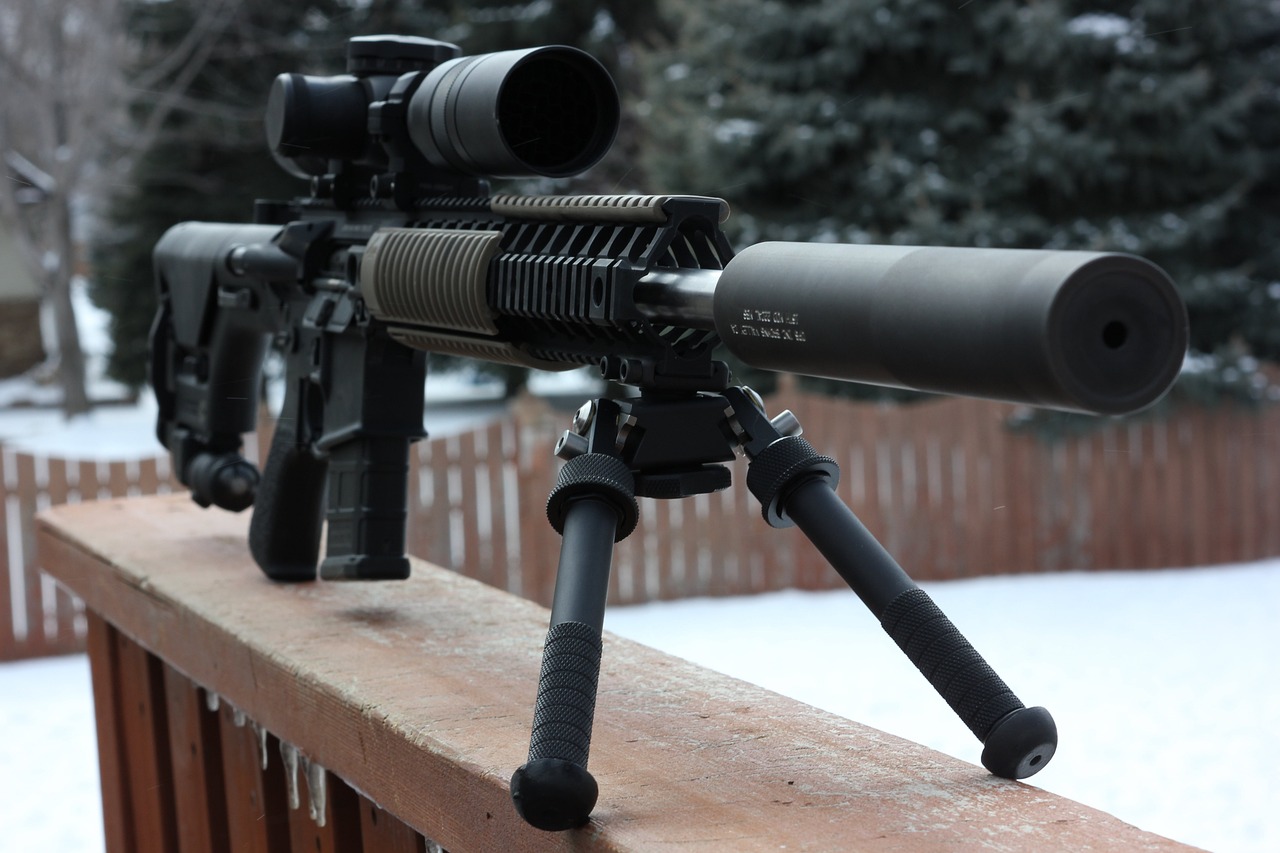
That is why cosmetic cues can be misleading. A different stock, grip, muzzle device, or handguard profile can make two rifles look miles apart even if the receivers, gas system geometry, and bolt carrier group specifications are nearly identical. For a first-time buyer, that visual variety feels like deep engineering diversity. Often it is really modular packaging.
There are also only so many practical ways to build a 16-inch, direct-impingement, forged-receiver AR with a free-float rail and mid-length gas system. Once brands converge on the same successful formula, overlap becomes inevitable. The rifle might not be literally identical screw for screw, but it can be close enough that performance differences are smaller than the branding suggests.
This is one reason price gaps can sometimes reflect finishing, QC intensity, warranty support, dealer margin, and brand position more than a radically different mechanical core. In other words, the spread between “entry,” “mid-tier,” and “premium” is not always about entirely different DNA.
Where brands really separate themselves in specs and quality control
Two rifles can share the same general parts map and still be very different in execution. The meaningful distinctions usually live in barrel steel, chamber dimensions, gas port sizing, heat treatment, bolt inspection standards, staking quality, rail rigidity, and assembly consistency. Those are not always obvious on the tag hanging from the trigger guard.
A company with better QC may reject more parts from the same outside supplier than a budget brand does. Another may spec a better bolt material, tighter tolerances, or more consistent testing. So when people say “they’re all made by the same few companies,” that idea is directionally true, but incomplete. Shared sourcing does not automatically mean equal rifles.
You can see the opposite model in more vertically integrated makers. Daniel Defense, for example, says it manufactures its cold hammer forged barrels in-house and has invested heavily in controlling production processes, including barrel making and finishing. The company has also said it aimed to make more of the AR platform internally over time. Ruger likewise said the AR-556 was designed and built at its Mayodan, North Carolina facility.
Those examples stand out precisely because true in-house production depth is notable in this category. Many brands instead compete by choosing smart vendors, writing solid specs, and enforcing inspection standards. That can still produce an excellent rifle, but it is a different business model from making nearly everything yourself.
“Made in USA” and branding language can hide a lot of complexity
Buyers often read “Made in USA” or “built in America” as if it means every important part came from one domestic factory. That is not what the phrase guarantees. The Federal Trade Commission says an unqualified “Made in USA” claim means a product should be “all or virtually all” made in the United States, with all significant processing and nearly all significant parts of U.S. origin.
Even within that standard, a rifle can still be the product of multiple American suppliers spread across several states. One company may source forgings from one plant, barrels from another, coatings from a third, and final assembly from a fourth. It can still be legitimately American-made without being the product of a single factory campus.
That distinction matters because a lot of rifle marketing leans on heritage, patriotism, and craftsmanship language. None of that is automatically dishonest. But it can encourage buyers to picture one master builder doing everything under one roof, when the reality is often an industrial web of subcontractors and specialists.
The AR-15 business is not unique in this respect. It simply makes the overlap easier to see because components are modular and enthusiasts pay close attention to details. Once you understand the supply chain, brand proliferation starts to look less mysterious and more like a smart use of shared manufacturing capacity.
Why stores still stock so many nearly identical rifles

Retailers carry many AR-15 brands because customers shop by trust, price, features, and familiarity, not just by who machined the raw receiver. One buyer wants the least expensive dependable rifle on the wall. Another wants a known military-adjacent brand. Another cares most about furniture, rail style, finish color, or whether the rifle already includes iron sights.
From the store’s perspective, those are distinct products even when the internal family resemblance is strong. A rifle with upgraded trigger furniture, a nicer handguard interface, or a better warranty may justify more shelf space because the buyer experience is different. The same goes for dealer programs, rebates, and brand recognition.
There is also a psychological factor. Most customers do not want twenty component decisions. They want a ready-made rifle that feels curated. Brands create that shortcut by bundling a familiar configuration and a reputation, even if the underlying components came from a common vendor base.
That is why the AR rack can look crowded without being truly diverse at the mechanical level. Retail assortment reflects marketing segmentation as much as engineering diversity. The logos create choice architecture, while the platform’s standardization keeps production efficient for everybody involved.
How to shop smarter when the names multiply faster than the differences

If you want to cut through the badge game, start with the parts that most affect function and durability. Ask about the barrel material and finish, the gas system length, the bolt material and testing, the receiver extension type, and whether the carrier key and castle nut are properly staked. Those answers tell you more than slogans ever will.
Next, ask who actually makes the important components, even if the salesperson cannot always give a precise answer. Some brands are transparent about in-house barrels or receivers. Others are quieter, either because supply chains change or because the value they provide is in specification and QC rather than raw manufacturing ownership.
Then look at evidence of execution. Are tolerances consistent, is the feed geometry clean, does the rail lock up solidly, and does the company have a reputation for fixing problems? A rifle built from shared-source components can be outstanding if the assembler knows what it is doing and holds vendors to a high standard.
The bottom line is simple. Many AR-15 brands really are drawing from the same manufacturing river, and sometimes from the same exact industrial sources. But sameness at the supplier level does not erase the importance of specs, inspection, assembly discipline, and after-sale support. That is where the real separation usually lives.