The law was built for factories, storefronts, and serial numbers.
3D-printed guns are blowing holes straight through that old framework.
The old rulebook was written for an industrial gun market

Most modern gun laws were designed around a basic assumption: firearms come from licensed manufacturers, move through licensed dealers, and carry serial numbers that let police trace them later. That logic made sense in a world where making a gun required a machine shop, a supply chain, and real money.
3D printing changes the starting point. A person can now combine downloadable files, consumer-grade printers, polymer filament, and a handful of metal parts to build key gun components outside the traditional market. The result is a weapon that may function like a commercial firearm but never passed through the systems lawmakers spent decades regulating.
That mismatch is exactly why regulators are rewriting old definitions. The core question is no longer just what counts as a finished gun. It is also whether unfinished frames, parts kits, CAD files, and conversion components should trigger the same legal safeguards as products made on an assembly line.
Why “ghost gun” rules suddenly became a legal battleground
The phrase “ghost gun” became central because it captures the practical problem for police: an unserialized firearm is far harder to trace after a shooting or trafficking investigation. According to ATF, about 45,240 suspected privately made firearms were recovered by law enforcement from potential crime scenes between 2016 and 2021, including 692 homicides or attempted homicides.
That surge pushed federal regulators to revisit rules under the Gun Control Act of 1968. In April 2022, ATF finalized its “frame or receiver” rule, expanding how federal law applies to certain weapon parts kits, unfinished frames, and privately made firearms, while also tightening marking and recordkeeping requirements for licensed dealers and gunsmiths.
The legal fight went all the way to the Supreme Court. In Bondi v. VanDerStok, decided March 26, 2025, the Court upheld the federal ghost gun rule in a 7-2 decision, concluding that at least some kits and unfinished components can be treated as firearms under existing law. That was a major win for regulators, but it also confirmed how much old statutes are now being stretched to cover new technology.
3D-printed guns are not just homemade guns with a new label
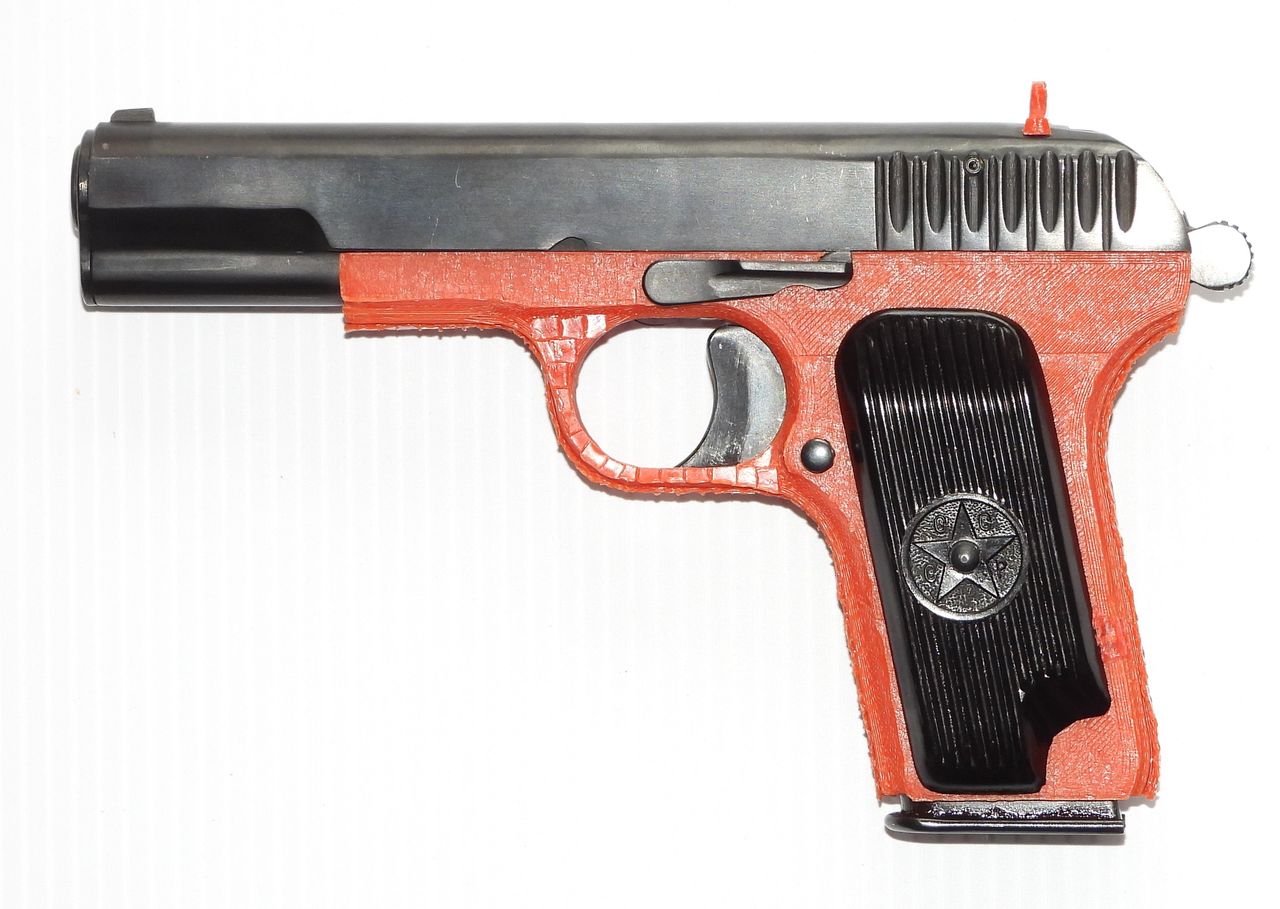
Homemade firearms are not new in the United States. What is new is the role of digital manufacturing, which lowers barriers and changes what exactly regulators are trying to control. A person no longer needs deep machining skill to produce a frame, receiver, magazine extension, or even a conversion-related component with surprising precision.
That matters because the threat is not limited to one single printable pistol design. European Parliament researchers noted in 2025 that 3D printing now extends beyond complete firearms to parts and accessories including suppressors, extended magazines, and so-called Glock switches or auto sears. In other words, the technology is helping people bypass controls piece by piece.
Researchers are seeing the same trend. A 2024 study in Forensic Science International: Synergy analyzing 186 media and law-enforcement cases found incidents involving 3D-printed firearms rising sharply after 2021. For lawmakers, that means the problem is no longer theoretical, niche, or tied to one viral blueprint from a decade ago.
Digital blueprints are forcing lawmakers into uncomfortable territory
The hardest part for regulators may be that the critical item is sometimes not the gun part but the file. Traditional firearms law usually focuses on physical objects: receivers, barrels, completed guns, or prohibited accessories. But with 3D-printed guns, a digital blueprint can function like a manufacturing template that moves instantly across borders and platforms.
That creates a legal headache lawmakers were never really built to solve. Regulating code or CAD files raises free speech questions, platform enforcement questions, and jurisdiction questions all at once. A file can be uploaded in one country, downloaded in another, modified by a third user, and printed in a garage with no gun store involved anywhere in the chain.
Some governments have started targeting the files directly. New South Wales in Australia criminalizes possession of a digital blueprint for manufacturing a firearm on a 3D printer or electronic milling machine, and South Australia said new legislation regulating firearm blueprints takes effect on February 19, 2026. Those moves show how regulators are expanding from physical weapons law into digital possession law.
Investigators now have a tracing problem and a forensic problem
Serial numbers are only one part of the enforcement challenge. When police recover a commercially made gun, they can often work backward through manufacturer and dealer records. With a 3D-printed gun, that traditional paper trail may not exist at all, which makes identifying the source dramatically harder.
Court filings in the federal ghost gun litigation underscored the scale of that problem, arguing that out of 45,240 unserialized firearms submitted for tracing from 2016 to 2021, ATF completed only 445 traces to individual purchasers. Whether one agrees with every policy response or not, the enforcement gap is obvious.
Forensics is evolving to catch up. Recent forensic research has examined polymer traces, tool marks, and even micro-CT analysis tied to printed firearm components. That work is important because the law increasingly depends on proving not just that an object is a weapon, but how it was made, what printer or material was used, and whether multiple seized parts came from the same source.
Other countries are rewriting laws because the loopholes are different now
Outside the United States, 3D-printed guns are forcing a similar rethink, but often from a different legal starting point. In Europe, official EU documents in 2025 and 2026 acknowledged that many member states still lack laws specifically addressing 3D-printed firearms and that it is often unclear whether existing national rules fully cover printed essential components.
Europol and European Parliament researchers have also warned that 3D-printed firearms create a clandestine manufacturing path outside traditional supply chains. That matters in a region where many gun-control systems were built around import controls, registration, and licensed possession rather than home fabrication from distributed files.
Australia is moving aggressively as well. The Australian Criminal Intelligence Commission said in June 2025 that a threat assessment focused on privately manufactured firearms, including 3D-printed weapons, and the federal government is building a National Firearms Register backed by A$161.3 million over 2024–28. Regulators there are not just tightening ownership rules; they are redesigning intelligence, tracing, and data systems around homemade weapons.
The deeper issue is that technology is moving faster than legal categories
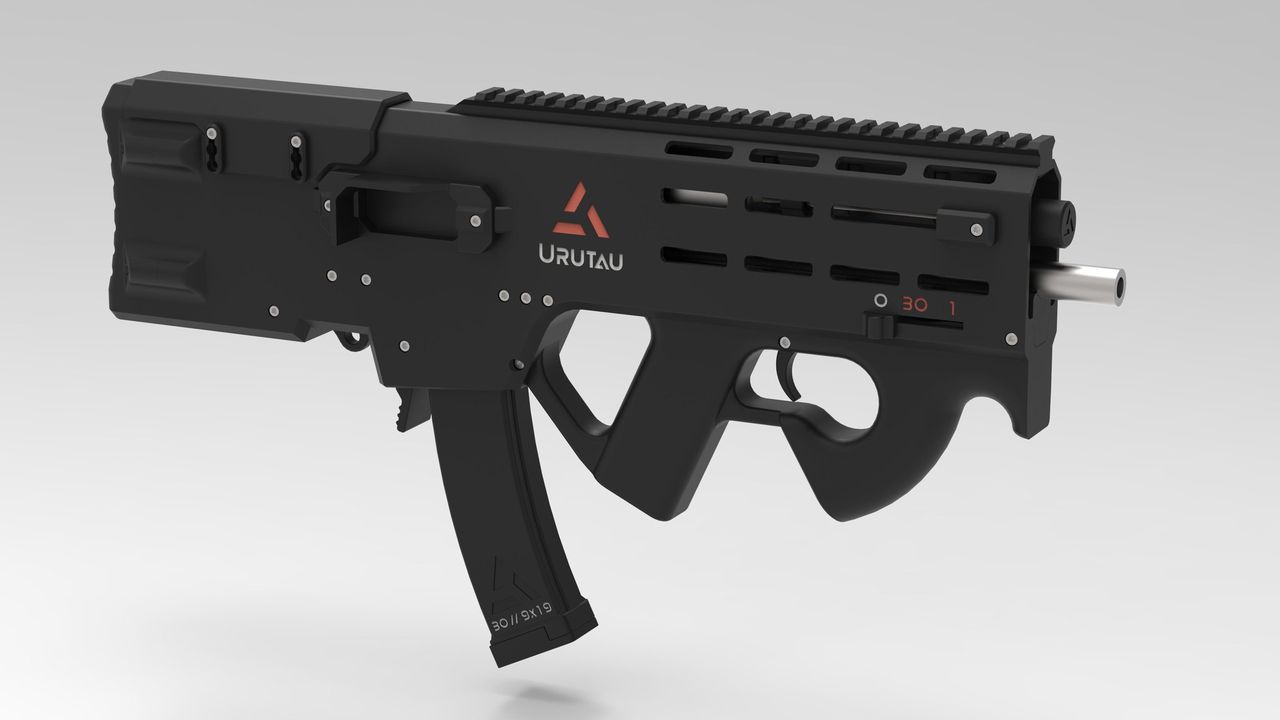
In the end, 3D-printed guns are forcing regulators to confront a simple fact: the categories inside many firearms laws are old, but the methods used to make guns are changing fast. Terms like manufacturer, dealer, receiver, transfer, and possession were drafted for a physical marketplace. They fit awkwardly when the “product” can be partly plastic, partly metal, and partly just a file.
That is why the rewrite is bigger than one ATF rule or one Supreme Court case. Regulators are now debating how to define a gun before it is finished, how to treat blueprints before anything is printed, and how to preserve lawful hobbyist activity while closing obvious criminal loopholes.
Expect this fight to keep expanding. The next generation of gun regulation will likely focus less on the gun counter and more on hybrid questions involving software, unfinished parts, decentralized distribution, and forensic traceability. The old laws are not disappearing, but they are being forced to speak a new technological language.