For years, bigger seemed better. Then the battlefield started teaching a more interesting lesson.
The old belief was simple: snipers needed bigger rounds

For most of the modern era, sniper thinking followed a straightforward logic. If the job demanded precision, range, and reliable terminal effect, then a larger cartridge seemed like the obvious answer. That meant 7.62×51 NATO for general precision work and even larger magnum rounds when distance stretched far beyond ordinary engagement ranges.
This view was not based on myth alone. Heavier bullets generally resist wind better, retain energy longer, and hit harder at distance. In military doctrine, that matters because snipers are often expected to identify, engage, and stop threats under conditions that are far less forgiving than a square range. A miss caused by wind drift or poor energy retention is not just a statistic. It can mean a lost opportunity or a compromised team.
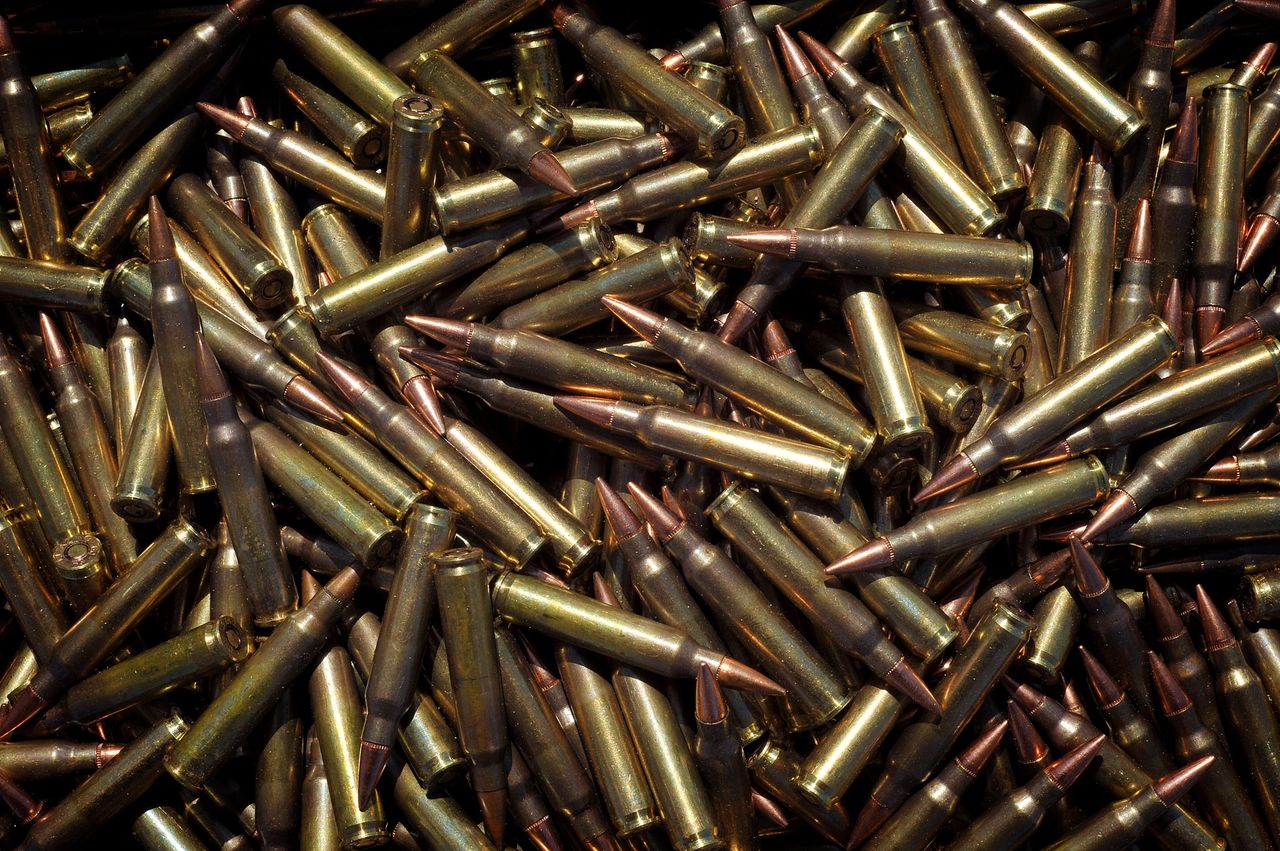
So for a long time, 5.56×45 NATO lived in a different category in the military mind. It was the cartridge of the service rifle, valued for controllability, lighter ammunition load, and high-volume fire. It was not usually treated as a serious sniper round except in narrow roles. What changed was not one magical test. It was the accumulation of combat experience, improved optics, better barrels, and more realistic thinking about what precision actually means in the field.
The military discovered that practical precision is not the same as maximum power.

One of the quiet lessons from years of conflict was that many precision engagements did not happen at extreme range. In Iraq and Afghanistan, troops often found that the most common fights occurred at distances where 5.56 remained entirely capable of delivering accurate fire, especially from well-built rifles with quality ammunition. The gap between a standard infantry rifle and a true precision setup began to narrow in useful ways.
Military units saw that hit probability is not just a matter of ballistic charts. Rifle weight, recoil, follow-up speed, shooter fatigue, and how quickly a marksman can get stable on target all matter. In those categories, 5.56 offered real advantages. Lighter recoil made it easier to spot impacts and correct quickly. A rifle chambered in 5.56 could often be carried longer, brought on target faster, and shot more comfortably during extended operations.
This did not make 5.56 superior in every way. It did something more disruptive. It exposed that snipers and designated marksmen were sometimes solving different problems than the doctrine assumed. The military learned that if the mission is precision inside moderate distances, with mobility and ammunition load playing major roles, then caliber choices deserve a much more nuanced conversation than the old bigger-is-better formula allowed.
Better rifles and ammo changed the reputation of 5.56
A major part of this shift came from hardware. Early impressions of 5.56 precision potential were often shaped by standard-issue rifles, average triggers, basic optics, and general-purpose ball ammunition. That is not a fair test of any cartridge’s best performance. Once militaries fielded free-floated barrels, improved optics, match-grade ammunition, and suppressors, the cartridge started showing a very different face.
The Mk 12 Special Purpose Rifle is one of the best-known examples of this evolution. Built around 5.56, it was designed to extend the precision and reach of small units without forcing them into the size and weight penalties of a larger sniper system. In the hands of skilled shooters using quality ammunition like 77-grain Open Tip Match loads, the rifle gained a strong reputation for accuracy and useful lethality at distances that surprised people who thought of 5.56 only as a close-to-midrange cartridge.
Special operations experience reinforced the point. The lesson was not that physics stopped applying. Wind still pushed lighter bullets more, and terminal performance still dropped as distance increased. But the military saw that with the right rifle and load, 5.56 could perform precision tasks once assumed to require a larger caliber, especially when engagement distances, target type, and mobility demands lined up in its favor.
Snipers began thinking more in terms of mission sets than caliber prestige.
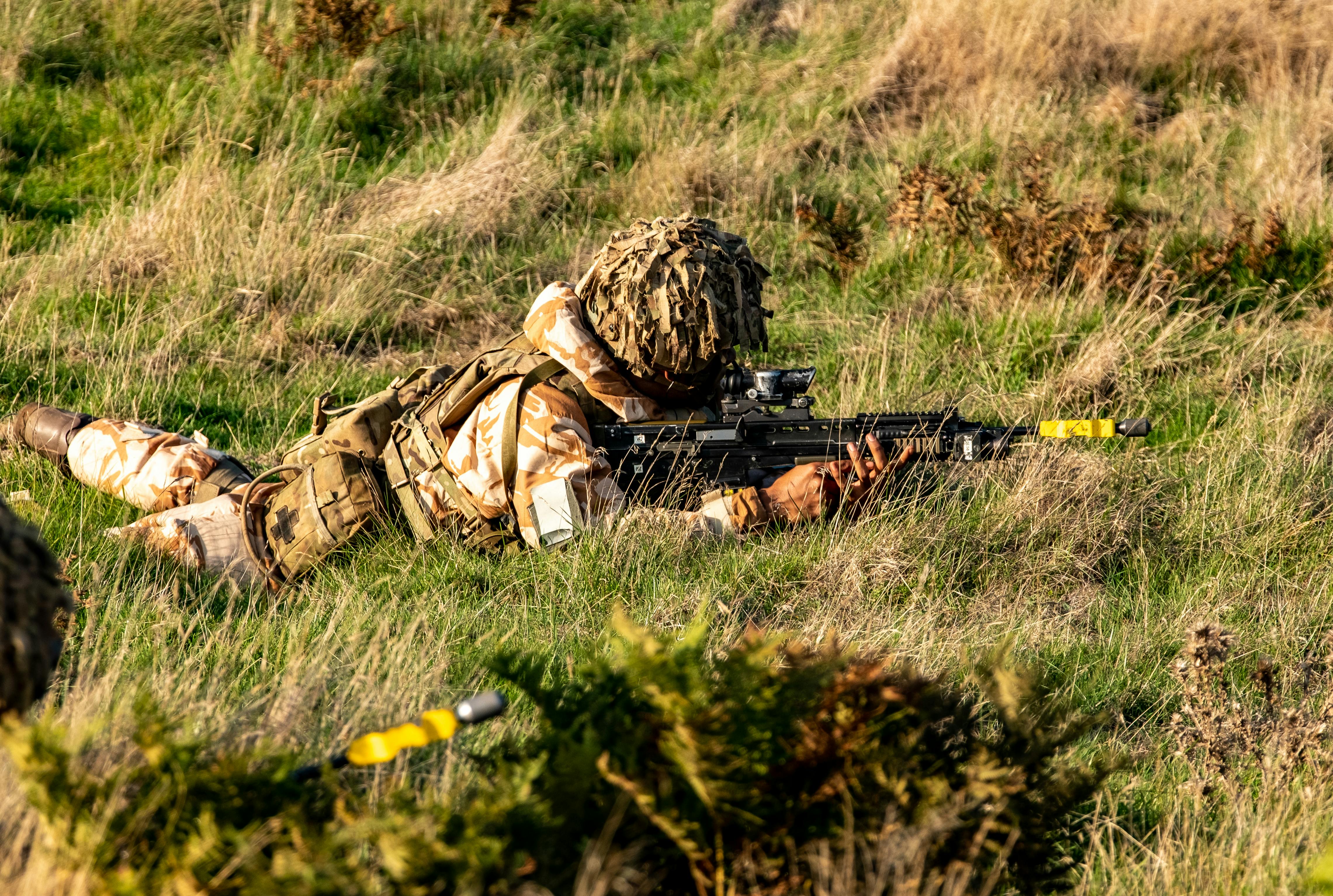
This is where the intellectual shift really happened. Snipers and military planners increasingly separated the idea of a “sniper caliber” from the idea of the “right caliber for the mission.” Those are not always the same thing. A round that looks ideal on paper for long-range energy may be less useful if the shooter needs to move fast through urban terrain, carry more ammunition, or remain less encumbered on long patrols.
In practical terms, this encouraged more role specialization. A designated marksman embedded with an infantry squad might benefit enormously from a highly accurate 5.56 platform, especially when the expected engagement window sat inside the cartridge’s sweet spot. A traditional sniper pair tasked with overwatch over wide terrain, barrier penetration, or uncertain long-range shots still had good reasons to favor 7.62 or larger calibers.
That distinction sounds obvious now, but it represented a meaningful departure from older thinking. The 5.56 debate forced the military to admit that precision is situational. It depends on terrain, visibility, target exposure, movement, ammunition burden, and expected shot volume. Once that framework took hold, Caliber lost some of its mystique. It became less about identity and more about matching a tool to a job.
The biggest limitation was never accuracy alone.
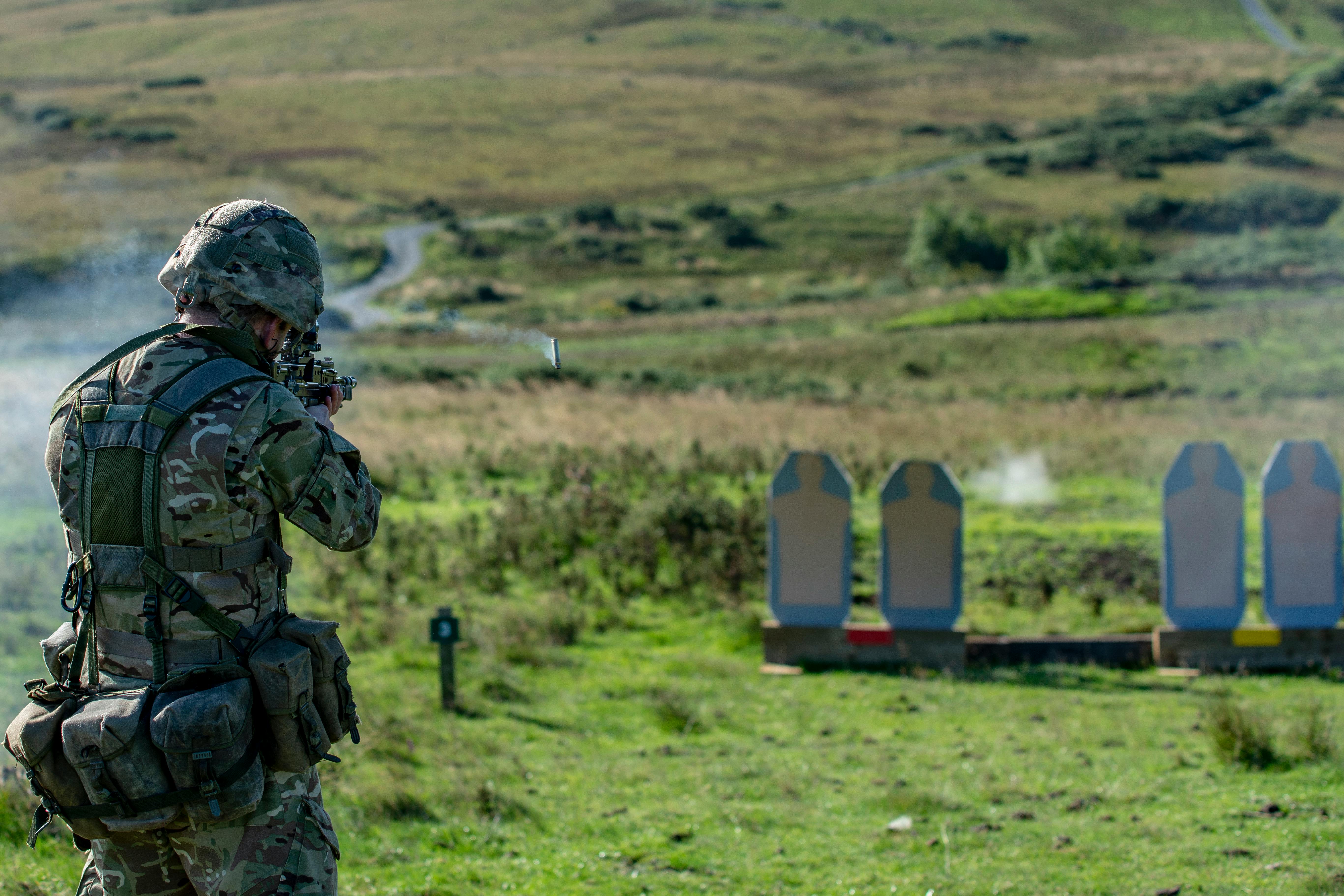
A lot of public discussion about 5.56 focuses on whether it is “accurate enough.” In truth, accuracy was only part of the equation. Well-built 5.56 rifles have long been capable of excellent precision, often around 1 MOA or better with the right ammunition. The more serious limitations show up in wind drift, retained velocity, terminal performance, and consistency against intermediate barriers as distance grows.
This is exactly why military users did not simply replace 7.62 sniper systems across the board. At 600 yards and beyond, especially in variable wind, the heavier 7.62 projectile often gives shooters more margin for error. Push farther still, and that difference becomes even more pronounced. If the target is partially obscured, moving unpredictably, or shielded by light cover, those ballistic advantages matter a great deal.
What 5.56 changed was not the laws of external ballistics. It changed the threshold for what military professionals considered acceptable and useful in a precision role. The quiet lesson was that a smaller cartridge can be extremely effective when used inside a realistic envelope. The real skill lies in respecting that envelope rather than pretending one caliber can dominate every tactical problem.
Combat experience pushed doctrine closer to reality.
Wars have a way of exposing the distance between theory and practice. According to reporting over the years from outlets like Army Times and task-focused military publications, troops repeatedly adapted their equipment based on what actually worked on patrol, on rooftops, and in mountain valleys. The result was not a clean doctrinal revolution. It was a gradual correction driven by field use.
That correction included recognizing how often engagement distances were misremembered or exaggerated in public debate. While long-range firefights did occur, many precision opportunities came at more ordinary distances where the speed and shootability of a refined 5.56 system made a real difference. It also became clear that many units needed more precision capability distributed throughout formations, not just concentrated in a few specialized sniper teams.
This broader precision mindset helped elevate rifles and carbines that could stretch the usefulness of 5.56 without overselling it. It also shaped training. Shooters became more aware of holds, wind calls, ammunition selection, and the importance of realistic expectations. In other words, the military did not merely learn that 5.56 could do more than expected. It learned that doctrine works best when it starts with actual battlefield patterns instead of inherited assumptions.
What changed for snipers was the question, not just the answer.
The most important shift was conceptual. Before, the question often sounded like this: What is the best sniper caliber? After years of experience, the better question became: best for what, at what distance, with what constraints, and for which shooter? That is a much more mature way to think about precision shooting, and 5.56 played a major role in forcing that change.
Modern sniper and marksman culture still respects larger calibers for good reason. Nobody seriously claims that 5.56 replaces 7.62, .300 Winchester Magnum, or .338 Lapua in their intended roles. But the military’s quiet lesson was that the lighter round proved something powerful about precision. Effectiveness is not determined by bullet diameter alone. It is created by the entire system: rifle, optic, ammunition, shooter skill, and mission context.
That idea has influenced how professionals talk about carbines, designated marksman rifles, and sniper employment to this day. In the end, 5.56 did not win by becoming something it was not. It changed minds by proving that practical precision is about disciplined tradeoffs, not caliber mythology.