A lot of new gun owners think one good shot from the right caliber ends everything instantly. Real life is harsher, messier, and much less forgiving.
The biggest myth is that caliber alone decides the outcome.

First-time buyers often walk into a gun store asking for the gun with the most “stopping power,” as if that quality lives entirely in a box of ammunition. It is an understandable mistake because the term has been oversimplified for decades by movies, marketing, and gun-counter folklore. In reality, there is no universal scientific formula that predicts instant incapacitation from caliber alone. Ballistics experts and modern law enforcement training have moved away from that simplistic view for good reason.
Handgun rounds, even powerful ones, are relatively weak compared with rifle rounds or shotgun loads. According to long-standing FBI testing standards, the real concern is whether a round penetrates deeply enough to reach vital structures after passing through clothing, tissue, or an angled body position. A larger bullet that fails to penetrate adequately can perform worse than a smaller one that reaches something important. That is not a theory. It is a lesson repeated in after-action reports and training analysis for years.
The uncomfortable truth is that people do not always stop because they are shot. Sometimes they stop psychologically, meaning fear or shock makes them quit. Sometimes they do not stop physically until blood loss, central nervous system disruption, or structural failure takes over. That process may be fast, slow, or shockingly delayed. A first-time buyer who expects magical instant results from caliber alone is building confidence on a very shaky foundation.
Shot placement beats power almost every time
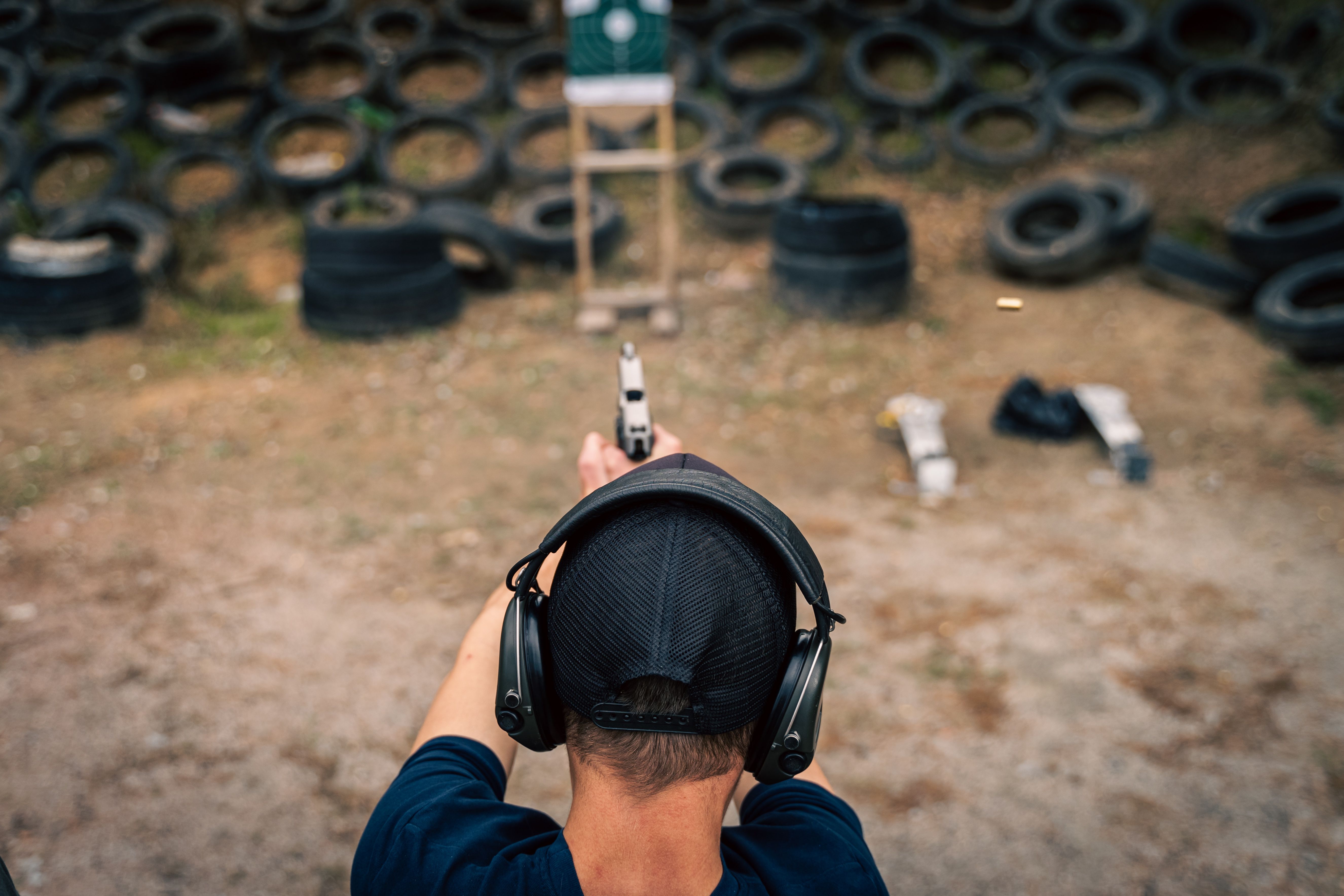
A miss with a powerful handgun does nothing. A hit in a non-vital area with a large round may also fail to stop an attack quickly enough. This is why experienced instructors keep returning to the same point: the bullet has to go somewhere that matters. That sounds obvious, but many beginners still obsess over energy numbers instead of where they can realistically place rounds under extreme stress.
Stress changes everything. Heart rate spikes, fine motor skills deteriorate, vision narrows, and people often shoot worse than they do in a calm range. Under those conditions, a compact 9mm you can control and fire accurately may be far more effective than a harder-kicking .40 or .45 that slows your follow-up shots. In force-on-force training, students regularly discover that controllability matters more than they expected.
This is one reason many major law enforcement agencies returned to or stayed with 9mm duty ammunition after years of experimenting with larger calibers. Better hit probability, less recoil, faster training progress, and modern bullet performance all played a role. A first-time buyer should take that seriously. If your chosen gun makes accurate, rapid hits difficult, the promised stopping power is mostly a fantasy.
Penetration matters more than dramatic bullet expansion.n

New buyers love the idea of a hollow point opening dramatically and dumping all its energy into the target. It sounds decisive and clean. But the useful question is not whether the bullet looks impressive in gelatin photos. The useful question is whether it can reliably penetrate to vital organs from realistic angles while still performing consistently through barriers like heavy clothing.
Ballistics professionals often emphasize the 12 to 18 inch penetration benchmark in properly conducted gelatin testing. That standard exists because attackers are not always square to the shooter, lightly dressed, or standing still. Arms may be in front of the chest. The torso may be turned. Intermediate obstacles may interfere. If a bullet expands too quickly and stops too soon, its performance may look dramatic while failing at the exact moment the shooter needs it most.
This is where first-time buyers get trapped by flashy marketing and internet arguments. They compare expanded diameter pictures while ignoring consistency. They talk about “energy transfer” as though handguns produce movie-style knockdown force. They do not. Reliable penetration combined with controlled expansion is what reputable defensive loads are designed to deliver. In a real situation, boring consistency beats spectacular advertising every single time.
Recoil, capacity, and speed are part of stopping power, too
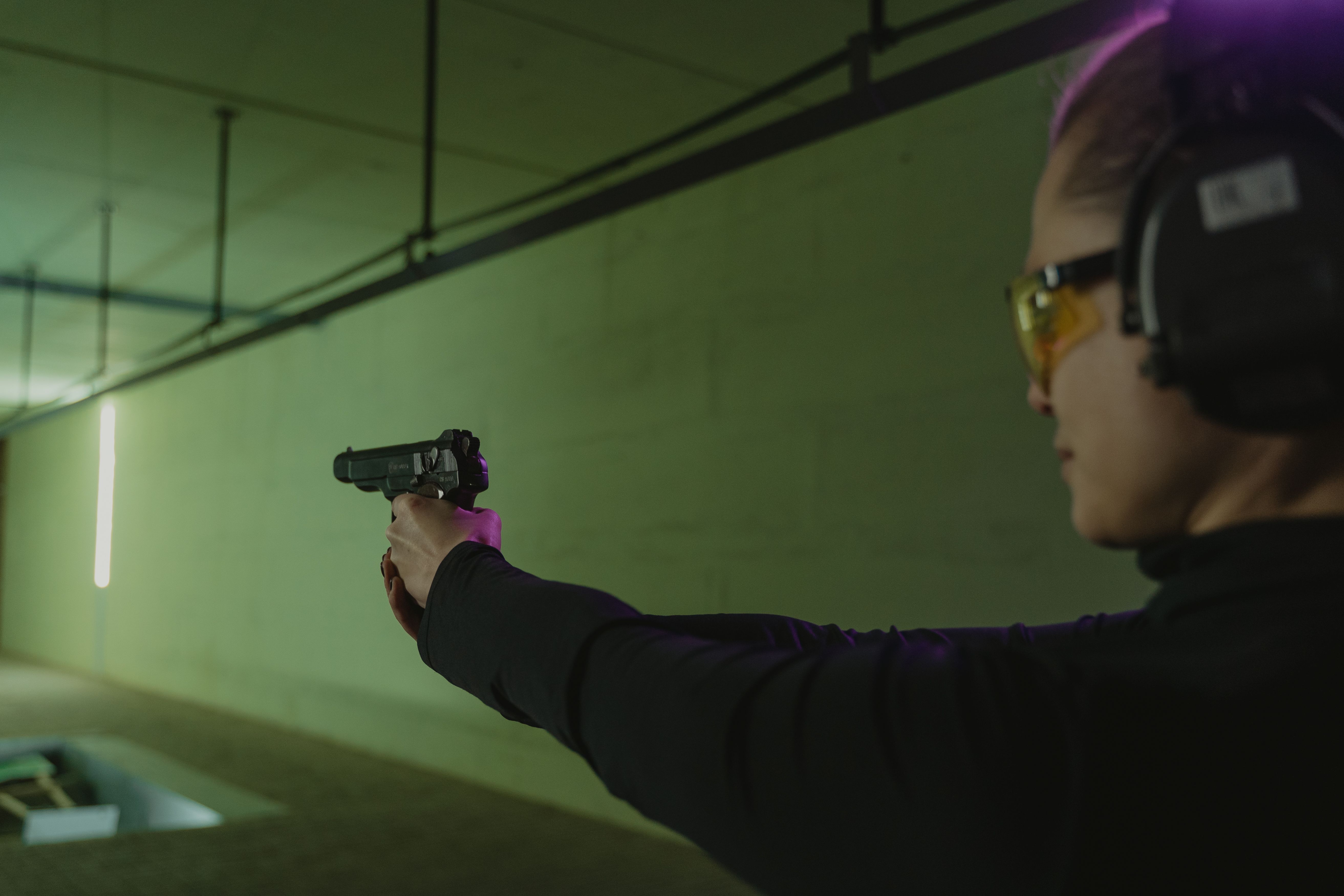
Stopping a threat is not only about what one bullet can do. It is also about how quickly you can deliver effective hits, how many rounds you have available, and how well you can recover the sights between shots. Those practical factors become crucial when the first round does not immediately end the danger, which is common in real shootings. Beginners often underestimate how much recoil management affects survival.
A gun that feels powerful in the store can become a liability on the range. If muzzle rise is heavy, your second and third shots may be slow, low confidence, and inaccurate. A lighter recoiling platform often lets shooters keep rounds in a tighter area and make corrections faster. That is one reason many trainers steer new owners toward full-size or compact 9mm pistols instead of tiny magnums or ultralight handguns that are unpleasant to shoot well.
Capacity matters too, though people sometimes treat that as controversial. Real incidents are unpredictable, and mistakes happen even to trained people under pressure. Multiple assailants, movement, low light, and imperfect angles can consume rounds quickly. Choosing a firearm with manageable recoil and reasonable capacity is not cowardice or overthinking. It is a realistic acknowledgment that self-defense rarely unfolds like a neat one-shot demonstration.
The human body does not react like people think it does
One of the most dangerous misconceptions about stopping power is the belief that the body responds mechanically and immediately to being hit. Popular culture has taught generations of people to expect instant collapse, dramatic backward movement, or a guaranteed shutoff switch. But trauma medicine, law enforcement case reviews, and countless self-defense debriefs show a more chaotic picture. Human beings can absorb astonishing damage and continue purposeful action for longer than most new buyers imagine.
Unless the central nervous system is disrupted, rapid incapacitation often depends on blood loss, and blood loss takes time. That time may be measured in seconds, but those seconds can still include gunfire, stabbing, charging, or close-quarters violence. Drugs, adrenaline, mental commitment, and simple determination can all delay the visible effect. This is why trainers stress continuing to assess and respond rather than firing once and assuming the problem is solved.
The reverse is also true. A person may stop after a relatively minor wound because they decide to stop. That does not mean the caliber was uniquely powerful. It means human reactions are inconsistent. First-time buyers who understand this tend to make better choices, because they stop chasing mythical certainty and start preparing for the reality of uncertainty.
Gear selection matters, but training matters far more.
Many first-time buyers spend hours comparing calibers, muzzle energy charts, and expansion tests, then almost no time thinking about draw stroke, target identification, or low-light shooting. That is backwards. The best defensive ammunition in the world cannot fix poor gun handling, hesitation under stress, or an inability to hit quickly from realistic distances. If you are betting your safety on stopping power, training is what turns theory into actual capability.
Good training also teaches judgment. It forces shooters to think about backdrop, angles, legal standards, and what happens after the trigger press. Instructors who work with ordinary citizens often report the same pattern: students arrive fixated on hardware and leave realizing that awareness, avoidance, communication, and marksmanship are the real life-saving skills. That perspective can keep a person from making terrible choices before, during, and after an encounter.
Even basic, repeated practice changes outcomes. Drawing safely from concealment, firing controlled pairs, reloading under pressure, and clearing simple malfunctions are not glamorous topics. But in a crisis, those fundamentals matter more than arguments about whether one handgun round is slightly better on paper than another. Competence is a form of stopping power that new buyers often fail to value until much later.
What first-time buyers should focus on in the meantime?d
If you are buying your first defensive firearm, choose reliability first. Then choose a caliber and platform you can shoot accurately, quickly, and consistently. For most people, that means a reputable 9mm handgun loaded with well-tested defensive ammunition from a major manufacturer. It is not the only workable answer, but it is the answer that best balances recoil, capacity, penetration, cost, and ease of training for a huge number of shooters.
After that, put your attention where it belongs. Test the gun with your carry load, confirm reliability, and learn the manual of arms until operation becomes second nature. Practice realistic distances, not just slow fire at a comfortable lane target. Work on drawing, movement, low-light awareness, and decision-making. If possible, get professional instruction instead of relying on social media myths and gun-shop storytelling.
Most importantly, abandon the fantasy that any handgun guarantees instant results. Think in terms of disrupting a threat through accurate hits, sufficient penetration, and repeated assessment. That mindset is less exciting than the old stopping-power myth, but it is much closer to the truth. And in a real situation, truth is what keeps people alive.