One Supreme Court decision can quietly rewrite everyday rules. This one did exactly that for where licensed Americans may carry a gun.
What the Court actually decided
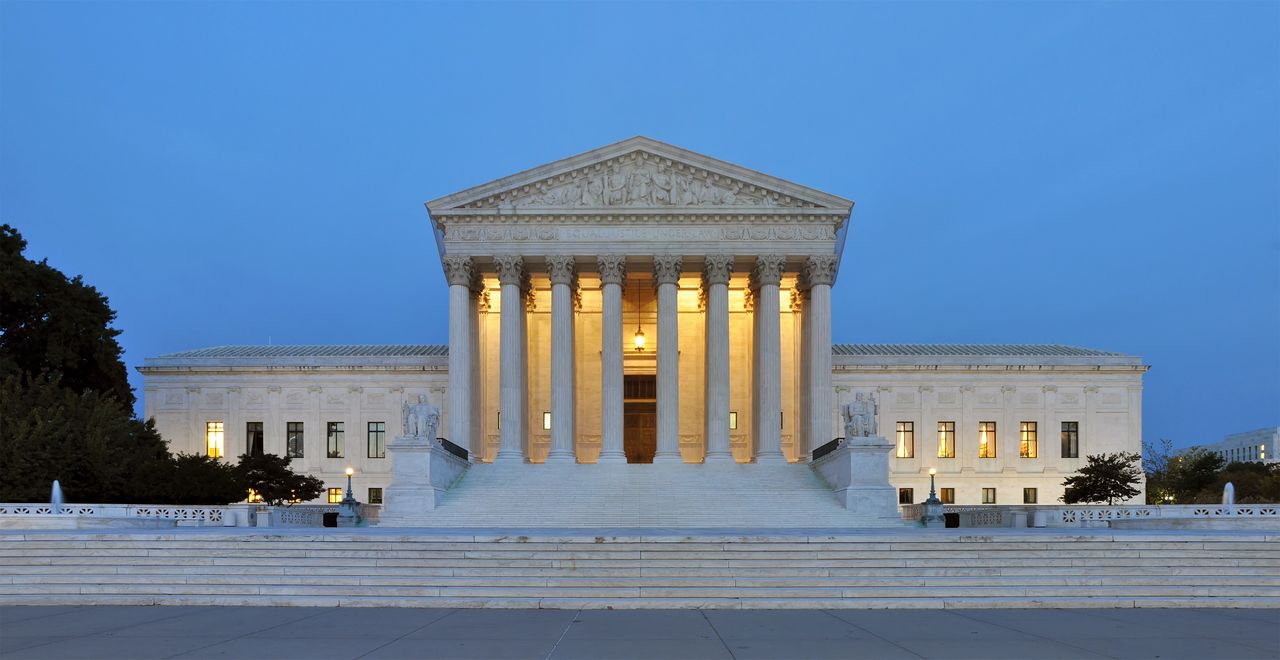
On June 25, 2026, the U.S. Supreme Court struck down a Hawaii law that made it a crime for a licensed person to carry a handgun onto private property open to the public unless the owner had given express permission. That covered places people visit every day, including stores, gas stations, and restaurants. In a 6-3 ruling, the Court said that approach violated the Second Amendment, continuing the justices’ broader expansion of gun-carry rights in the post-Bruen era, according to Reuters and the Court’s published opinion.
Justice Samuel Alito wrote for the majority in Wolford v. Lopez, a case argued on January 20, 2026, and decided on June 25, 2026. The Court framed Hawaii’s rule as a serious burden on permit holders because it required them to secure permission before entering a wide range of ordinary businesses and public-facing private spaces. The majority said that burden mattered because those are exactly the places people move through in daily life.
The practical holding was straightforward. A state may not broadly impose an express-consent default rule for licensed concealed carry on private property that is open to the public. In plain English, the Court rejected a permission-first system and favored the traditional rule that entry is generally allowed unless the property owner says no.
Why the phrase “default rule” matters so much
The fight in this case was never only about Hawaii. It was about who gets to set the starting assumption when a business owner says nothing about firearms. Hawaii’s law assumed no carry unless the owner affirmatively allowed it. The Supreme Court said that flipped the ordinary background rule too far against licensed carriers.
That sounds technical, but it has huge real-world consequences. Most businesses do not post firearm policies at the door, do not hand out verbal instructions, and do not make gun policy a central part of customer interaction. When the default rule changes, millions of routine encounters change with it, even if no one notices right away.
The majority emphasized that property open to the public usually carries an implied invitation to enter. Hawaii tried to carve firearms out of that implied invitation unless the owner specifically opted in. The Court said that move burdened lawful self-defense too broadly, especially for people who had already satisfied state licensing requirements.
The property-rights argument did not disappear

This ruling does not mean property owners lost control over their land. It means the state cannot automatically presume every owner forbids licensed carry on public-facing private property unless that owner gives express permission. Owners still retain the power to ban guns, post signs, set terms of entry, or tell a person carrying a firearm to leave.
That point matters because the case sat at the intersection of two strong American legal traditions: the right to bear arms and the right to exclude others from private property. Hawaii defended its law as a property-rights measure, arguing that it simply selected one default among several possible consent rules. The dissent leaned heavily on that idea and argued there is no right to enter private property with a firearm absent the owner’s consent.
But the majority saw the issue differently. It treated the state’s chosen default as a broad public-carry restriction imposed by government, not just a neutral property-law housekeeping rule. That distinction is the heart of the opinion, and it is why the ruling is bigger than a local dispute over signage.
How this fits into the Court’s recent gun cases
To understand this decision, you have to place it after New York State Rifle & Pistol Association v. Bruen in 2022. Bruen recognized a constitutional right to carry handguns outside the home for self-defense and told courts to evaluate modern gun laws against historical tradition. After Bruen, several states rewrote their laws to create new restricted places or new hurdles for permit holders.
Hawaii’s law was one of the clearest examples of that response. Reuters reported that Hawaii adopted the measure after the state could no longer keep its old permitting system intact. The Court’s majority plainly believed the state had replaced one obstacle with another, this time by making huge portions of public life effectively off-limits unless businesses affirmatively said yes.
That explains why the ruling may echo beyond Hawaii. Reuters noted that several other states had similar laws, and legal observers have long watched New York, New Jersey, California, and Maryland for parallel battles over default carry rules on private property open to the public. Some lower courts had already been skeptical of those laws even before the justices acted.
What this means for businesses and gun owners
For gun owners with valid permits, the ruling makes the legal landscape simpler in one important respect. If a business is private property open to the public and the owner has not clearly prohibited firearms, a state generally cannot force a permission-first rule as the baseline. That is the default-rule shift people are talking about.
For businesses, the ruling raises the importance of clear policy. Owners who do not want firearms on the premises may need to post conspicuous signs, communicate house rules to staff, and think through enforcement. Silence no longer works the same way in states that tried to build an automatic no-carry presumption into law.
For law enforcement, the decision may reduce one category of carry prosecution while increasing the importance of trespass-style enforcement after notice is given. In other words, the legal question shifts from “Did the person get express permission first?” to “Did the owner forbid firearms or tell the person to leave?” That is a meaningful operational change on the ground.
The dissent’s warning and the public safety debate
The dissenters saw a very different case. In the materials published with the decision, the dissent argued that there is no constitutional right to carry a gun onto someone else’s property without consent and that states have historically been able to define how consent works. That view treats express permission as a legitimate property-protective rule, not a Second Amendment problem.
Gun-safety advocates echoed that concern after the ruling. Reuters quoted critics who said Hawaii’s law was about giving owners and families peace of mind rather than imposing a blanket ban on firearms. From that perspective, the Court privileged armed entry over a state’s effort to make the default more cautious in crowded commercial spaces.
That argument will not disappear just because the majority won. Expect the debate to continue around how much notice owners must give, what counts as a valid sign, and whether states can regulate especially sensitive commercial settings without recreating the same constitutional problem under another label. Those next-round fights are where policy and litigation will likely move.
What comes next after Wolford v. Lopez
The immediate takeaway is narrow but powerful. States cannot broadly make licensed concealed carry on public-facing private property illegal by default unless the owner expressly authorizes it. That principle, announced in Wolford v. Lopez on June 25, 2026, is now part of the Supreme Court’s modern Second Amendment framework.
The broader consequence is legal ripple effect. States with similar statutes will have to revisit them, defend narrower versions, or watch lower courts strike them down. Businesses will need to decide whether to post rules. Gun owners will still need to pay close attention to state carry restrictions, trespass laws, and clearly marked gun-free premises, because this ruling did not erase every limit.
The biggest shift is conceptual. Before this ruling, some states tried to make no-carry the default on private property open to the public unless an owner opted in. After this ruling, the constitutional presumption runs the other way. That is why this case matters so much: it changed the starting rule that governs countless ordinary places Americans enter every day.