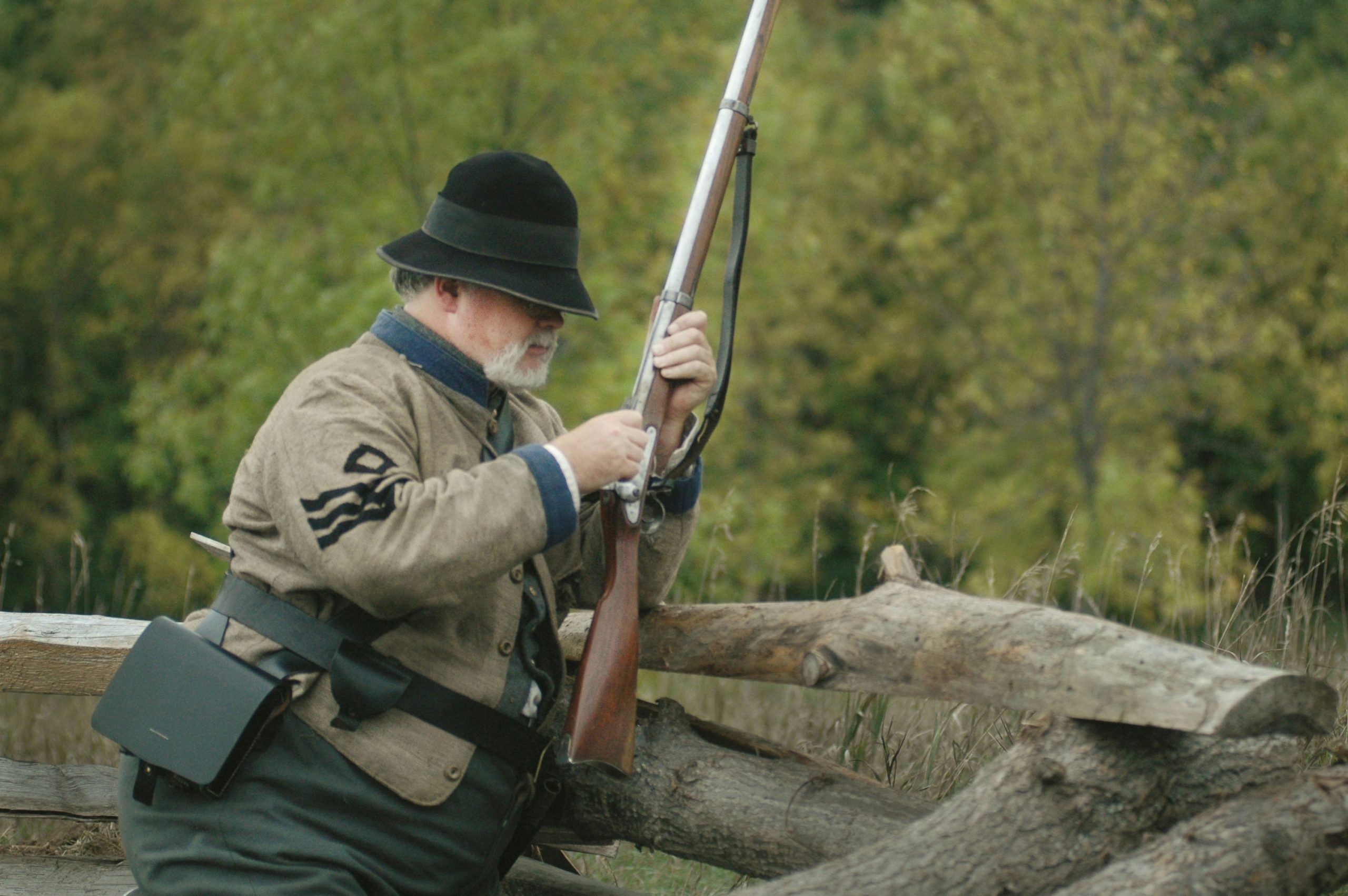
Some inventors improve a field. John Moses Browning practically redrew the blueprint for it.
He never became a polished academic or credentialed engineer, yet he produced a body of work so vast that historians still measure gun design in before-and-after Browning terms.
The man behind the record

If you are looking for the self-taught inventor who holds more gun patents than anyone else in history, the name is John Moses Browning. Born in Ogden, Utah, on January 23, 1855, Browning grew up in a gunsmith’s shop, learning metalwork, mechanics, and problem-solving from his father long before most children today would be trusted with a hand tool. The National Inventors Hall of Fame and multiple Browning histories describe him as one of the foundational figures in modern firearms design.
He received his first major patent in 1879 for a single-shot breech-loading rifle, and that early success opened the door to a career that would stretch across nearly half a century. Utah’s state history records credit him with 128 gun patents, a staggering figure that helps explain why his name towers over every other firearms inventor in the historical record. For sheer volume and long-term impact combined, no rival really matches him.
What makes that number even more impressive is that Browning was not simply churning out minor variations. He was producing workable, commercially successful designs across handguns, rifles, shotguns, machine guns, and automatic cannons. Plenty of inventors created one famous mechanism. Browning kept creating entire families of them.
That breadth is why experts still talk about him with a kind of mechanical awe. He was not just prolific. He was prolific in ways that permanently changed how firearms fed, fired, locked, cycled, and survived hard use in the field.
A genius shaped by the workshop, not the classroom
The line about Browning never finishing school gets repeated because it captures something true about his path, even if biographies often phrase it more carefully as a lack of formal engineering education. The consistent historical picture is that Browning learned by doing. He worked in his father’s Ogden shop from a young age, absorbing engineering and manufacturing principles through hands-on labor rather than classroom theory. That practical upbringing mattered more than any diploma ever could.
In a modern sense, Browning was a workshop engineer before the title was fashionable. He observed broken guns, listened to complaints, examined stress points, and kept refining mechanisms until they ran cleaner or lasted longer. That habit helps explain why so many of his designs earned reputations for rugged reliability instead of just clever novelty.
He also benefited from growing up in a maker culture inside his own family. The Browning household was full of mechanical work, repairs, fabrication, and experimentation. By the time he was a young man, he was not guessing how machinery behaved. He had already spent years seeing what real metal does under real strain.
That kind of education is easy to romanticize, but it was also brutally practical. If a mechanism jammed, broke, overheated, or wore out, the workshop exposed the flaw immediately. Browning’s genius was not that he ignored fundamentals. It was that he learned them in the hardest possible classroom: the one where bad ideas fail in your hands.
Why Browning’s patents mattered more than the raw number
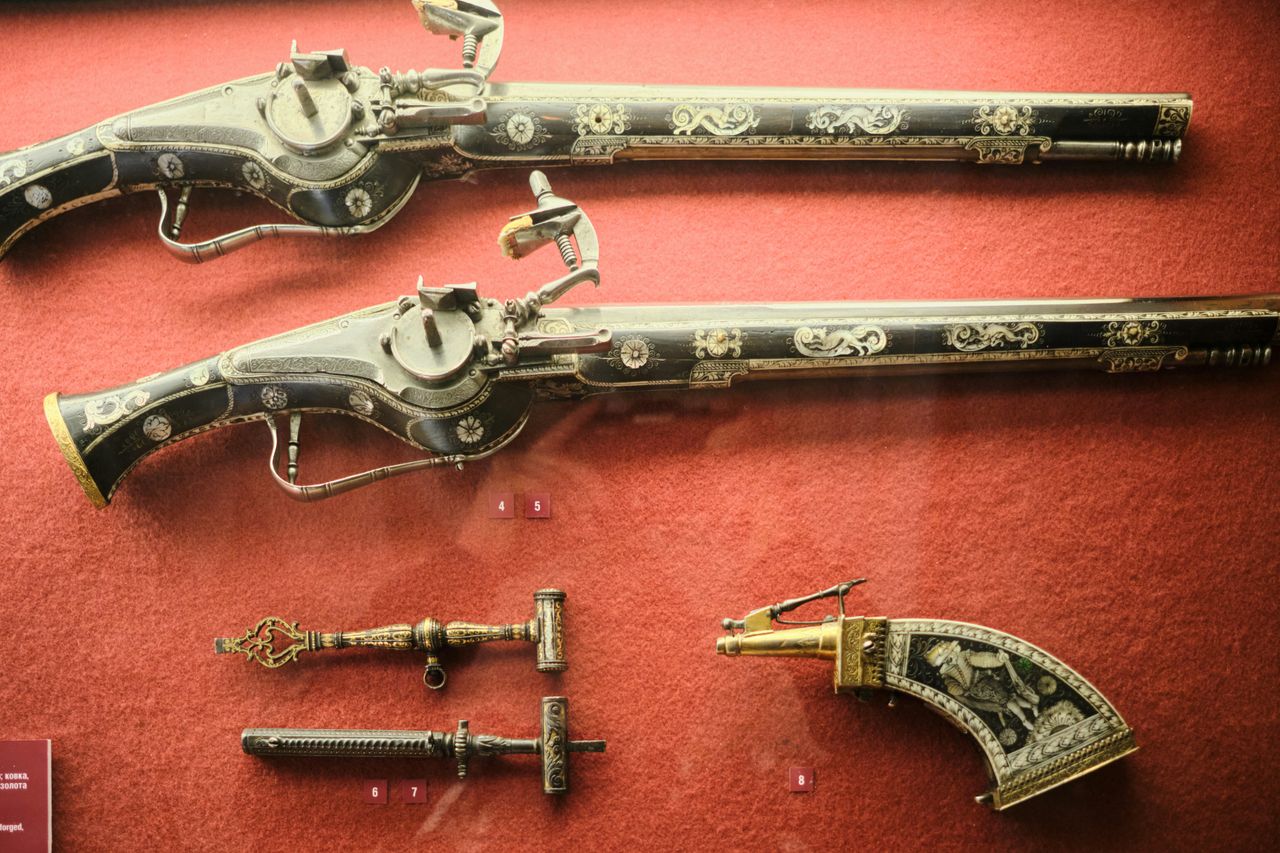
Patent counts alone can be misleading. A person can accumulate patents and leave barely a ripple behind. Browning’s 128 firearms patents mattered because an extraordinary number turned into guns that soldiers carried, hunters trusted, lawmen wore, and manufacturers copied or licensed for decades. According to the National Inventors Hall of Fame, his designs included the lever-action repeating rifle, semiautomatic shotgun, major machine guns, and the Browning Automatic Rifle. That is not a niche résumé. It is an industrial revolution in one career.
His commercial importance was just as striking as his technical importance. Browning’s partnership model evolved over time, and one key move was asking for royalties rather than accepting a one-time buyout on some designs. Browning’s own corporate history notes that this shift changed the economics of invention for him and gave him greater leverage with manufacturers. It also reflected confidence: he knew his work would sell.
The patents also covered different operating systems and use cases, which is why his influence spread so far. Sporting guns, military weapons, defensive pistols, and crew-served arms all felt his touch. Few inventors mastered one category deeply. Browning moved across categories and kept landing hits.
That is the real reason the record matters. It is not merely that he patented more gun designs than anyone else. It is that so many of those patents became standards.
The designs that made him impossible to ignore

Browning’s first breakthrough with Winchester led to the Model 1885, but that was only the start. His association with Winchester later produced landmark long guns including the Model 1892, Model 1894, and Model 1895, along with important shotgun designs such as the Model 1893 and Model 1897. The NRA Museums record makes clear how deep that relationship ran before Browning eventually moved on.
Then came the inventions that pushed him from brilliant designer to near-mythic figure. The Browning Auto-5, introduced in the early 20th century, became one of the most famous semiautomatic shotguns ever made. On the pistol side, his work led to the Colt 1911, still one of the most recognized handgun designs on earth. History and other major references continue to identify the 1911 as a signature Browning achievement.
His military legacy may be even larger. The Colt-Browning Model 1895 machine gun, the BAR, the M1917 and M1919 machine guns, and especially the M2 .50 caliber machine gun all trace back to him. The M2 in particular is the kind of design that turns an inventor into a legend because it remained in frontline service for generations.
When one person influences lever guns, pump guns, autoloading shotguns, service pistols, and heavy machine guns, you are no longer describing a talented specialist. You are describing a once-in-an-era mechanical mind.
How one inventor shaped both duck blinds and battlefields

The most famous inventors dominate one lane. Browning owned several. Hunters know his name because of shotguns and sporting rifles that became trusted field companions. Soldiers know it because their machine guns and automatic rifles helped define 20th-century warfare. That unusual overlap is a major part of his unmatched status.
Take the sporting side first. Browning’s pump and semiautomatic shotgun designs changed expectations around speed, repeat fire, and practical reliability in the uplands and the marsh. The Auto-5, in particular, proved that self-loading shotguns could be durable working tools rather than fragile novelties. For outdoorsmen, that mattered as much as any military innovation because it changed the daily experience of carrying and using a shotgun in the field.
Now look at the battlefield side. Browning-designed machine guns and automatic weapons became standard issue for the United States and many allied forces over long stretches of the 20th century. The National Inventors Hall of Fame notes that later Browning innovations became standard military arms across the U.S. and numerous NATO countries. That is extraordinary staying power for any mechanical system.
Very few inventors can claim they changed both duck camps and armored convoys. Browning can. His influence was not confined to one culture of gun use. It crossed civilian, military, sporting, and industrial lines all at once.
The myths, the truth, and the reason people still revere him

Like any giant historical figure, Browning attracts a certain amount of mythmaking. People call him the father of modern firearms, the greatest gun inventor ever, even the Leonardo da Vinci of gunsmithing. Some of that language is obviously dramatic, but the underlying point holds up. When respected institutions, company histories, museums, and historians all keep circling back to one man, that pattern tells you something.
The truth is a little more interesting than the myth. Browning was not a magician sketching perfect guns from thin air. He was a relentless practical thinker who tested, revised, sold, negotiated, and adapted. His success came from combining imagination with manufacturability, which is a rarer gift than simple creativity.
He also worked during a period when firearms technology was changing at high speed. Black powder gave way to smokeless powder. Manual repeaters gave way to autoloaders. Armies were rethinking firepower from the squad level to heavy support weapons. Browning was not just present during that transition. He was one of the men driving it.
That is why reverence for him has lasted. The admiration is not just nostalgia. It is a recognition that modern gun design still rests on foundations he helped pour.
The legacy of a man who outdesigned his era
Browning died on November 26, 1926, at the Fabrique Nationale factory in Belgium while still working on a new pistol design, according to Browning’s own family history. There is something fitting about that ending. He did not retire into legend. He was still inventing.
His lasting influence shows up in more than collector culture or military history books. It is visible in the operating principles, ergonomics, locking systems, and reliability standards that continue to shape firearms made long after his death. Even when a gun does not bear his name, there is often a Browning idea somewhere inside it.
That is what separates a famous inventor from a civilization-level one. A famous inventor builds a great product. A civilization-level inventor changes what future engineers consider normal. Browning did that repeatedly, across categories most designers would spend a lifetime trying to enter once.
So yes, the headline claim stands up. The self-taught inventor who never finished school and still amassed more gun patents than anyone in history was John Moses Browning. And the most remarkable part is not the record itself. It is how thoroughly he earned it.