Sometimes a rifle loses because it deserves to. Sometimes it loses because the contest was never really built to let it win.
That second story is what makes the XM8 one of the strangest chapters in modern U.S. small-arms history.
A Competition With The Ending Already In Sight

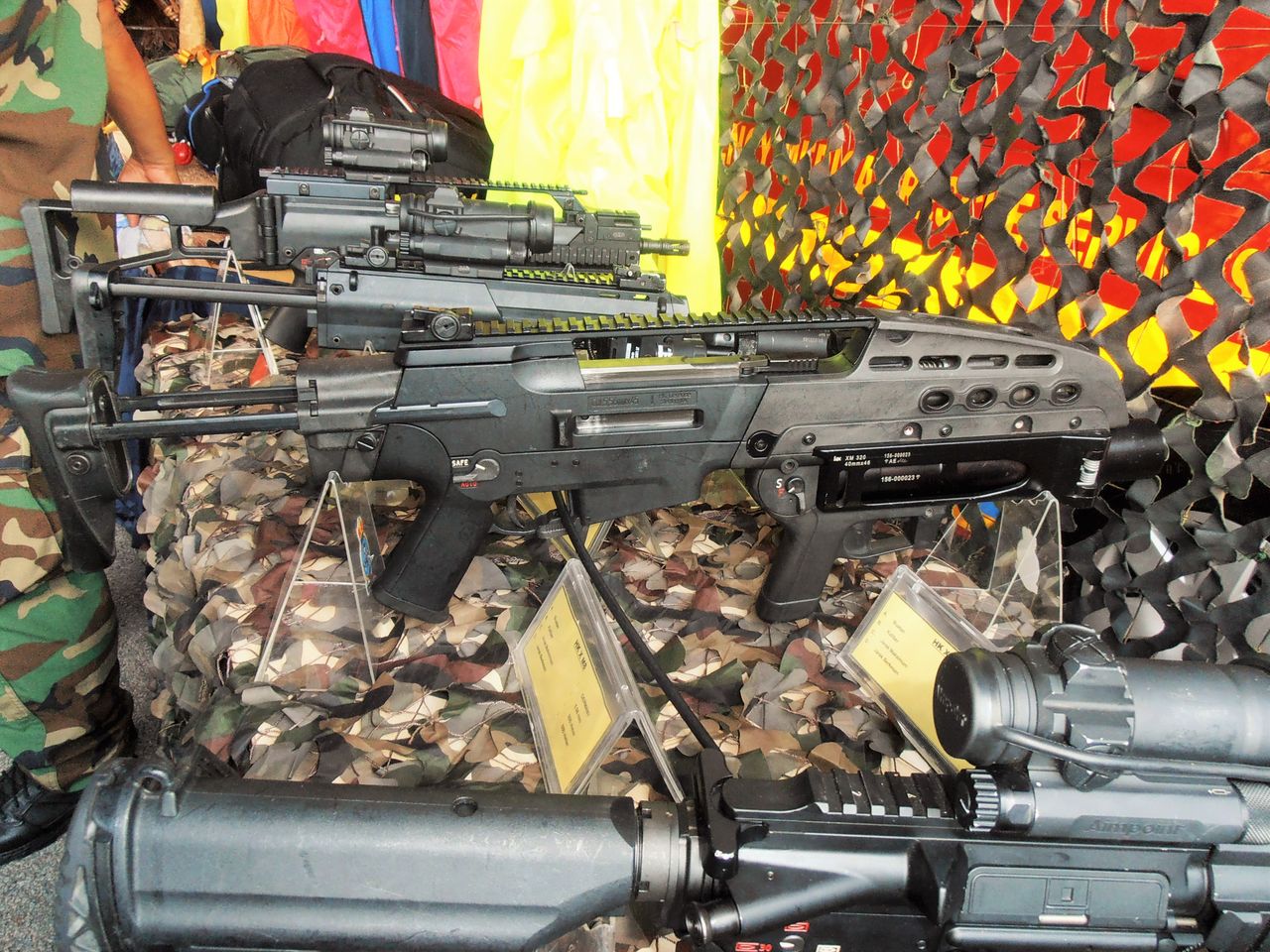
The XM8 began life as the 5.56mm kinetic-energy half of the Army’s larger XM29 Objective Individual Combat Weapon effort. As that ambitious program struggled under the weight of cost, bulk, and complexity, the carbine portion was peeled away and treated as a possible near-term replacement for the M4. Army acquisition material from the period described the XM8 as a modular family, not just a single rifle.
That sounds normal until you look at how it was advanced. A 2006 Defense Department Inspector General report laid out a timeline showing the Army pushed the XM8 through urgent-requirement memoranda, sole-source contracting, and limited competitive avenues. In plain English, the rifle was moving forward before a true open contest had taken shape.
That is why critics later argued the XM8 was effectively trapped by the process that created it. Once pressure mounted for a broader competition, the weapon had to survive a test environment shaped as much by procurement politics as by raw field performance.
Why The XM8 Looked So Attractive At First
On paper, the XM8 had real appeal. Army testing coverage from the era highlighted its lighter weight, modular layout, corrosion resistance, and the promise of easier handling for less experienced soldiers. Heckler & Koch also emphasized a short-stroke gas piston system derived from the G36 family, aiming for reliability under dirt, cold, and sustained use.
The rifle was not just one configuration. It was pitched as a family including a baseline carbine, compact carbine, designated-marksman variant, and automatic-rifle version. That mattered because the Army was increasingly interested in systems that could share training, accessories, and maintenance across multiple roles.
Early soldier trials in Alaska were serious enough to generate optimism. According to Army reporting, evaluators looked at accuracy, dispersion, cold-weather behavior, and human factors. So the XM8 was never merely a paper concept. It was a functioning candidate with genuine institutional momentum.
The Real Problem Was Not The Gun Alone
The central issue was never simply whether the XM8 could shoot well. It was whether the Army could justify buying it without an open, defensible competition. That distinction changed everything.
Once rivals, especially Colt, challenged the procurement path, the discussion widened beyond reliability and ergonomics. It became about Federal Acquisition Regulation compliance, requirement writing, and whether the Army had effectively tailored the process around one favored design. The Inspector General report was especially damaging because it questioned the adequacy of market research and the rationale for limiting competition.
In other words, the XM8 entered a fight it could not win cleanly. If it lost tests, it failed technically. If it won, critics could still say the deck had been stacked. That is the rare military rifle burdened with proving both that it worked and that its very chance to compete was legitimate.
How A Promising Rifle Became A Political Casualty
By the mid-2000s, the Army’s confidence had cooled. The service did keep studying alternatives to the M4, but the XM8’s direct path to adoption weakened as concerns grew over requirements, accessory compatibility, barrel performance under hard use, and the cost of replacing entrenched inventory.
At the same time, the Army was learning a broader lesson. A rifle is never just a rifle in U.S. procurement. It is optics, magazines, training pipelines, manuals, repair parts, and industrial base. Replacing the M4 meant replacing an ecosystem, and the XM8 had to justify that disruption.
That burden proved too heavy. The Army ultimately did not field the XM8 as its next standard rifle, and later modernization efforts shifted into more openly competitive frameworks. The service itself would later describe strong competition as essential in the Next Generation Squad Weapon process, a sharp contrast with the XM8 saga.
Designed To Lose, Or Built Into A No-Win Contest?

Saying the XM8 was literally engineered to lose would be unfair. It was a serious weapon, backed by a major manufacturer, and tested by soldiers under real conditions. But saying it was set up to lose its own military competition gets much closer to the truth.
The reason is simple: the procurement strategy created a backlash that attached itself to the rifle. Once the Army appeared to be favoring a solution before finishing the argument about the requirement, the XM8 inherited that controversy. It became the embodiment of a process problem.
That is what made its competition feel self-defeating. The Army wanted a streamlined replacement path, but that very shortcut triggered the institutional resistance that helped kill the rifle. In effect, the contest around the XM8 was built in a way that guaranteed distrust.
The XM8’s Real Legacy
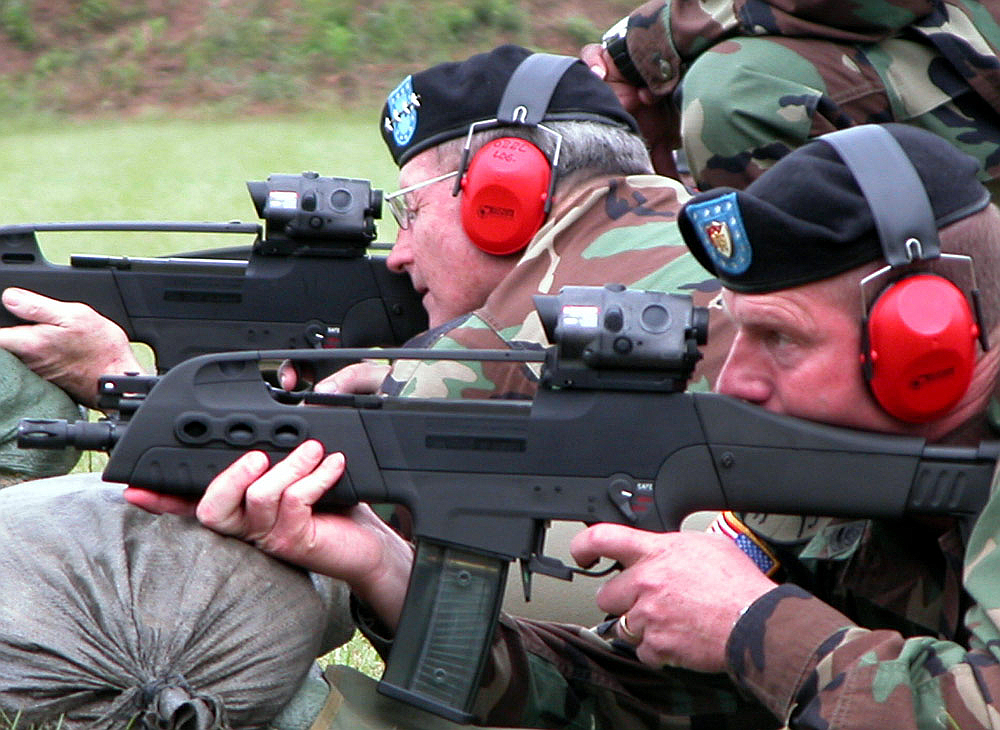
Today, the XM8 matters less as a lost rifle than as a warning label on defense acquisition. It showed that even a capable weapon can be sunk by how it is introduced, justified, and competed. In military procurement, process credibility is part of performance.
It also previewed features that later became familiar: modular families, emphasis on soldier feedback, environmental testing, and interest in alternatives to the direct-impingement M4 pattern. In that sense, the XM8 was not a dead end. It was an early, messy sign of where rifle development was heading.
So the rifle designed to lose its own competition was not really built to fail at the range. It was built into a bureaucratic fight where technical merit alone was never going to be enough.