Some trends fade in a season. This one feels older, deeper, and a lot more human.
Why ancient skills feel new again
Primitive skills are having a very modern comeback. What once looked like a niche interest for survivalists now shows up in family campgrounds, cooking circles, social video feeds, and sold-out outdoor classes. The appeal is not hard to understand: these skills offer a hands-on antidote to a life lived through screens, schedules, and constant notifications.
The broader outdoor boom helps explain the timing. The 2024 Outdoor Participation Trends Report said 175.8 million Americans took part in outdoor recreation, with growth in accessible activities such as hiking and camping. That matters because bushcraft often begins there, with people who first go outside for relaxation and then start asking how to light a fire, identify useful plants, or cook without modern gear.
There is also a cultural mood behind the trend. People want competence. They want hobbies that do more than entertain. In an age of subscriptions and convenience, making flame from a ferro rod or recognizing edible greens in spring feels strangely radical. These are not just techniques. They are proof that you can still do something real with your hands.
The wellness appeal goes beyond nostalgia
A big part of the revival is emotional, not just practical. Fire-making, carving, shelter building, and careful plant gathering demand attention in a way that pushes out mental clutter. You cannot doomscroll and split kindling at the same time. The process slows the body down and gives the mind one clear job.
That effect lines up with what health experts have been saying about time outdoors. Cleveland Clinic and Mayo Clinic both highlighted in 2024 that nature exposure can reduce stress, support mood, and help people feel more restored. The CDC also frames emotional well-being around coping with stress, uncertainty, and change, which helps explain why low-tech outdoor rituals feel so appealing right now.
There is nostalgia in the mix, but nostalgia is not the whole story. Many newcomers are not trying to reenact the past. They are trying to escape the feeling that everyday life has become too abstract. Bushcraft gives them visible results: dry tinder, boiling water, a repaired tarp line, and a meal made from simple ingredients. That kind of feedback is powerful because it replaces passive consumption with direct experience.
Social media turned niche knowledge into mainstream curiosity
The internet did not kill primitive skills. In a strange twist, it helped revive them. Video platforms have made once-obscure knowledge far easier to discover, whether the topic is feather sticks, ember transfer, tree identification, or how to build a weatherproof camp kitchen from a few poles and cordage.
That visibility changed the audience. Traditional survival schools used to attract dedicated hobbyists, hunters, guides, or military-minded students. Now, content creators package the same subjects as calming, cinematic, and approachable. A ten-second clip of sparks catching birch bark can pull in someone who has never slept outdoors but suddenly wants to learn more.
Media aesthetics matter here. Bushcraft content often looks slow, tactile, and quiet, which is exactly the opposite of the speed and noise many people are trying to escape. It also overlaps with adjacent trends like off-grid cooking, cottagecore, backyard gardening, wild food culture, and minimalist travel. According to the Associated Press, foraging has seen an uptick in interest as people reconnect with food, community, and local landscapes. That wider lifestyle framing makes primitive skills feel less extreme and more inviting.
Fire-making is symbolic, but also newly complicated

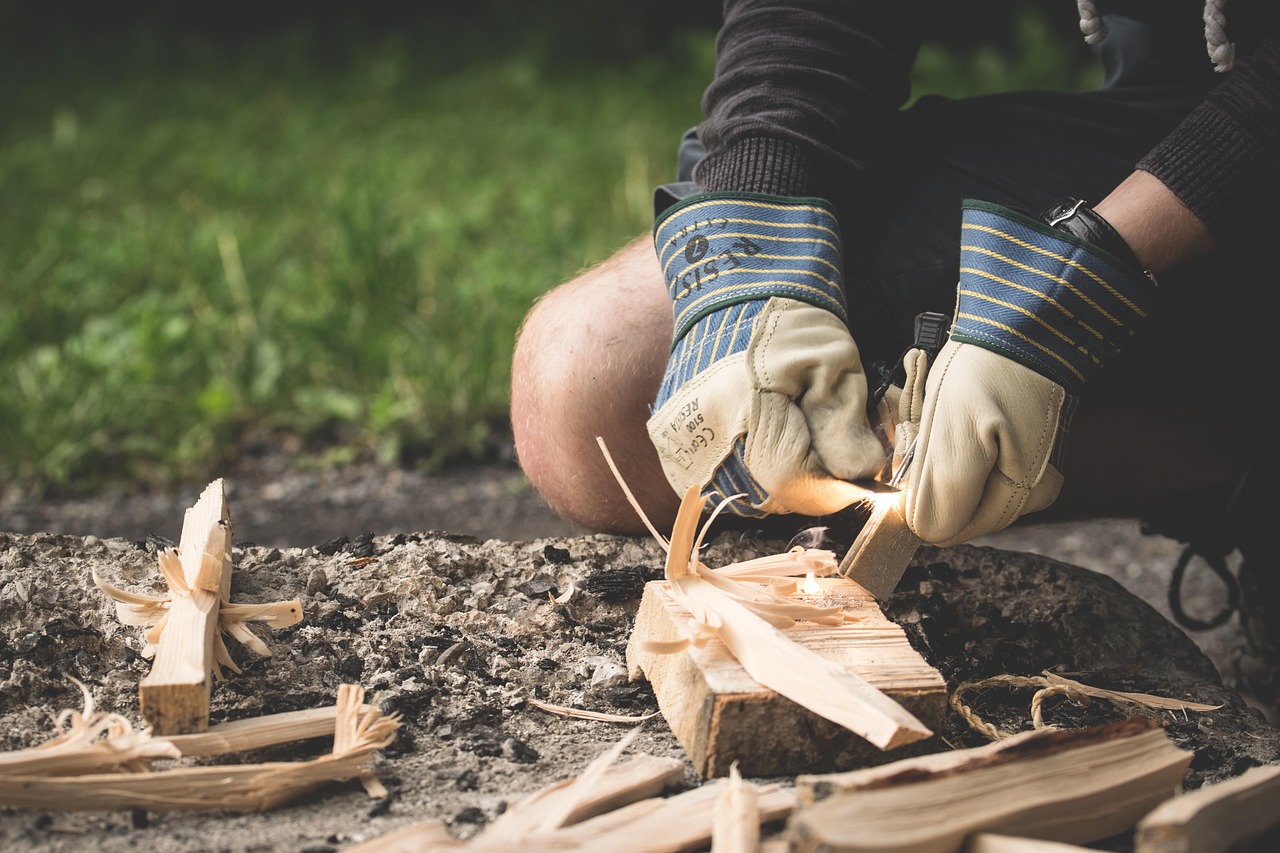
Of all primitive skills, fire-making carries the strongest symbolic power. Few things feel more elemental than creating flame from spark, friction, or ember. It represents self-reliance in its purest form, which is why it dominates bushcraft classes and survival television alike. For beginners, it is often the gateway skill that turns vague curiosity into real practice.
But modern fire-making comes with responsibilities that earlier generations did not frame the same way. Wildfire risk has changed the conversation. The National Park Service stresses wildfire prevention, checking local restrictions, and following campfire rules, and some parks have imposed seasonal campfire bans during dangerous conditions. In other words, learning to make fire now means learning when not to.
That tension is part of why the trend has matured. Serious instructors are not just teaching ignition methods. They teach site selection, fuel awareness, extinguishing practices, and Leave No Trace ethics. The old fantasy was about conquering the wild. The better modern version is about reading conditions, minimizing risk, and understanding that a wood fire is a skillful choice, not an automatic one.
Foraging speaks to food anxiety and local connection
Foraging has surged because it sits at the crossroads of food, ecology, and identity. People are more curious about where flavor comes from, how landscapes feed communities, and what grows beyond the grocery store. Wild garlic, berries, seaweed, nuts, mushrooms, and edible greens all offer a way to experience place through taste, not just scenery.
The appeal is especially strong at a time when many people feel detached from food systems. Gathering something edible yourself, even something simple, creates a different relationship to seasonality. Spring tastes different from late summer. A wet year produces a different abundance than a dry one. You start paying attention in a way supermarket life rarely requires.
Still, this is where enthusiasm can outrun knowledge. The FDA warns that some wild mushrooms contain dangerous toxins, and state food safety agencies stress that proper mushroom identification requires advanced expertise. Consumer advocates have also warned that mushroom identification apps can spread risky misinformation. So the real lesson of modern foraging is not just curiosity. It is humility. Good foragers learn slowly, verify repeatedly, and treat uncertainty as a reason not to eat what they cannot confidently identify.
Bushcraft offers preparedness without full-blown survivalism.
Another reason primitive skills are trending is that they offer a middle ground between everyday recreation and extreme survivalism. Not everyone wants to become an off-grid expert. Plenty of people just want to know they could stay warm, purify water, improvise shelter, or navigate a minor setback during a camping trip or power outage.
That practical layer feels especially relevant in an era shaped by wildfire smoke, severe weather, infrastructure stress, and a general sense that systems are not always as stable as they look. Primitive skills do not solve every emergency, but they reduce helplessness. Even basic competence changes how people think under pressure.
There is also a quiet democratic quality to bushcraft. Many skills require more patience than money. A knife, a tarp, cordage, a metal pot, and time outdoors can teach lessons that expensive gear never will. That helps explain the trend’s reach. It appeals to people who want preparedness without paranoia, simplicity without posturing, and confidence built through repetition rather than branding.
The future of the trend will depend on ethics.
Primitive skills will keep growing, but the healthiest version of the movement will be the one that pairs knowledge with restraint. More people outdoors can be wonderful for public health and conservation, yet it also means more pressure on trails, campsites, plants, and wildlife. The same curiosity that gets people into bushcraft can damage landscapes if it is not guided well.
That is why ethics matter as much as technique. The National Park Service and other public land agencies continue to emphasize Leave No Trace principles, including minimizing campfire impacts and protecting natural resources. Foraging rules also vary widely by park, forest, and region, so responsible practice starts with knowing what is legal before deciding what is possible.
In the end, the return of primitive skills is not really about going backward. It is about recovering forms of attention that modern life has made easy to ignore. Fire-making teaches patience. Foraging teaches observation. Bushcraft teaches that competence is built, not downloaded. That message lands now because many people are not chasing a fantasy of the past. They are looking for a steadier way to live in the present.