
Few gear debates stay this lively for this long. But in competitive shooting, red dots and iron sights still split opinion in ways that say a lot about skill, tradition, and performance.
Why this argument never really goes away
At first glance, the debate seems settled. Red dots are faster for many shooters, easier on aging eyes, and increasingly common in action pistol sports. Yet the argument keeps returning because competitive shooting is not one sport with one standard. USPSA, IPSC, IDPA, Steel Challenge, and multigun all reward different strengths, and equipment rules shape what “better” even means.
For one shooter, a sighting system is about raw stage time. For another, it is about consistency under match pressure. A Carry Optics competitor may swear that target focus and a clean dot presentation changed everything, while a Production or SSP shooter may argue that irons still punish sloppy fundamentals less kindly and therefore build better shooters. Both are speaking from real experience, not fantasy.
The deeper reason this debate survives is that gear choices become identity markers. Competitive shooters invest thousands of repetitions into a platform, then naturally defend what they know works. When someone says red dots are the future, iron sight shooters hear that years of discipline no longer count. When someone calls optics a crutch, dot shooters hear an outdated loyalty to harder, not smarter.
What red dots changed in the competition range
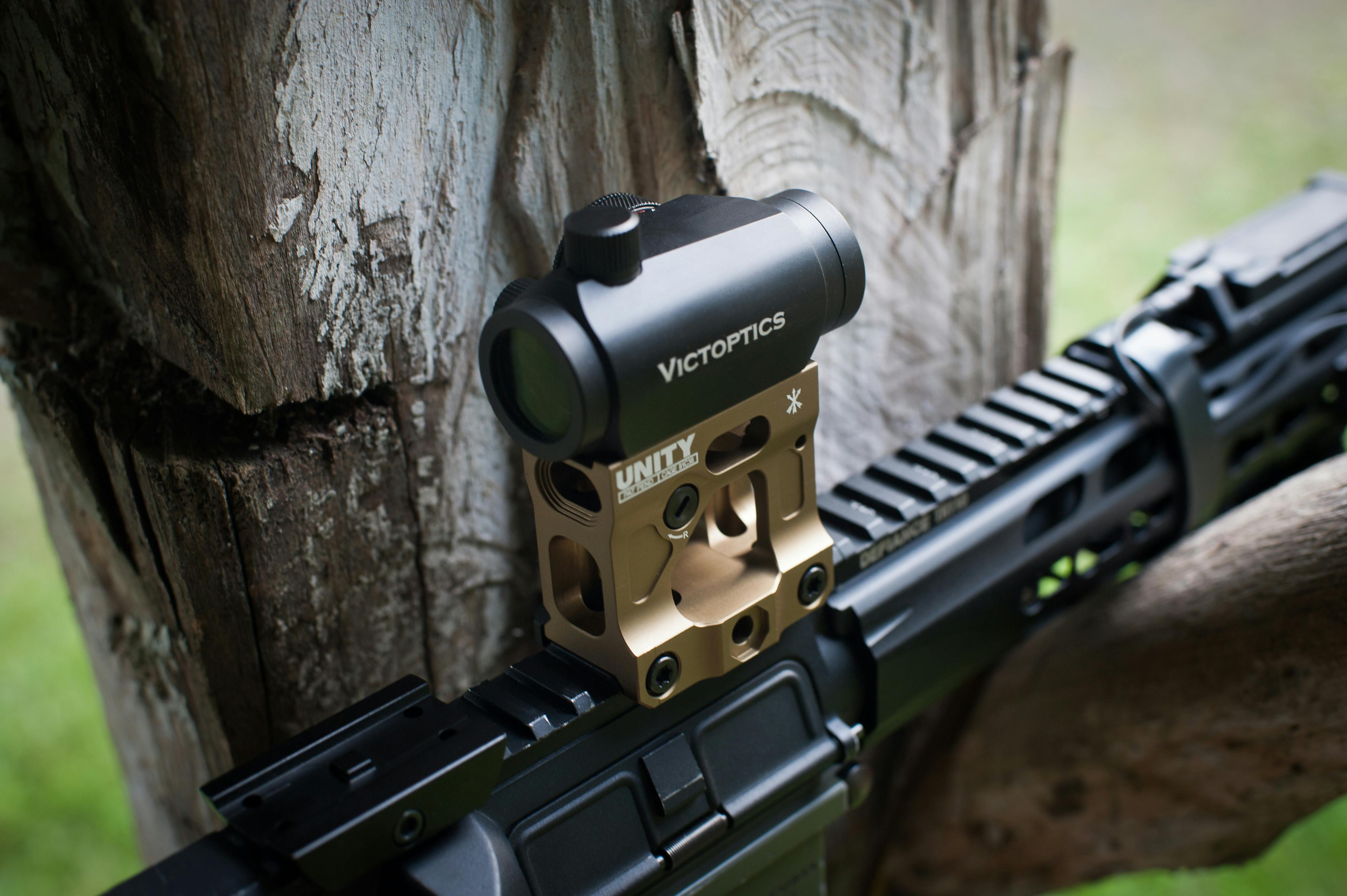
Miniature red dots did not just add a glowing aiming point. They changed visual processing. Instead of shifting focus between rear sight, front sight, and target, shooters can remain target-focused and superimpose the dot where the shot should go. That sounds simple, but under a timer, it can trim hesitation from entries, exits, and partial-target engagements in ways that matter.
In practical terms, red dots often help most on difficult shots. Tight partials at 20 yards, mini poppers in bad light, and swingers that require visual patience all become more manageable when the aiming reference is crisp and single-plane. Many top shooters have said the biggest gain is not pure speed on easy targets but confidence on hard ones. Confidence, in turn, keeps stage plans aggressive.
The rise of Carry Optics illustrates that shift. What started as a niche division became one of the busiest categories in many matches because the performance advantage was obvious to ordinary club shooters, not just elite names. Match directors and instructors noticed it too. Newer shooters who struggled to see a clean front sight often shot better scores sooner with an optic, especially past 15 yards and on low-contrast targets.
Why iron sights still have serious defenders

If red dots offer so much, why are iron sights still respected, and sometimes preferred, by serious competitors? One reason is reliability, both mechanical and mental. A steel front sight and rear notch do not need batteries, electronics, or screws that stay perfectly torqued through repeated recoil. Modern optics are much tougher than early versions, but many shooters have at least one story about a dead dot, cracked lens, or mount issue ruining a day.
Another reason is presentation discipline. Irons tend to give instant feedback on poor draw mechanics because the sights either appear aligned or they do not. With a dot, many beginners spend time “searching” the window after a sloppy presentation. Experienced dot users solve this with training, but iron sight shooters often argue that the gun teaches cleaner indexing from the start and rewards consistency without any electronic shortcut.
There is also the issue of division fit and match culture. In Production, Single Stack, revolver, and certain defensive-style formats, irons are still central to the game. Plenty of excellent shooters enjoy those divisions specifically because they value traditional marksmanship constraints. To them, the appeal is not resisting change. It is preserving a version of the sport where sight alignment, recoil control, and stage execution meet without digital help.
Speed versus precision is not the whole story.y
People often frame the debate too simply. Red dots are supposed to be faster, irons more “pure,” and the rest is just preference. Real match performance is messier. On close hoser stages with open targets, skilled iron sight shooters can be every bit as fast as optic shooters, especially if transitions and movement matter more than surgical aiming. The timer often exposes how much of the speed comes from footwork and decision-making, not the sight itself.
The same is true for precision. A dot gives a cleaner aiming reference, but it also reveals wobble that irons can visually mask. Some shooters press more confidently through movement with irons because the sight picture feels less distracting. Others shoot tighter groups with a dot because they can accept acceptable sight movement with more honesty. What improves performance depends on whether the shooter interprets the visual information usefully or freezes under it.
Then there is stage design. A classifier heavy on 25-yard partials may flatter optics. A short field course packed with wide-open arrays may compress the advantage. Weather matters too. Bright sun, rain on the lens, dust, and hard shadows can change how comfortable an optic feels. None of this means red dots are hype. It means equipment lives inside a broader system, and match results rarely come from one variable alone.
Training scars, learning curves, and the myth of easy mode

One of the strangest parts of this debate is the claim that red dots are automatically easier. They are easier in some ways, especially once the shooter learns a repeatable draw and can track the dot through recoil. But the learning curve can be brutal at first. New users often lose the dot on presentation, over-confirm their sight picture, or chase movement instead of breaking acceptable shots.
That early frustration is why some respected instructors still warn students not to confuse higher potential with immediate success. A shooter who has years on irons may initially perform worse with an optic, not better. The brain has to learn a different visual discipline, and the hands must present the pistol consistently enough that the dot appears without hunting. Competitive shooters who survive that awkward phase often become evangelists because the payoff is real.
Iron sight shooters have their own training scars. Many spent years mastering front-sight focus, recoil timing, and acceptance of blurry targets. That investment creates strong habits, but also inertia. Switching systems can feel like starting over, and few active competitors enjoy sacrificing match performance for months just to test a theory. So the argument persists partly because both camps are defending not only equipment, but the value of accumulated practice.
Money, maintenance, and match rules shape the choice.

The red dot versus iron sights argument is not purely technical because budgets matter. A reliable competition-ready optic, mounting system, backup irons, extra batteries, and slide work can make the switch expensive. For some shooters, that cost is justified by better performance and easier vision. For others, especially those shooting several guns or divisions, it is hard to justify replacing a setup that already works.
Maintenance also changes the ownership experience. Dot shooters think about lens cleaning, battery schedules, zero confirmation, screw torque, and whether the emitter stays clear in rain or lint. Iron sight shooters mostly avoid that checklist. In a sport where match mornings are already full of magazine tuning, chrono concerns, ammo checks, and gear prep, simpler has its own appeal. Convenience does not win arguments online, but it absolutely affects real-world preferences.
Then there are rules. A shooter may genuinely prefer optics,s but compete in a division where irons keep the playing field level or where the division identity matters. Another may choose Carry Optics because local match turnout is strongest there, creating better competition and more meaningful rankings. In other words, the “best” sighting system is often the one that fits the ecosystem around the shooter, not the one that wins an abstract internet debate.
What the smartest competitors usually conclude
The best competitive shooters tend to become less ideological over time. They stop asking which system is universally superior and start asking which system is superior for a given shooter, match format, and goal. If the goal is maximum practical pistol performance across a wide range of conditions, the case for red dots is strong and getting stronger. That is why more champions, instructors, and clubs now treat optics as normal, not experimental.
At the same time, smart competitors do not dismiss irons as obsolete. Iron sights still develop visual patience, demand clean gun presentation, and remain deeply relevant in divisions where they define the challenge. They are also excellent teachers of accountability. A shooter who can call shots well with irons often brings that discipline into optics and becomes even harder to beat. The systems are not enemies so much as different emphases.
That is why the argument is still not done. It survives because both sides can point to real advantages, real limits, and real match results. Red dots are not a cheat code, and iron sights are not museum pieces. In competitive shooting, the answer is annoyingly unsatisfying and completely true: the better sight is the one that best matches the shooter, the sport, and the work they are willing to put in.