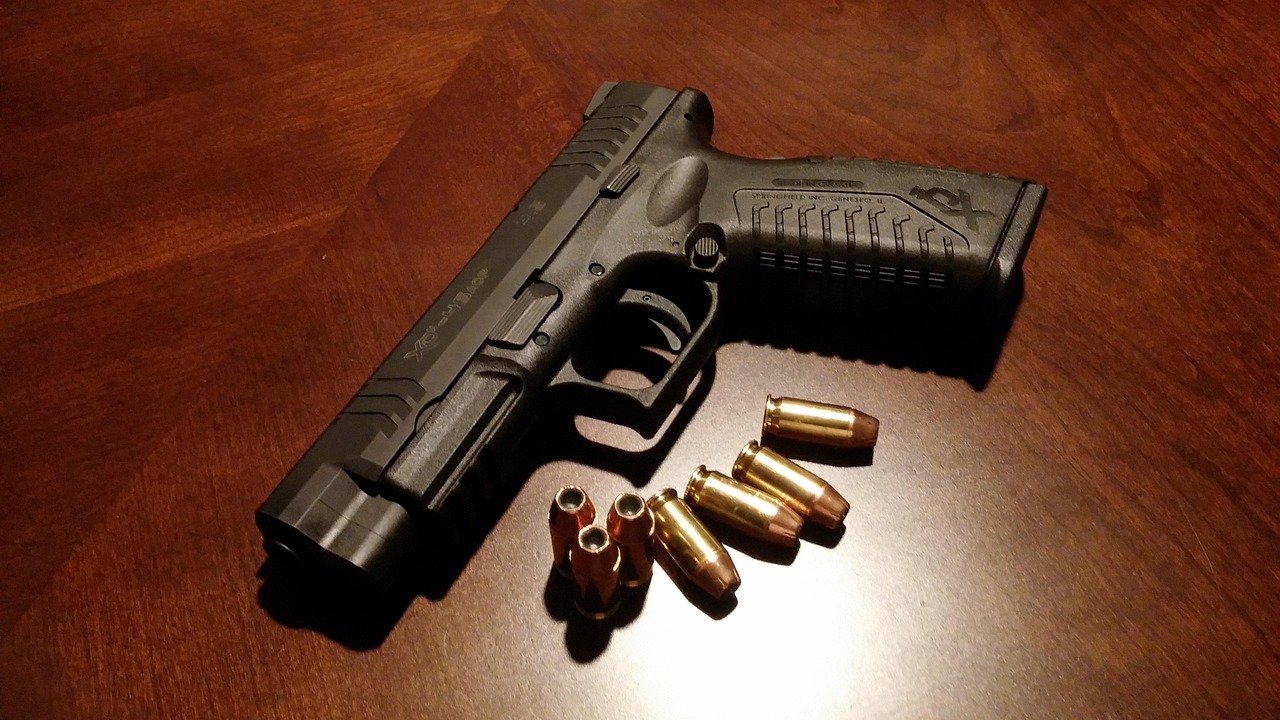
Not every industry-shaking firearm was born to be revolutionary. Some were commercial gambles, military stopgaps, or engineering experiments that ended up changing how guns were designed, sold, and used. These nine firearms left outsized marks on the business and culture of guns, often in ways their creators never fully intended.
Colt Paterson
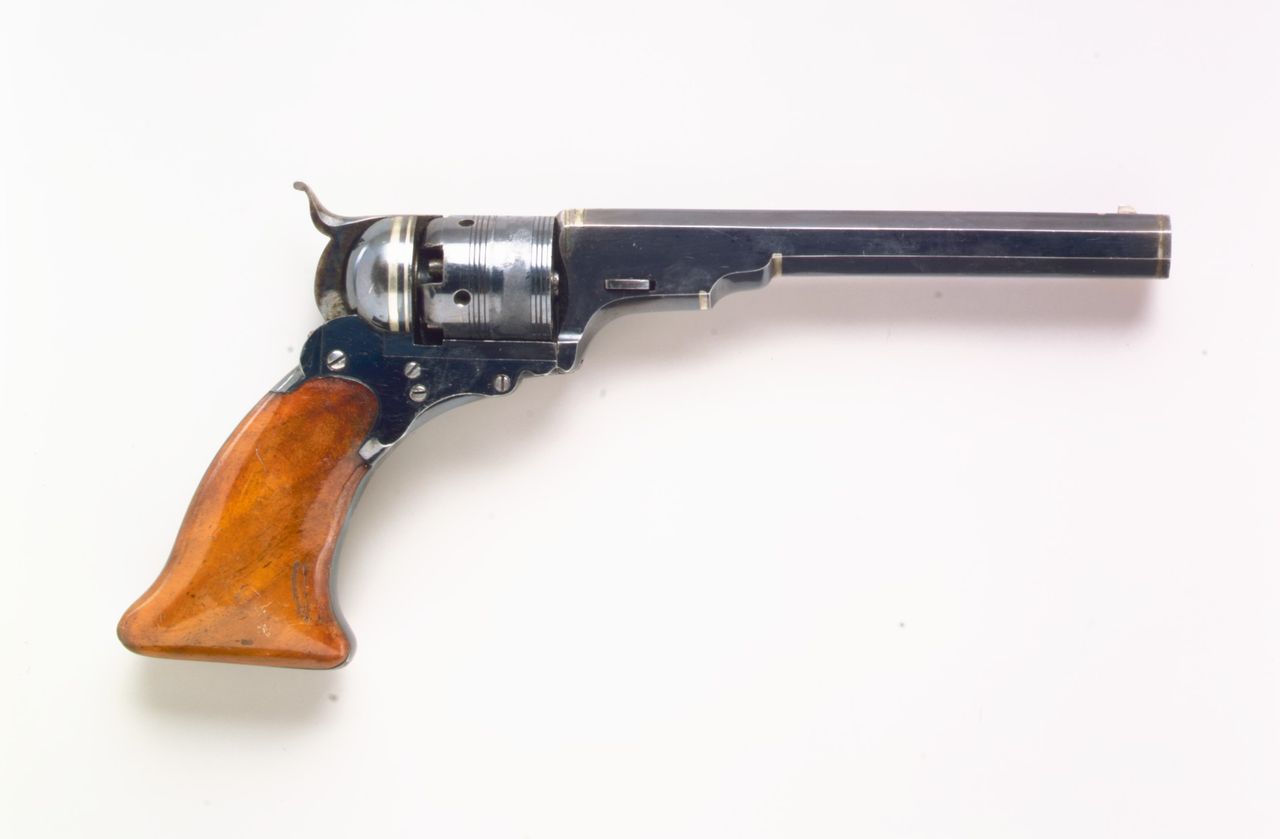
Samuel Colt’s early revolver was not an instant triumph. The Colt Paterson was fragile, expensive, and awkward by later standards, and the original company behind it struggled badly. Yet the core idea, a repeating handgun with multiple ready shots, was too powerful to disappear.
Its real legacy was not commercial dominance in its first run, but proof that a practical revolver could reshape expectations. Once users saw the advantage of repeat fire in a sidearm, the market never looked back. The gun industry’s future suddenly included mass-produced repeaters, interchangeable parts, and a growing appetite for personal firepower.
Winchester Model 1873
The Winchester Model 1873 became famous as the rifle of the American West, but its broader effect was industrial as much as cultural. It helped cement the lever-action rifle as a symbol of reliability and fast follow-up shots, making repeating rifles feel less like a novelty and more like the standard.
Just as importantly, it showed manufacturers the selling power of mythology. A firearm could be marketed not only as a tool, but as an identity. That lesson changed the gun business for good, turning branding, lifestyle appeal, and frontier storytelling into powerful forces alongside pure performance.
Mauser C96
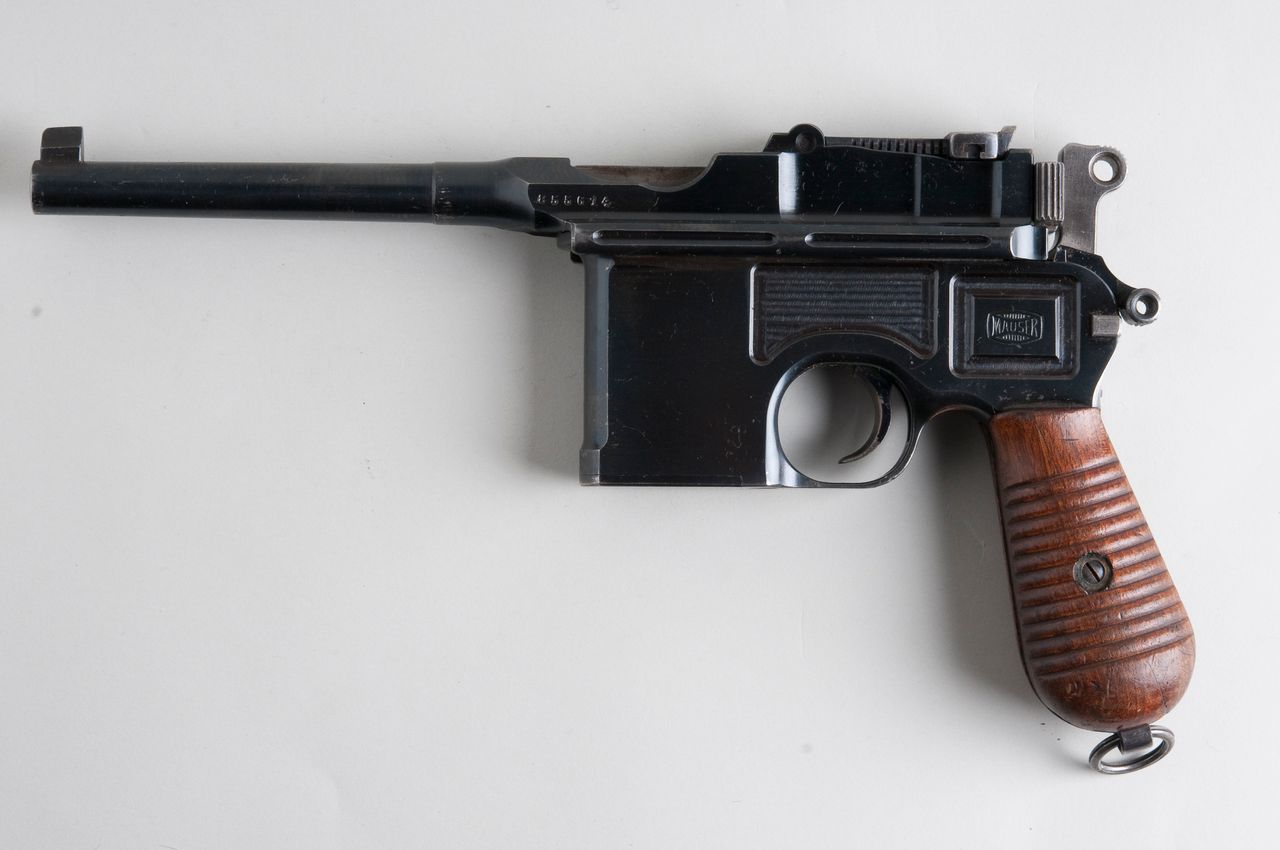
The Mauser C96 looked unlike almost anything around it, with its box magazine ahead of the trigger and unmistakable profile. It was never the universal service pistol its makers may have imagined, but it became a global traveler, turning up in wars, revolutions, and export markets all over the world.
That wide reach mattered. The C96 helped normalize the idea that handguns could be serious military and international commercial products, not just local curiosities. It also pushed designers to think bigger about magazine-fed pistols, holster stocks, and how a distinctive silhouette could become a brand in its own right.
Luger P08
The Luger P08 earned its place in history with style as much as mechanics. Its grip angle, toggle action, and sleek lines gave it an aura few pistols could match. While it was not the easiest or cheapest design to produce, it helped define what a modern semi-automatic handgun looked and felt like.
Its influence reached beyond military adoption. Collectors loved it, rivals studied it, and consumers began associating self-loading pistols with sophistication and elite performance. In that sense, the Luger accidentally helped move the industry toward handguns that sold partly on ergonomics, image, and prestige, not just rugged utility.
M1 Garand
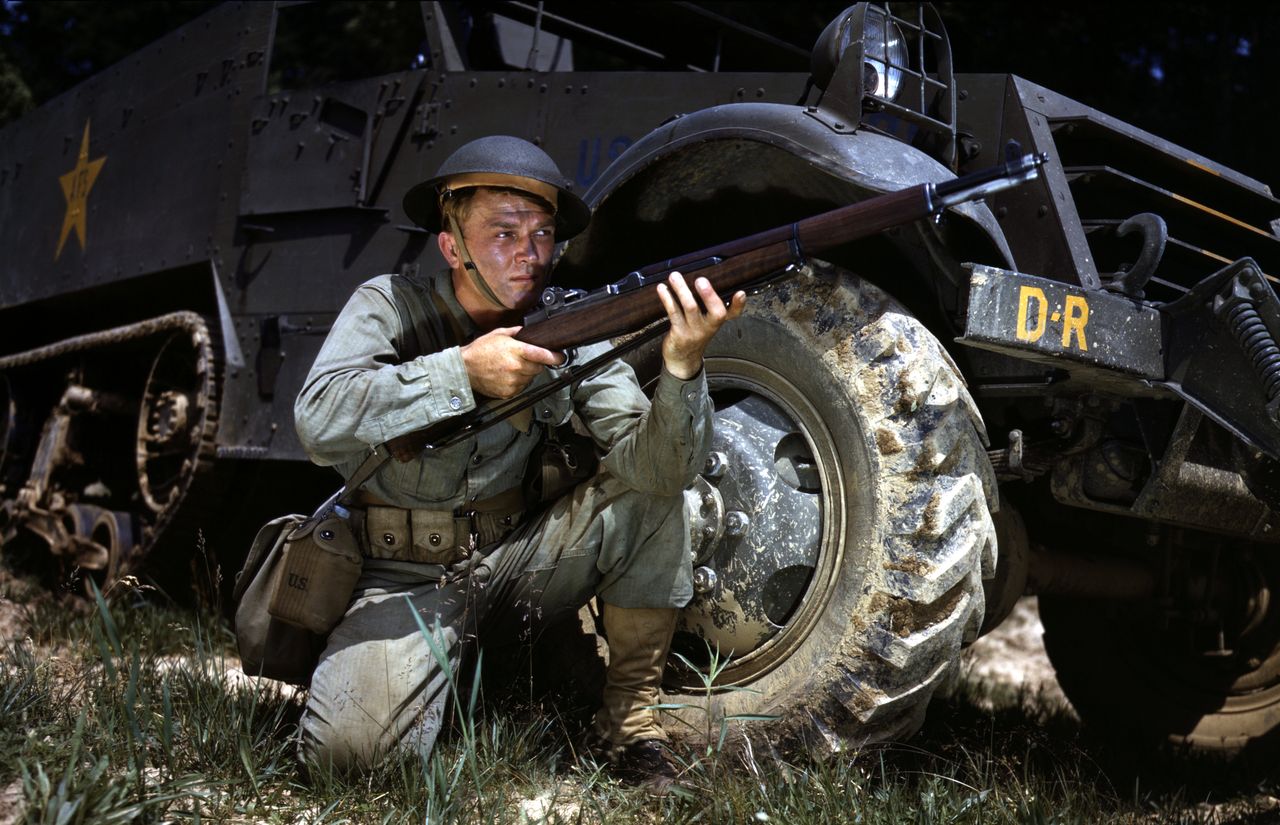
The M1 Garand was designed as a service rifle, not as a marketing campaign for semi-automatic fire. But once American troops carried a reliable self-loading rifle at scale, the message was impossible to ignore. Bolt actions suddenly looked like yesterday’s answer to tomorrow’s battlefield.
Its effect spread far beyond the war. Military planners, civilian shooters, and gunmakers all absorbed the same lesson: fast, repeatable fire from a full-power rifle was not only possible, but desirable. The Garand nudged the industry toward new expectations in rifle design, production capacity, and what counted as modern in a standard infantry arm.
AK-47
The AK-47 became one of the most recognizable firearms on earth, but its deepest impact was industrial simplicity. It proved that a rifle could be rugged, easy to manufacture in huge numbers, and tolerant of rough conditions without requiring delicate craftsmanship.
That formula changed global expectations. Governments wanted cheap durability, insurgencies wanted availability, and manufacturers saw the power of a design built for scale. The AK pattern also helped create a vast ecosystem of licensed copies, unlicensed clones, and local variants, showing that a firearm could become less a single product and more an entire industrial language.
Remington 700
The Remington 700 did not arrive as a grand revolution. It was a practical bolt-action rifle aimed at broad appeal, with manufacturing choices that made it efficient to build and easy to sell. Then accuracy, aftermarket support, and law enforcement adoption turned it into something much bigger.
Its accidental contribution was the template it created. The 700 showed the industry how a rifle could become a platform, not just a product. Stocks, triggers, optics mounts, and custom parts followed, and modern rifle culture leaned hard into personalization. In many ways, today’s booming precision rifle market still carries its fingerprints.
Glock 17
When the Glock 17 appeared, many shooters viewed its polymer frame with suspicion. A pistol made partly from modern synthetic materials seemed like a strange break from steel and tradition. Instead, it became a landmark, not because it tried to be flashy, but because it worked, carried well, and simplified production.
Its success changed both design and business strategy. Polymer handguns went from controversial to normal, and competitors rushed to answer with their own striker-fired models. The Glock also showed that agencies and civilians would embrace a firearm built around durability, consistency, and straightforward maintenance over old ideas about elegance.
AR-15

The AR-15 started as a lightweight, modern sporting rifle concept and evolved into something far larger than its original role. Its modular construction, familiar controls, and easy adaptability made it unusually flexible. Over time, that flexibility transformed it from a single rifle design into a vast product universe.
The real industry shift came from the platform effect. Barrels, uppers, lowers, rails, triggers, optics, and furniture turned the AR-15 into a customization machine. Manufacturers, large and small, could enter the market by making parts rather than complete rifles. Few firearms accidentally created such a sprawling ecosystem of accessories, brands, and consumer loyalty.