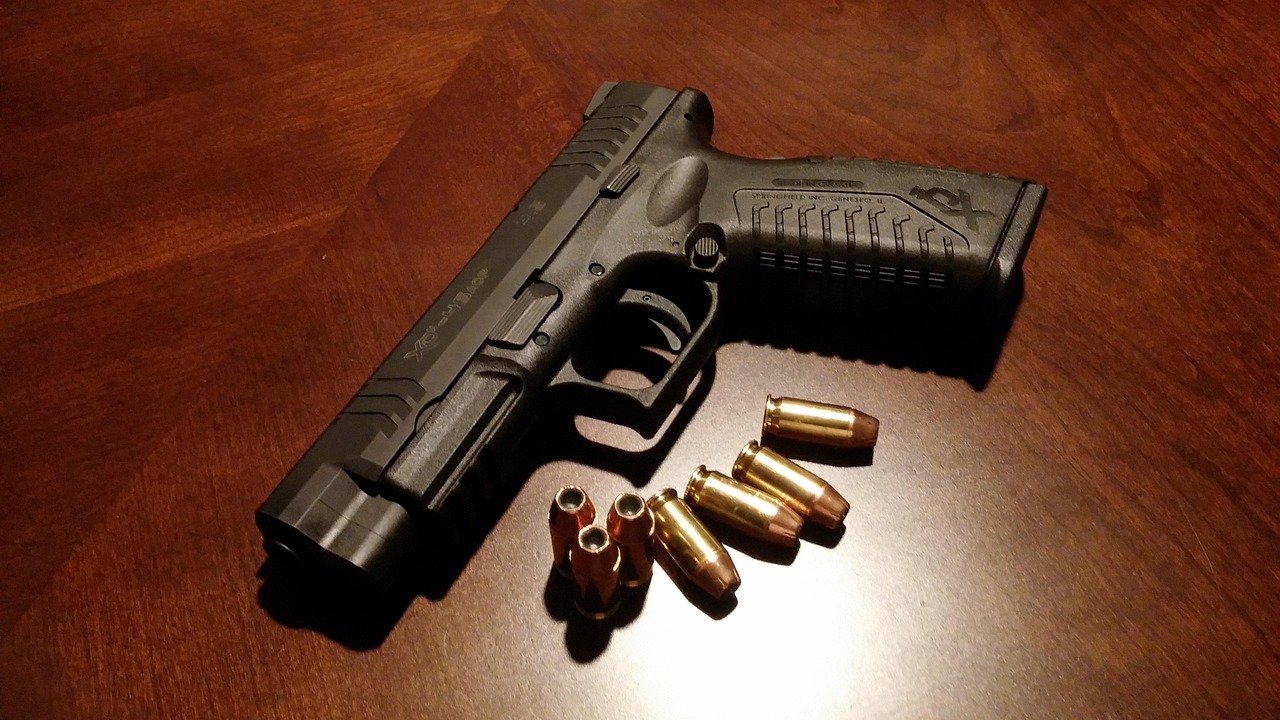
This fight has been building for years. Now, one court ruling has pushed the suppressor debate into a very different phase.
What Happened In The Texas Case

Second Amendment advocates scored a major legal win when a federal court order in Texas took effect after the Justice Department chose not to file an immediate appeal before the judge’s seven-day deadline. According to the Associated Press, that meant the ruling began operating on Thursday, giving gun rights groups a concrete victory rather than just a symbolic one.
U.S. District Judge James Wesley Hendrix ruled on August 5, 2026, that key federal restrictions covering suppressors, short-barreled rifles, short-barreled shotguns, and some other firearms could no longer stand under Congress’ taxing power. His reasoning turned on a major policy change made by Republicans and President Donald Trump, who eliminated the long-standing $200 tax on those items last year, with the change taking effect January 1, 2026.
That tax had been central to how the National Firearms Act worked since 1934. Hendrix wrote that once the tax was gone, the legal basis for those challenged provisions collapsed with it. In practical terms, the ruling strips away federal registration requirements for the plaintiffs and removes an extra layer of federal review that had long applied to these NFA-regulated items.
This is why gun rights groups viewed Thursday not as a routine procedural step, but as a significant rollback of one of the oldest federal gun control frameworks in the country.
Why The National Firearms Act Matters So Much

The National Firearms Act is not just another gun law. It has been one of the most important federal firearms statutes for more than 90 years, originally enacted in 1934 during an era shaped by concerns over gang violence and weapons associated with the Prohibition years, according to ATF and AP reporting.
For decades, the law imposed a $200 tax on the making or transfer of certain firearms and accessories, while also requiring registration with the federal government. ATF still describes the original act as a tax-and-registration system aimed at tightly controlling weapons considered especially dangerous, including silencers, short-barreled rifles, short-barreled shotguns, machine guns, destructive devices, and certain concealable firearms.
The Hendrix ruling does not wipe out the entire NFA. Machine gun restrictions remain intact, which is a crucial distinction that sometimes gets lost in fast-moving headlines. What it does do is target the legal justification for suppressor and short-barreled firearm provisions that were tied to the tax Congress eliminated.
That narrow-but-important line matters. Gun rights advocates see it as a blueprint for attacking more NFA provisions in other courts, while gun control groups see it as a potentially destabilizing crack in a federal system that has been in place for generations.
What Changes For Buyers And Dealers Right Now
For the parties covered by the case, the immediate effect is substantial. The AP reported that the ruling allows purchases of suppressors and certain short-barreled firearms without federal registration under the challenged NFA provisions, while also removing the extra review process that had functioned as a heightened layer beyond the standard background check system.
That does not mean every gun law suddenly disappears. Federal background check requirements still apply to ordinary retail firearm transfers where they otherwise would. State laws also remain important, and some states continue to ban or tightly restrict suppressors regardless of what happens in federal court.
The order is also not a nationwide injunction. That point is critical. The benefit applies to the parties who brought the lawsuit, including some dealers outside northern Texas, but it does not automatically erase federal enforcement across the entire country for everyone.
Even so, the practical significance is real. Gun Owners of America said two members had already acquired suppressors at a Texas retailer without registration once the order took effect. That kind of immediate, real-world example is exactly why both sides are treating this ruling as more than an academic legal dispute.
Why Gun Rights Groups Are Celebrating
From the gun rights perspective, this decision is the payoff from a long-running legal and political campaign. Groups challenging suppressor rules have argued for years that the NFA’s registration and tax regime was both constitutionally suspect and badly outdated, especially for suppressors that are commonly marketed as hearing-protection tools as much as firearm accessories.
The scale of suppressor ownership helps explain their confidence. The AP, citing ATF data, reported that more than 6.4 million suppressors were registered in the United States as of June 2026. That number is politically and legally useful for advocates because it supports their broader claim that suppressors are in widespread civilian use rather than rare fringe equipment.
There is also a strategic legal angle here. If courts accept that Congress cannot keep NFA restrictions in place after removing the underlying tax, then challengers may press that argument elsewhere, hoping to create conflicting rulings or build momentum toward appellate review and eventually the Supreme Court.
In that sense, Thursday’s development was a win on two levels. It delivered immediate relief in one case, and it gave the broader Second Amendment movement a fresh test case with facts tailor-made for a larger constitutional fight.
Why Opponents Say The Fight Is Far From Over

Gun control organizations reacted with alarm, and their argument is straightforward. Groups such as Giffords say the NFA process did more than collect a tax. It also created a more intensive screening system, including registration and heightened scrutiny of weapons and accessories that have long been treated differently under federal law, according to AP reporting.
Critics say removing those requirements will make suppressors and short-barreled firearms easier to obtain, which they view as a direct public-safety risk. Their position is that the danger identified in 1934 has not disappeared simply because Congress changed the tax structure in 2025. In their view, the government’s decision not to immediately appeal allowed a major safety safeguard to lapse.
Still, the legal story is not over. The Justice Department can continue litigating, and an appeal could still be filed even though Hendrix’s order is already in effect. Similar challenges are also moving through other courts, which means this issue is likely headed toward broader appellate battles.
So yes, this was a real win for suppressor-rights advocates. But it also looks like the opening chapter of a much bigger national showdown over how far federal gun regulation can go after one of its oldest foundations has been pulled away.