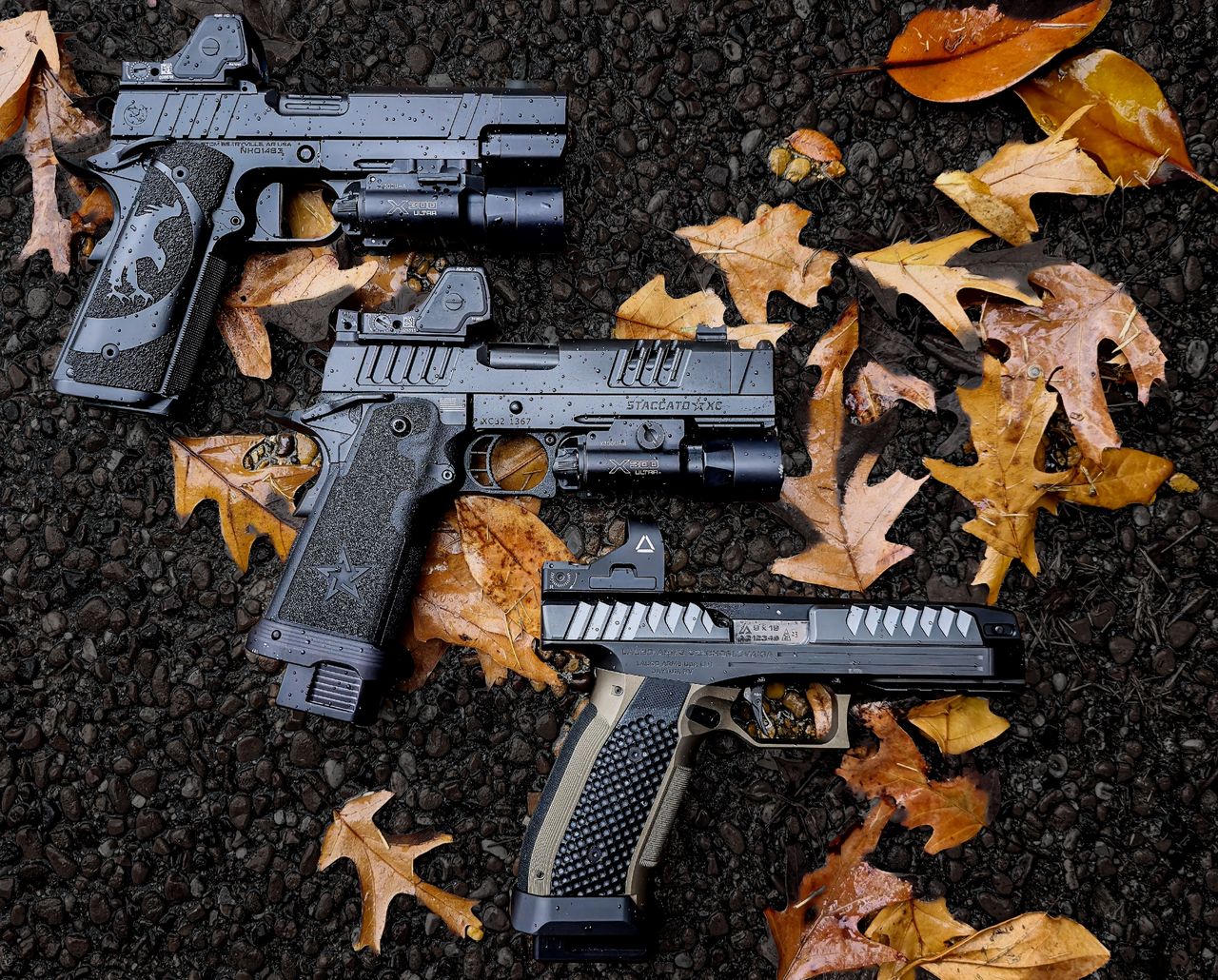
Some guns become popular. A few become trusted. The Mossberg 590A1 became something closer to institutional confidence inside the Marine Corps.
The shotgun Marines kept reaching for
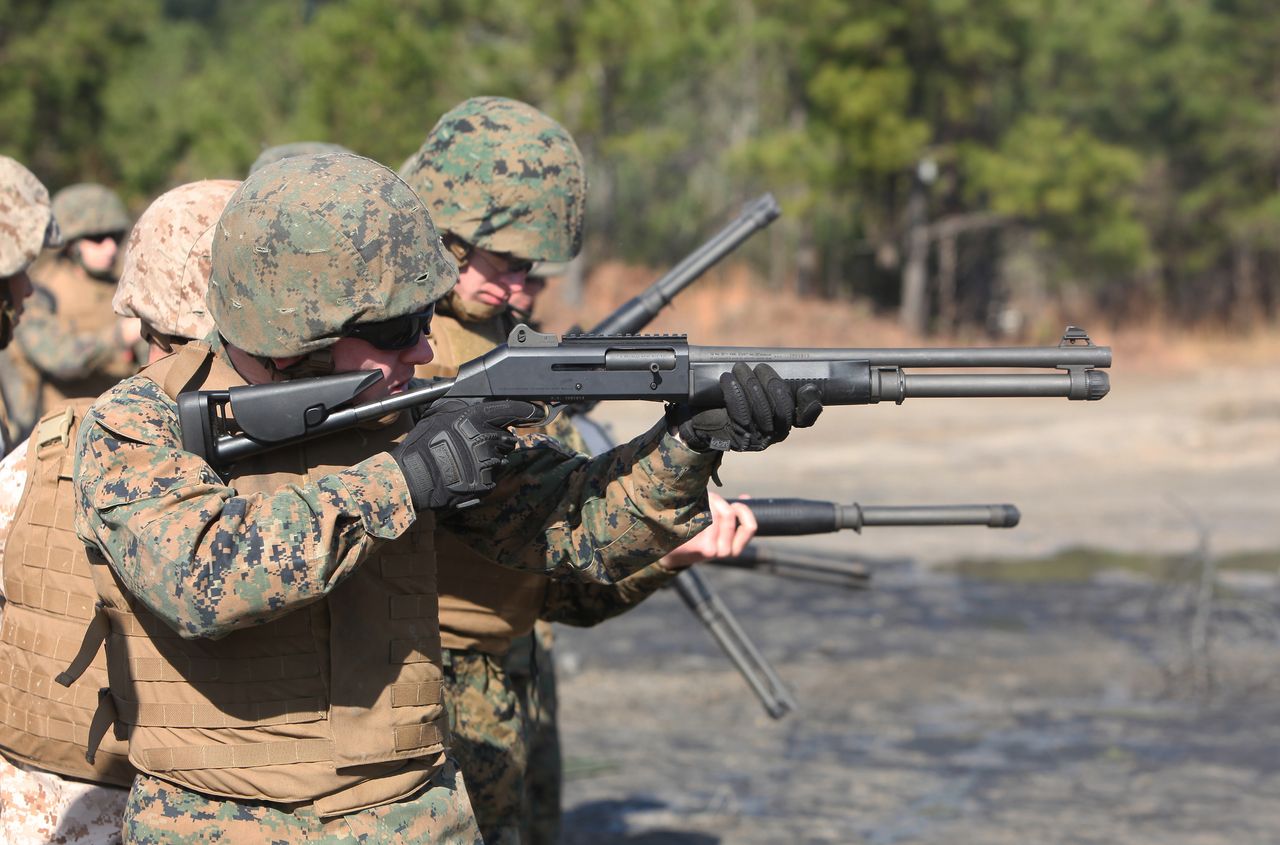
When people think of Marine Corps shotguns, the semi-automatic Benelli M1014 usually gets the spotlight. It deserves that attention, but it is not the whole story. For years, the pump gun that kept showing up in Marine use, especially in roles where brute reliability mattered most, was the Mossberg 590A1.
Marine Corps Systems Command has described newer breaching gear as something designed to augment the M500A2 pump-action shotguns already used by reconnaissance, security forces, military police, explosive ordnance disposal, and special operations units. That matters because it shows the pump shotgun was not a niche museum piece. It was still a working tool in multiple Marine communities long after flashier options arrived.
The key point is that Marines did not choose the pump gun because it was glamorous. They chose it because it worked in ugly conditions, with simple manual control, and with very little drama. In military procurement, that usually beats cleverness.
Why a pump gun still makes sense

A pump shotgun solves a very practical problem. It cycles nearly anything a unit wants to feed it, from buckshot to slugs to specialized breaching rounds, without asking the gas system to adapt or the user to wonder whether a lighter load will run. In the real world, that flexibility is gold.
That helps explain why the Marine Corps continued to value pump guns even after the Benelli M1014 entered service around 1999 as the Joint Service Combat Shotgun. The M1014 gave Marines a powerful semiautomatic option, but pump guns still held advantages in specialized jobs where ammunition variety and total user control mattered just as much as speed.
Breaching is the clearest example.Marines’s training for methods of entry has long used shotguns for defeating locks and hinges, and Marine training publications reference both Remington and Mossberg shotgun operator manuals in that world. When the mission is to blow through a door safely and predictably, simple can be better than sophisticated.
What made the 590A1 different

The 590A1 was not just a standard sporting shotgun painted green. It was the heavier-duty answer to military demands. Mossberg says its 500, 590, and 590A1 military pump guns are the only pump-action shotguns ever to pass all U.S. Military Mil-Spec 3443 requirements, including parts interchangeability in the field and a 3,000-round endurance test with buckshot loads.
That military-spec pedigree is a big part of the 590A1 story. According to Mossberg’s own account of the platform’s evolution, the earlier Model 500 did not fully satisfy the government testing standard, which pushed the company toward a tougher configuration. The result was the 590A1, with the kind of durability features Marines tend to appreciate only after equipment gets slammed into trucks, bulkheads, and door frames.
The hardware reflects that purpose. The 590A1 family is known for features like a heavy-walled barrel, metal trigger guard, metal safety, dual extractors, twin action bars, and a steel-to-steel lockup on an aluminum receiver. None of that sounds romantic, but every bit of it speaks the language of service use.
Built for abuse, not admiration
The reason Marines trusted the 590A1 comes down to how military weapons live. They get dragged through sand, banged against hard surfaces, neglected during long movements, and handed from one user to the next. A fighting shotgun in that environment has to be more than accurate. It has to be stubborn.
The 590A1’s reputation was built on exactly that sort of stubbornness. Mossberg describes it as the company’s most durable pump action, and the basic design has served not only Marines but all five U.S. military branches. Even allowing for some marketing shine, that claim aligns with the platform’s unusually long institutional life.
This is also where the shotgun’s layout mattered. The ambidextrous tang safety is easy to understand and fast to manipulate. The action is straightforward to run under stress. If something goes wrong, the operator is usually diagnosing a very simple machine. In close quarters or on breaching work, that kind of mechanical honesty is a genuine combat advantage.
The Marine Corps rfilled its rolebest
The 590A1 was never meant to replace the rifle as the Corps’ universal answer. Its role was always more specialized than that. But within those specialties, it was extremely good at what Marines needed done.
For security forces, military police, and special reaction teams, the pump shotgun offered immediate close-range power and the ability to use mission-specific ammunition. For breachers, it provided controlled manual cycling and reliable function with specialized door-busting rounds. For reconnaissance and expeditionary users, it offered ruggedness without much mechanical complexity.
Marine reporting on breaching and entry training helps show how these guns fit real unit needs. Some Marines trained with the M1014, while Marine Corps Systems Command noted that newer breaching systems were meant to supplement pump-action M500A2 shotguns already in service. That tells us the Corps was not thinking in either-or terms. The pump gun stayed because it still solved problems better than anything else in its lane.
Why “over everything else” is mostly true

The headline idea needs one important nuance. If we are talking about the Marine Corps’ preferred pump shotgun, the Mossberg pattern absolutely has a strong claim. If we are talking about every shotgun in every role, the story is more complicated because the Benelli M1014 became the better-known semiautomatic combat shotgun in Marine service.
Still, the phrase works when you understand what Marines value in a pump gun. The Mossberg design outlasted trends because it was adaptable, durable, and easy to maintain. The Corps did not need a pump shotgun to do everything. It needed one that would keep doing its own job without excuses.
That is probably the clearest lesson here. Military users often end up favoring the least temperamental option, not the most exciting one. In the pump-shotgun category, the 590A1 earned that place by being brutally practical.
The legacy of the 590A1 in Marine culture
What keeps the 590A1 interesting is that it represents an older but still relevant military philosophy. It is a reminder that a manually operated weapon can remain valuable even in an age of optics, rails, suppressors, and ever-more-specialized platforms. Marines kept it around because mission requirements kept rewarding its strengths.
It also left a cultural mark beyond issue rooms and armories. Among shooters, the 590A1 became one of the few military shotguns with a widely recognized service reputation that was not built on myth alone. Its credibility came from procurement standards, long-term field use, and the kind of narrow mission set where equipment either proves itself or disappears.
So yes, the Marine Corps did choose other shotguns for other reasons. But when it came to the pump gun it trusted most, the Mossberg 590A1 stands above the rest. Not because it was flashy, and not because it was new, but because it was exactly tough enough, simple enough, and reliable enough for Marines to keep choosing it.