Some guns fail because they are badly designed. Others fail because they arrive with big promises at exactly the wrong moment.
A Handgun That Tried To Leap Past The 1911
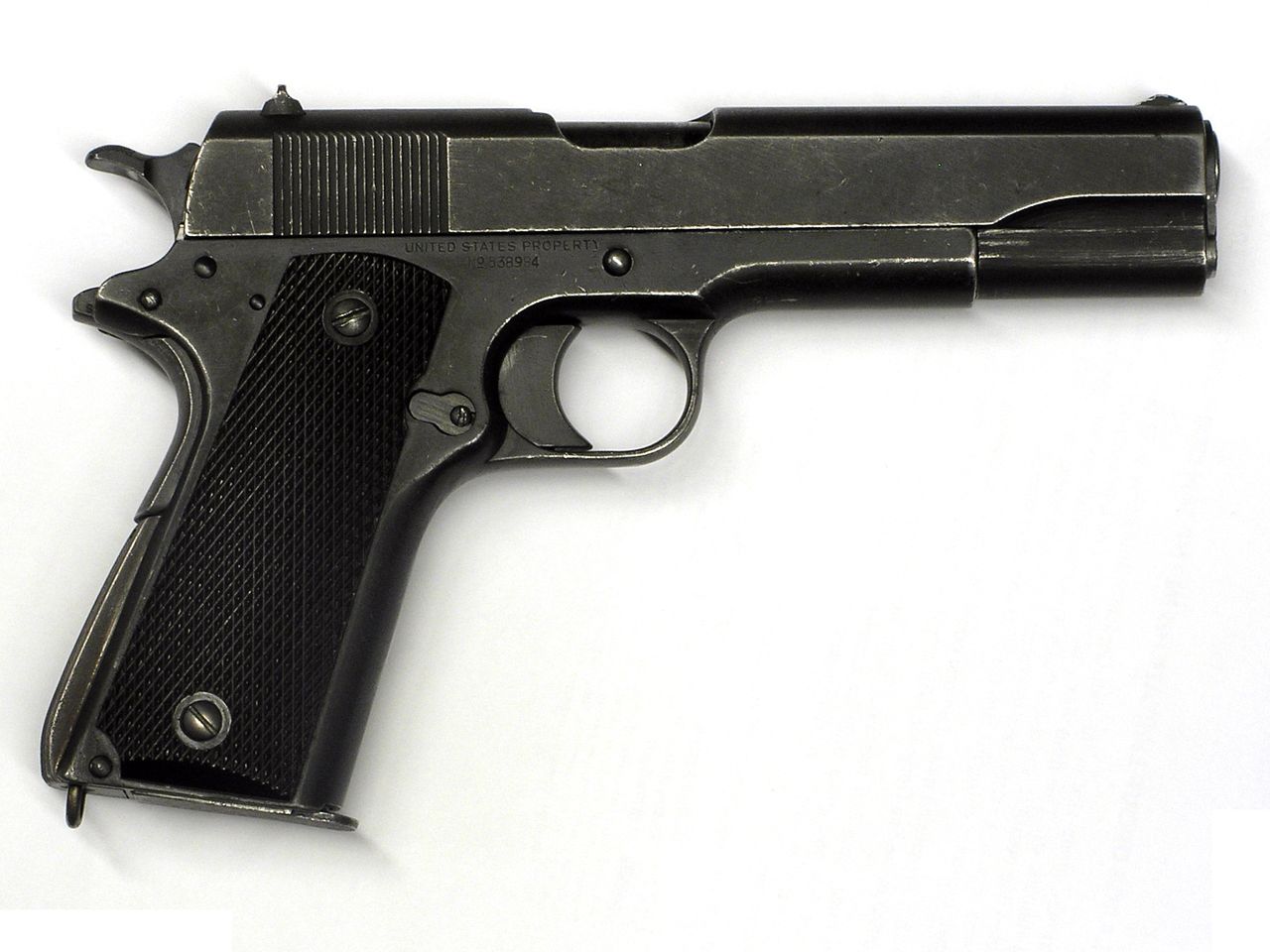
By the late 1960s, Colt knew the M1911A1 was aging, even if it remained respected. Designers were not just thinking about a replacement pistol, but about a different kind of sidearm entirely.
According to Small Arms Review, Colt engineer Henry A. Into developed the SCAMP in 1971, a name short for Small Caliber Machine Pistol. The idea was ambitious: build something only a little larger than a service pistol, yet capable of select-fire performance and controlled burst fire.
That alone made it stand out. Instead of acting like a conventional holster gun, the SCAMP was supposed to blur the line between pistol, machine pistol, and personal defense weapon.
Why The SCAMP Seemed So Impressive On Paper
The numbers were eye-catching. Small Arms Review described the prototype as 11.6 inches long, 1.4 inches wide, 6.8 inches high, and about 3.25 pounds, with a 27-round magazine.
It also used a proprietary high-velocity .22 centerfire cartridge rather than 9mm or .45 ACP. Colt reportedly pushed a 40-grain bullet to roughly 2,100 feet per second, chasing flatter trajectory, lighter recoil, and better controllability in burst fire.
The gun itself was unusually forward-looking. It used a gas-operated, locked-breech system, select-fire capability, a three-round burst mode, stainless internal parts, and a glass-reinforced plastic housing years before polymer-framed handguns became common talking points.
Colt’s Engineers Were Solving Real Problems
Miniature automatic weapons usually suffer from one basic flaw: they climb hard under recoil. SCAMP’s designers tried to beat that with a low bore axis, compensator, careful balance, and burst control rather than brute weight.
Its grip shape borrowed from target-pistol thinking, with natural pointing and better hand positioning as part of the concept. That mattered because the weapon was meant to be shot quickly, under stress, and at closer ranges where immediate handling counts more than benchrest precision.
Colt also designed it with rough service in mind. Fieldstripping required no tools, and the use of stainless steel and reinforced synthetic materials was intended to make the gun less vulnerable to dirt, corrosion, and hard field conditions.
The Military Looked, But Never Fully Bought In
This is where the story changes tone. Small Arms Review reported that only one SCAMP prototype was ever built, and while Colt tested it and some military personnel tried it, the Army evaluated it only on an unofficial basis.
One retired ordnance NCO recalled firing it at the factory in the mid-1970s and liking its accuracy and burst feature. That sounds encouraging, but encouragement is not the same thing as adoption, or even a formal procurement path.
The Air Force also showed some interest as a possible survival or personal defense weapon for aircrew. Yet even there, the attention remained limited and unofficial, with no known formal trials that pushed the gun toward standard issue.
Why Army Examiners Weren’t Convinced
The SCAMP’s biggest problem may have been that it answered a question the Army was not fully asking. A select-fire pistol in a proprietary caliber is clever, but clever does not automatically mean necessary, supportable, or better than existing compact arms.
Logistics likely worked against it too. A one-off cartridge means separate supply, training, maintenance planning, and long-term manufacturing commitments. That is a steep hill for any military project, especially one centered on a niche weapon type.
Then there was doctrine. Armies tend to prefer clear categories: pistol, carbine, submachine gun. The SCAMP sat awkwardly between them, and once evaluators looked past the novelty, that in-between identity probably became a liability rather than a strength.
A Great Prototype That Still Went Nowhere
That is what makes the SCAMP memorable. It was not a junk design, and it was not obviously absurd. In many ways, it anticipated later interest in compact personal defense weapons, controllable burst fire, and advanced materials.
But military adoption is never just about ingenuity. It is about doctrine, logistics, procurement timing, and whether the new thing solves a pressing problem better than everything already on hand.
So the SCAMP survived as a fascinating dead end. It looked like tomorrow’s pistol, right up until the Army examined it closely enough to decide tomorrow could wait.