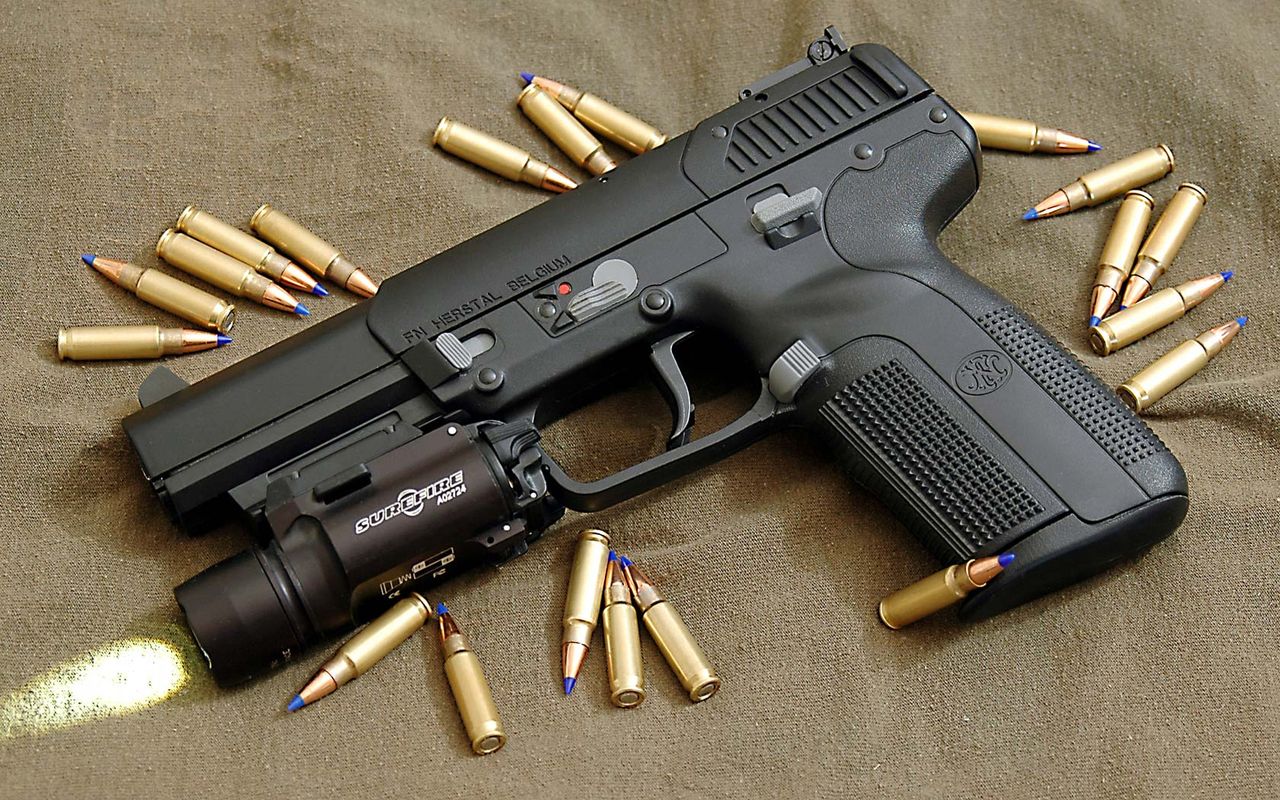
It looked unusual from the start. More importantly, it asked an uncomfortable question: what if the classic military pistol was already obsolete?
Why The Old Sidearm Formula Started Breaking Down
For most of the 20th century, military pistols followed a familiar script. They fired heavy, relatively slow rounds, rode on officers’ hips, and served as backup weapons rather than decisive fighting tools. Reliability mattered most, while capacity, weight, and armor penetration were usually secondary concerns.
That formula began to strain in the late Cold War. According to FN Herstal, growing concern over widespread body armor use pushed designers to think beyond the traditional 9mm service-pistol model. The battlefield was changing, and rear-echelon troops, vehicle crews, and specialists increasingly needed compact weapons that could still defeat protected threats.
This was not just a handgun problem. It was a doctrine problem. Once armies started asking whether support troops needed more than a symbolic sidearm, the old handgun design brief no longer looked sufficient.
The 5.7×28mm Idea Changed The Question

FN’s answer started with ammunition, not the pistol itself. In the late 1980s, the company developed the 5.7×28mm cartridge alongside the P90 personal defense weapon, specifically to answer demand for a lighter, faster round suited to modern protective gear. Later, that same cartridge became the foundation for the Five-seveN pistol.
That was the real disruption. Instead of adapting a pistol around an established handgun cartridge, FN built a sidearm around a weapons system concept. NATO later standardized the 5.7×28mm under STANAG 4509, a sign that the round was taken seriously beyond marketing language.
In practical terms, the concept promised several things at once: low recoil, high magazine capacity, light carried weight, and performance that challenged assumptions about handgun lethality against armored opponents. Whether every military agreed was almost beside the point. The design brief had already changed.
The Five-SeveN Looked More Like A System Component
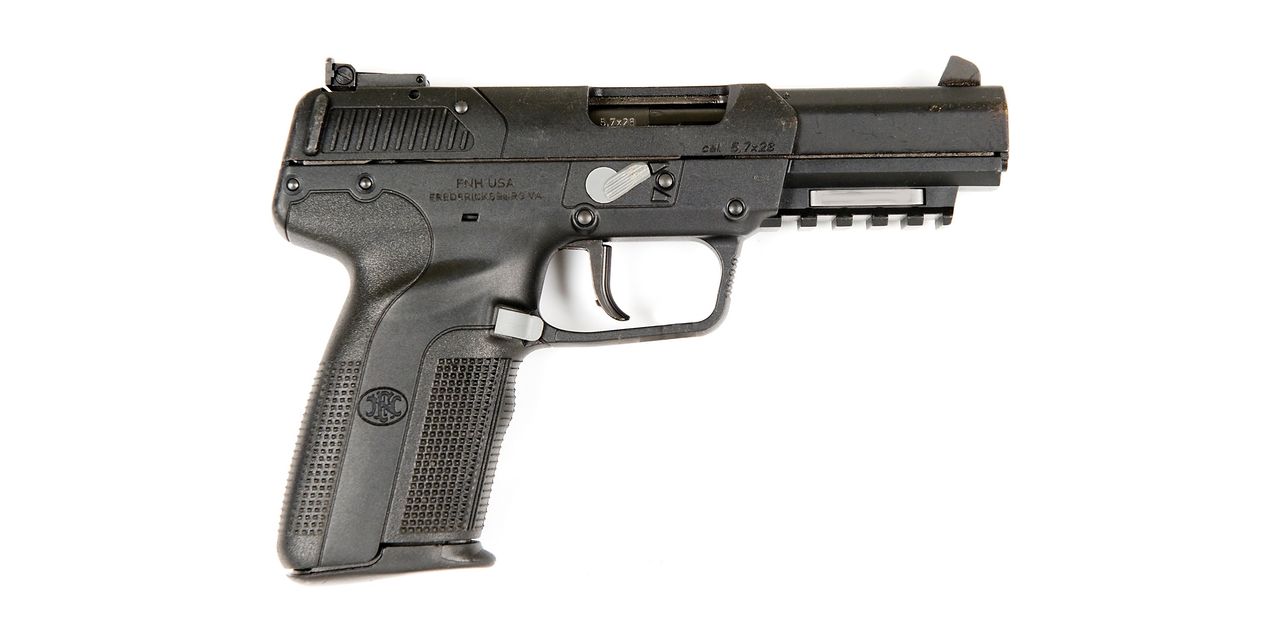
When the Five-seveN appeared in the 1990s and entered production in 1998, it did not resemble the steel-and-wood heritage pistols that shaped military taste. It was light, polymer-framed, high-capacity, and visually tied to the P90. That pairing mattered because the pistol was never meant to stand alone conceptually.
FN has long presented the P90, the Five-seveN, and the 5.7×28mm cartridge as an integrated system. In other words, the pistol was not merely a sidearm replacing another sidearm. It was the companion piece to a broader personal-defense architecture for troops who might not carry a full rifle.
That distinction influenced later military handgun thinking. Designers increasingly treated sidearms as part of a larger loadout equation involving optics, armor, ammunition commonality, weight, and mission role rather than as isolated badges of rank.
What Designers Learned From Its Strengths And Tradeoffs
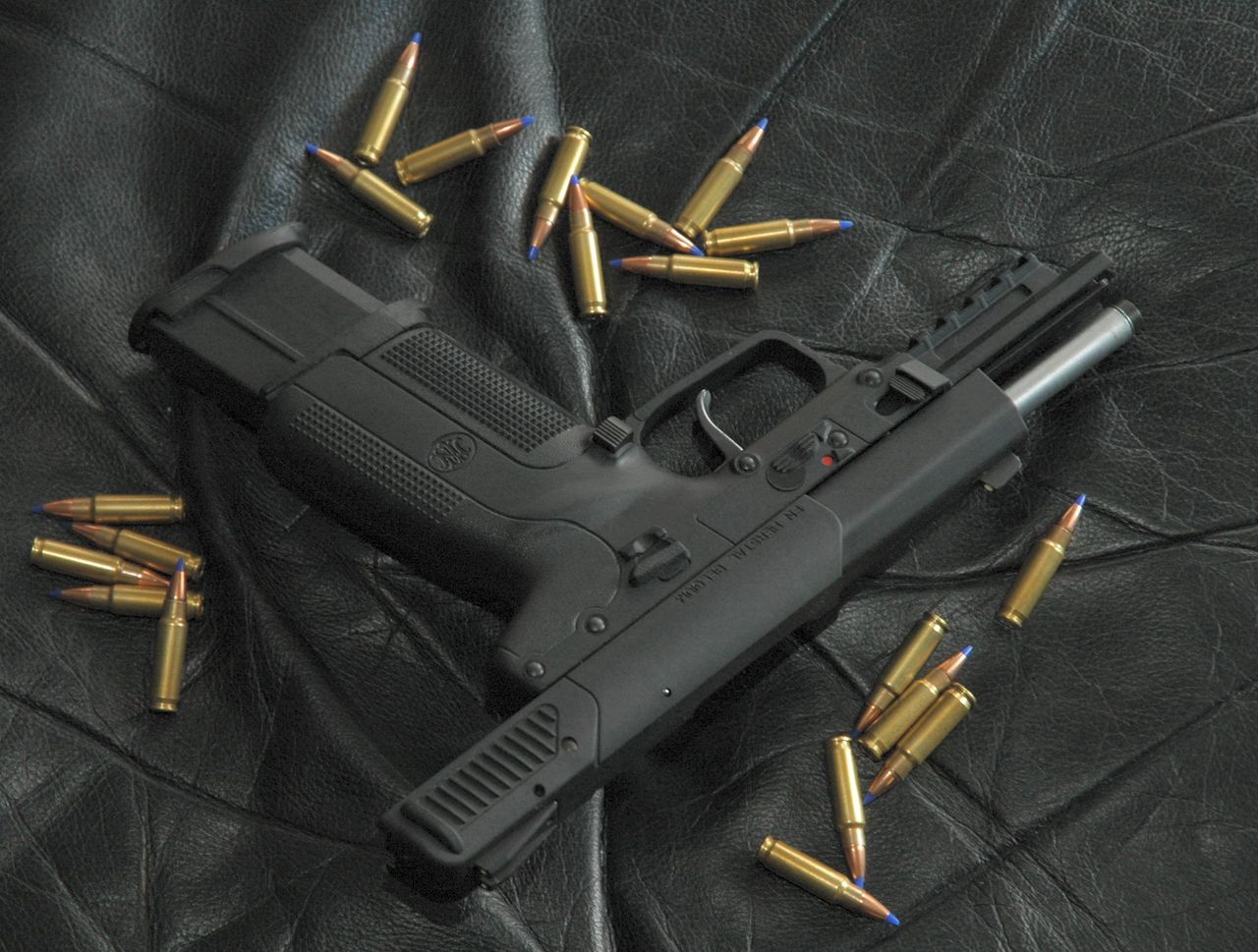
The Five-seveN proved that a military pistol could prioritize controllability and capacity without becoming oversized or punishing to shoot. Its light recoil made fast follow-up shots easier, and the platform showed how polymer construction could keep overall weight down even with a generous magazine.
But it also highlighted trade-offs. A specialized cartridge means supply complexity, training adjustments, and political debate over terminal performance and armor penetration. In military procurement, even a clever idea can stall if it complicates logistics or challenges entrenched doctrine.
That is why the pistol’s influence exceeds its adoption numbers. Many later service-handgun programs still stayed with 9mm, yet they borrowed the broader lesson: a sidearm should be judged by mission efficiency, soldier load, and system integration, not just tradition.
Its Influence Shows Up In Modern Military Handguns
You can see the ripple effects in today’s military pistol market. Modern sidearms are expected to be lighter, more modular, more durable, and easier to run with accessories than the old classics. FN itself says its newer military-focused pistols, including the FN HiPer and the redesigned Five-seveN MK3 MRD, reflect direct user feedback, better ergonomics, and optics compatibility.
That shift in priorities would have sounded radical decades earlier. Red-dot readiness, accessory rails, suppressor compatibility, and high-capacity magazines are now normal talking points in serious handgun design. The sidearm is no longer treated as a ceremonial backup by default.
Even when armies stick with 9mm, they now expect a much smarter 9mm pistol. In that sense, the Five-seveN helped move the conversation from caliber nostalgia to battlefield utility.
The Real Legacy Was Intellectual, Not Just Mechanical
The Five-seveN did not conquer the world the way some famous service pistols did. What it did instead was force designers, procurement officers, and soldiers to ask what a military handgun is actually for. That is a deeper kind of impact.
If a sidearm must serve pilots, vehicle crews, special units, and security personnel in an era of armor, optics, and weight-sensitive gear, then yesterday’s answers will not always hold. The Five-seveN exposed that reality early and unapologetically.
That is why it matters. Not because every army adopted it, but because it made complacency harder. Once that happened, military sidearm design was never going back to sleep.