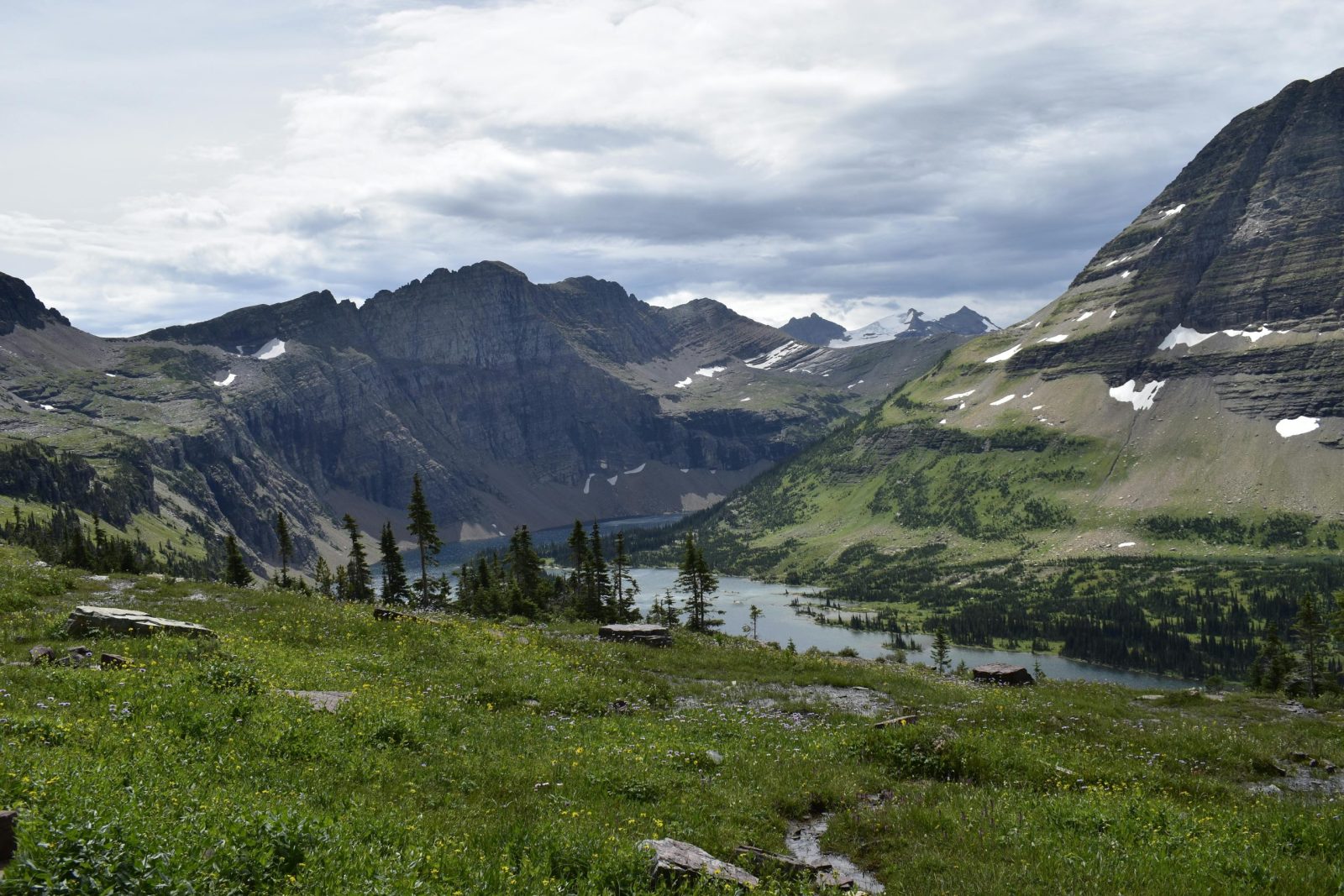
Public land fights usually sound abstract until you realize they are really about the places people hunt, fish, hike, camp, and pass down to their kids. That is why this new bill matters more than its modest name suggests.
What the bill actually does
The measure is called the Public Lands in Public Hands Act, introduced as H.R. 718 on January 23, 2025, by Representative Ryan Zinke of Montana, a Republican, and Representative Gabe Vasquez of New Mexico, a Democrat. According to Congress.gov, the bill was referred to the House Natural Resources Committee and then to the House Agriculture Committee’s Subcommittee on Forestry and Horticulture, where it has remained in introduced status. That matters because it is a real bill with real language, not just a talking point.
At its core, the bill would prohibit the Secretaries of the Interior and Agriculture from transferring certain federal land to nonfederal entities. In plain English, that means no easy handoff of accessible Bureau of Land Management ground or National Forest land into private, state, county, or municipal hands when the tract falls under the bill’s protections. The language is broad enough to cover a lot of the country that sportsmen and campers actually use.
The most important phrase in the bill is “publicly accessible tract.” The text defines that as federal land reachable by public road, trail, waterway, easement, or right-of-way. It also blocks transfers of land that is contiguous with that kind of tract, or contiguous with accessible state or local land. That is a big deal because many controversial land sales do not start with a famous overlook or beloved campground. They start with a parcel that looks small on paper but controls access to something much larger.
Why this is a bigger deal than it first appears.

This bill is not a total ban on every federal land transfer. It still allows some smaller disposals and several categories of transfers already authorized under older laws. But the practical effect would be to raise the bar significantly for selling off or otherwise transferring the kinds of public lands most Americans actually touch and use.
The bill contains an exception for parcels under 300 acres, or under 5 acres if they are accessible only by waterway, so long as those transfers are authorized under the Federal Land Policy and Management Act of 1976. It also preserves exceptions for things like the Southern Nevada Public Land Management Act, the Recreation and Public Purposes Act, the Weeks Act, Alaska Native allotment programs, and land exchanges specifically authorized by federal law. In other words, it does not try to shut down every technical land transaction.
What it does do is close off the easier pathways for broader disposal of accessible ground. The bill also says agencies cannot subdivide land just to slip under the acreage threshold. That one line matters a lot. Without it, opponents would rightly worry that a large parcel could simply be chopped into smaller pieces on paper and sold off in stages. The drafters clearly saw that loophole coming and tried to seal it.
Why public land sales became such a live issue again

This proposal did not appear out of nowhere. It arrived after repeated political fights over whether federal land could be used as a budget offset, an economic development tool, or a way to satisfy state and local demands for more control. In recent years, public land disposal has moved from a fringe argument into a recurring part of major fiscal and political battles.
Existing law already allows some sales. Under the Federal Land Policy and Management Act, the Bureau of Land Management can sell certain tracts identified for disposal through land-use planning. The law also gives Congress a review role for larger sales. That framework was built around the idea of targeted, planned disposal, not a broad ideological push to unload public estate. Still, the legal door is open, which is why advocates on both sides keep fighting over how wide it should stay.
That fight heated up in 2025. Ryan Zinke said he helped strip a provision from the House budget reconciliation package that would have sold more than 450,000 acres of public land. Conservation groups also pointed to discussions around budget policy and Utah’s high-profile campaign to challenge long-term federal ownership of BLM land. Even though the Supreme Court declined to hear Utah’s lawsuit on January 13, 2025, the broader political pressure never really went away. This bill is a response to that pressure.
Why hunters, anglers, campers, and small towns care so much
For regular Americans, the fear is not just that acreage disappears from a map. It is that access disappears first. A land transfer that cuts off a road, blocks a trail connection, or privatizes the parcel next to a river corridor can functionally kill public use over a much wider area than the deed transfer itself suggests.
That is why the bill’s emphasis on accessible tracts and contiguous land is so smart. Western public land users understand this instinctively. One parcel at a bottleneck can lock up trailheads, elk country, fishing pullouts, dispersed campsites, and backcountry access routes. If you have spent enough time on checkerboard ground or around landlocked corners, you know the whole game often turns on access, not scenery.
Polling suggests lawmakers know voters are watching. Colorado College’s 2026 Conservation in the West Poll found widespread concern among Western voters about rollbacks to land protections, cuts to land-management funding, and threats to sell off public lands. Reporting tied to the same poll noted that more than three-quarters of respondents wanted elected officials to prioritize conservation and recreation over extraction. For members of Congress from hunting and outdoor states, that is not niche sentiment. That is political reality.
The politics behind this bill are unusually revealing.g
One reason this proposal has gotten attention is the sponsor lineup. Zinke and Vasquez come from different parties and different political coalitions, but both represent places where public land is woven into the local economy and identity. That bipartisan pairing sends a message that keeping public lands public still has cross-party appeal, especially in the West.
It also shows how public land politics scramble the usual ideological map. Many conservatives support smaller government in general but fiercely oppose federal land sales when they threaten access for hunting, fishing, and off-grid recreation. Many liberals who favor strong federal conservation policy still understand that local access and working landscapes matter as much as scenic preservation. This issue does not break neatly along cable-news lines.
The bill had at least 14 cosponsors listed on Congress.gov as of the latest available legislative information, and cosponsors were added over time in both 2025 and early 2026. That does not mean passage is likely. Lots of bills gather support and die quietly in committee. But it does mean the concept has legs, and the politics around public land disposal remain hot enough that lawmakers want to be seen on the record.
What the bill does not do, and where the real limits are
It is worth being precise here. H.R. 718 would not make all public land sales impossible forever. It is narrower than that, and readers should be skeptical of anybody selling it as a total lockbox. Congress can still explicitly authorize transfers by future law, and the bill itself leaves several existing statutory exceptions in place.
That means the real strength of the bill is not absolute prohibition. It is friction. It creates a legal and political barrier around the most visible and usable public lands. Future efforts to sell or transfer those lands would need to move through narrower channels, face more scrutiny, and overcome a clearer statement of congressional intent. In Washington, that kind of friction can be the difference between a bad idea quietly moving and dying in the sunlight.
There is also the practical matter of committee bottlenecks. As of February 28, 2025, the bill had been referred to the House Agriculture Subcommittee on Forestry and Horticulture after its initial committee referrals. If it never moves out, the proposal remains more signal than statute. Still, even signal matters. Bills like this often shape the debate, set red lines, and warn leadership that accessible public land is politically explosive.
The bigger picture for America’s public land future

The deepest value of this bill is symbolic as much as legal. It treats public land not as spare inventory on a balance sheet, but as infrastructure for freedom. That may sound lofty, but anyone who has parked at a rough trailhead before daylight, filled a tag on BLM ground, or found a quiet campsite on national forest land knows exactly what that means.
Public land in America is unusual because it is both national and personal. It belongs to everyone, yet it feels local when you use it. Once sold, that relationship is almost impossible to rebuild. Roads can close. Access can vanish. Traditions can end in a single transfer that looked trivial in a committee memo. That is why even modest guardrails can matter so much.
So yes, this is just one bill, and no, it is not law yet. But if H.R. 718 or something like it eventually passes, it would mark a real shift. It would say that the default answer to public land sell-offs, especially where access is on the line, should be no. For millions of campers, hunters, anglers, and small-town businesses, that would be a very big change.