It sounds backwards, because it was.
The Mannlicher 1894 is one of those rare firearms that makes even experienced shooters stop and ask, “Wait, how did that work?”
A Pistol That Broke The Rules
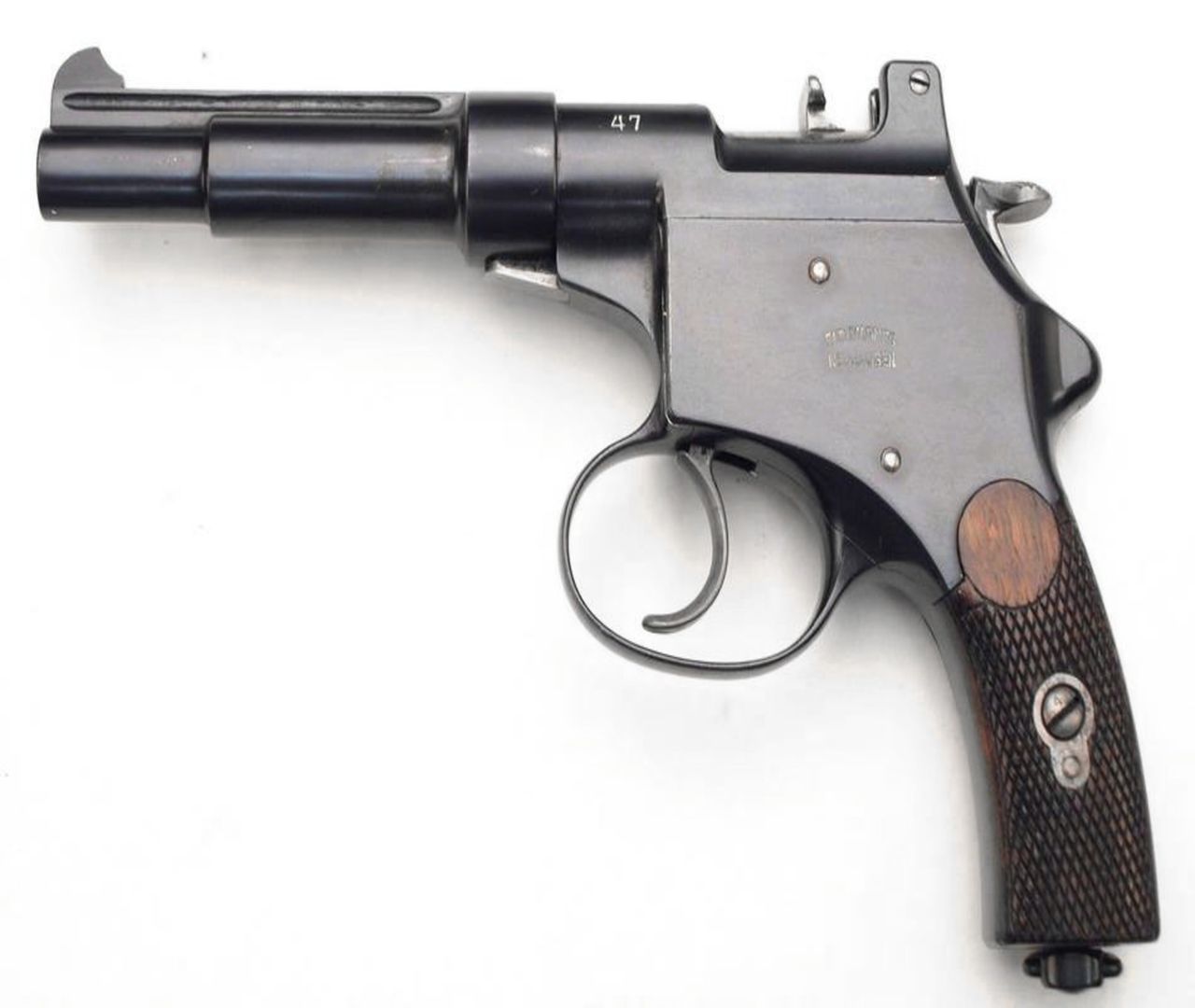
Most self-loading pistols teach us the same basic story: firing pushes parts rearward, the action opens, and the gun reloads itself. The Mannlicher 1894 flipped that script completely. Instead of a slide moving back under recoil, the barrel moved forward.
That makes it a blow-forward pistol, a system so uncommon that only a few commercial handguns ever used it. According to Forgotten Weapons, the Mannlicher 1894 was the first of the type, which alone gives it an important place in firearms history. It was an early sign that designers in the 1890s were still exploring every possible route to a practical autoloading sidearm.
Ferdinand Mannlicher was not some fringe tinkerer chasing a gimmick. He was already a major name in European arms design, famous for innovative rifles and for helping popularize the en-bloc clip. The 1894 pistol shows what happens when a first-rate designer attacks a new problem before the industry has settled on a standard answer.
How The Blow-Forward System Actually Worked
The heart of the design was friction. When the cartridge fired, the bullet gripped the rifling and traveled down the bore, and that drag helped pull the barrel forward against a spring. Once the barrel ran ahead, the empty case was extracted and ejected, and the spring then drove the barrel back to chamber the next round.
Mechanically, that is fascinating because the frame and breech area stayed comparatively fixed while the barrel did the moving. Forgotten Weapons describes the effect clearly: the projectile itself contributed to cycling the action. In practical terms, the barrel was doing work that later pistols would assign to a slide.
This was clever, but it came with compromises. Blow-forward systems tend to produce sharp felt recoil and awkward handling characteristics, because the gun is managing energy in a very unusual way. That helps explain why the idea stayed a technical curiosity instead of becoming the industry standard.
Why Designers In The 1890s Tried Ideas Like This
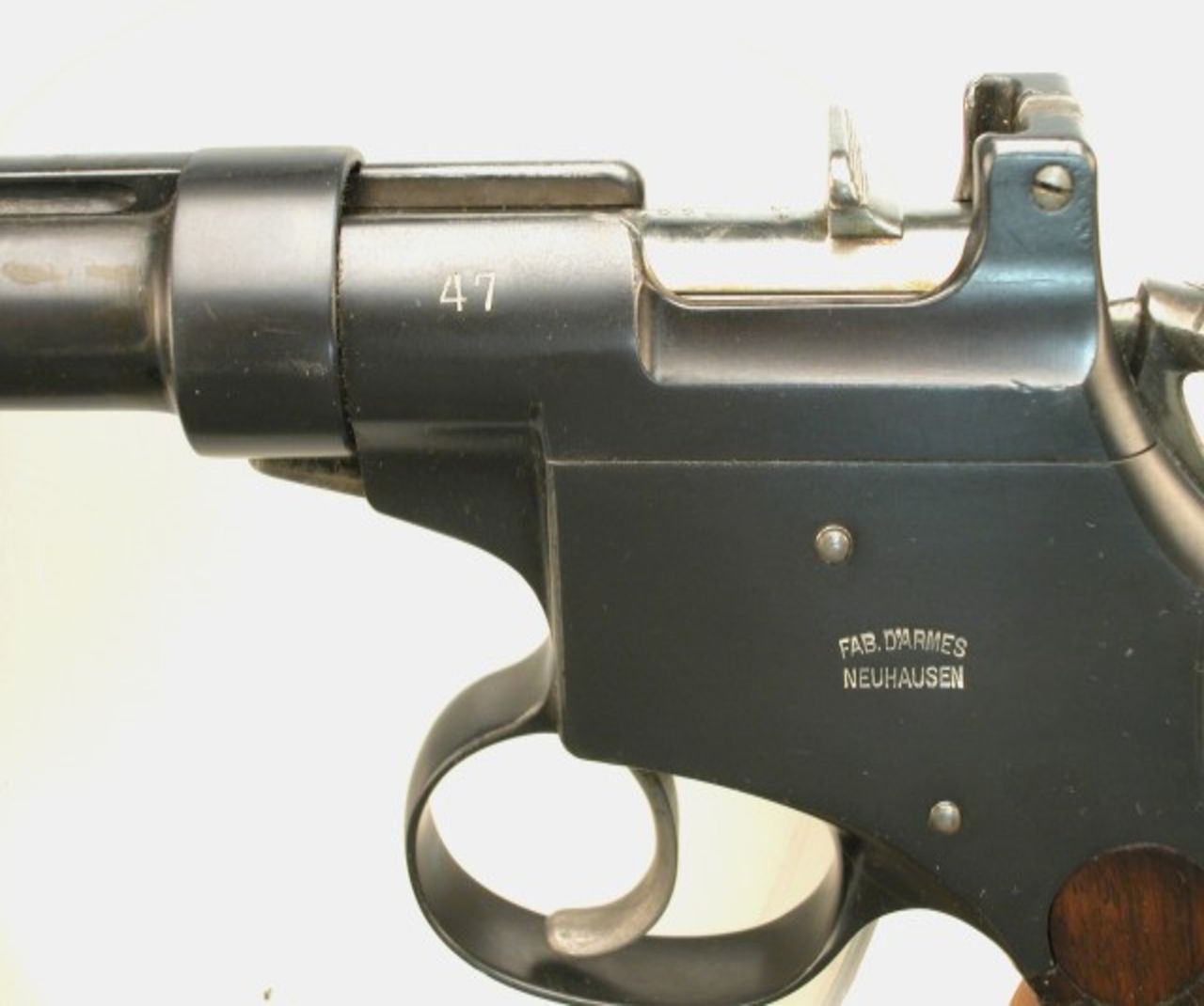
The Mannlicher 1894 emerged in the same era as other highly unconventional early automatics from Bergmann and Schönberger-Laumann. Everyone knew repeating handguns had a future, but no one yet knew what the winning formula would be. In that environment, a moving barrel that traveled forward did not seem absurd so much as plausible.
That historical context matters. Today the design looks strange because we know what came next. Back then, it was part of a genuine technological race, and the oddity of the Mannlicher 1894 is exactly what makes it such a revealing artifact from the birth of semiautomatic handguns.
What The Gun Was Like In Real Use
Accounts from period trials suggest the pistol was more interesting than comfortable. Forgotten Weapons notes a U.S. trial report that judged the design technologically advanced but not especially more useful in practice than a revolver. That is a telling verdict for a handgun introduced during an era when revolvers still set the standard for reliability and readiness.
Production was also extremely limited. Surviving summaries indicate roughly 150 Steyr-made examples in 7.6mm Mannlicher, with an even smaller Swiss-related batch in a different caliber for military evaluation. In other words, this was never a mass-market sidearm and never had the chance to mature through large-scale service use.
For shooters, the manual of arms was not ideal either. Blow-forward pistols can be less intuitive to charge and can feel unusual in the hand under firing. Those traits may be forgivable in a prototype, but they are serious drawbacks in a military sidearm.
Why The Idea Never Caught On
The blow-forward concept was ingenious, but better systems arrived fast. As self-loading handgun design evolved, simple blowback and locked-breech arrangements proved easier to refine, easier to manufacture, and generally more practical for soldiers and civilians alike. Once those patterns improved, Mannlicher’s forward-moving barrel looked less like the future and more like a fascinating side road.
There were later blow-forward pistols, including the Schwarzlose 1908 and the Hino-Komuro, but the family tree remained tiny. That is usually a sign that a mechanism works in principle yet fails the broader test of durability, comfort, cost, or operational simplicity. Firearms history is full of designs that were smart but not smart enough.
The Mannlicher 1894 belongs squarely in that category. It was not a dead end because it was foolish. It was a dead end because the competition turned out to be better.
Why Collectors And Historians Still Love It
What keeps the Mannlicher 1894 alive today is not battlefield fame or commercial success. It is the sheer audacity of the engineering. Collectors prize it because it captures a moment when gunmakers were still inventing the grammar of the automatic pistol.
For historians, it is a reminder that technological progress is rarely linear. The guns we now consider normal emerged from a chaotic experimental phase filled with strange mechanisms, partial successes, and elegant failures. The Mannlicher 1894 may not have won, but it helped map the territory.
And for the rest of us, that is the appeal. A pistol with a barrel that moved forward instead of a slide moving back feels almost impossible until you see the logic, and once you do, it becomes unforgettable.