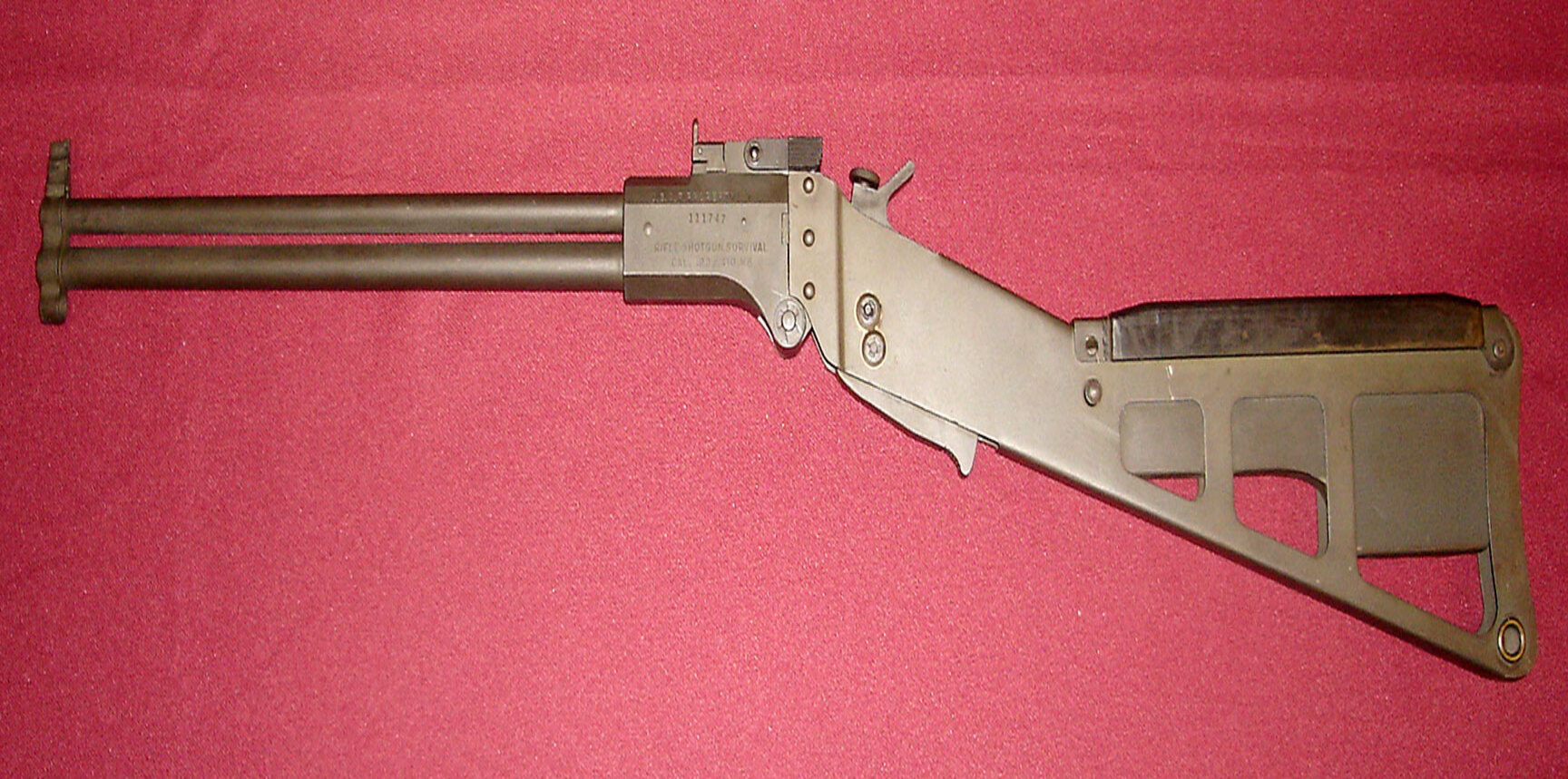
It looks almost homemade at first glance. Then you realize every odd detail on the M6 exists for one hard reason: survival after a crash.
A gun designed for the worst day imaginable
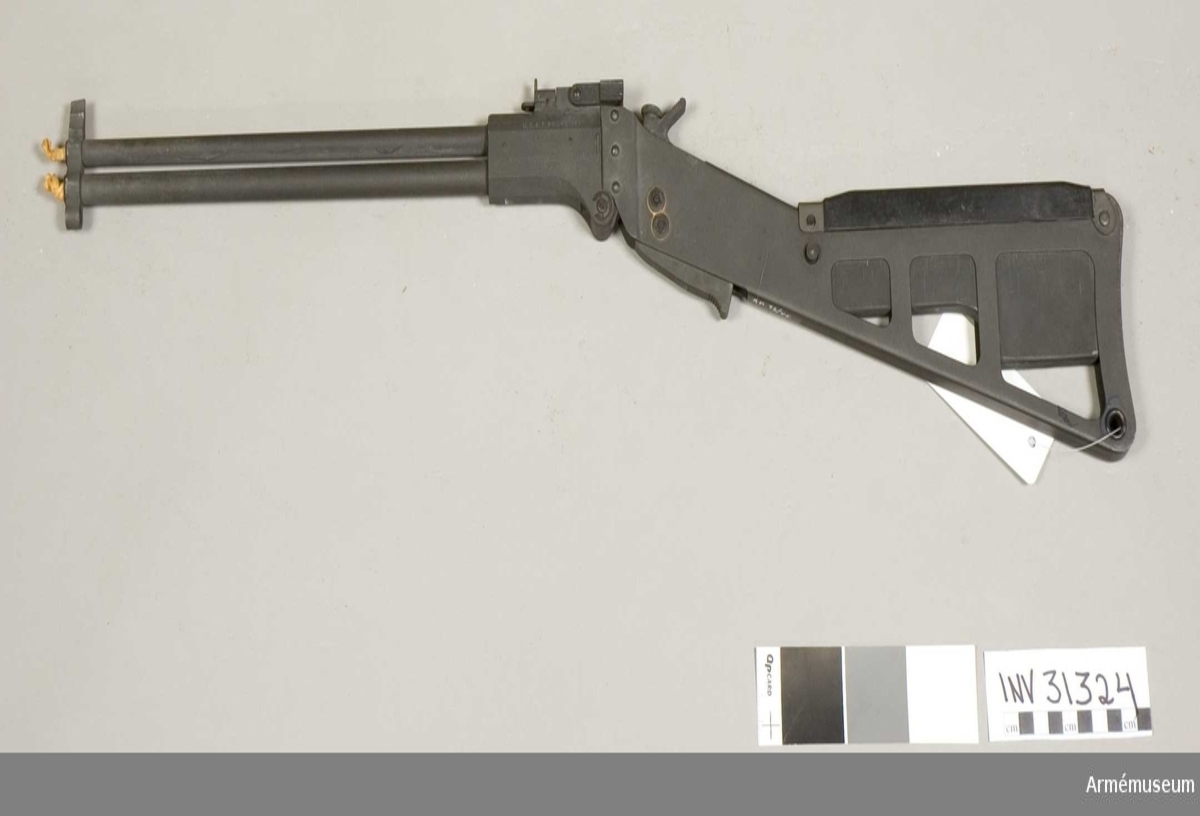
The M6 Aircrew Survival Weapon was created for downed American aircrew who might land far from help and need to live off the land. According to Air Force-focused historical reporting and long-running firearms research, it followed the earlier M4 survival rifle and was adopted in the early 1950s as a more flexible tool.
Its basic idea was simple but smart. Instead of giving a pilot only a small rifle, the M6 combined a .22 Hornet barrel with a .410 shotgun barrel in an over-under, break-action package.
That combination mattered in the field. A .22 Hornet could take small game at longer range, while the .410 gave the user a better chance on birds or rabbits flushed at close distance.
Why the over-under layout made so much sense
The M6 was not built for comfort, beauty, or even ordinary sporting use. It was built to fit inside survival kits carried aboard aircraft, which meant compact size and rugged simplicity mattered more than a polished trigger or walnut stock.
Most examples used all-metal construction with a skeletonized stock. The design folded down small, resisted rough handling, and avoided the swelling, cracking, or warping that traditional wood furniture could suffer in extreme climates.
That same stripped-down approach kept weight low. Historical descriptions commonly place the M6 at about 3.75 pounds, which made it realistic to pack with other emergency gear rather than treat as a full-time fighting arm.
Built for pilots, not for gun collectors
This was a specialized emergency tool, and it behaved like one. Period descriptions note 14-inch barrels on the military version, making the original issue guns especially compact, while later civilian variants typically used longer barrels to comply with federal law.
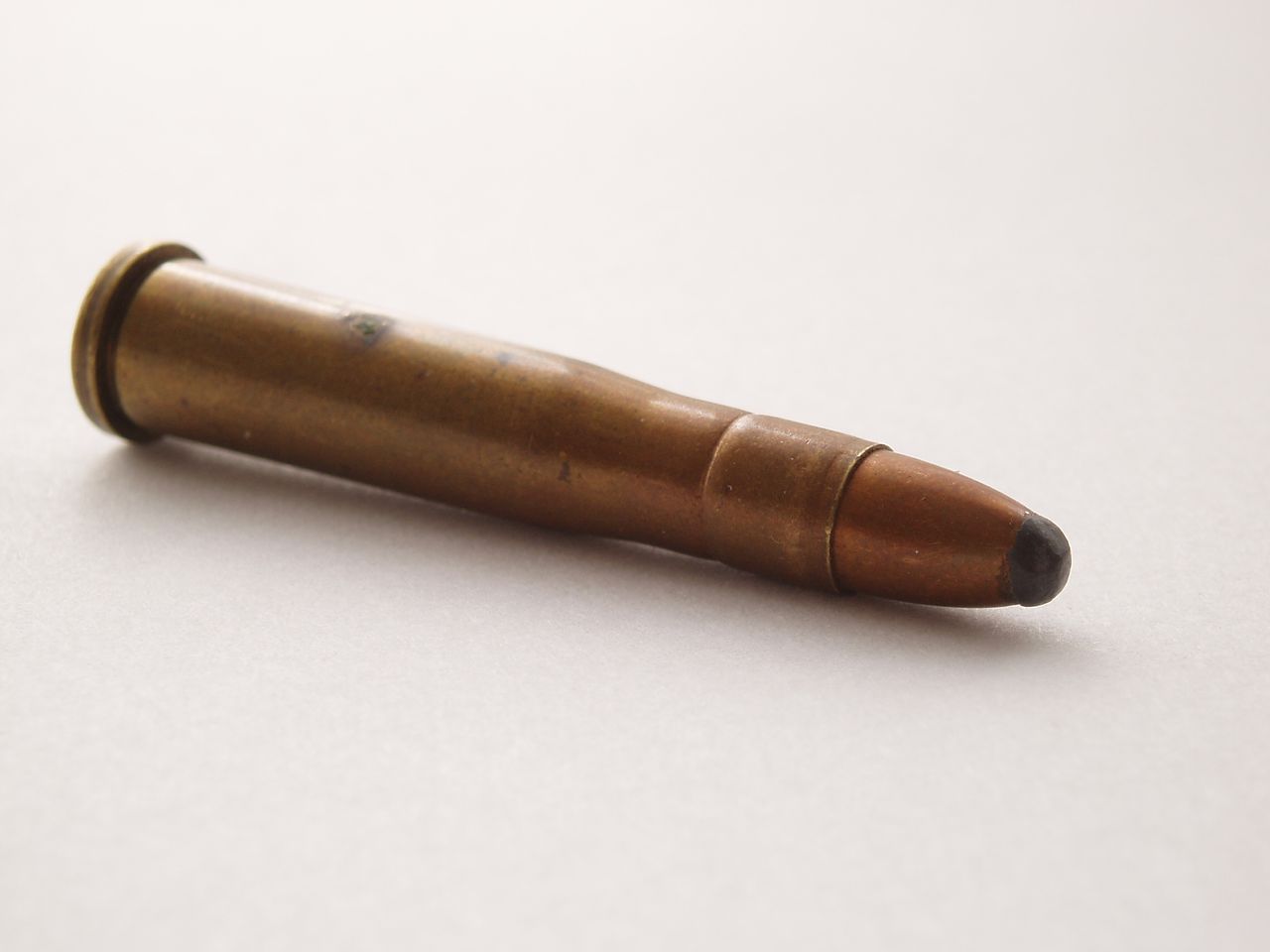
The stock also doubled as storage. Reports on surviving examples describe room in the butt for ammunition, often cited as nine .22 Hornet cartridges and four .410 shells, plus small support items such as an oiler.
Even the trigger arrangement reflected its mission. A selector allowed the shooter to choose which barrel fired, reducing parts count while preserving the ability to switch from precise rifle fire to a shotgun pattern when the situation changed fast.
What a stranded pilot could actually do with it
Despite the dramatic nickname, the M6 was not really about “hunting your way home” across hundreds of miles. It was about buying time, calories, and confidence until rescue arrived.
In that role, it made real sense. A pilot in remote country could use the .410 for grouse, squirrels, or rabbits at short range, then shift to the .22 Hornet for slightly longer shots on similarly sized game.
It also had psychological value. Survival training has long emphasized that tools matter not just for food gathering, but for morale. A simple firearm that works after hard landings, weather exposure, and minimal maintenance can steady decision-making when stress is high.
The M6’s place in Air Force survival history
The M6 came out of a larger Air Force effort to rethink what downed crews needed after World War II. The service had already fielded survival arms such as the M4, and much later it would move toward very different concepts, including the modern GAU-5A Aircrew Self Defense Weapon announced by Wright-Patterson officials in 2020.
That shift tells you a lot. The M6 belonged to an era when evasion in wilderness and food procurement were central assumptions for survival planning.
Modern systems place more emphasis on rapid recovery, signaling, communications, and defensive capability. Even so, the M6 remains one of the clearest examples of purpose-built military survival thinking ever turned into steel.
Why people still remember it today
Collectors and outdoors enthusiasts still talk about the M6 because it represents a very pure design philosophy. Nothing on it was meant to impress anyone; everything was meant to keep a stranded airman alive with the fewest possible moving parts.
It also stands out visually. The over-under barrels, bare-bones stock, and industrial look make it instantly recognizable next to conventional rifles and shotguns.
And beneath the odd appearance is a serious historical lesson. The M6 reminds us that military firearms are not always about combat power alone. Sometimes they are about food, shelter, morale, and the stubborn hope that a pilot on the ground can stay alive long enough to get home.